
Loading, please wait...

LOT 0671
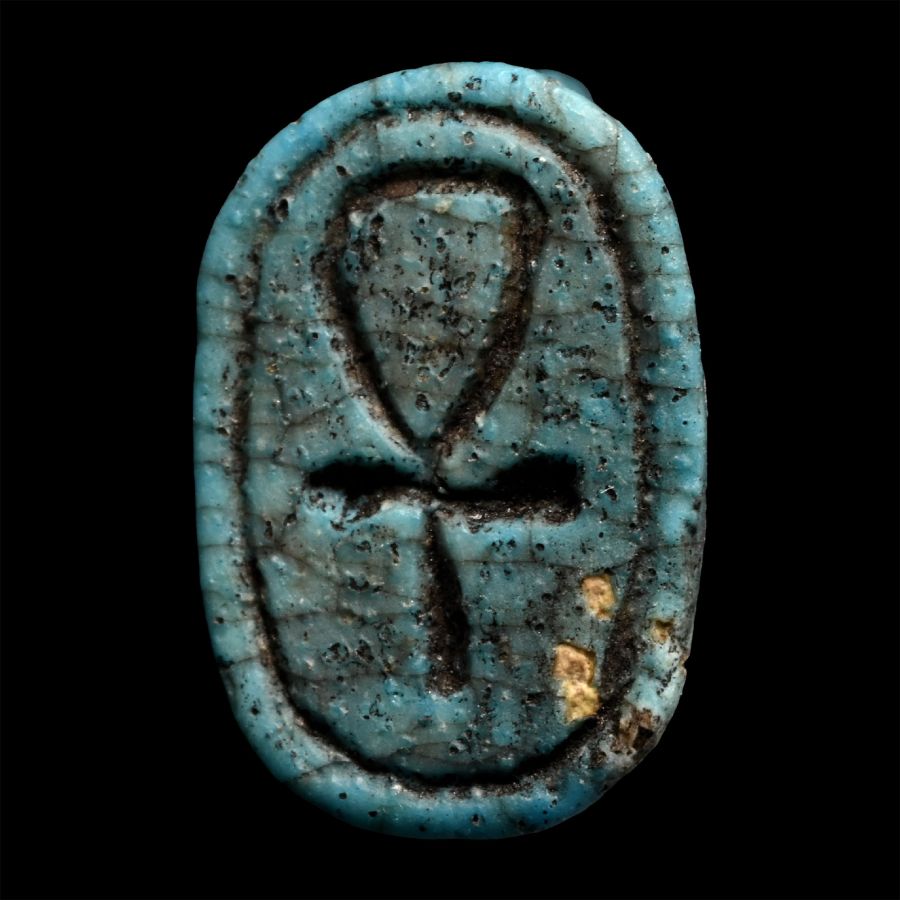
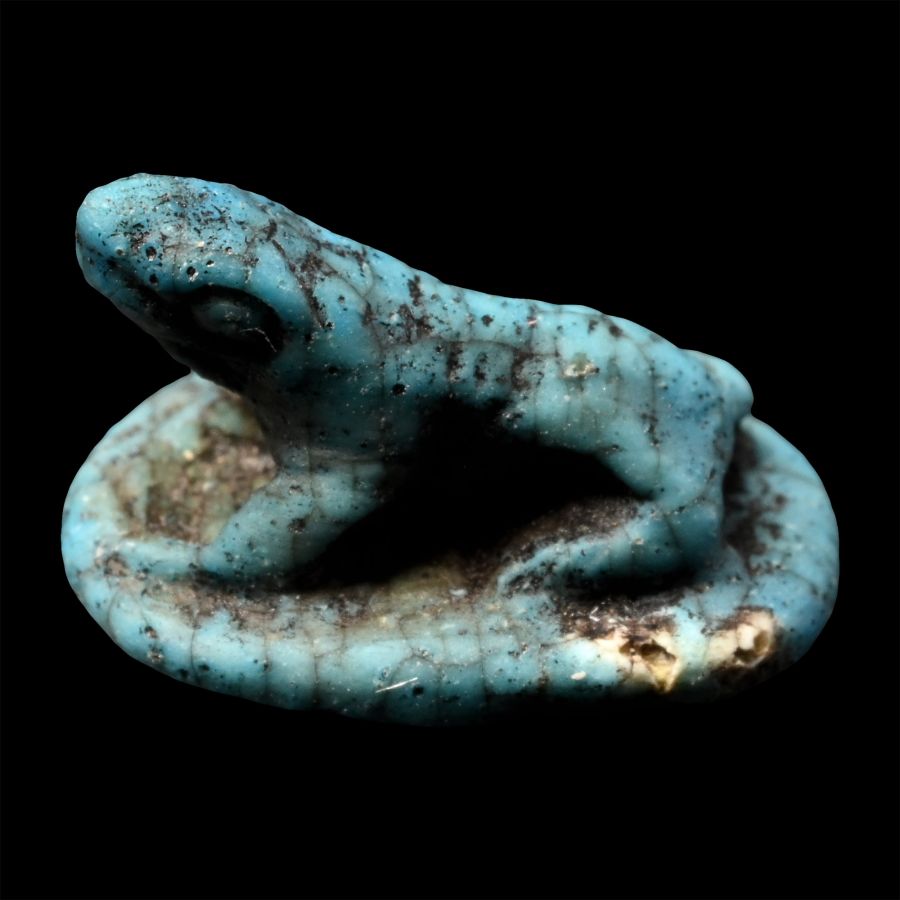
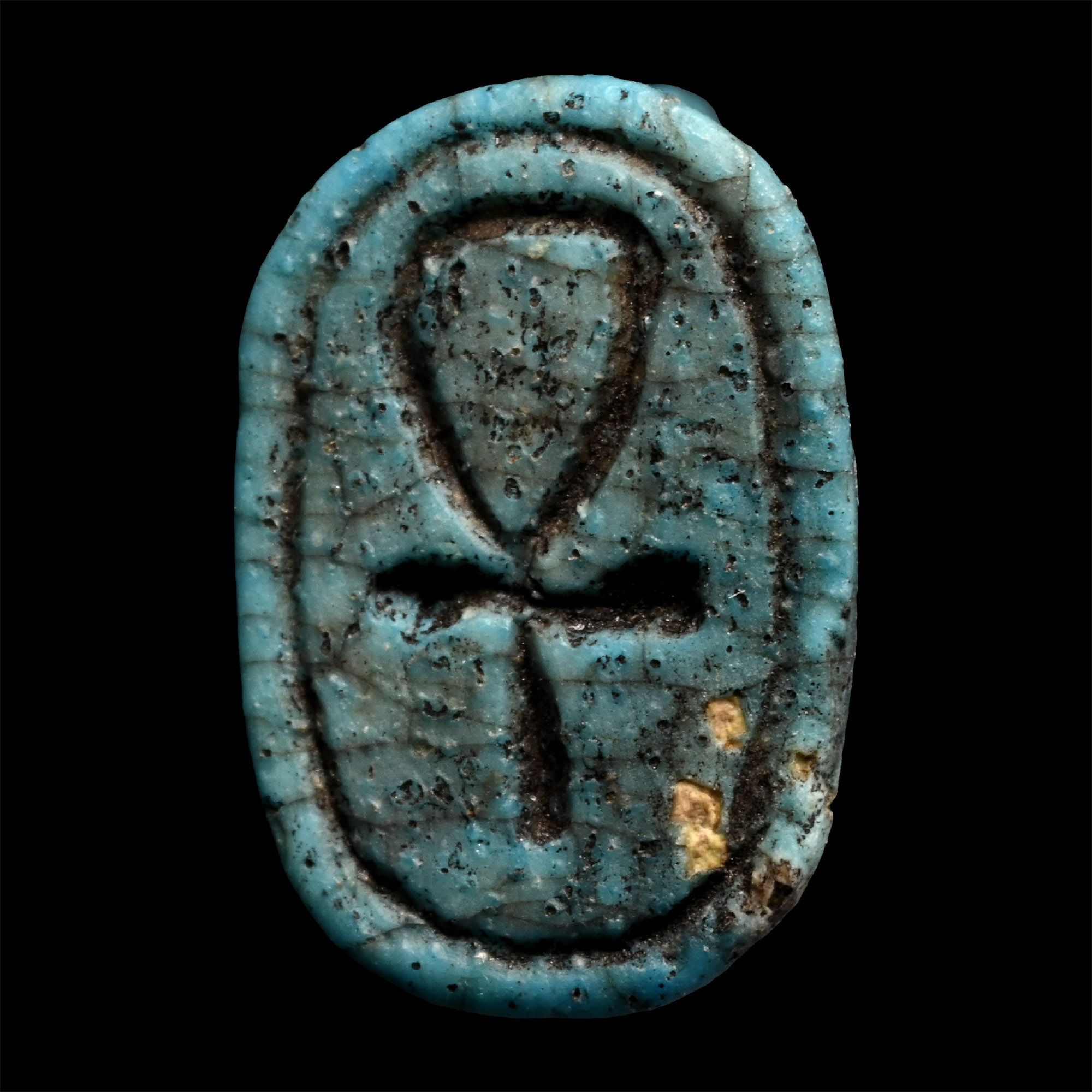
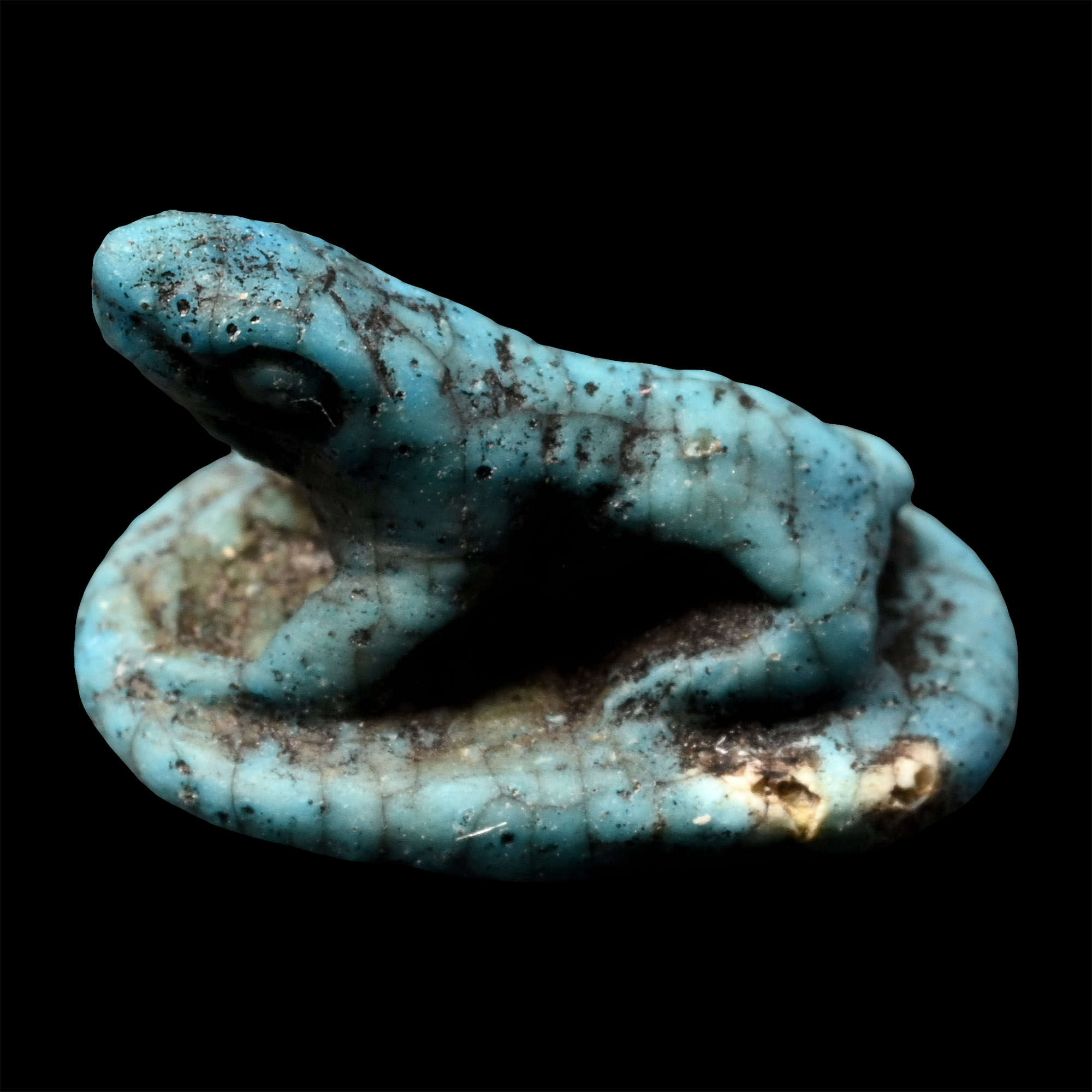
Egyptian Faience Scaraboid Frog Amulet with Ankh
LATE PERIOD, 664-332 B.C.
3/8 in. (0.48 grams, 11 mm).
Modelled in the round, crouching on a rectangular base, incised ankh to the underside.
ProvenanceFrom an important UK collection, 1940s.
LiteratureCf. Reisner, G.A., Catalogue général des antiquités égyptiennes du Musée du Caire, Nos.12528-13595, Vol. II, Amulets, Cairo, 1958, pl. XVI, nos. 13373-13380, for similar examples.
FootnotesFrog amulets in ancient Egypt symbolised fertility, rebirth, and renewal. Associated with the goddess Heqet, linked to childbirth and life-giving forces, they were especially popular for fertility and for protection during pregnancy and labour. Their association with the annual Nile flood, which brought new life to the land, further emphasised their symbolism of revival and abundance. The ancient Egyptian ankh hieroglyph on the amulet's base, meaning "life," reinforces the creature's symbolism.
CONDITIONTimeLine Auctions follows a vetting process to ensure the authenticity and legality of all items, reinforcing our commitment to integrity and responsible trading. Each antiquity, antique, and coin lot undergoes thorough examination by a vetting committee of at least ten external specialists, professional trade association members, scientists, and archaeologists: Our Vetting Process
AUCTIONS:
TimeLine is a leading auction house specialising in antiquities, ancient art, collectables, natural history, coins, medals, and books. Our auctions offer museums, collectors, historians, and enthusiasts the opportunity to acquire unique and historically significant pieces.
LOT 0671
Egyptian Faience Scaraboid Frog Amulet with Ankh
Estimate £120 - 170€140 - 200 (for guidance only)$160 - 230 (for guidance only)
Opening Bid
£60 (EUR 70; USD 81) +BP*
-
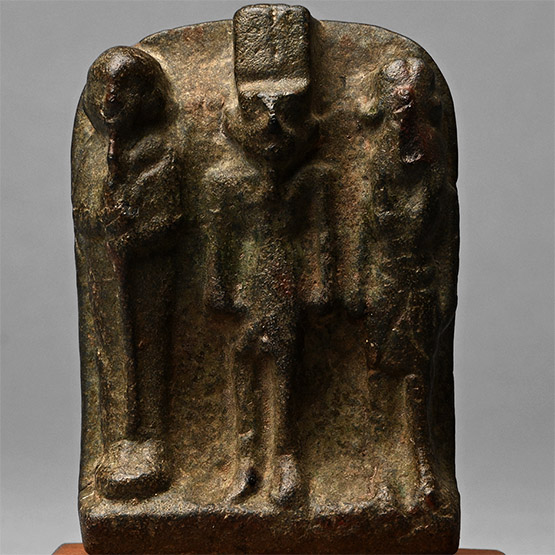
Egyptian Faience Ptah, Amun-Ra and Ra-Horakhty Triad Amulet
Ptolemaic Period, 332-30 B.C.Estimate: £2,500 - 3,500 (‡+bp*)
Opening Bid: £1,444
Rectangular plaque with a ledge along the lower edge, featuring the half-round figures of Ptah, Amun-Ra, and Ra-Horakhty; each invoked in offering formulae written in three vertical columns on the back; a fragmentary suspension loop at the rear; mounted on a wooden display stand. 88.8 grams total, 85 mm including stand
From a deceased American estate, 1970-1989. with Bonhams, London, 28 October 2009, no.81. Private collection, Europe. Accompanied by a copy of an Art Loss Register certificate, no.S00066707. This lot has been checked against the Interpol Database of stolen works of art and is accompanied by search certificate number no.13190-249206.
Amun, Ra-Horakhty, and Ptah. Amun evolved from a primordial god to a nationally worshipped deity, merging with Ra to become Amun-Ra, while Ra-Horakhty symbolises the sun and is depicted with a falcon's head. Ptah is recognised as the creator god and patron of craftsmen, originally worshipped in Memphis and later throughout Egypt. -
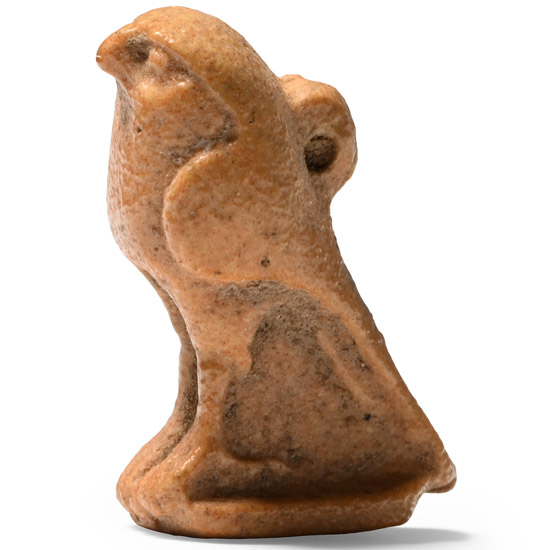
Egyptian Horus Amulet
Late Period, 664-332 B.C.Estimate: £150 - 200 (+bp*)
Opening Bid: £75
Perching Horus falcon with talons gripping the front edge of the integral plinth; detailed wings and head and a suspension loop on the back. 1.24 grams, 19 mm
Ex London gentleman's collection, by descent 1980s.
Horus is one of the most significant and widely worshipped gods in ancient Egyptian mythology. His importance spans many aspects of Egyptian religion, including serving as a symbol of the living king, offering protection, representing the sky, and symbolising the sun. -
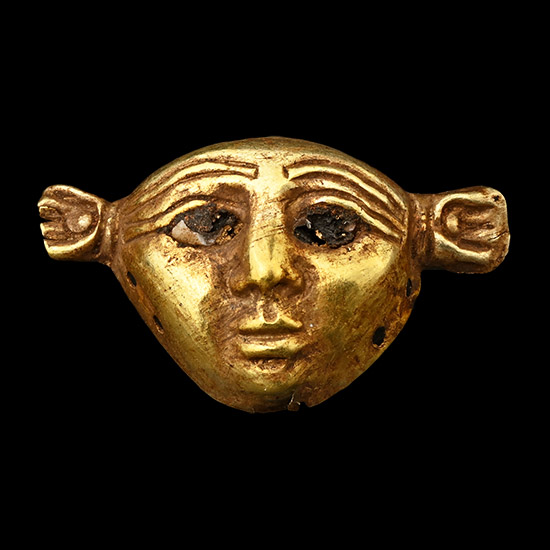
Egyptian Gold Hathor Face Mask
Late Period-Ptolemaic Period, circa 664-30 B.C.Estimate: £1,800 - 2,400 (+bp*)
Opening Bid: £900
Depicted as a woman's head with cow ears, her eyebrows and cosmetic lines carefully defined, with her eyes retaining traces of inlay. 0.96 grams, 28 mm
From the collection of a UK gentleman, London, UK, by descent from his family collection 1970s.
This particular appearance of Hathor, with a human head and cow ears, often appears on columns, particularly in temples associated with goddesses or mammisi-temples ("birth houses"), which were devoted to the birth of a goddess's divine son. The form also appears in the decoration of sistra used in Hathoric and birth-related rituals. Therefore, this diminutive gold image embodies Hathor's symbolic protective potency in all matters maternal.
