
Loading, please wait...
LOT 0482
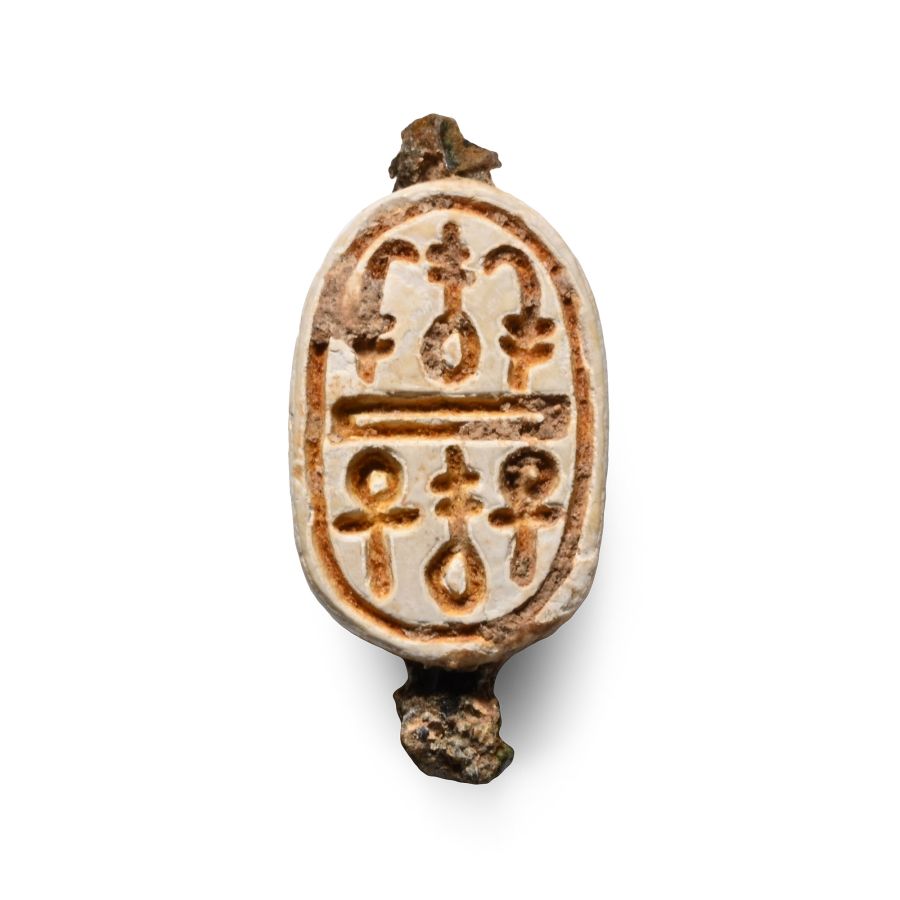
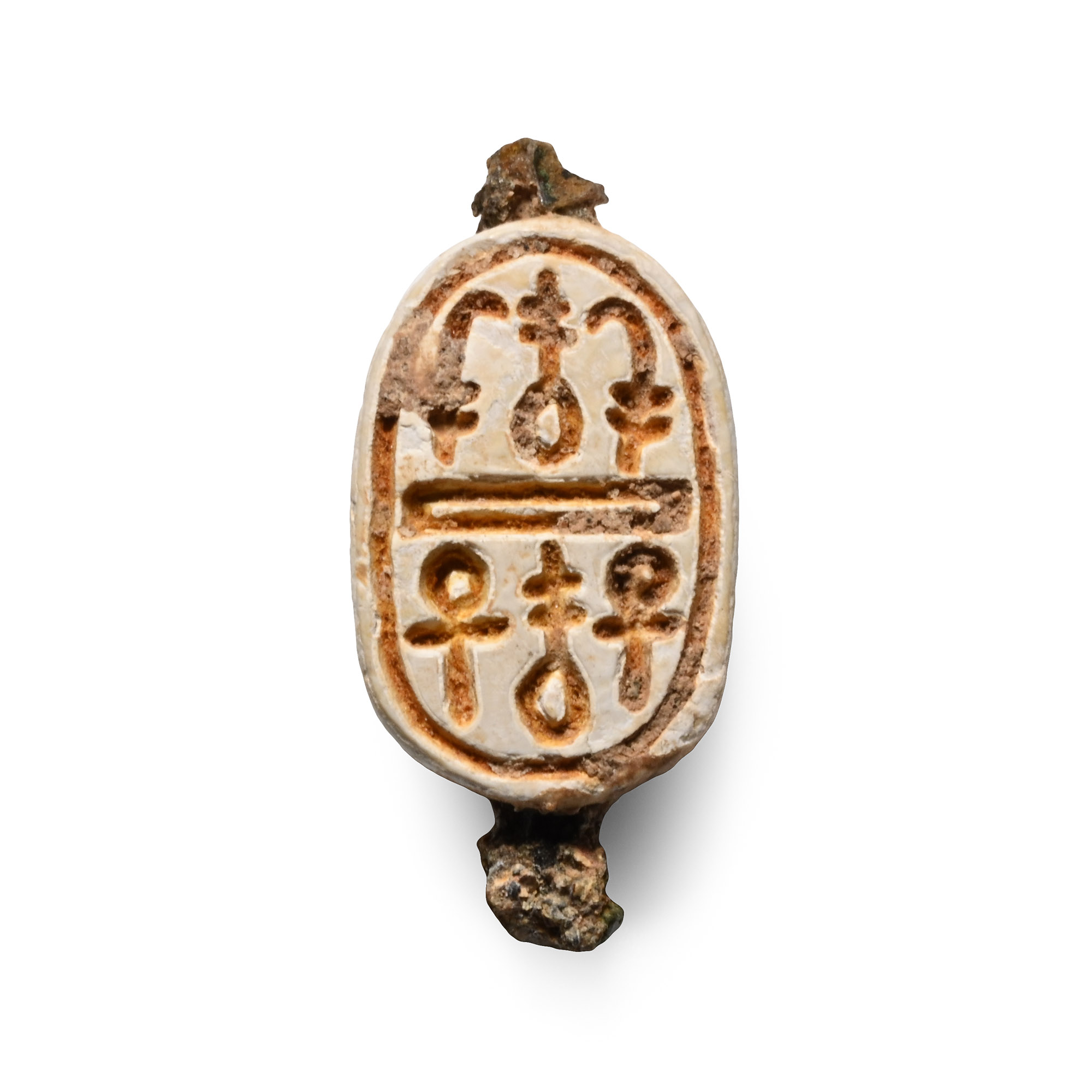
Egyptian Faience Scarab
2ND MILLENNIUM B.C.
3/4 in. (0.89 grams, 18 mm).
Anatomical detailing on the head and legs, with the underside featuring sedge plant (swt), ankh, and nefer symbols. [No Reserve]
ProvenancePrivate collection, 1990s-early 2000s.
LiteratureCf. Ben-Tor, D., Scarabs, Chronology, and Interconnections: Egypt and Palestine in the Second Intermediate Period, Fribourg/Göttingen, 2007, pl. 10, nos. 3, 6-8, 12, for scarab designs incorporating the central horizontal bar with sedge plant symbols and other signs.
FootnotesScarabs featuring this design arrangement have been found in numerous sites in Palestine and were inspired by Middle Kingdom prototypes.
CONDITIONTimeLine Auctions follows a vetting process to ensure the authenticity and legality of all items, reinforcing our commitment to integrity and responsible trading. Each antiquity, antique, and coin lot undergoes thorough examination by a vetting committee of at least ten external specialists, professional trade association members, scientists, and archaeologists: Our Vetting Process
AUCTIONS:
TimeLine is a leading auction house specialising in antiquities, ancient art, collectables, natural history, coins, medals, and books. Our auctions offer museums, collectors, historians, and enthusiasts the opportunity to acquire unique and historically significant pieces.
-
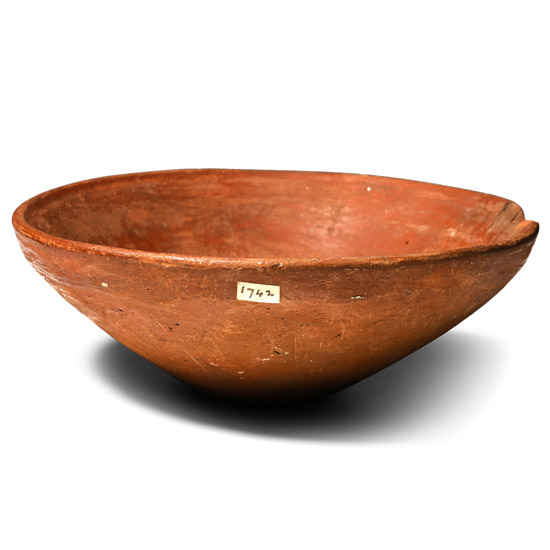
Egyptian Terracotta Bowl
Predynastic Period, 4th millennium B.C.Sold for (Inc. bp): £442
Conical in profile with narrow foot; old collector's notation to underside: 'Found by Petrie location Ballas and Naqada in 1895'. 375 grams, 15.5 cm wide
From the collection of David Donlan (1947-2025), a dedicated and lifelong collector with a passion for the ancient world and the natural sciences, forming his collection from 1960s onwards, using many reputable dealers across the United Kingdom, including the well-regarded Coincraft and The Parthenon Gallery.
Naqada (ancient Nubt) is situated on the west bank of the Nile, and is the type-site for the Predynastic period (Naqada I–III). It was a major centre of trade, craft production, and the process of unifying Egypt. Ballas is situated on the east bank opposite Naqada, and contains important Predynastic and Early Dynastic cemeteries excavated extensively by Flinders Petrie and James Quibell in conjunction with their work at Naqada. Their report was published in 1895. -
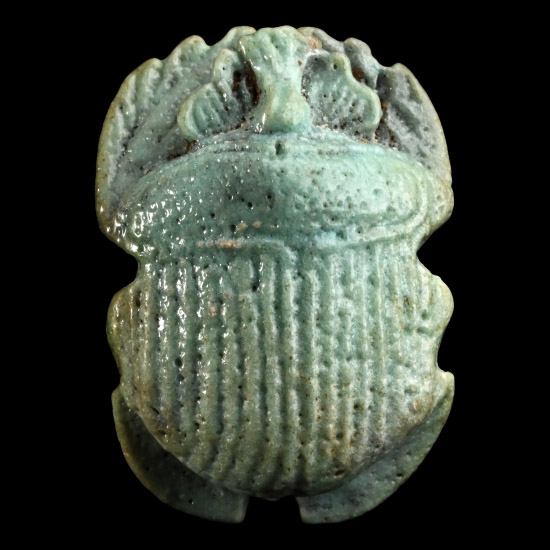
Egyptian Faience Heart Scarab
Late Period, 664-332 B.C.Sold for (Inc. bp): £624
With fine anatomical detailing on the body and striated wingcase, legs folded beneath the body and flanked by a ribbed suspension loop. 1.89 grams, 20 mm
Ex Swedish nobleman's collection, early 20th century, reputedly from Petrie’s excavations. -
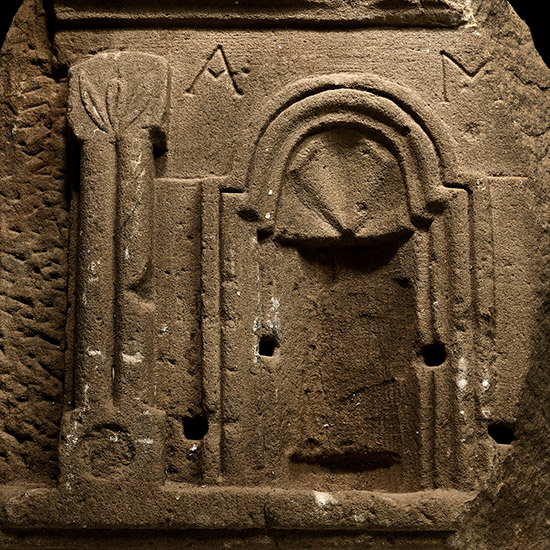
Romano-Egyptian Limestone Funerary Niche
Coptic, 5th-6th century A.D.Sold for (Inc. bp): £2,340
Carved architectural block fragment comprising: a shallow niche with arched top and parallel sides, with concentric mouldings to create a reveal and ledge below to accept offerings; horizontal tiered base; attachment sockets for two figurines (absent) flanking the niche; to left, a column modelled in the half-round with two parallel vertical stems, shallow roundel to the base and stylised foliage at the top; pediment above with scooped profile; above each figurine recess an incised initial, 'A' and 'M'; facing surface keyed for plaster finish. 57.55 kg, 49 cm
From the estate and private collection of Matthew Upham (1962-2025), an antiques trader from Budleigh Salterton, Devon, UK. Acquired at an estate sale at auction. Property of a Cambridgeshire, UK, gentleman. Accompanied by an academic report by Dr Raffaele D'Amato. This lot has been checked against the Interpol Database of stolen works of art and is accompanied by a search certificate number no. 13297-255939.
In the Christian Roman Empire, the stelae in the form of aedicula, which could be funerary monuments with crosses or the images of the deceased, or devotional niches with images of saints, appear to be independent sculptures. These stelae consisted of a rectangular body surmounted by a circular arch or trapezoidal structure. At the centre of the niche, the deceased was often depicted full-length, in a praying position (orans). Devotional stelae were also placed inside a church or shrine, with images of the Virgin and Child, or saints.
