
Loading, please wait...
_900x900.jpg "Egyptian Faience Scarab with Hieroglyphs")
_200x200.jpg "Egyptian Faience Scarab with Hieroglyphs")
_900x900.jpg "Egyptian Faience Scarab with Hieroglyphs")
_200x200.jpg "Egyptian Faience Scarab with Hieroglyphs")
.jpg "Egyptian Faience Scarab with Hieroglyphs")
.jpg "Egyptian Faience Scarab with Hieroglyphs")
LOT 0498
Egyptian Faience Scarab with Hieroglyphs
LATE PERIOD, 664-332 B.C.
5/8 in. (2.66 grams, 18 mm).
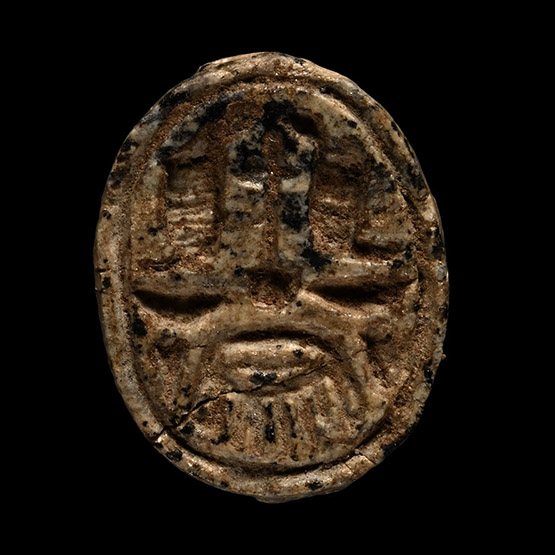
Modelled as a scarab resting on a textured base with a tubular extension behind and before the head forming part of the piercing, the underside features two rearing cobras atop neb signs flanking a nefer sign, with a large nwb sign (meaning 'gold') below.
ProvenanceFrom the property of a London, UK, gentleman, 1970-2000s.
CONDITIONTimeLine Auctions follows a vetting process to ensure the authenticity and legality of all items, reinforcing our commitment to integrity and responsible trading. Each antiquity, antique, and coin lot undergoes thorough examination by a vetting committee of at least ten external specialists, professional trade association members, scientists, and archaeologists: Our Vetting Process
AUCTIONS:
TimeLine is a leading auction house specialising in antiquities, ancient art, collectables, natural history, coins, medals, and books. Our auctions offer museums, collectors, historians, and enthusiasts the opportunity to acquire unique and historically significant pieces.
-
Egyptian Faience Scarab with Hieroglyphs
Late Period, 664-332 B.C.Sold for (Inc. bp): £156
Modelled as a scarab resting on a textured base with a tubular extension behind and before the head forming part of the piercing, the underside features two rearing cobras atop neb signs flanking a nefer sign, with a large nwb sign (meaning 'gold') below. 2.66 grams, 18 mm
From the property of a London, UK, gentleman, 1970-2000s. -
.jpg)
Egyptian Carnelian Scarab Amulet
Late Period, 664-332 B.C.Sold for (Inc. bp): £98
Carved in the round scarab with longitudinal piercing. 0.40 grams, 8.5 mm
Ex Belinda Elliston collection, 20th century. -
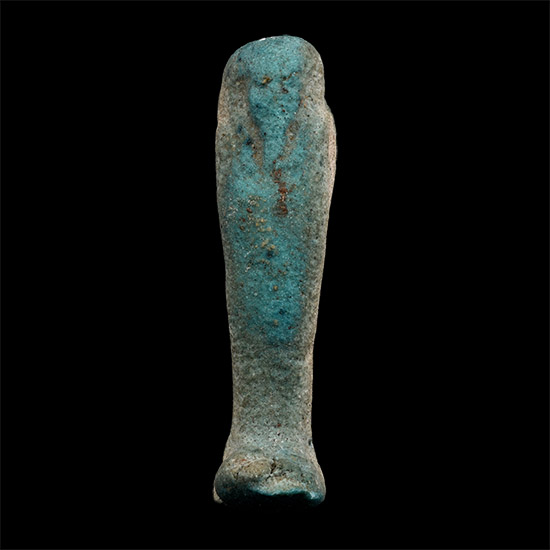
Egyptian Light Blue Faience Shabti
Ptolemaic Period, 332-30 B.C.Sold for (Inc. bp): £98
Mummiform figure with a lappet wig and divine beard. 10.77 grams, 64 mm
Ex private collection, London, UK, 1970s-1990s.
