
Loading, please wait...



LOT 0498
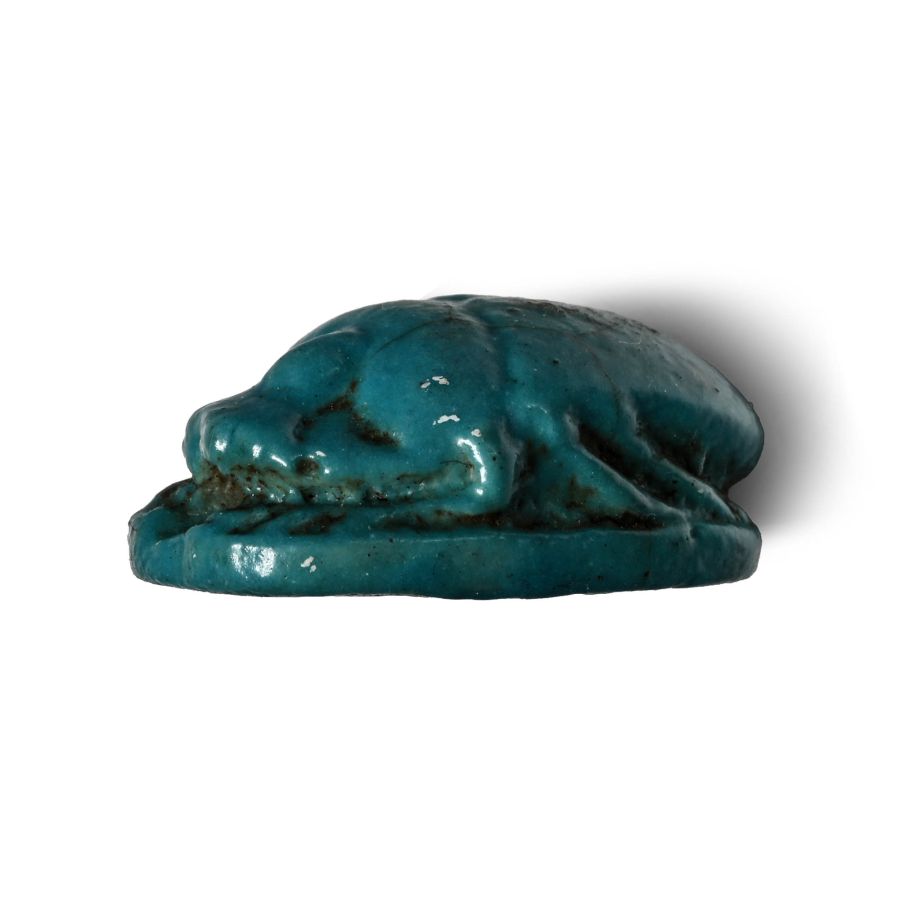
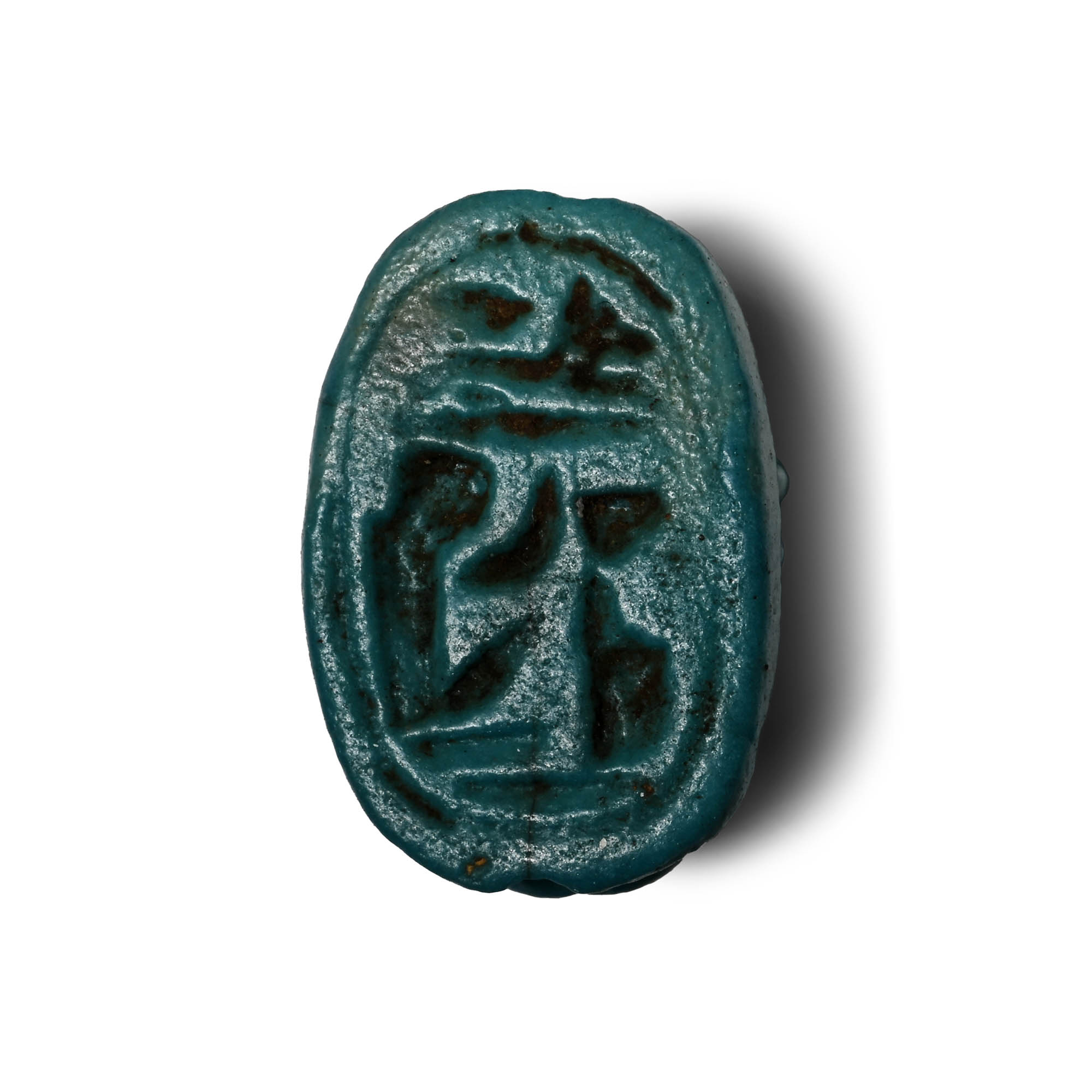
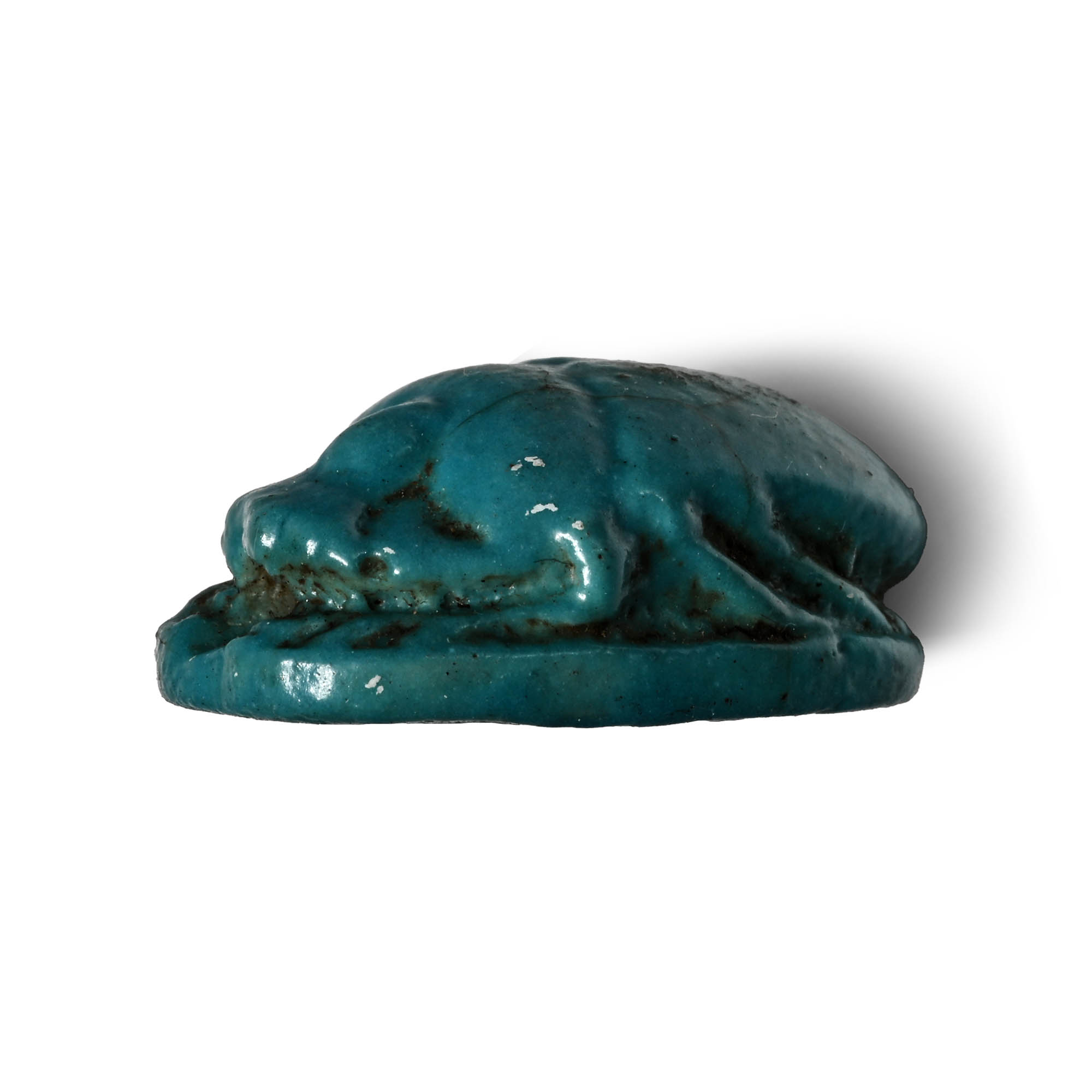
Egyptian Faience Scarab with Hieroglyphs
LATE PERIOD, 664-332 B.C.
7/8 in. (4.18 grams, 23 mm).
Blue glazed faience scarab beetle, with detailed features; the underside decorated with a recumbent jackal above a seated figure in an attitude of praise before two hieroglyphs.
ProvenanceFrom the collection of a gentleman, acquired on the London art market in the 1990s.
CONDITIONTimeLine Auctions follows a vetting process to ensure the authenticity and legality of all items, reinforcing our commitment to integrity and responsible trading. Each antiquity, antique, and coin lot undergoes thorough examination by a vetting committee of at least ten external specialists, professional trade association members, scientists, and archaeologists: Our Vetting Process
AUCTIONS:
TimeLine is a leading auction house specialising in antiquities, ancient art, collectables, natural history, coins, medals, and books. Our auctions offer museums, collectors, historians, and enthusiasts the opportunity to acquire unique and historically significant pieces.
LOT 0498
Egyptian Faience Scarab with Hieroglyphs
Estimate £200 - 300€230 - 350 (for guidance only)$270 - 410 (for guidance only)
-
.jpg)
Egyptian Bronze Head of a Pharaoh with Inlaid Eyes
Third Intermediate Period, 21st-22nd Dynasty, circa 1069-900 B.C.Sold for (Inc. bp): £49,400
Hollow-formed mask with integral tripartite wig and mount for a uraeus; impassive facial detailing and applied gold cosmetic lines to eyes, eyebrows, and lateral chin straps of the braided 'false beard'; segment of the wesekh-collar visible between the lappets of the wig; some restoration; mounted on a custom-made stand within a padded wooden display case. 1.2 kg, 22.5 cm high including stand (3.27 kg total, 27 cm including case)
Old French family collection of Monsieur and Madame D., 1960s. Ex Rennes Enchères, Hôtel des Ventes, France, 11 March 2003, no.117 (front-cover) for 150,000.00 euros. Acquired from Mansour Gallery, London W1, UK, in 2013. From the collection of a Kensington gentleman. Private collection, UK. Accompanied by the original Rennes Enchères catalogue. Accompanied by a copy of French passport no.058205 dated 15 April 2003. Accompanied by a copy of Mansour Gallery’s invoice, 2013. Accompanied by previous typed and illustrated collection cataloguing pages. Accompanied by an academic report by Egyptologist Paul Whelan. This lot has been checked against the Interpol Database of stolen works of art and is accompanied by a search certificate number no.12372-225585. -
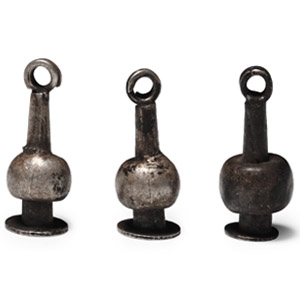
Egyptian Silver Poppy Beads
Late Period, 664-332 B.C.Sold for (Inc. bp): £124
Modelled in the shape of a poppy seed with a flat foot leading to a globular body with a tapering neck attached to a small loop at the top for suspension. 3.29 grams total, 16-17 mm
From an early 20th century collection.
Amulets in the form of poppies were used to heal and alleviate pain and to ward off death. These types of amulets were also linked to Osiris, the Egyptian deity of agriculture, death, and the afterlife. -
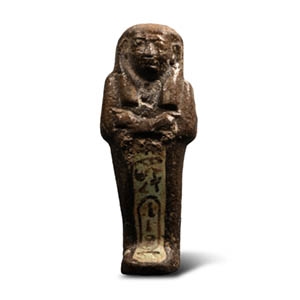
Egyptian Brown Glazed Shabti for Queen Isetnofret
New Kingdom, 12th century B.C.Estimate: £2,000 - 3,000 (+bp*)
Opening Bid: £1,000
Of mummiform type, wearing a tripartite wig, stylised facial features with large ears, hands crossed at the chest; a contrasting green-glazed frontal column of hieroglyphic text with a cartouche which reads wsỉr nswt wrt Ꜣst-nfr.t, ‘The Osiris, the great king's wife Iset-nofret’. 88 grams, 10.8 cm
Acquired on the German art market, 1989-1995. with The Museum Gallery, 19 Bury Place, London, WC1, UK, 1998-2003. Property of a London based academic, 2003-present. This lot has been checked against the Interpol Database of stolen works of art and is accompanied by a search certificate number no.12373-226026.
Several late New Kingdom queens were named Iset-nofret, but this particular example is likely associated with one of the two wives of Ramesses II who had the same name. One of these queens gave birth to Prince Khaemwaset and is mentioned on monuments erected by him. While it is possible that the queen's shabtis were used for funerary purposes, Khaemwaset is known to have placed his own shabtis as votives in non-sepulchral locations in the Memphite necropolises, and it is possible that he also did the same with shabtis naming his mother. For a discussion of the Ramesside queens with this name, see Tyldesley, J., Chronicle of the Queens of Egypt, London, 2006, p.154ff.
