
Loading, please wait...
LOT 0454
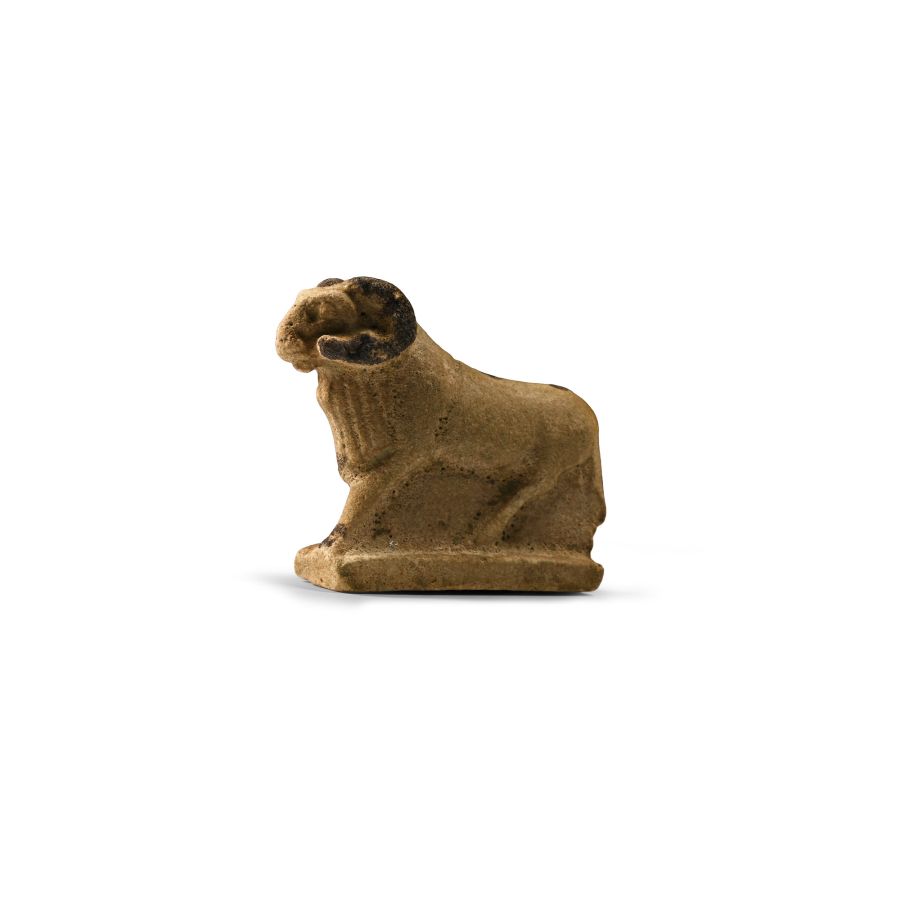
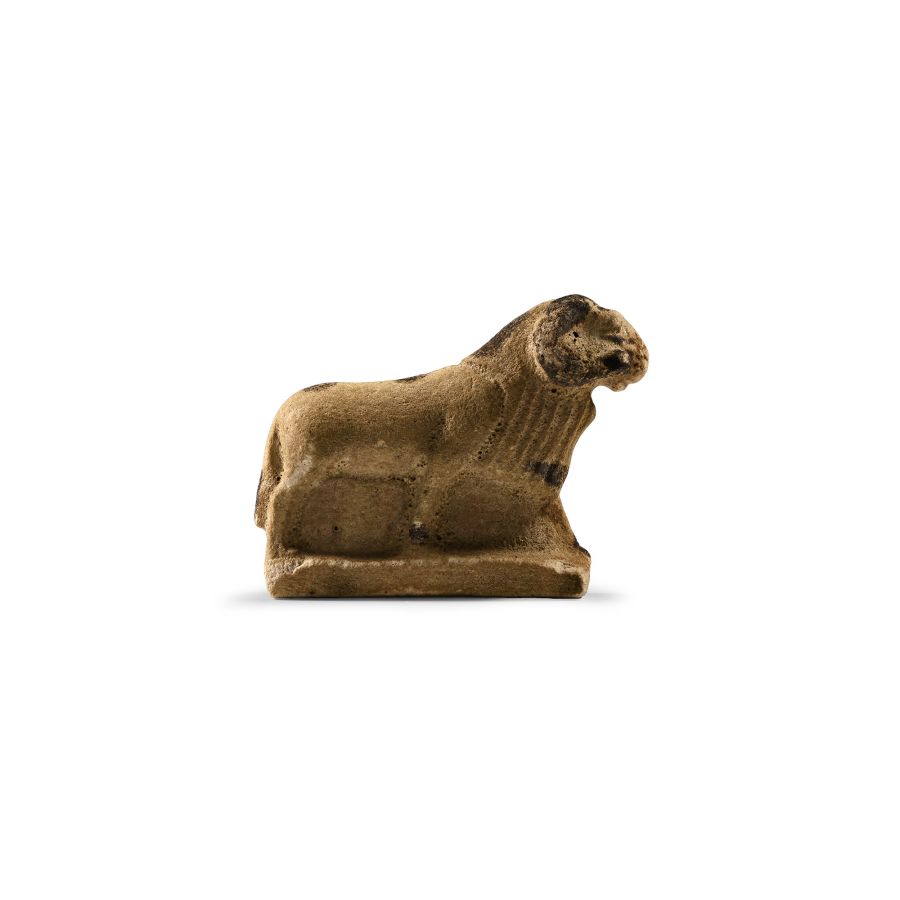
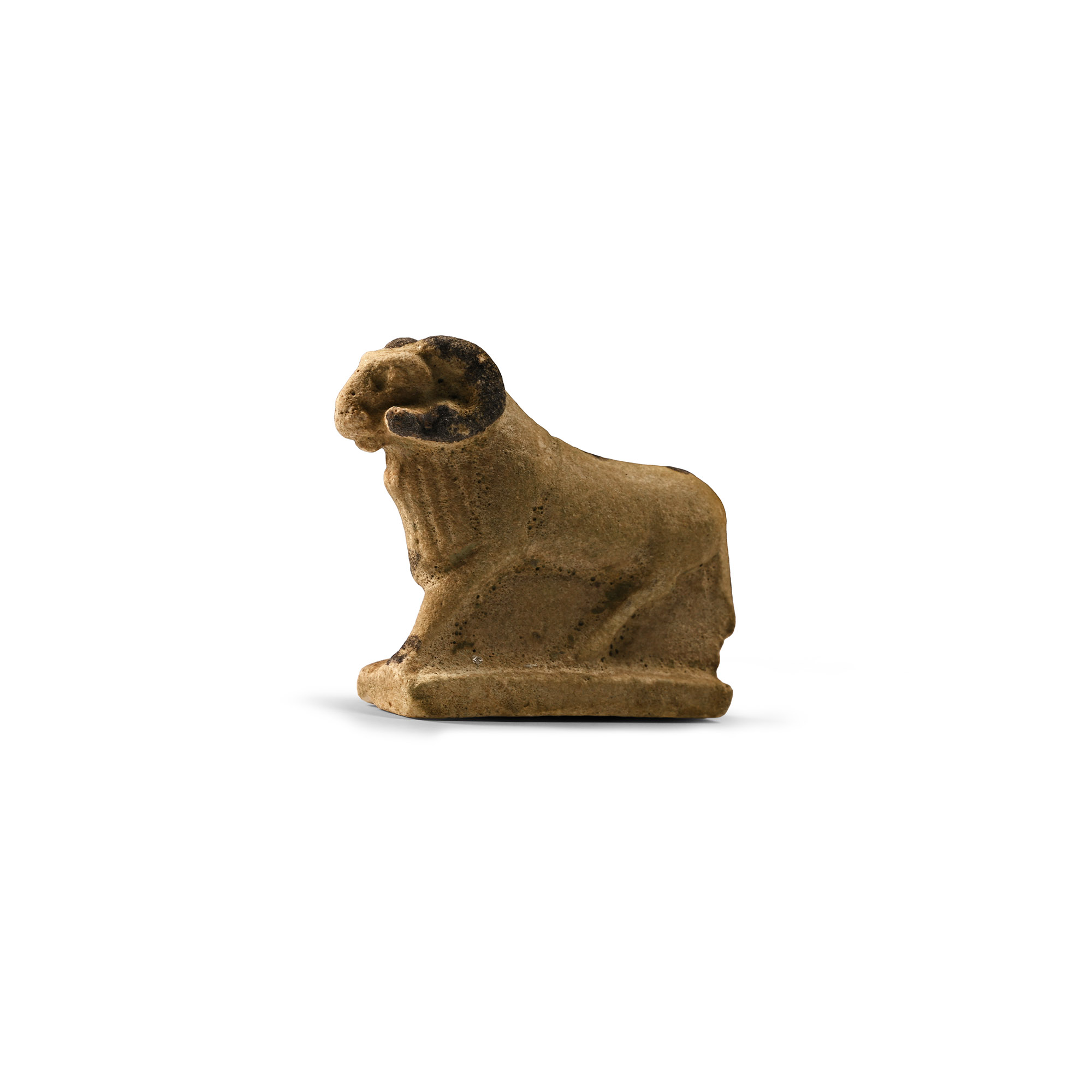
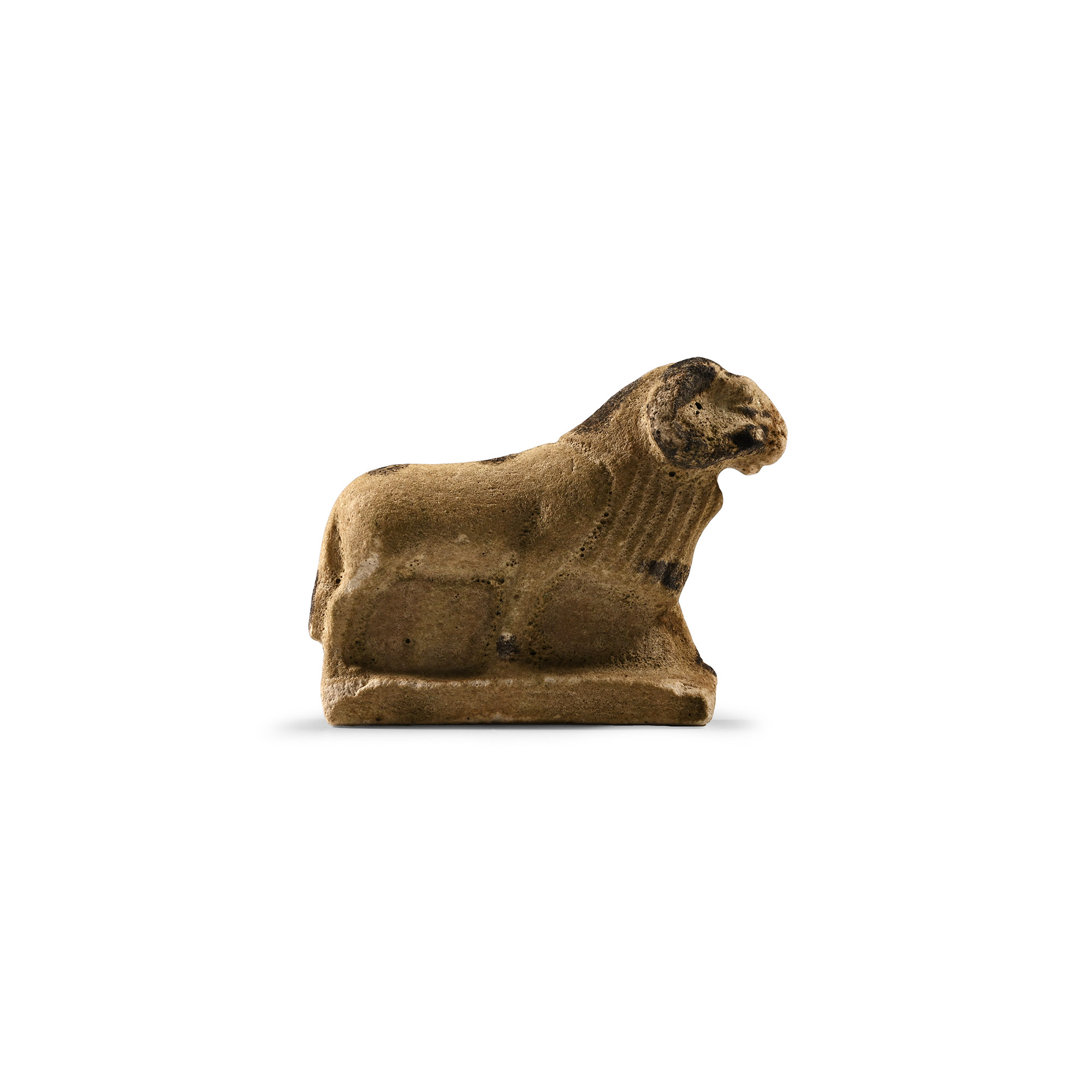
Egyptian Faience Ram Statuette
LATE PERIOD, 664-332 B.C.
2 1/2 in. (44.2 grams, 64 mm).
Modelled in a dynamic pose on a rectangular base, muscular body and striated dewlap, curving horns decorated with black glaze framing the face, three large black dots on the back with further black detailing to the front hooves and tail.
ProvenancePrivate collection of Mr K.A., acquired in the 1990s-early 2000s.
Accompanied by a copy of an Art Loss Register certificate no.2922.WW, dated 5 June 2007.
This lot is accompanied by an illustrated lot declaration signed by the Head of the Antiquities Department, Dr Raffaele D'Amato.
Cf. Tinius, I., Altägypten in Braunschweig. Die Sammlungen des Herzog Anton Ulrich-Museums und des Städtischen Museums, Wiesbaden, 2011, p. 156, no. 293, for a similar form.
FootnotesVarious gods were depicted as rams. The downturned horns on this amulet indicate that the ram represents Amun. The ram was symbolically linked to ideas of revival and fertility, which, over time, became associated with Osiris and was also viewed as the god's soul or ba.
CONDITIONTimeLine Auctions follows a vetting process to ensure the authenticity and legality of all items, reinforcing our commitment to integrity and responsible trading. Each antiquity, antique, and coin lot undergoes thorough examination by a vetting committee of at least ten external specialists, professional trade association members, scientists, and archaeologists: Our Vetting Process
AUCTIONS:
TimeLine is a leading auction house specialising in antiquities, ancient art, collectables, natural history, coins, medals, and books. Our auctions offer museums, collectors, historians, and enthusiasts the opportunity to acquire unique and historically significant pieces.
-
Egyptian Limestone Fragment
New Kingdom, 1550-1295 B.C.Sold for (Inc. bp): £1,690
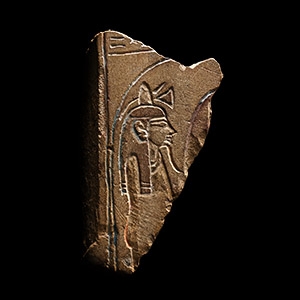
Architectural fragment with two dressed faces; incised design comprising: vertical border to the left; a band of hieroglyphic text at the top; an arch enclosing a seated figure in profile wearing a tripartite wig and collar with curved beard, head cone and frond above; curved linear element meeting the end of the beard; traces of white, blue, red-brown and other pigments; chamfered edge pierced in modern times for mounting. 190 grams, 10.8 cm
From the estate of a deceased American, acquired between 1970-1989. with Bonham's, London, Knightsbridge, 28 October 2009, no.23 [part]. This lot has been cleared against the Art Loss Register database, and is accompanied by an illustrated lot declaration signed by the Head of the Antiquities Department, Dr Raffaele D'Amato. -
Egyptian Faience Bead with Eye of Horus and Ankh Symbols
Late Period, 664-332 B.C.Estimate: £100 - 140 (+bp*)
Opening Bid: £50
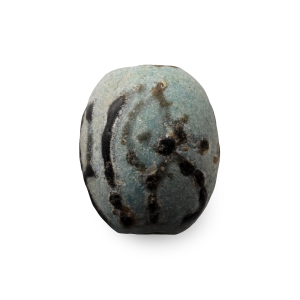
Barrel-shaped bead with blue glaze, wedjat and ankh in black glaze. 2.09 grams, 14 mm
From an early 20th century collection. This lot is accompanied by an illustrated lot declaration signed by the Head of the Antiquities Department, Dr Raffaele D'Amato.
The wedjat-eye amulet is a representation of the healed eye of the god Horus, featuring both human and falcon elements. The name wedjat in ancient Egyptian means ‘the one that is sound.’ According to Egyptian mythology, Horus' eye was wounded or taken by the god Seth and restored by Thoth. The wedjat-eye amulet was thought to protect its wearer and bestow the power of recovery and regeneration onto them. It was very popular and used by both the living and the dead. -
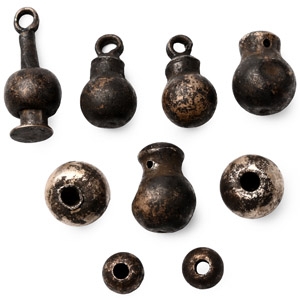
Egyptian Silver Poppy Amulet Collection
Late-Ptolemaic Period, 664-30 B.C.Sold for (Inc. bp): £234
Group of poppy-head amulets, some with suspension loop, others pierced. 7.21 grams total, 5-18 mm
Ex London, UK, gentleman 1980-1990s. This lot is accompanied by an illustrated lot declaration signed by the Head of the Antiquities Department, Dr Raffaele D'Amato.
Amulets in the form of poppies were used to heal and alleviate pain and to ward off death. These types of amulets were also linked to Osiris, the Egyptian deity of agriculture, death, and the afterlife.
