
Loading, please wait...
LOT 0563
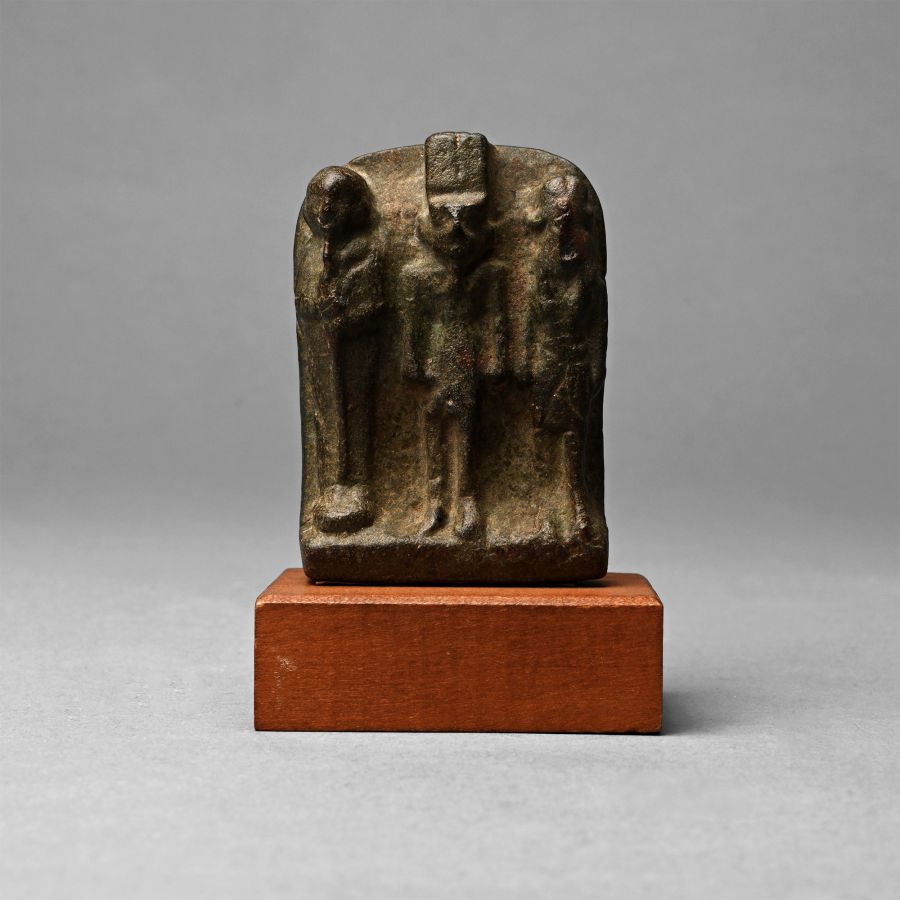
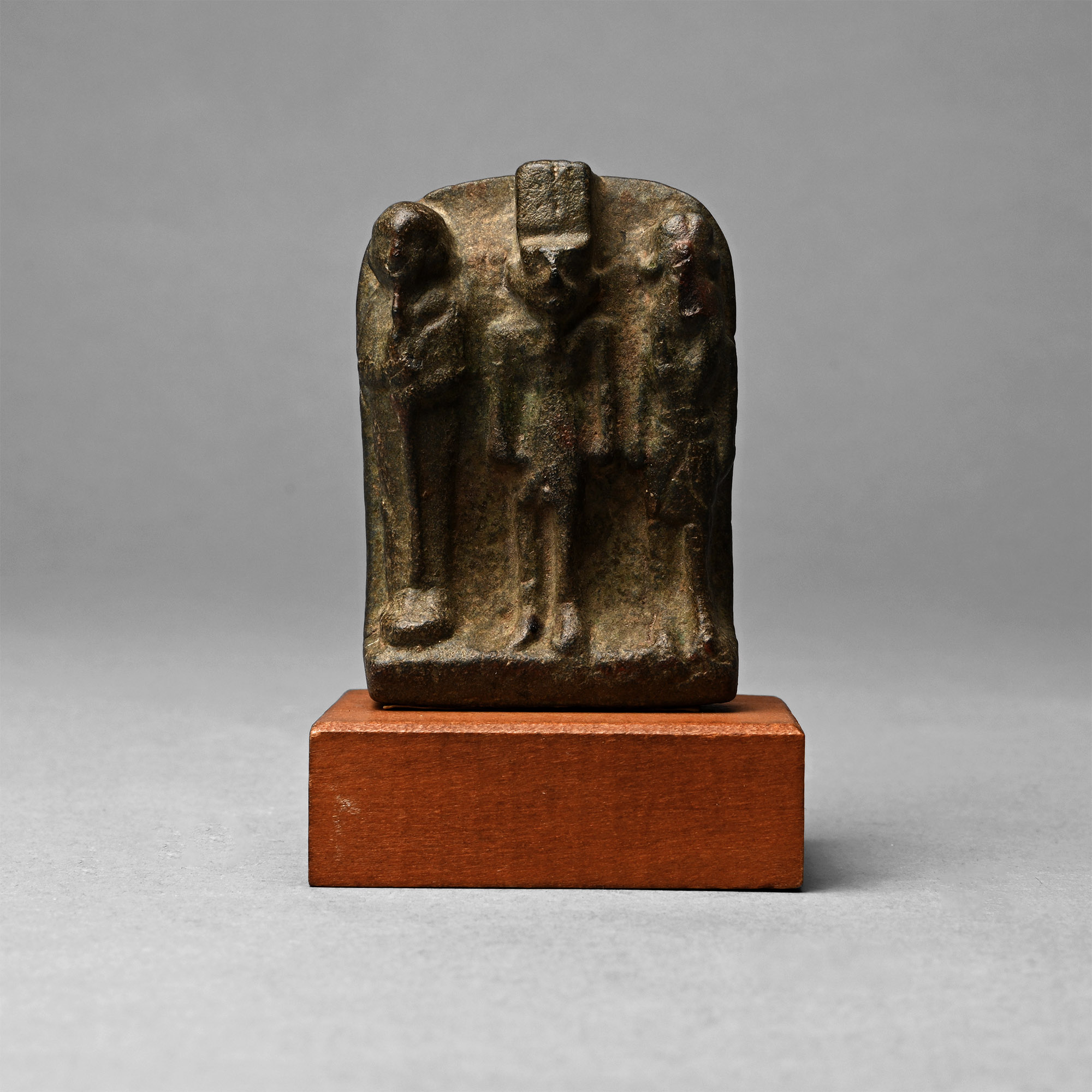
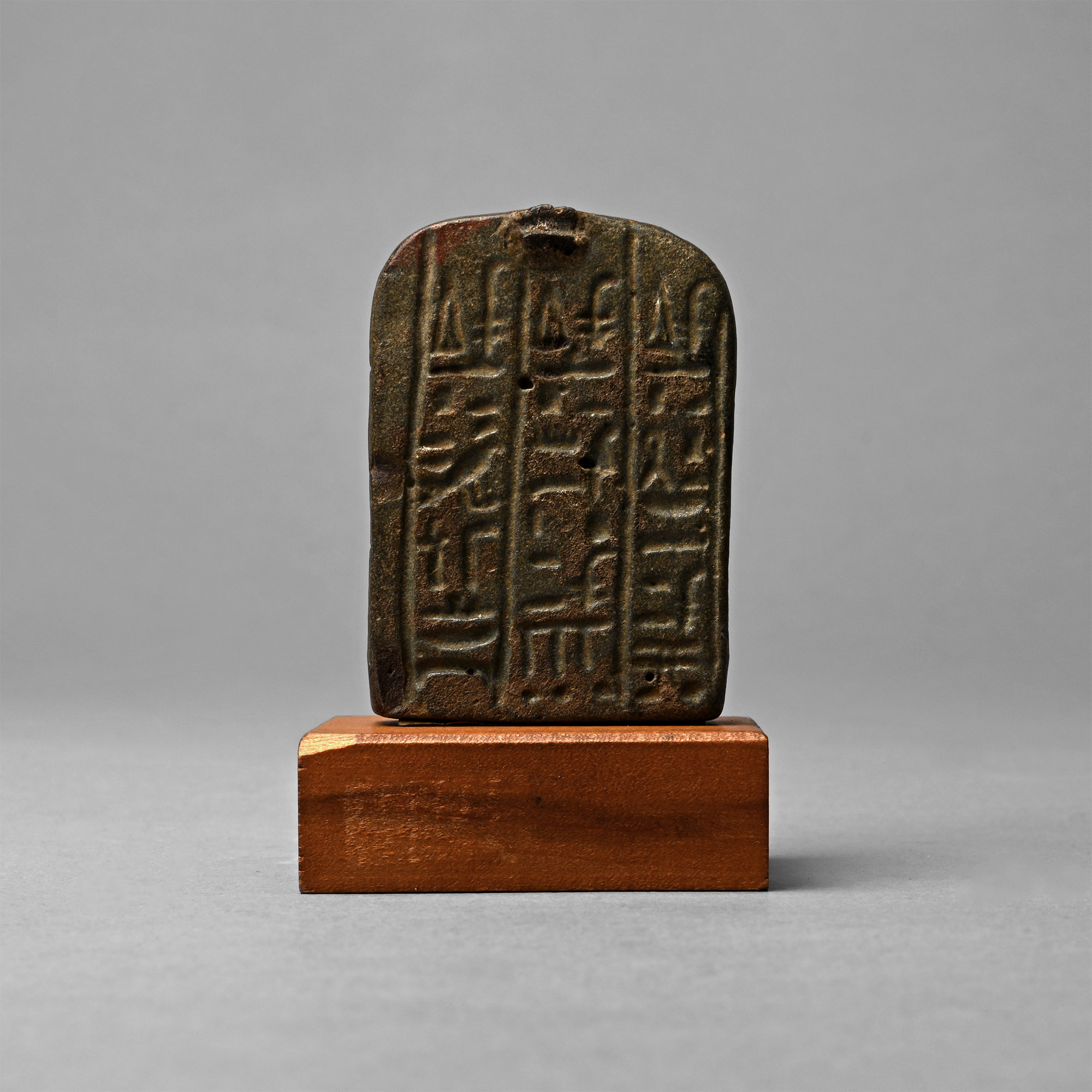
Egyptian Faience Ptah, Amun-Ra and Ra-Horakhty Triad Amulet
PTOLEMAIC PERIOD, 332-30 B.C.
3 3/8 in. (88.8 grams total, 85 mm including stand).
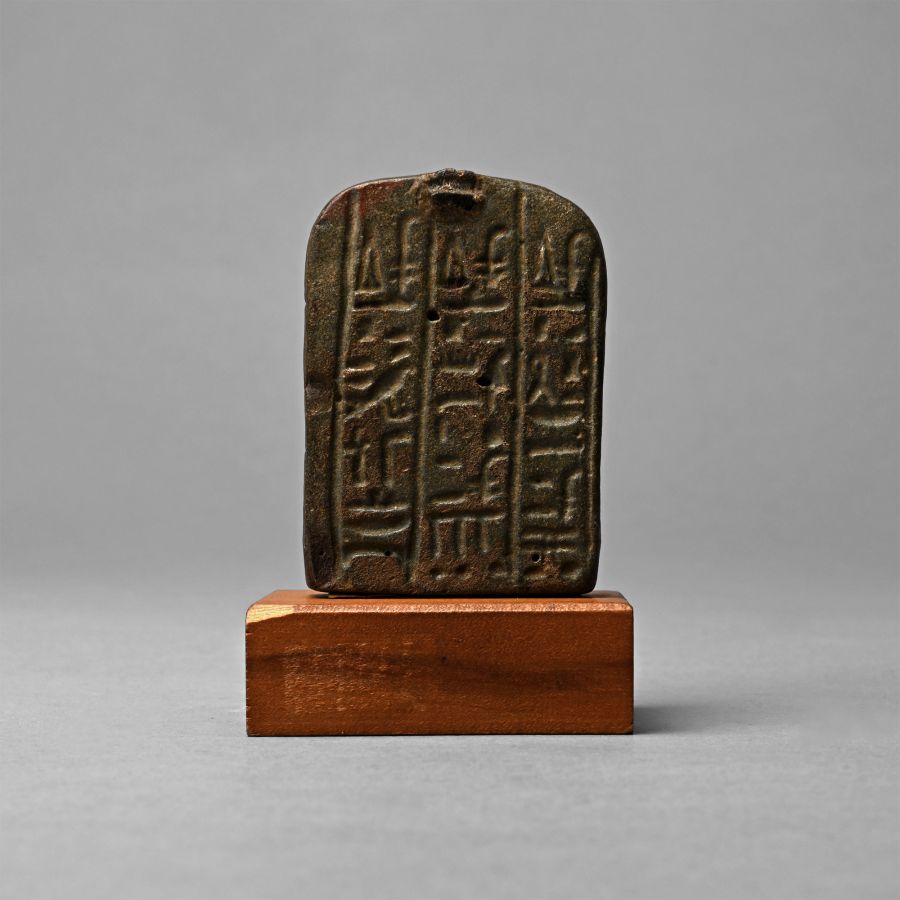
Rectangular plaque with a ledge along the lower edge, featuring the half-round figures of Ptah, Amun-Ra, and Ra-Horakhty; each invoked in offering formulae written in three vertical columns on the back; a fragmentary suspension loop at the rear; mounted on a wooden display stand.
ProvenanceFrom a deceased American estate, 1970-1989.
with Bonhams, London, 28 October 2009, no.81.
Private collection, Europe.
Accompanied by a copy of an Art Loss Register certificate, no.S00066707.
This lot has been checked against the Interpol Database of stolen works of art and is accompanied by search certificate number no.13190-249206.
Cf. Andrews, C., Amulets of Ancient Egypt, London, 1994, item 13(b).
FootnotesAmun, Ra-Horakhty, and Ptah. Amun evolved from a primordial god to a nationally worshipped deity, merging with Ra to become Amun-Ra, while Ra-Horakhty symbolises the sun and is depicted with a falcon's head. Ptah is recognised as the creator god and patron of craftsmen, originally worshipped in Memphis and later throughout Egypt.
CONDITIONTimeLine Auctions follows a vetting process to ensure the authenticity and legality of all items, reinforcing our commitment to integrity and responsible trading. Each antiquity, antique, and coin lot undergoes thorough examination by a vetting committee of at least ten external specialists, professional trade association members, scientists, and archaeologists: Our Vetting Process
AUCTIONS:
TimeLine is a leading auction house specialising in antiquities, ancient art, collectables, natural history, coins, medals, and books. Our auctions offer museums, collectors, historians, and enthusiasts the opportunity to acquire unique and historically significant pieces.
LOT 0563
Egyptian Faience Ptah, Amun-Ra and Ra-Horakhty Triad Amulet
Estimate £2,500 - 3,500€2,900 - 4,060 (for guidance only)$3,380 - 4,730 (for guidance only)
Opening Bid
£1,444 (EUR 1,676; USD 1,950) ‡+BP*
-
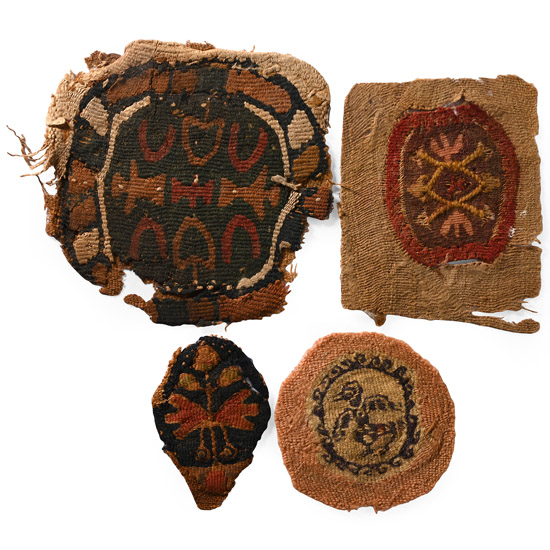
Egyptian Coptic Tunic Textile Fragments of Orbiculi with Vegetation, Animals and Geometric Ornament
Circa 6th-7th century A.D.Estimate: £80 - 100 (+bp*)
Opening Bid: £5
Featuring four medallions (orbiculi) in red, green, yellow, and dark blue wool, three decorated with floral and geometric motifs, the fourth featuring an eaglet figure with a meander border; tapestry weave, S-twist. 11.07 grams total, 6.3-10.7 cm
Acquired 1970s-1996. Property of a North American collector. London collection, 2016.
The orbiculi are realised in the tapestry technique. They were part of the decoration of a tunic, and the presence of the Imperial eagle, which is not a common pattern, could be related to a military tunic or to a tunic of an Imperial functionary. -
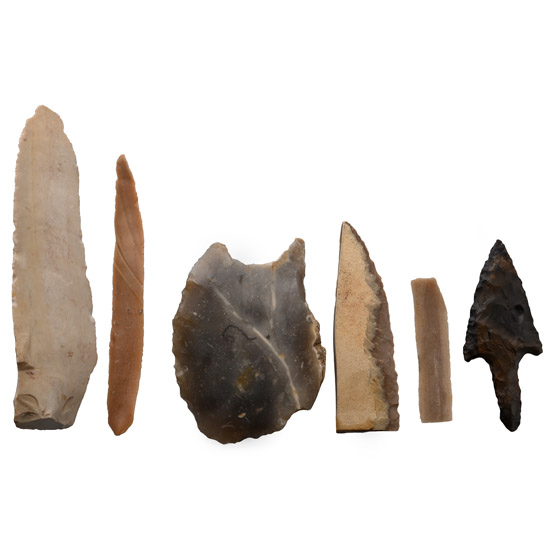
Egyptian Stone Age Knapped Tool and Arrowhead Collection
Neolithic Period, 11,000-5,200 B.P.Estimate: £60 - 80 (+bp*)
Bids: 1 | Current Bid: £5
Comprising a tanged arrowhead, three leaf-shaped tools, a tongue-shaped with a fading inked inscription, one triangular-shaped with knapped edge. 97 grams total, 45-98 mm
From the collection of A.D. Passmore (1879-1958), his collection of flints from the area of Stonehenge was donated to the Ashmolean Museum in the 1950s. From the private collection of Peter Clayton, FCILIP, Dip, Arch, FSA, FRNS, Hemel Hempstead, Hertfordshire, UK; formed since the late 1950s. Accompanied by a copy of an old handwritten information card by Peter Clayton. -
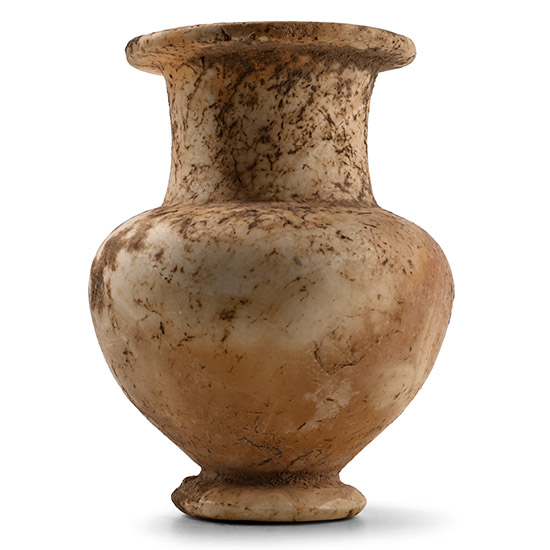
Early Phoenician Alabaster Vase
1st millennium B.C.Estimate: £3,000 - 4,000 (‡+bp*)
Opening Bid: £1,667
With bulbous body, broad flared neck, flange rim, dimple to underside of base. 769 grams, 13.1 cm
Private collection, USA and Switzerland, acquired in the late 1980s-early 1990s; by descent to the current owner. This lot has been checked against the Interpol Database of stolen works of art and is accompanied by search certificate no.13222-249180.
Jars like this vase certainly were part of the funerary equipment and destined to contain makeup, unguents and oils. The vase can find a good parallel with a similar specimen in the Egyptian Museum of Turin, belonging to the outfit of the 18th Dynasty princess Nbw-m-tḫ, probably a daughter of Amenhotep III.
