
Loading, please wait...
LOT 0063
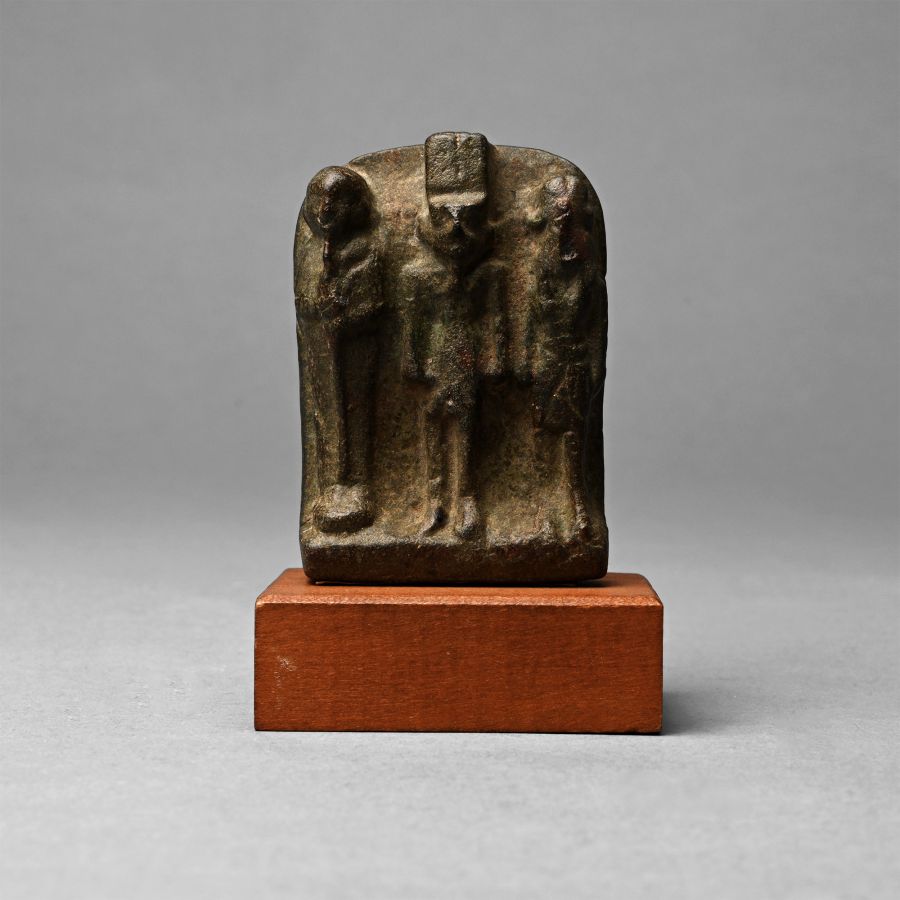
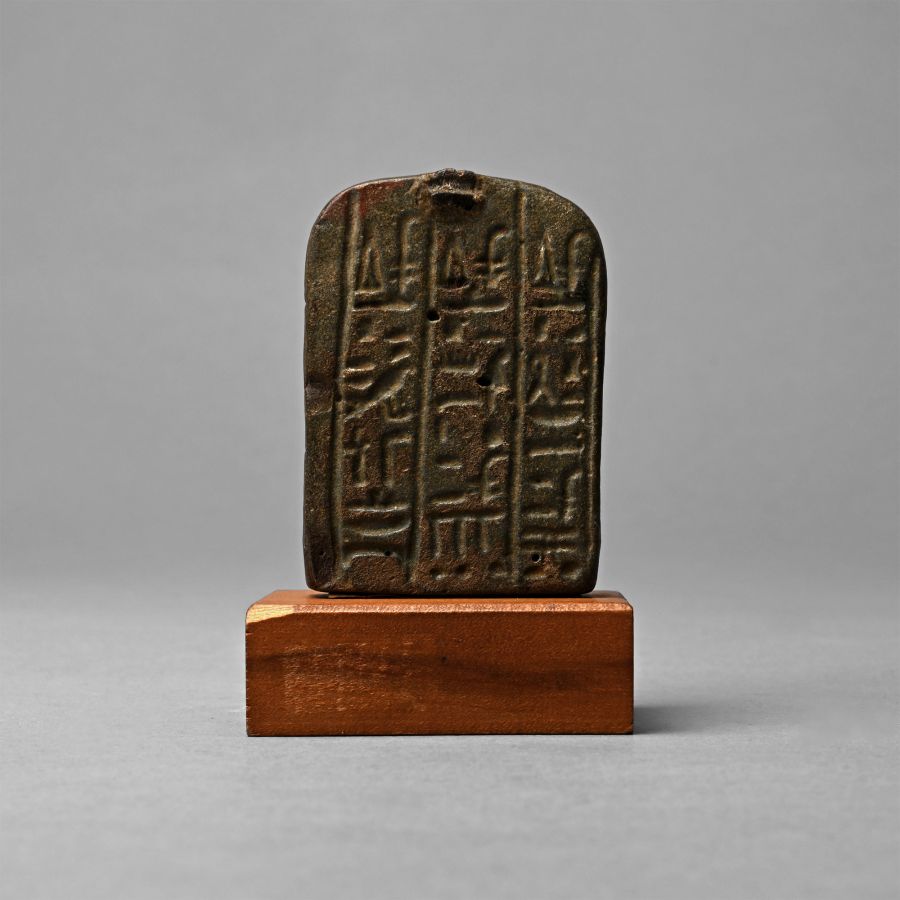
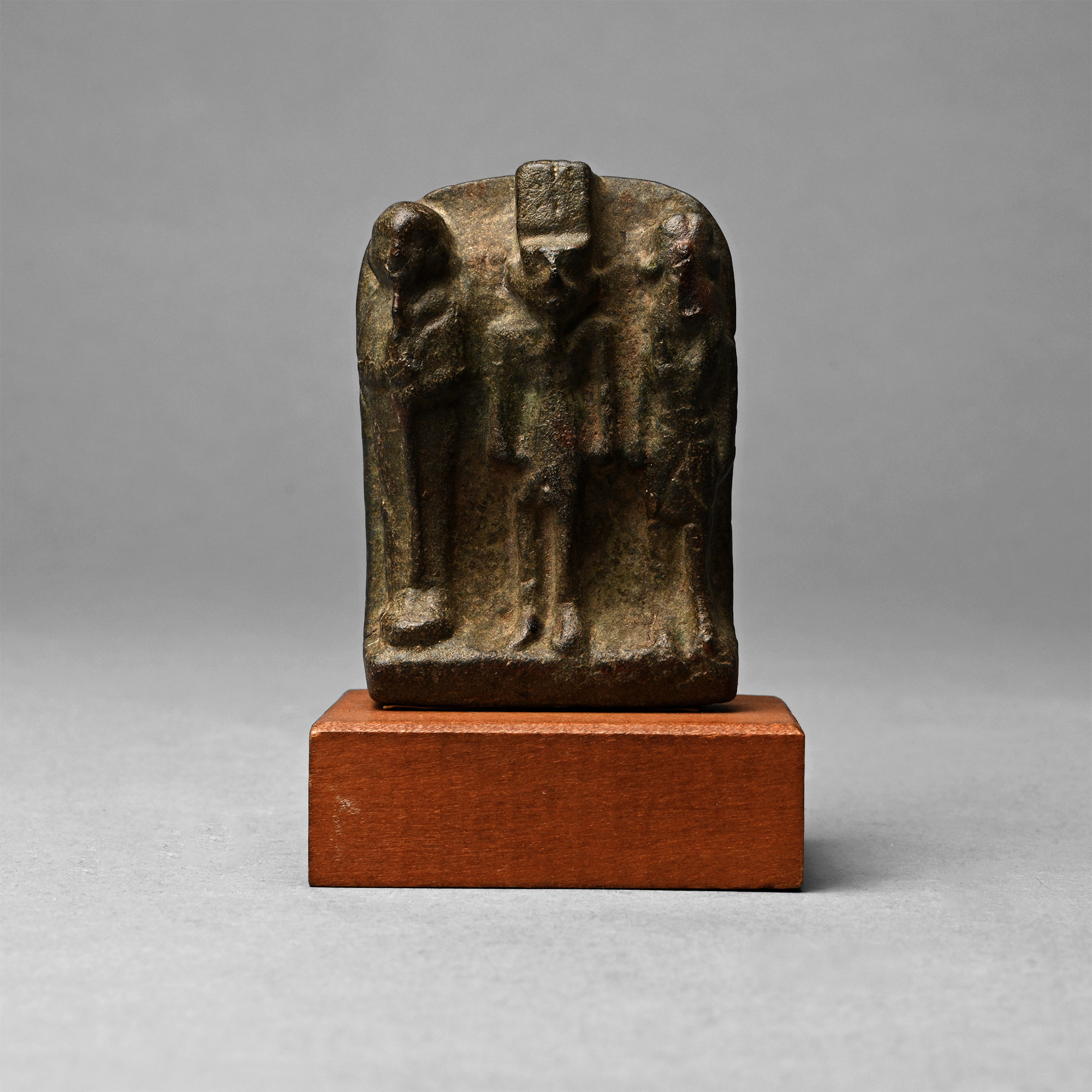
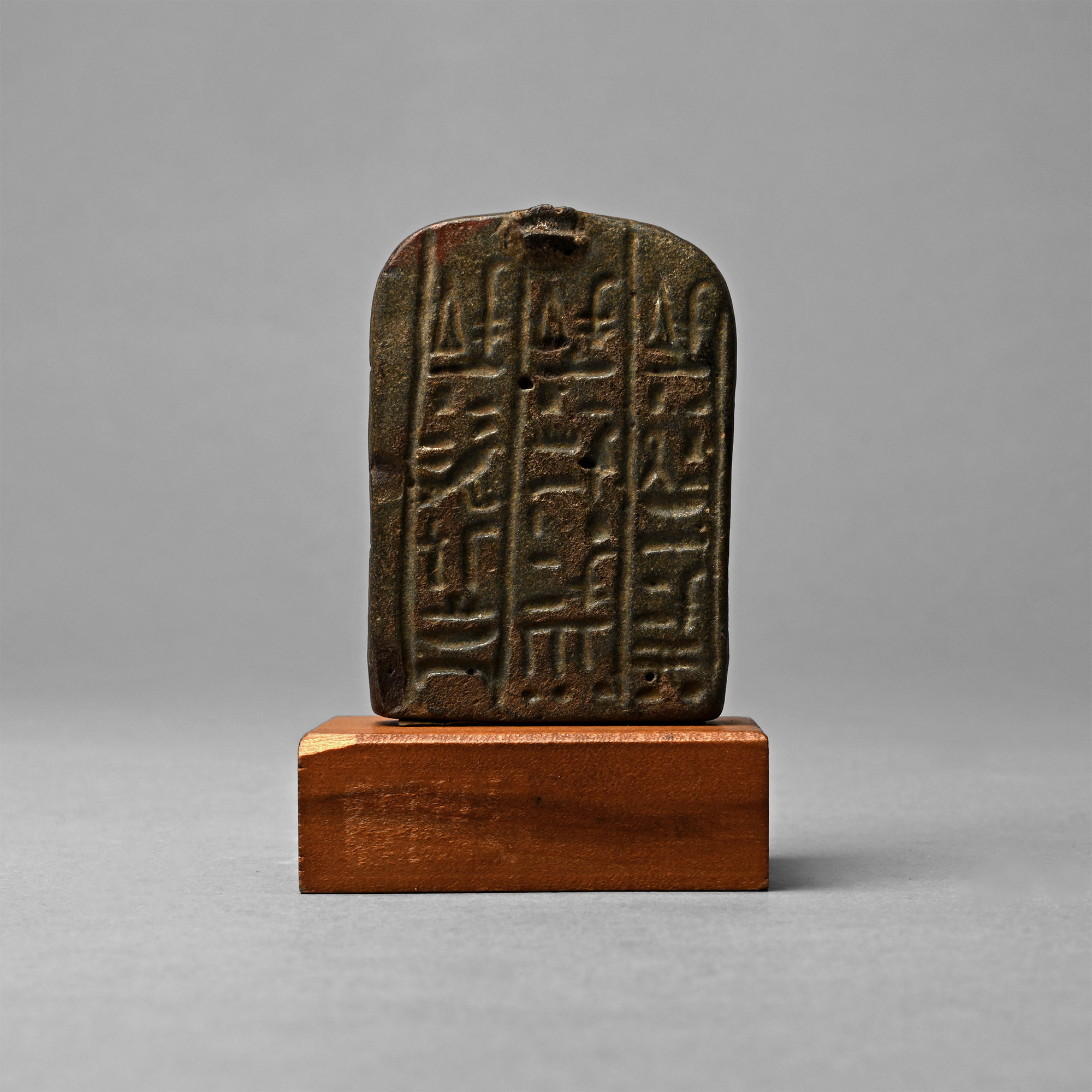
Egyptian Faience Ptah, Amun-Ra and Ra-Horakhty Triad Amulet
PTOLEMAIC PERIOD, 332-30 B.C.
3 3/8 in. (88.8 grams total, 85 mm including stand).
Rectangular plaque with a ledge along the lower edge, featuring the half-round figures of Ptah, Amun-Ra, and Ra-Horakhty; each invoked in offering formulae written in three vertical columns on the back; a fragmentary suspension loop at the rear; mounted on a wooden display stand.
ProvenanceFrom a deceased American estate, 1970-1989.
with Bonhams, London, 28 October 2009, no.81.
Private collection, Europe.
Accompanied by a copy of an Art Loss Register certificate, no.S00066707.
This lot has been checked against the Interpol Database of stolen works of art and is accompanied by search certificate number no.13190-249206.
Cf. Andrews, C., Amulets of Ancient Egypt, London, 1994, item 13(b).
CONDITIONTimeLine Auctions follows a vetting process to ensure the authenticity and legality of all items, reinforcing our commitment to integrity and responsible trading. Each antiquity, antique, and coin lot undergoes thorough examination by a vetting committee of at least ten external specialists, professional trade association members, scientists, and archaeologists: Our Vetting Process
AUCTIONS:
TimeLine is a leading auction house specialising in antiquities, ancient art, collectables, natural history, coins, medals, and books. Our auctions offer museums, collectors, historians, and enthusiasts the opportunity to acquire unique and historically significant pieces.
LOT 0063
Egyptian Faience Ptah, Amun-Ra and Ra-Horakhty Triad Amulet
Estimate £3,000 - 4,000€3,480 - 4,640 (for guidance only)$4,050 - 5,400 (for guidance only)
-
Egyptian Green Glazed Faience Mut Suckling Khonsu with Winged Sekhmet on the Back
Third Intermediate Period, circa 1069-735 B.C.Estimate: £1,800 - 2,400 (+bp*)
Opening Bid: £900
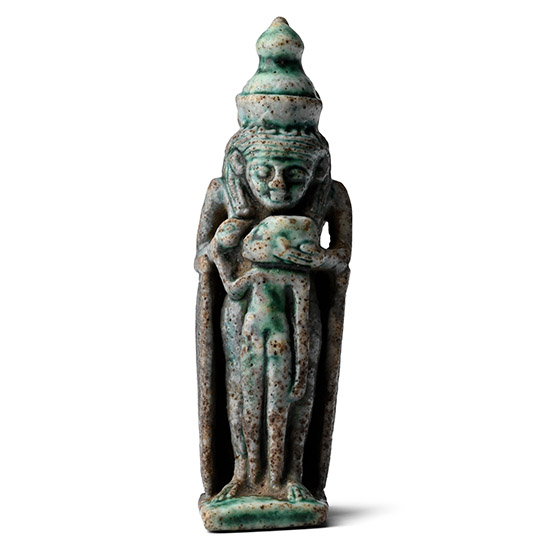
Modelled in the round, formed as the goddess standing before a high-backed throne, cradling the head of a standing naked child to her chest; the goddess with tiered double-crown and tripartite wig; throne with low-relief figure of the lioness-headed goddess Sekhmet to the rear with spread wings forming the arms of the chair. 22.6 grams, 60 mm
Jean Phillip Mariaud De Serres, Paris, France, 1992. Private collection, London, UK. This lot has been checked against the Interpol Database of stolen works of art and is accompanied by search certificate number no.13274-254069.
Mut was a prominent mother goddess in ancient Egyptian religion, associated with creation, motherhood, and the sky. She was the consort of the god Amun and the mother of Khonsu, forming the Theban triad with them in Thebes. Mut's name ("mother" in ancient Egyptian) reflects her role as a divine mother and patroness of motherhood. Sekhmet was revered as a powerful and fierce protector. Her presence was believed to ward off evil and safeguard the people from harm. In ancient Egyptian mythology, Sekhmet was also a manifestation of Hathor, another powerful birth goddess. -
Phoenician Blue Glazed Faience Scaraboid with Winged Beast and Tree
1st millennium B.C.Sold for (Inc. bp): £72
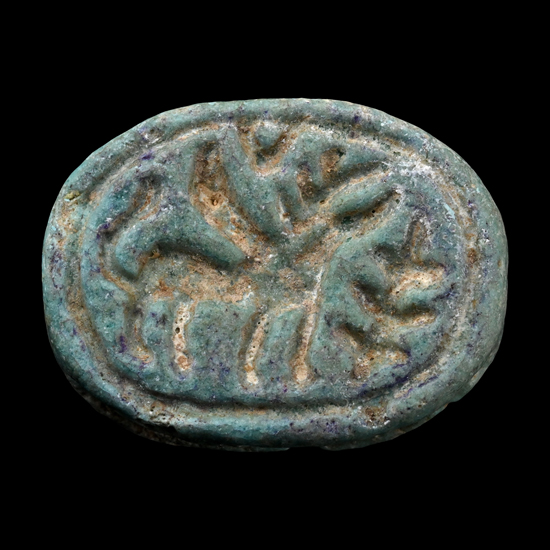
Anatomical detailing on the body, underside with a standing quadruped with open wings and curving tail, tree before. 1.5 grams, 15 mm
From a late Warwickshire numismatic collector, his collection formed from the early 1980s. -
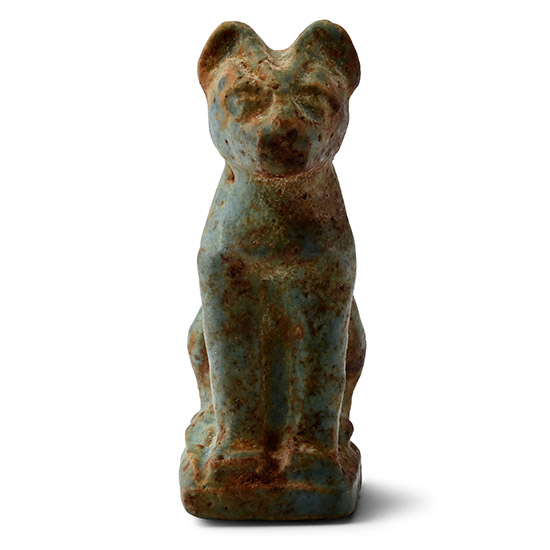
Large Egyptian Faience Cat Amulet
Late Period, 664-332 B.C.Sold for (Inc. bp): £1,105
Modelled seated on a tongue-shaped base, with simple facial detailing and suspension loop to the shoulders. 12.46 grams, 40.75 mm
Ex early 20th century London, UK, collection.
The cat was sacred to Bastet, a protective mother goddess and the daughter of the sun god Re. Amulets were believed to provide the wearer with the goddess's protection.
