
Loading, please wait...

LOT 0424
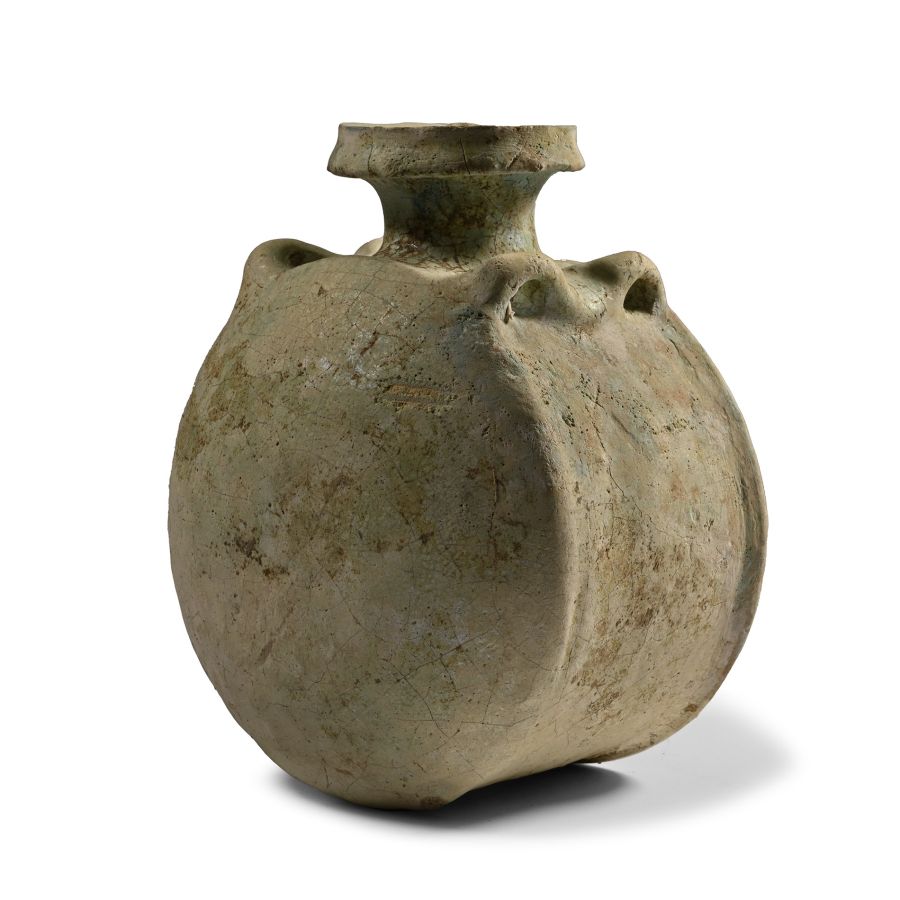
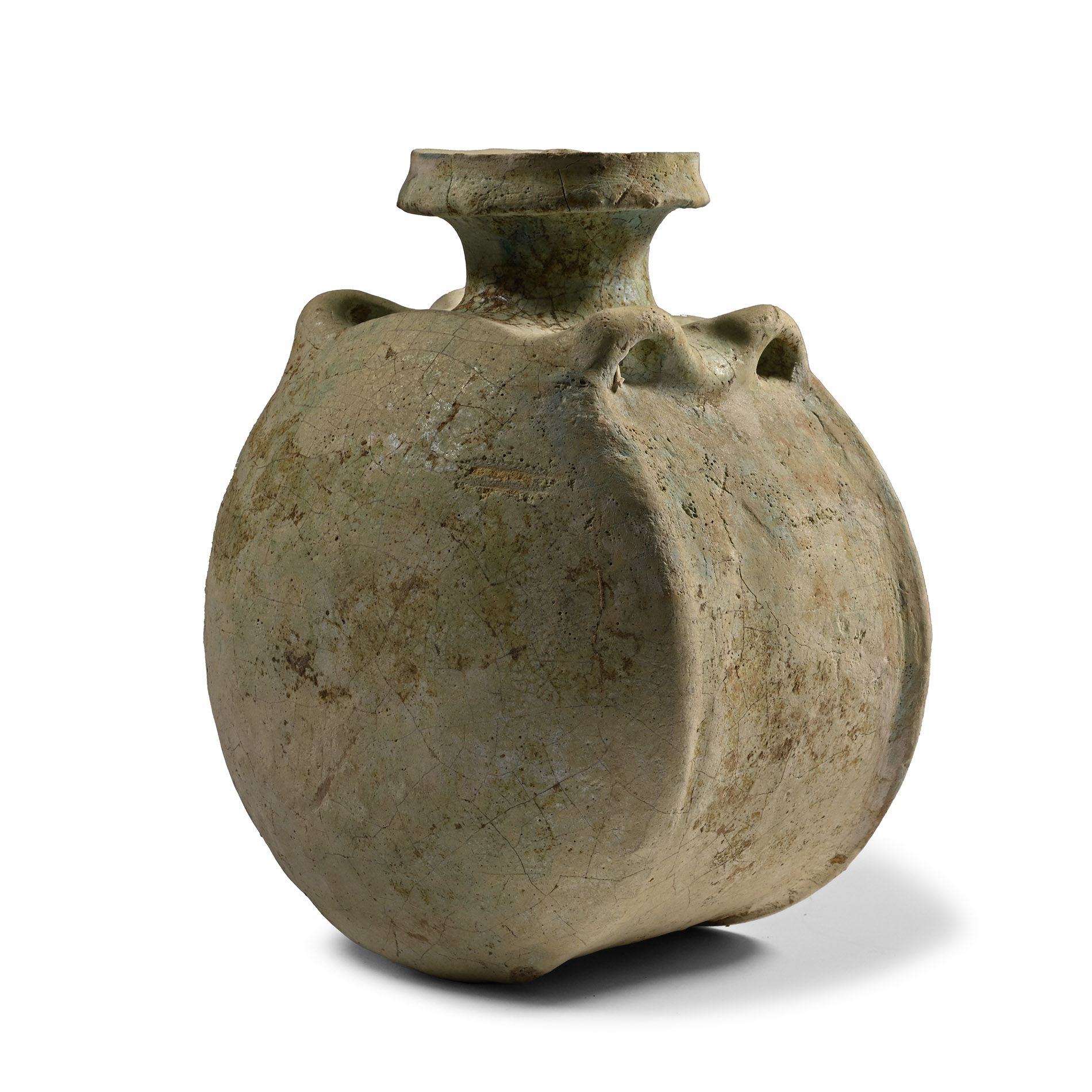
Egyptian Faience Pilgrim's Flask
LATE-PTOLEMAIC PERIOD, 664-30 B.C.
6 3/4 in. (825 grams, 17.2 cm).
With domed faces and grooved edge, a pair of loop handles to each shoulder, slender neck and wide mouth.
ProvenanceEx London art market 1990s.
From a London, UK, collection.
This lot is accompanied by an illustrated lot declaration signed by the Head of the Antiquities Department, Dr Raffaele D’Amato.
TimeLine Auctions follows a vetting process to ensure the authenticity and legality of all items, reinforcing our commitment to integrity and responsible trading. Each antiquity, antique, and coin lot undergoes thorough examination by a vetting committee of at least ten external specialists, professional trade association members, scientists, and archaeologists: Our Vetting Process
AUCTIONS:
TimeLine is a leading auction house specialising in antiquities, ancient art, collectables, natural history, coins, medals, and books. Our auctions offer museums, collectors, historians, and enthusiasts the opportunity to acquire unique and historically significant pieces.
-
.jpg)
Egyptian Orange Carnelian Poppy Head Amulet
New Kingdom, 18th Dynasty, 1550-1292 B.C.Sold for (Inc. bp): £124
Polished and with integral pierced suspension loop; element from a broad collar. 0.20 grams, 11 mm
Ex UK gallery, early 2000s. This lot is accompanied by an illustrated lot declaration signed by the Head of the Antiquities Department, Dr Raffaele D’Amato.
Amulets in the form of poppies were used to heal and alleviate pain and to ward off death. These types of amulets were also linked to Osiris, the Egyptian deity of agriculture, death, and the afterlife. -
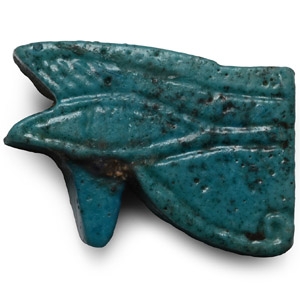
Egyptian Deep Blue Glazed Faience Eye of Horus Amulet
Late Period, 664-332 B.C.Sold for (Inc. bp): £234
Large wedjat-eye amulet with incised human and falcon elements. 11.7 grams, 38 mm
From the private collection of the late Mrs Belinda Ellison, a long time member of the Egyptian Exploration Society, c.1940-2020. This lot is accompanied by an illustrated lot declaration signed by the Head of the Antiquities Department, Dr Raffaele D’Amato.
The wedjat-eye amulet is a representation of the healed eye of the god Horus, featuring both human and falcon elements. The name wedjat in ancient Egyptian means ‘the one that is sound.’ According to Egyptian mythology, Horus' eye was wounded or taken by the god Seth and restored by Thoth. The wedjat-eye amulet was thought to protect its wearer and bestow the power of recovery and regeneration onto them. It was very popular and used by both the living and the dead. -
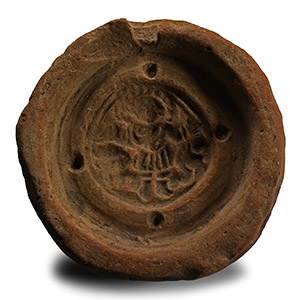
Coptic Terracotta Clay Mould
6th-7th century A.D.Sold for (Inc. bp): £72
Discoid receptacle with a military saint in Roman armour (Saint Menas), with muscular cuirass and pteryges, arms open in the manner of the orans pose, animals (camels?) on his side. 198 grams, 89 mm
Maurice Bouvier, Alexandrie, prior 1959. This lot is accompanied by an illustrated lot declaration signed by the Head of the Antiquities Department, Dr Raffaele D’Amato.
The majority of the terracotta ampullae come from Egypt and bear representations of St. Menas or Mennas, an Egyptian Christian officer decapitated during the persecutions of Diocletian's time. The legend relates that the saint's body was placed upon a camel which was let loose to follow what course it chose; in the place where the camel stopped, some miles from Alexandria, a grave and a shrine were subsequently built. In allusion to this legend, St. Menas is often represented as standing between two camels, though the animals are often of so fantastic a form as to be very difficult to recognise.
