
Loading, please wait...
LOT 0428
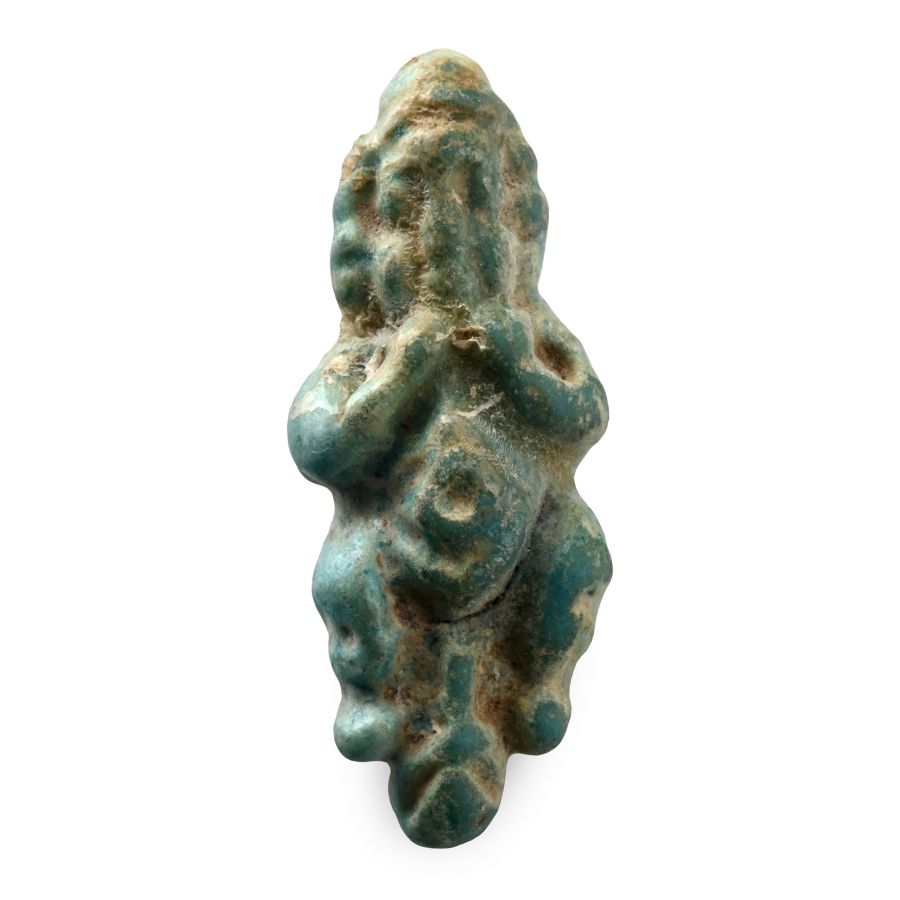
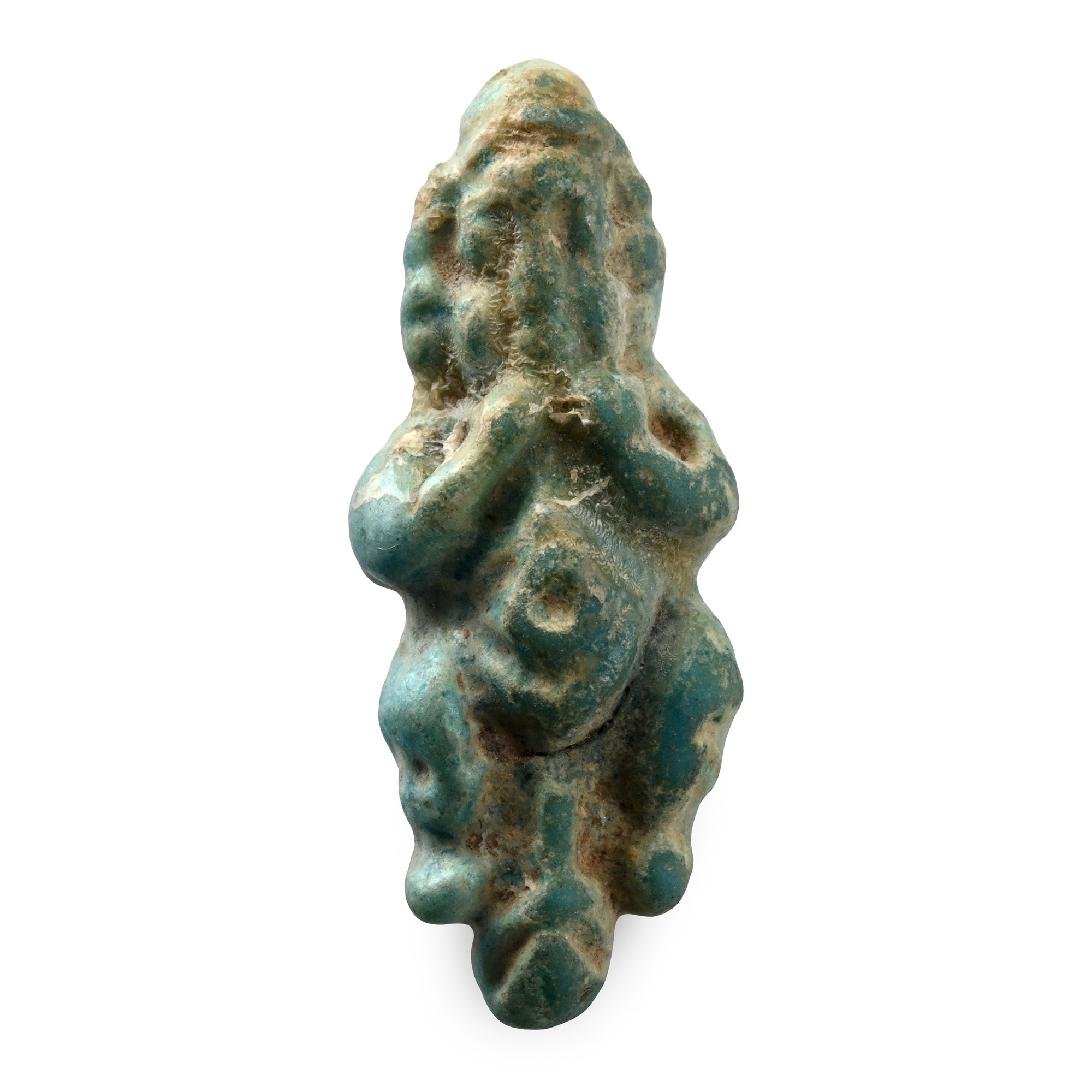
Egyptian Faience Phallic Figure Amulet
PTOLEMAIC PERIOD, 332-30 B.C.
1 1/8 in. (2.43 grams, 29 mm).
Blue glazed figure of a chubby dwarf with bent legs seated on emphasised phallus, both hands touching the chin, suspension loop to the reverse.
ProvenanceFrom an early 20th century collection.
This lot is accompanied by an illustrated lot declaration signed by the Head of the Antiquities Department, Dr Raffaele D'Amato.
TimeLine Auctions follows a vetting process to ensure the authenticity and legality of all items, reinforcing our commitment to integrity and responsible trading. Each antiquity, antique, and coin lot undergoes thorough examination by a vetting committee of at least ten external specialists, professional trade association members, scientists, and archaeologists: Our Vetting Process
AUCTIONS:
TimeLine is a leading auction house specialising in antiquities, ancient art, collectables, natural history, coins, medals, and books. Our auctions offer museums, collectors, historians, and enthusiasts the opportunity to acquire unique and historically significant pieces.
-
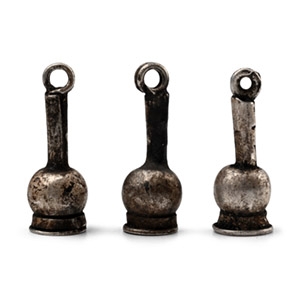
Egyptian Silver Poppy Amulet Group
Late-Ptolemaic Period, 664-30 B.C.Sold for (Inc. bp): £143
Three pendants each with poppy-head and loop at the apex. 3.05 grams, 17 mm each
Ex London, UK, gentleman 1980-1990s. This lot is accompanied by an illustrated lot declaration signed by the Head of the Antiquities Department, Dr Raffaele D'Amato.
Amulets in the form of poppies were used to heal and alleviate pain and to ward off death. These types of amulets were also linked to Osiris, the Egyptian deity of agriculture, death, and the afterlife. -
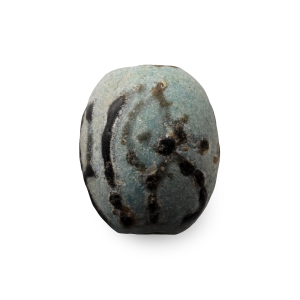
Egyptian Faience Bead with Eye of Horus and Ankh Symbols
Late Period, 664-332 B.C.Estimate: £100 - 140 (+bp*)
Opening Bid: £50
Barrel-shaped bead with blue glaze, wedjat and ankh in black glaze. 2.09 grams, 14 mm
From an early 20th century collection. This lot is accompanied by an illustrated lot declaration signed by the Head of the Antiquities Department, Dr Raffaele D'Amato.
The wedjat-eye amulet is a representation of the healed eye of the god Horus, featuring both human and falcon elements. The name wedjat in ancient Egyptian means ‘the one that is sound.’ According to Egyptian mythology, Horus' eye was wounded or taken by the god Seth and restored by Thoth. The wedjat-eye amulet was thought to protect its wearer and bestow the power of recovery and regeneration onto them. It was very popular and used by both the living and the dead. -
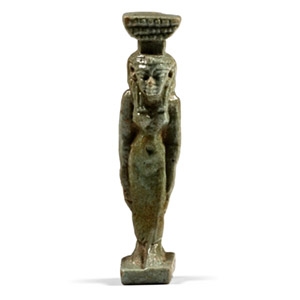
Egyptian Green Glazed Faience Amulet of Nephthys
Late Period, 26th Dynasty, circa 664-525 B.C.Estimate: £400 - 600 (+bp*)
Opening Bid: £200
Depicting the goddess Nephthys wearing the two hieroglyphic parts of her name (Neb(et)-Hut), with dorsal pillar and base. 2.68 grams, 37 mm
with B.M.S., Switzerland. Private collection, London, UK, acquired from the above on 14 September 1981. This lot is accompanied by an illustrated lot declaration signed by the Head of the Antiquities Department, Dr Raffaele D'Amato.
Nephthys was a protective goddess linked to mourning, magic, and the afterlife. As the sister of Isis, she played a vital role in the funerary rites of Osiris. Amulets like this were placed on the deceased to invoke her protection and aid in rebirth. Typically made of faience or semi-precious stone, they were especially common in the Late Period.
