
Loading, please wait...
LOT 0463
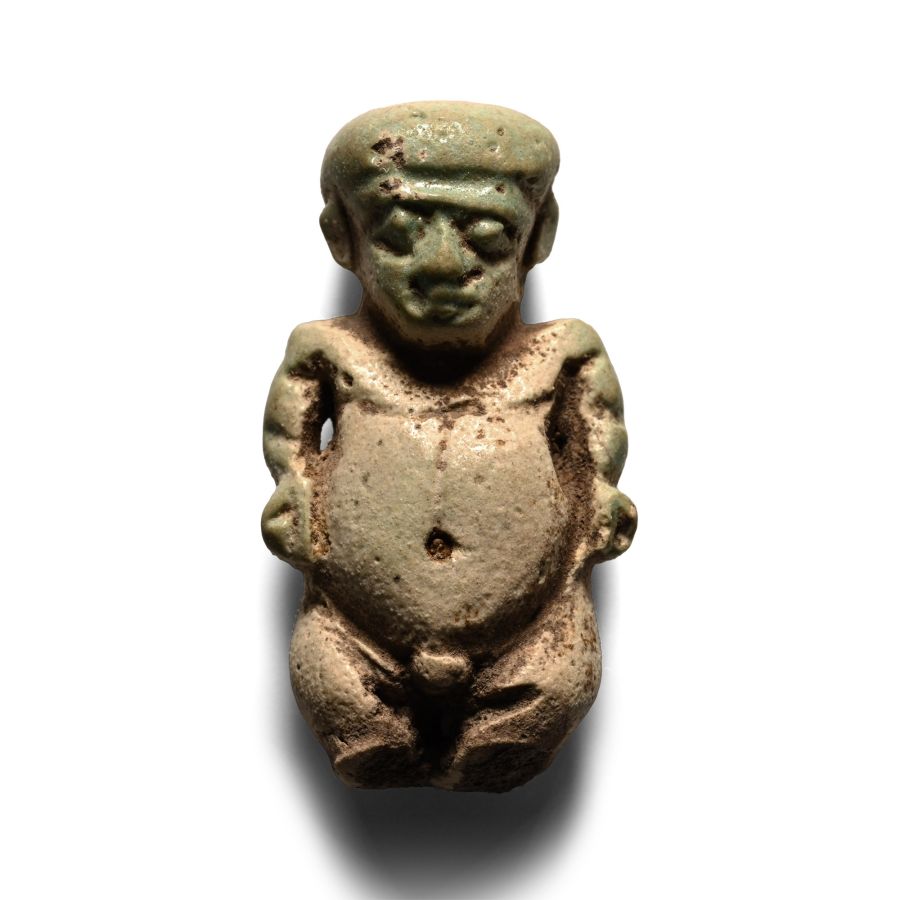
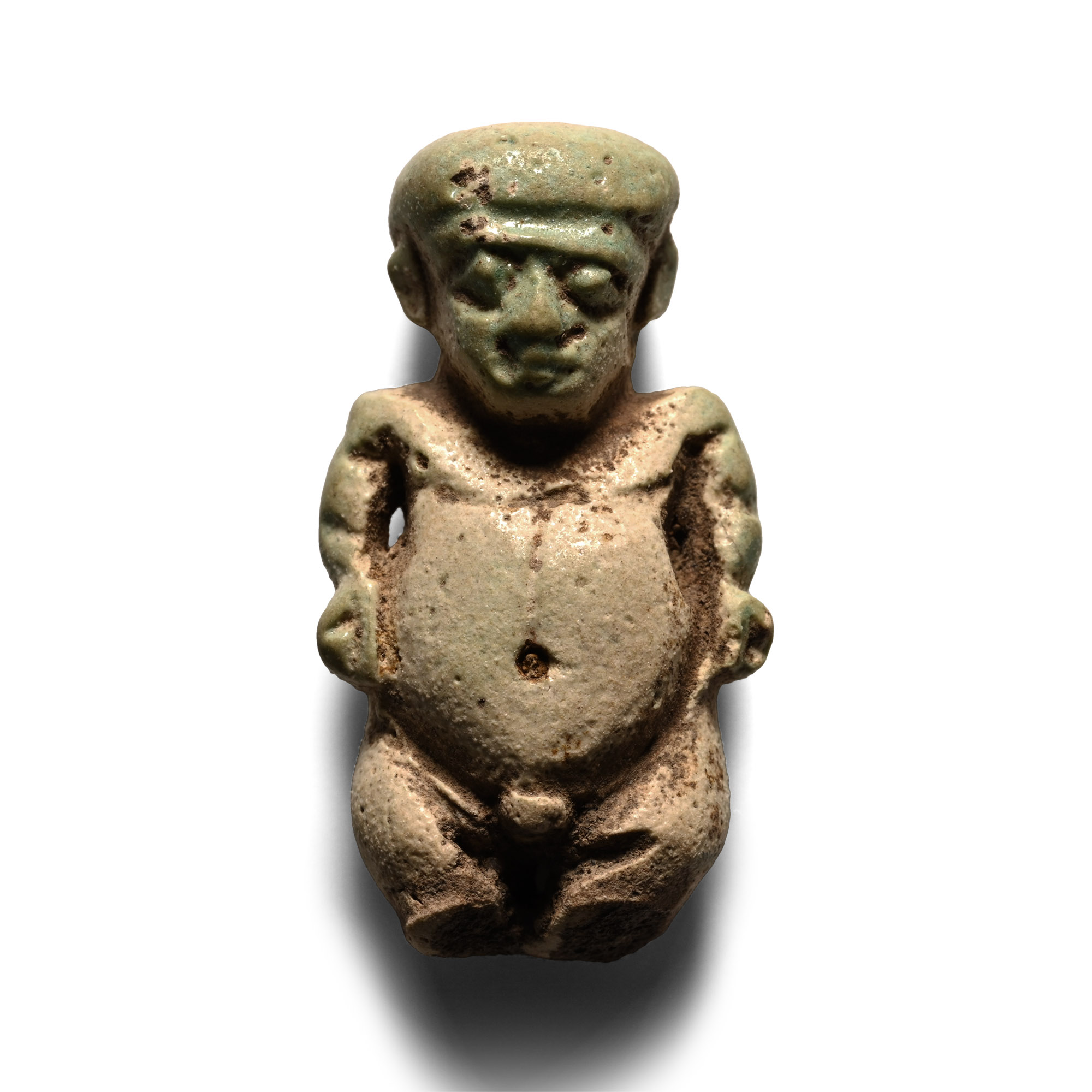
Egyptian Faience Pataikos Amulet
LATE PERIOD, 525-332 B.C.
1 3/8 in. (6.03 grams, 36 mm).
Depicted nude with a cap to his head, ribbed suspension loop to the rear of the neck. [No Reserve]
ProvenanceUK private collection before 2000.
Acquired on the UK art market.
Property of a London gentleman.
This lot is accompanied by an illustrated lot declaration signed by the Head of the Antiquities Department, Dr Raffaele D’Amato.
Cf. Petrie, W.M.F., Amulets. Illustrated by the Egyptian Collection in University College, London, 1914, pl.XXXI, for a similar example.
FootnotesPataikos is a representation of the creator deity Ptah, and his diminutive form is a symbol of his immense magical power.
CONDITIONTimeLine Auctions follows a vetting process to ensure the authenticity and legality of all items, reinforcing our commitment to integrity and responsible trading. Each antiquity, antique, and coin lot undergoes thorough examination by a vetting committee of at least ten external specialists, professional trade association members, scientists, and archaeologists: Our Vetting Process
AUCTIONS:
TimeLine is a leading auction house specialising in antiquities, ancient art, collectables, natural history, coins, medals, and books. Our auctions offer museums, collectors, historians, and enthusiasts the opportunity to acquire unique and historically significant pieces.
-
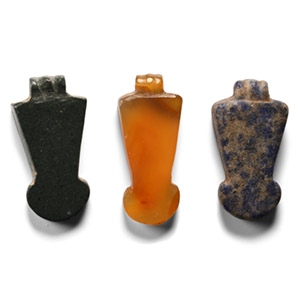
Egyptian Hardstone Menat Amulet Group
Ptolemaic Period, 332-30 B.C.Sold for (Inc. bp): £364
Lapis lazuli, carnelian, and schist (?) menat amulets, each with a distinctive keyhole shape and broad ribbed bale. 5.38 grams total, 20-22 mm
From a private collection acquired by the previous owner's father in the 1950s. Ex TimesAncient, Bristol, UK. Accompanied by a copy of a previous catalogue entry. This lot is accompanied by an illustrated lot declaration signed by the Head of the Antiquities Department, Dr Raffaele D’Amato.
The menat was a counterpoise that hung at the back of a heavy ornamental collar and was closely associated with the goddess Hathor. Amulets representing the counterpoise were thought to bring good luck, protect against evil spirits, and safeguard the wearer in the afterlife. Their Hathoric connection symbolised fertility and good health for women while representing virility for men. -
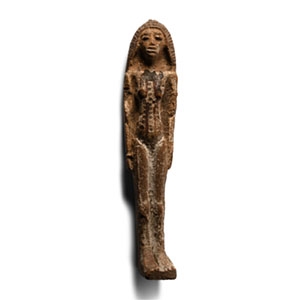
Egyptian Terracotta of a Concubine
Middle Kingdom, 12th Dynasty, circa 1976-1793 B.C.Sold for (Inc. bp): £1,235
D-shaped in section with tongue-shaped base, slender, long-limbed female figure modelled in the half-round with tightly curled, shoulder length hair, the chest and abdomen with linear and dotted decoration. 69 grams, 14.6 cm
From an old English deceased estate. Property of a London, UK, collector. This lot is accompanied by an illustrated lot declaration signed by the Head of the Antiquities Department, Dr Raffaele D’Amato. -
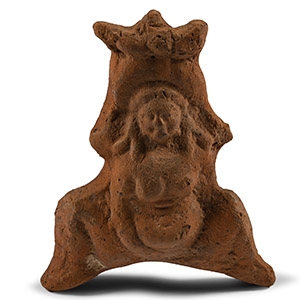
Romano-Egyptian Terracotta Figurine of Baubo
Ptolemaic Period, 2nd-1st century B.C.Sold for (Inc. bp): £221
Modelled as a seated plump fertility figure; the right hand touching the pubic area beneath the rounded abdomen, a garland upon her propoloma and thick braids falling on her shoulders, smooth back with a vent hole. 213 grams, 13 cm
The Erotica Collection Christian von Faber-Castell, Küsnacgt ZH, Switzerland, since the late 1970s. This lot is accompanied by an illustrated lot declaration signed by the Head of the Antiquities Department, Dr Raffaele D’Amato.
Baubo was a minor divinity of the Greek mythology, linked to the cult of Demeter and Persephone. The statuette belongs to the second type of Baubo figurines, widespread in the last Ptolemaic and Roman period in Egypt. The Egyptian Baubo are split into two groups, and this one belongs to the first group depicting a woman seating frontally whilst holding a musical instrument. In some of these figurines her right hand is touching her genitalia. Many of them were used as amulets or as ex-voto. Christian von Faber-Castell (born 1950) is a renowned German entrepreneur and art collector, best known as a member of the prominent Faber-Castell family, famed for their iconic writing instruments. A passionate advocate for art and culture, Christian von Faber-Castell curated an extensive and diverse private collection of erotica, spanning centuries and cultures. His collection reflects a deep appreciation for the interplay of beauty, sensuality, and artistic expression, bringing together rare and unique works that explore themes of intimacy and human connection. Pieces from this collection have been featured in notable exhibitions and are celebrated for their artistic and historical significance. This offering represents a rare opportunity to acquire works from one of the most fascinating and eclectic private collections of its kind.
