
Loading, please wait...
LOT 0015
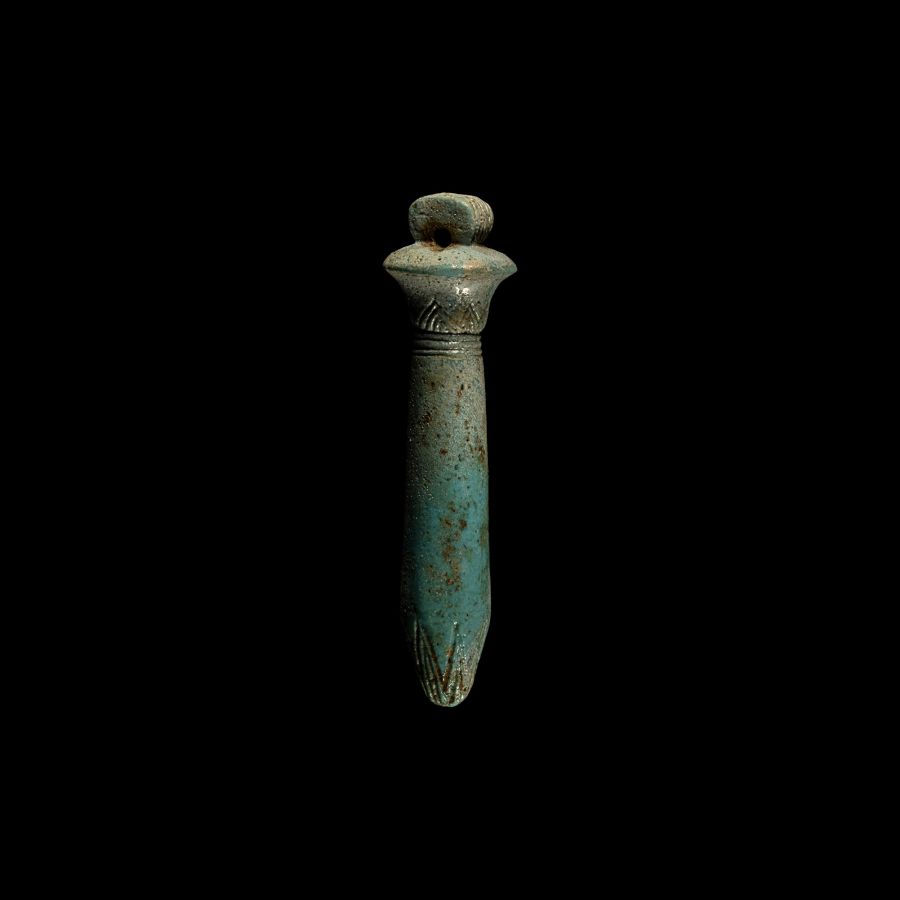
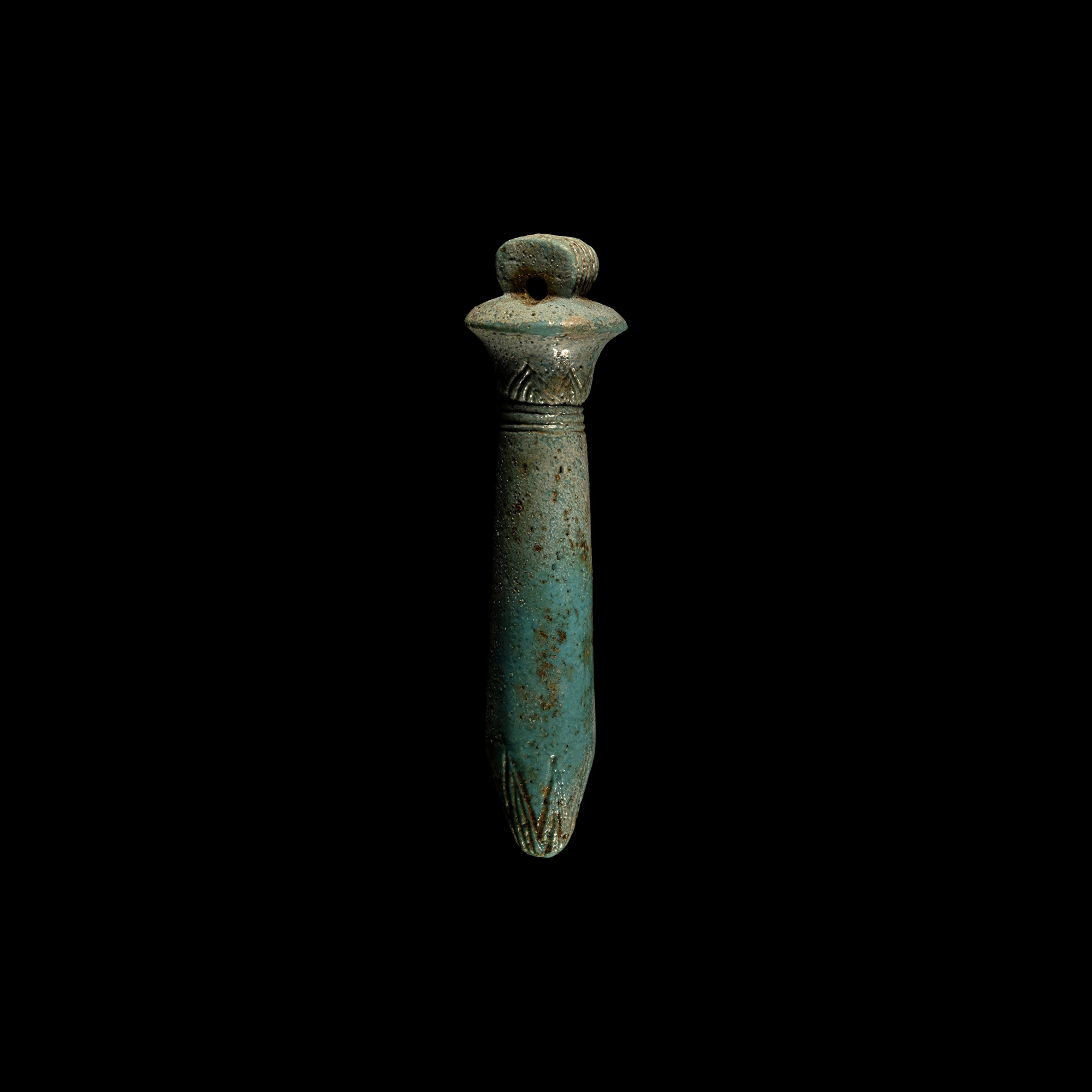
Egyptian Faience Papyrus Stalk Amulet
LATE PERIOD, 664-525 B.C.
2 3/8 in. (9.05 grams, 62 mm).
With stylised incised lotus petal detailing to base and neck; suspension loop.
ProvenanceEx collection Emil Saad, Paris-Alexandria.
LiteratureCf. The Metropolitan Museum, New York, accession number 10.130.1818, for similar.
CONDITIONTimeLine Auctions follows a vetting process to ensure the authenticity and legality of all items, reinforcing our commitment to integrity and responsible trading. Each antiquity, antique, and coin lot undergoes thorough examination by a vetting committee of at least ten external specialists, professional trade association members, scientists, and archaeologists: Our Vetting Process
AUCTIONS:
TimeLine is a leading auction house specialising in antiquities, ancient art, collectables, natural history, coins, medals, and books. Our auctions offer museums, collectors, historians, and enthusiasts the opportunity to acquire unique and historically significant pieces.
-
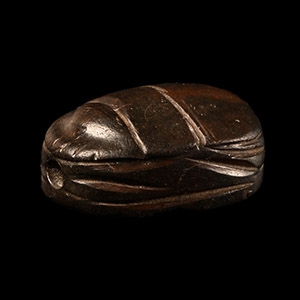
Large Egyptian Hardstone Scarab
Late Period, 664-323 B.C.Sold for (Inc. bp): £117
Carved with stylised anatomical detailing and drilled for suspension; blank base. 5.12 grams, 22 mm
From an early 20th century collection, Carnavon, North Wales, UK. -
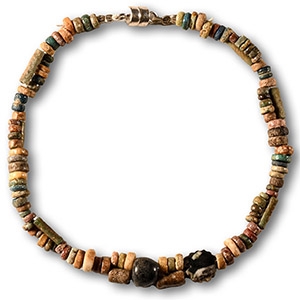
Egyptian Faience Mummy Bead Bracelet
Late Period, 664-525 B.C.Sold for (Inc. bp): £78
Restrung designer bracelet and with a modern magnetic clasp; composed primarily of disc-shaped and tubular beads, together with feature beads, one possibly amuletic. 4.3 grams, 18 cm long
Acquired on the UK art market. Property of a Ruislip, UK, gentleman, by inheritance. -
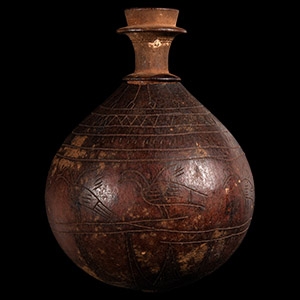
Egyptian Decorated Wooden Vessel with Stopper
Late Period, 664-332 B.C.Sold for (Inc. bp): £494
Spheroid wooden flask and stopper; the outer face with incised alternating bands of radiating triangles and hatching, the equator with frieze of perching birds and a hatched sunburst to the underside; turned hollow wooden stopper with carinated profile and flanges. 11 grams, 74 mm
Ex family collection since the 1950s. Property of an East Sussex, UK, teacher.
The vessel is a version in lathe-turned wood of a type known to have been produced in glass.
