
Loading, please wait...
LOT 0463
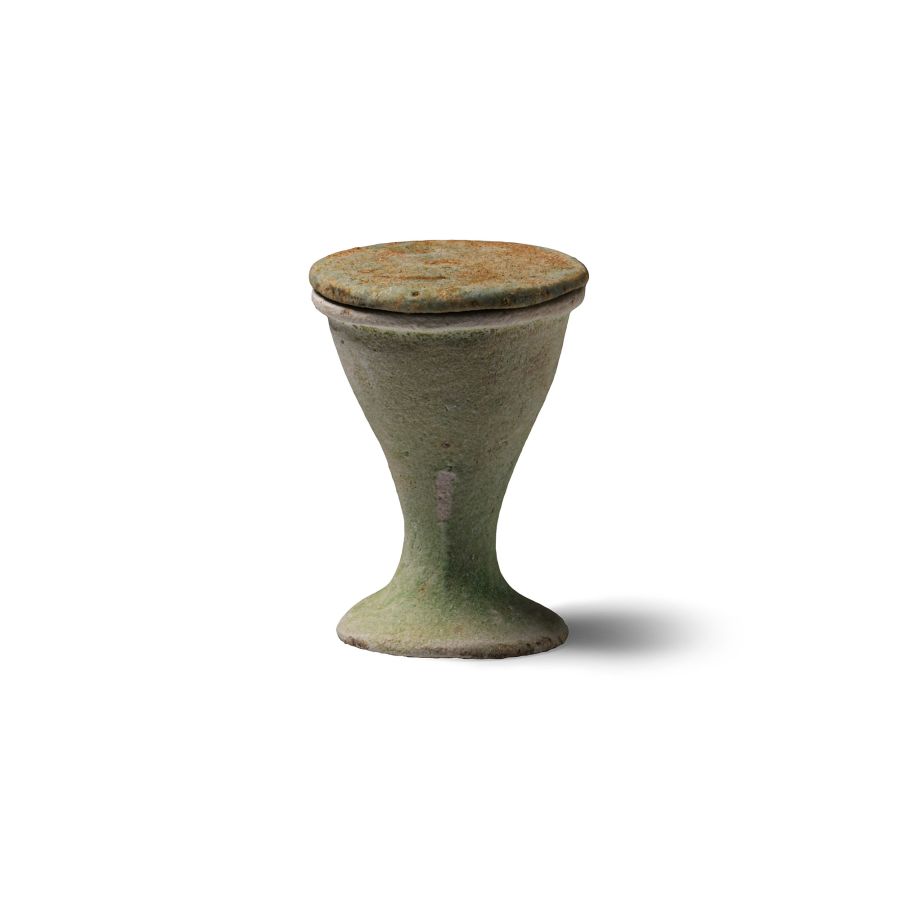
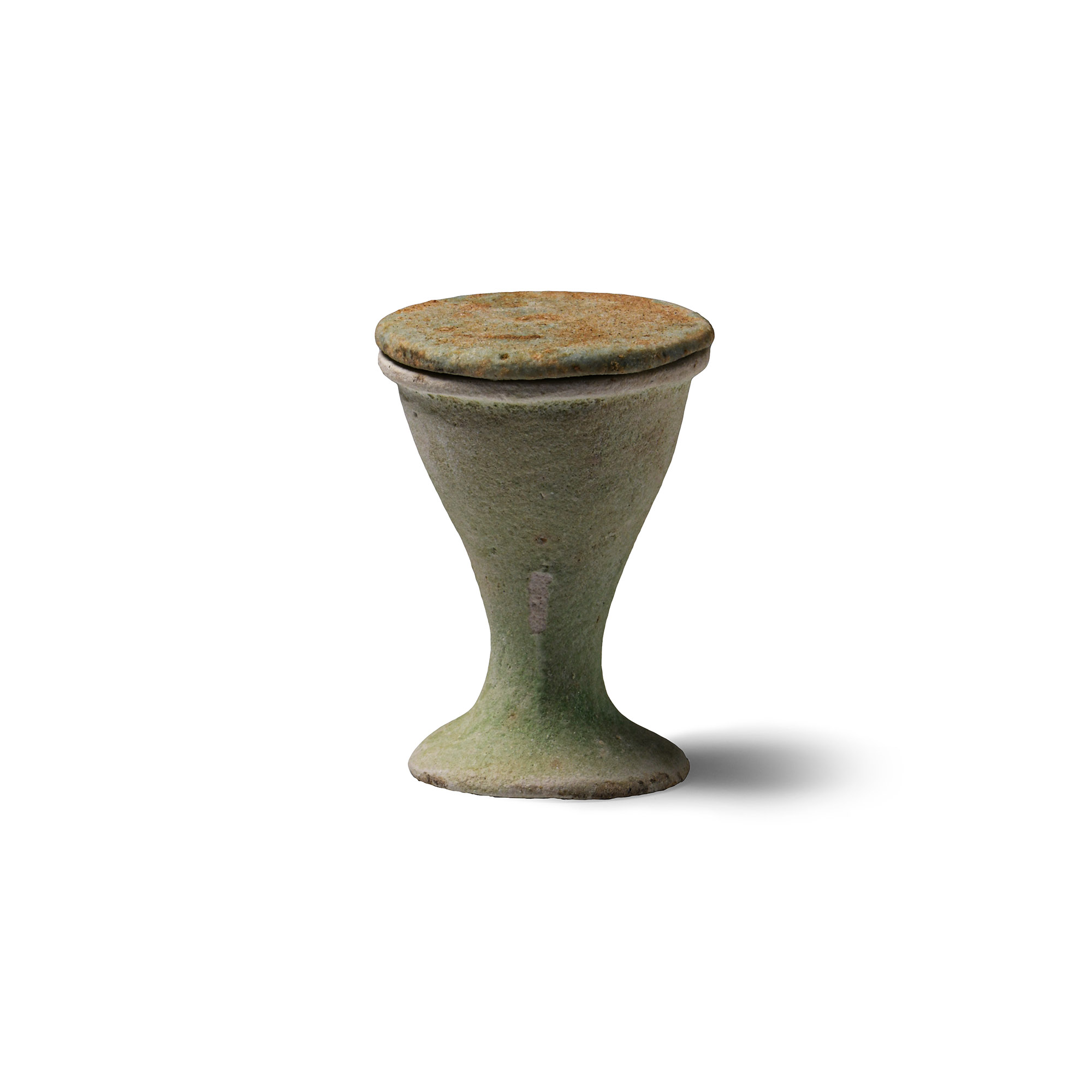
Egyptian Faience Offering Cup with Lid
PTOLEMAIC PERIOD, 332-30 B.C.
1 3/4 in. (18.8 grams, 43 mm).
Glazed composition cup with stemmed foot and thick rim, separate discoid lid with panel to the underside, possibly not belonging.
ProvenanceEx Den of Antiquity, Cambridgeshire, UK.
Private collection of Mr T.H., Norfolk, UK.
Accompanied by a previous dealer's certificate of authenticity.
Cf. a larger example of the type with decoration is in the collection of the British Museum under accession no.EA26226.
CONDITIONTimeLine Auctions follows a vetting process to ensure the authenticity and legality of all items, reinforcing our commitment to integrity and responsible trading. Each antiquity, antique, and coin lot undergoes thorough examination by a vetting committee of at least ten external specialists, professional trade association members, scientists, and archaeologists: Our Vetting Process
AUCTIONS:
TimeLine is a leading auction house specialising in antiquities, ancient art, collectables, natural history, coins, medals, and books. Our auctions offer museums, collectors, historians, and enthusiasts the opportunity to acquire unique and historically significant pieces.
-
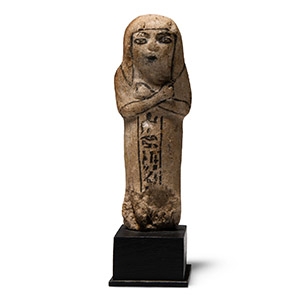
Egyptian Faience Shabti with Hieroglyphic Inscription
Late New Kingdom-Third Intermediate Period, 1186-715 B.C.Estimate: £1,000 - 1,400 (+bp*)
Opening Bid: £500
Pale grey glazed composition shabti with black outlining to the wig, eyes and facial features, arms, seed sack and a vertical panel of hieroglyphic text to the lower body dedicating the shabti to 'The illuminated, the Osiris, The God's Father (a priestly title) Pia[..]'; mounted on a custom-made stand. 249 grams total, 14 cm high including stand
Ex Marc Delorme, Antiquité Archéologie, France. From the private collection of Mr & Mrs Gent of Belgium, acquired June 2009. Accompanied by a handwritten illustrated invoice and two handwritten dealer's tags. -
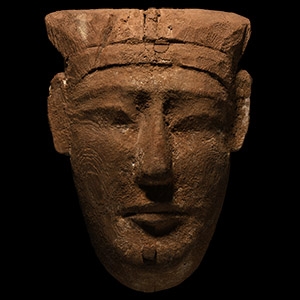
Egyptian Wooden Face Mask
Late Period, 664-332 B.C.Sold for (Inc. bp): £715
Carved in the half-round with elegant nose and prominent chin, full lips and rounded cheeks; a headband resting on the forehead; an attachment dowel on the chin and forehead. 475 grams, 23 cm high
Acquired 1970s-1996. Property of a North American collector. London collection, 2016. -
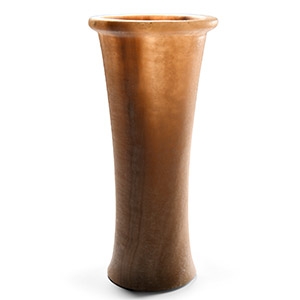
Egyptian Alabaster Cylindrical Vase
Late Period, 664-332 B.C.Estimate: £2,000 - 3,000 (+bp*)
Opening Bid: £1,000
Carved from cream-coloured Egyptian alabaster containing fine veining throughout; relatively thick walls flaring to form a wide mouth with flat-topped lip, then tapering towards the gently spreading, flat- bottomed base. 7.69 kg, 21 cm high
Acquired whilst living and working in Egypt 1920s. Private collection of a surveyor for the Air Ministry, UK, thence by descent for three generations. Private collection, UK, acquired 2011 from the UK art market. This lot has been checked against the Interpol Database of stolen works of art and is accompanied by search certificate no.11947-209448.
