
Loading, please wait...

LOT 0045
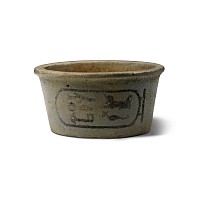
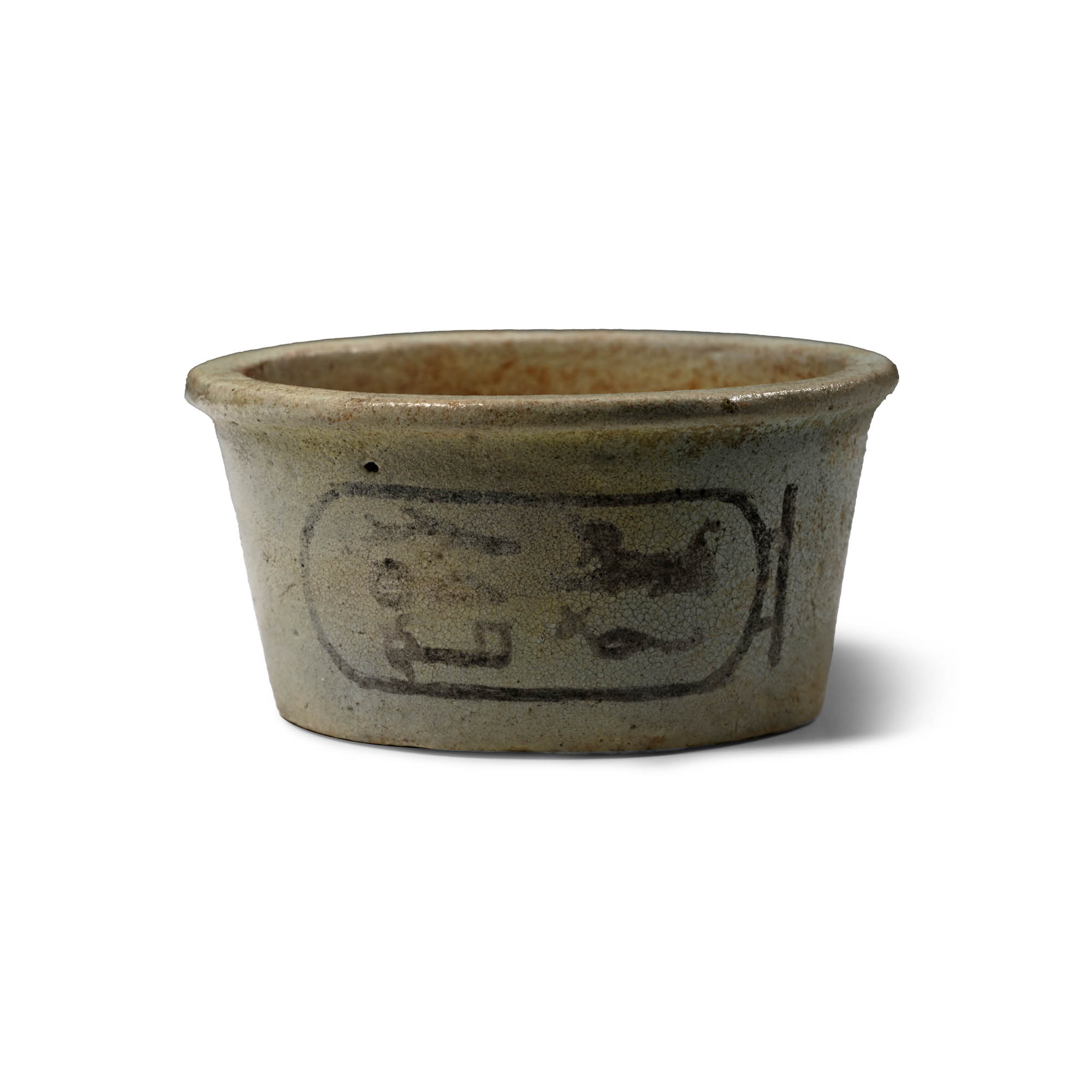
Egyptian Faience Offering Cup with Cartouche of Nectanebo I
30TH DYNASTY, 380-326 B.C.
1 7/8 in. (20.8 grams, 48 mm).
A squat flared vessel with a rim, one side with a cartouche containing the hieroglyphs nakhtnebef, giving the birth name of the 30th Dynasty King Nectanebo I.
ProvenanceAcquired on the German art market, 1989-1995.
with The Museum Gallery, 19 Bury Place, London, WC1, UK, 1998-2003.
Property of a London based academic, 2003-present.
Cf. Vandier d’Abbadie, J., Les objets de toilette égyptiens au Musée du Louvre, Paris, 1972, p.129, no. 557, for type.
CONDITIONTimeLine Auctions follows a vetting process to ensure the authenticity and legality of all items, reinforcing our commitment to integrity and responsible trading. Each antiquity, antique, and coin lot undergoes thorough examination by a vetting committee of at least ten external specialists, professional trade association members, scientists, and archaeologists: Our Vetting Process
AUCTIONS:
TimeLine is a leading auction house specialising in antiquities, ancient art, collectables, natural history, coins, medals, and books. Our auctions offer museums, collectors, historians, and enthusiasts the opportunity to acquire unique and historically significant pieces.
LOT 0045
Egyptian Faience Offering Cup with Cartouche of Nectanebo I
Estimate £1,200 - 1,700€1,390 - 1,970 (for guidance only)$1,620 - 2,300 (for guidance only)
-
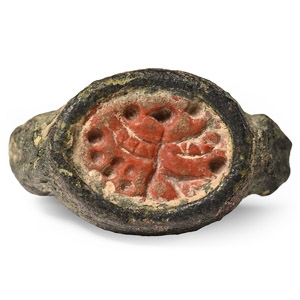
Egypto-Phoenician Hardstone Scaraboid Set in Bronze Pendant
Late 1st millennium B.C.Estimate: £200 - 300 (+bp*)
Opening Bid: £111
Comprising a carnelian scaraboid with a stylised bird with open wings to the underside, pellets to the field; set in an openwork bronze pendant frame with tubular loop. 3.84 grams, 18 mm
From an early 20th century Home Counties, UK, collection. -
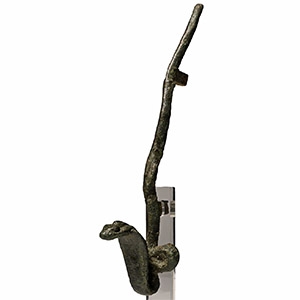
Egyptian Bronze Cobra Mount
Late Period, 6th century B.C.Estimate: £1,000 - 1,400 (‡+bp*)
Opening Bid: £500
Cobra-shaped mount with head raised and hood expanded, two mounting studs to the reverse; mounted on a custom-made stand. 182 grams, 22 cm
Private Israeli collection. Ex Archaeological Center, Tel Aviv, Israel, 2015. Private European collection.
The mount most likely adorned the Atef crown of a statue of Osiris. -
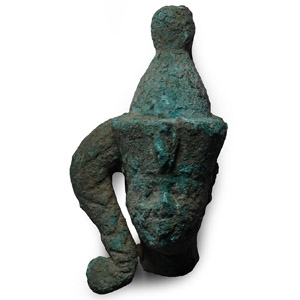
Egyptian Bronze Head of Harpocrates
Late Period, circa 664-332 B.C.Sold for (Inc. bp): £117
Head from a statuette of Harpocrates, wearing the Pschent crown fronted by uraeus, sporting the large plaited sidelock above the right ear. 86.5 grams, 60 mm
Acquired in the mid 1980s-1990s. Private collection, Switzerland, thence by descent. Private collection, since the late 1990s.
Harpocrates is the Greek rendering of the Egyptian Hor-pa-khered, meaning 'Horus the Child'. This title refers to Horus as the divine infant of Isis and Osiris. Wearing the amulet of Harpocrates was believed to offer the same protection that Isis gave her beloved son.
