
Loading, please wait...
LOT 0497
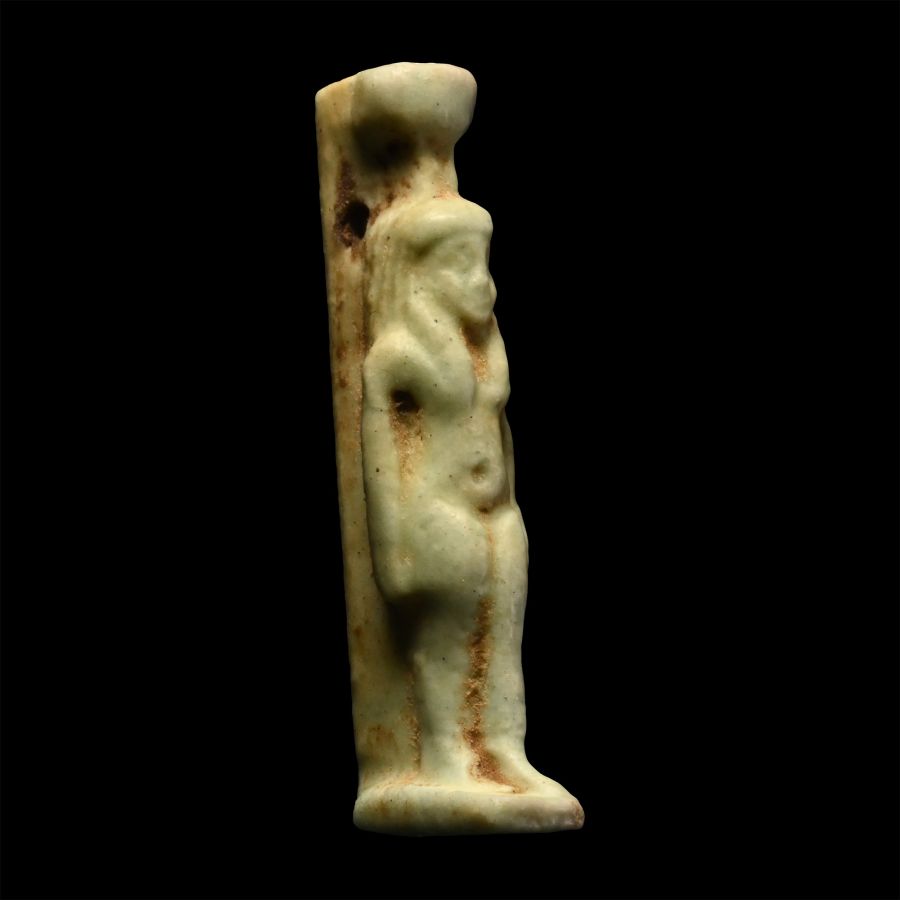
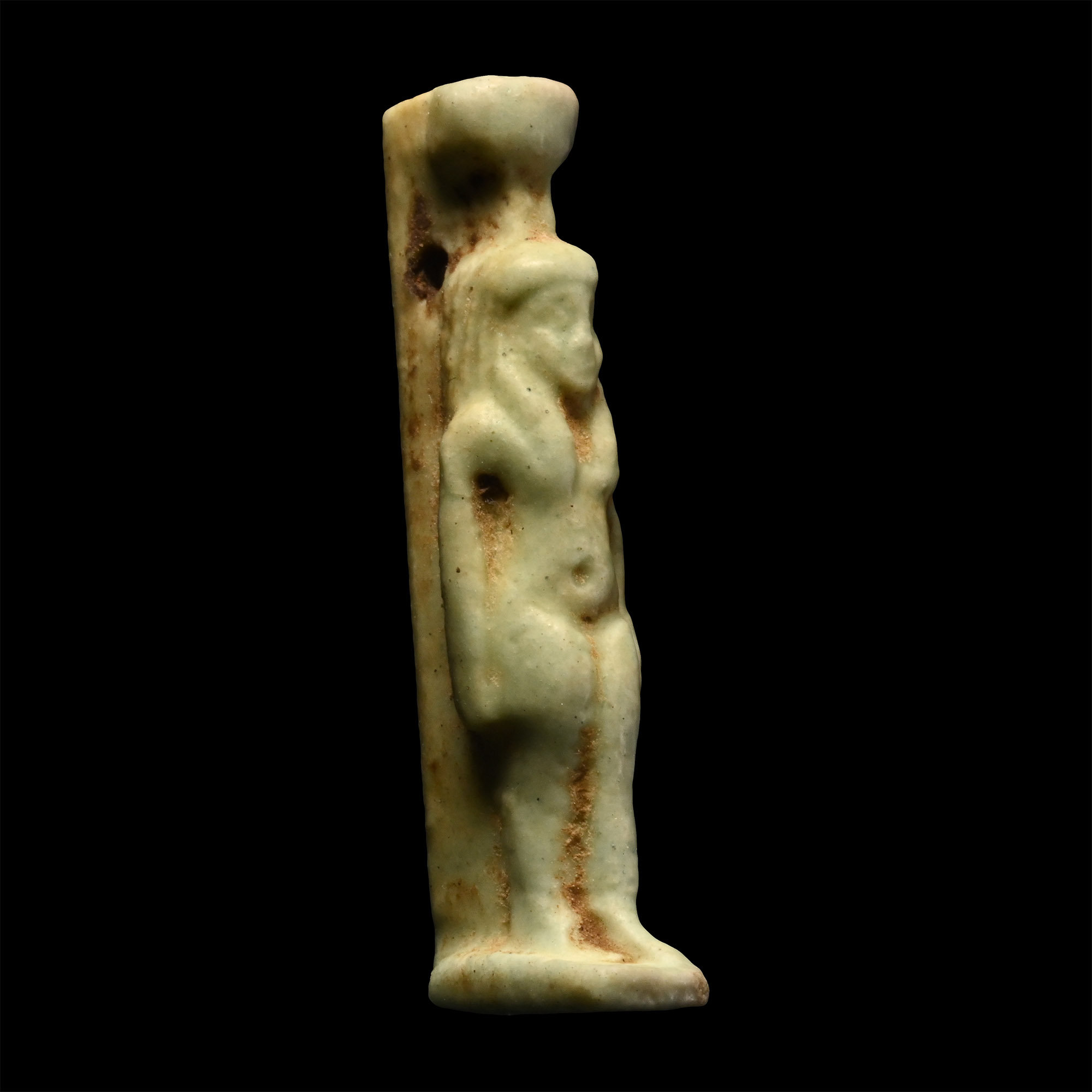
Egyptian Faience Nephthys Amulet
LATE PERIOD, 664-332 B.C.
1 1/4 in. (1.68 grams, 34 mm).
Standing figure of the goddess, wearing a striated lappet wig topped by her characteristic headdress, with her arms at her sides; supported by a dorsal pillar pierced once for suspension.
ProvenanceEx early 20th century collection, London, UK.
LiteratureCf. Loffet, H.C., Collections égyptiennes du Museum Emmanuel Liais de Cherbourg Octeville, Paris, 2007, p. 58, no. 61, for a similar example.
FootnotesThis amulet represents Nephthys (Egyptian: Nebet-Hut), a protective goddess closely associated with mourning, magic, and the afterlife. Often depicted as a woman with her name in hieroglyphs atop her head, Nephthys is Isis’s sister and, together with Isis, plays a central role in the funerary rites of Osiris.
Amulets of Nephthys were often worn or placed among the deceased’s wrappings to invoke her protective role during the journey to the afterlife. As a divine mourner, Nephthys was believed to guard the dead and assist in their rebirth, making her amulet a symbol of divine protection, sacred lamentation, and renewal.
TimeLine Auctions follows a vetting process to ensure the authenticity and legality of all items, reinforcing our commitment to integrity and responsible trading. Each antiquity, antique, and coin lot undergoes thorough examination by a vetting committee of at least ten external specialists, professional trade association members, scientists, and archaeologists: Our Vetting Process
AUCTIONS:
TimeLine is a leading auction house specialising in antiquities, ancient art, collectables, natural history, coins, medals, and books. Our auctions offer museums, collectors, historians, and enthusiasts the opportunity to acquire unique and historically significant pieces.
-
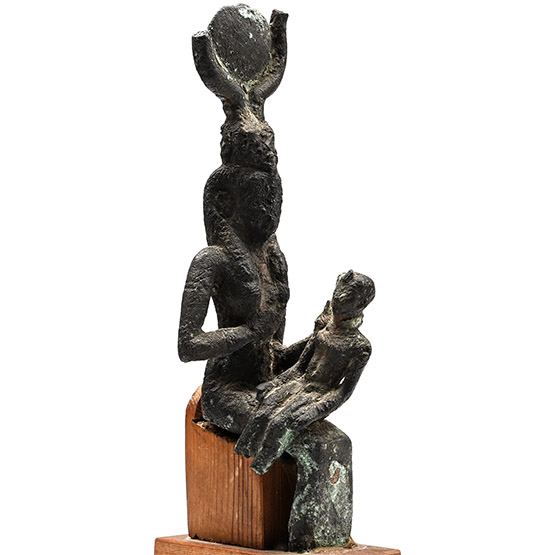
Egyptian Bronze Seated Isis with Horus Statue
Late Period, 664-332 B.C.Sold for (Inc. bp): £468
Modelled enthroned, wearing a cow's horn headdress with a solar disc; suckling the infant Horus seated transversely on her lap; Horus modelled with a side-lock of youth; mounted on a custom-made wooden stand. 405 grams total, 17.5 cm including stand
Property of a deceased gentleman's collection, 1980s. Ex John Nicholson Auction, Haslemere, Surrey, UK. -
.jpg)
Historic Collection of 565 Slides of Egyptian Archaeological Sites and Artefacts
1960s-1980s A.D.Sold for (Inc. bp): £845
Housed in five linen-covered boxes, covering ancient Egypt, Tutankhamun jewellery, Nefetari, Amun Hr Khopshef, Khaemwast, Tuthmosis IV, Tye, Archaic stele, maceheads, inscriptions, pottery, sculpture, Saqqara tombs, Esna etc. 3.85 kg total, 26.5 x 16.5 x 6.5 cm each box
Property of archaeologist Stephanie Gee, N.W. London, UK, 1960s-1980s.
Stephanie Gee was a prominent archaeologist who took part in several expeditions in Egypt. She was a trusted assistant to the British-Australian archaeologist Veronica Seton-Williams, who excavated in Egypt, Britain, and the Near East. Stephanie also took part in the Tell El-Farâ'în expeditions of 1965-1968, and assisted Seton-Williams with preparing the 1966 expedition report. Their collaboration continued and Stephanie helped with the manuscript of Seton-Williams’ book ‘The Road to El-Aguzein’, a narrative account of her life that was first published in 1988. -
.jpg)
Egyptian Steatite Heart Scarab
Late Period, 664-332 B.C.Sold for (Inc. bp): £143
With ribbed carapace and suspension loop to underside. 2.89 grams, 22 mm
Acquired on the European art market in the early 2000s. with Galerie Rhéa, Zurich, Switzerland.
