
Loading, please wait...


LOT 0528
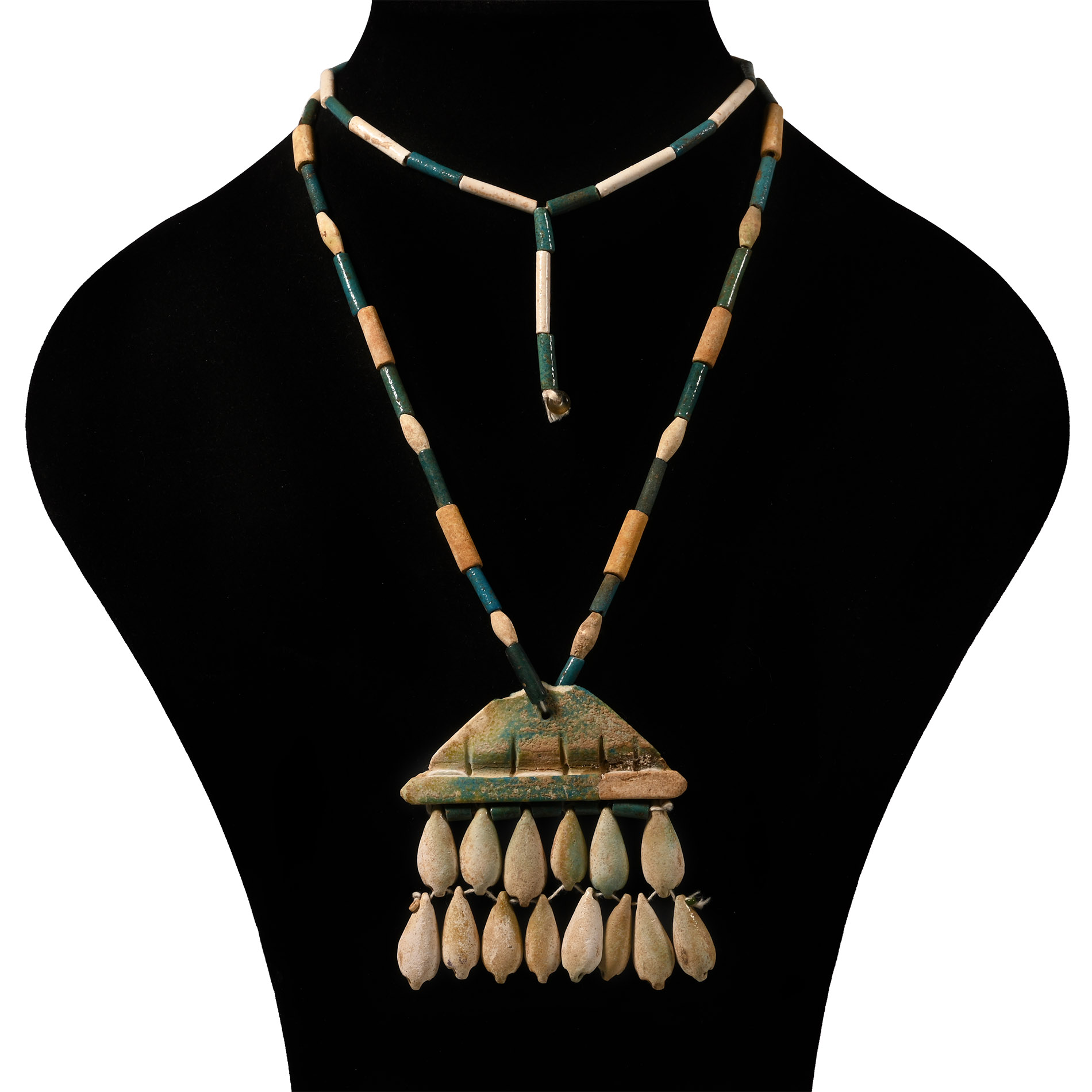
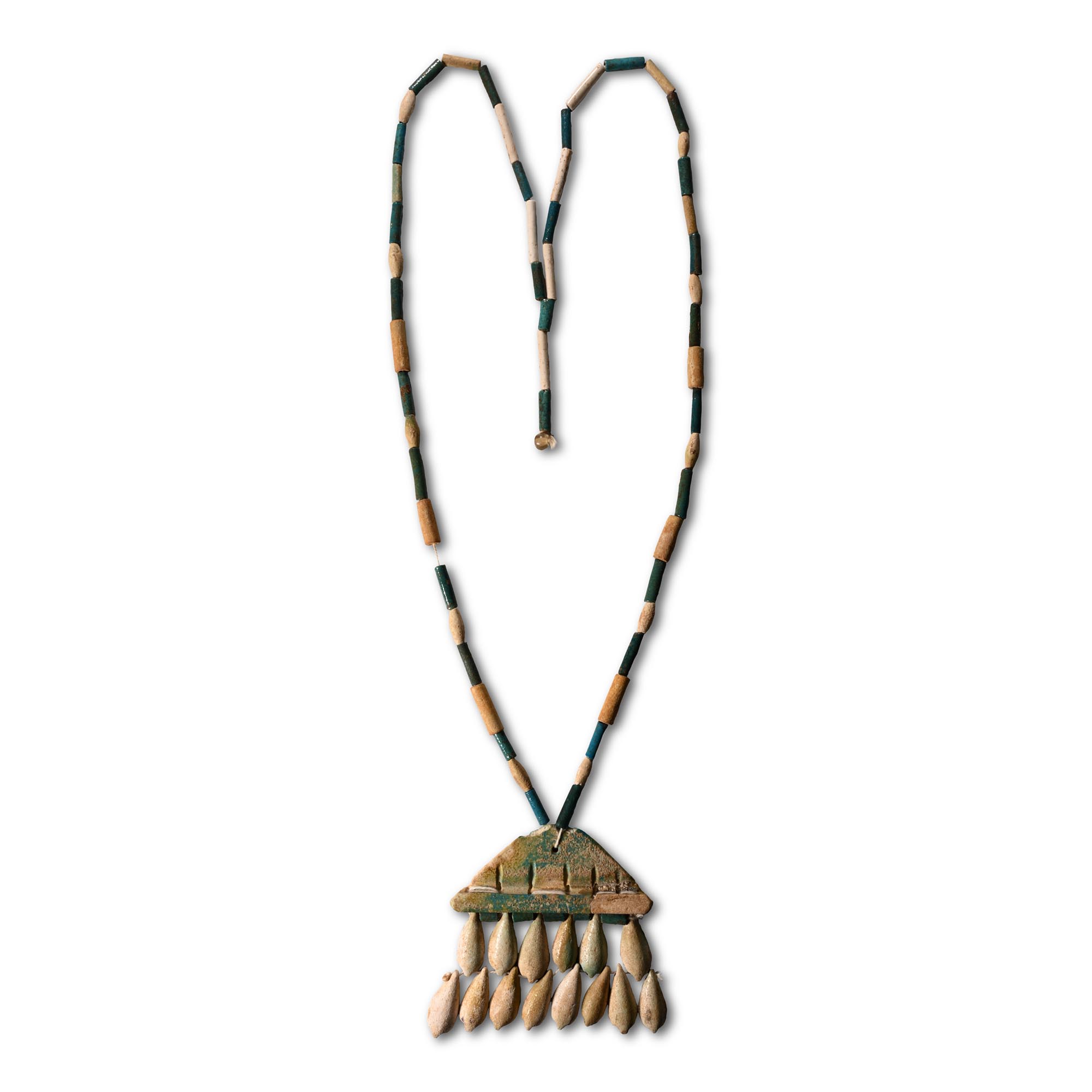
Egyptian Faience Necklace with Pendant
NEW KINGDOM, 1400-1100 B.C.
31 1/2 in. (48 grams, 80 cm long).
Restrung group of tubular and fusiform faience beads with D-shaped pendant and two tiers of dangles beneath.
ProvenanceAcquired in the mid 1980s-1990s.
Private collection, Switzerland, thence by descent.
Private collection, since the late 1990s.
This lot is accompanied by an illustrated lot declaration signed by the Head of the Antiquities Department, Dr Raffaele D’Amato.
This lot is accompanied by an illustrated lot declaration signed by the Head of the Antiquities Department, Dr Raffaele D'Amato.
TimeLine Auctions follows a vetting process to ensure the authenticity and legality of all items, reinforcing our commitment to integrity and responsible trading. Each antiquity, antique, and coin lot undergoes thorough examination by a vetting committee of at least ten external specialists, professional trade association members, scientists, and archaeologists: Our Vetting Process
AUCTIONS:
TimeLine is a leading auction house specialising in antiquities, ancient art, collectables, natural history, coins, medals, and books. Our auctions offer museums, collectors, historians, and enthusiasts the opportunity to acquire unique and historically significant pieces.
LOT 0528
Egyptian Faience Necklace with Pendant
Estimate £600 - 800€700 - 930 (for guidance only)$810 - 1,080 (for guidance only)
-
Roman and Egyptian Glass Fragment Collection
2nd century B.C.-1st century A.D.Sold for (Inc. bp): £312
Comprising a mixed group of mosaic and other glass fragments. 26 grams total, 12-29 mm
Ex Gallery Mikazuki prior to 1984. Property of a London, UK, gentleman. This lot is accompanied by an illustrated lot declaration signed by the Head of the Antiquities Department, Dr Raffaele D'Amato. -
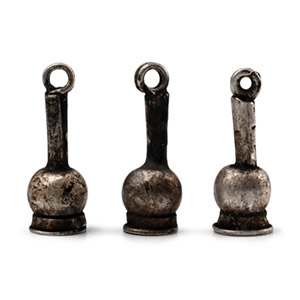
Egyptian Silver Poppy Amulet Group
Late-Ptolemaic Period, 664-30 B.C.Sold for (Inc. bp): £143
Three pendants each with poppy-head and loop at the apex. 3.05 grams, 17 mm each
Ex London, UK, gentleman 1980-1990s. This lot is accompanied by an illustrated lot declaration signed by the Head of the Antiquities Department, Dr Raffaele D'Amato.
Amulets in the form of poppies were used to heal and alleviate pain and to ward off death. These types of amulets were also linked to Osiris, the Egyptian deity of agriculture, death, and the afterlife. -
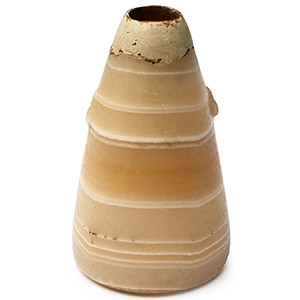
Egyptian Banded Agate Kohl Pot
Late Period, 664-332 B.C.Sold for (Inc. bp): £124
Cone-shaped body with traces of lug handles on the upper third; narrow opening at the top with a thin, flattened rim. 94 grams, 75 mm
UK private collection before 2000. Acquired on the UK art market. Private collection, London, UK. This lot is accompanied by an illustrated lot declaration signed by the Head of the Antiquities Department, Dr Raffaele D'Amato.
This vessel's unusual triangular shape is thought to be limited to the Late Period; other comparable examples are known (e.g., Barbotin, C., Collection égyptienne: Musée Granet - Aix-en-Provence, Aix-en-Provence, 1995, p. 166, no. 97).
