
Loading, please wait...
LOT 0448
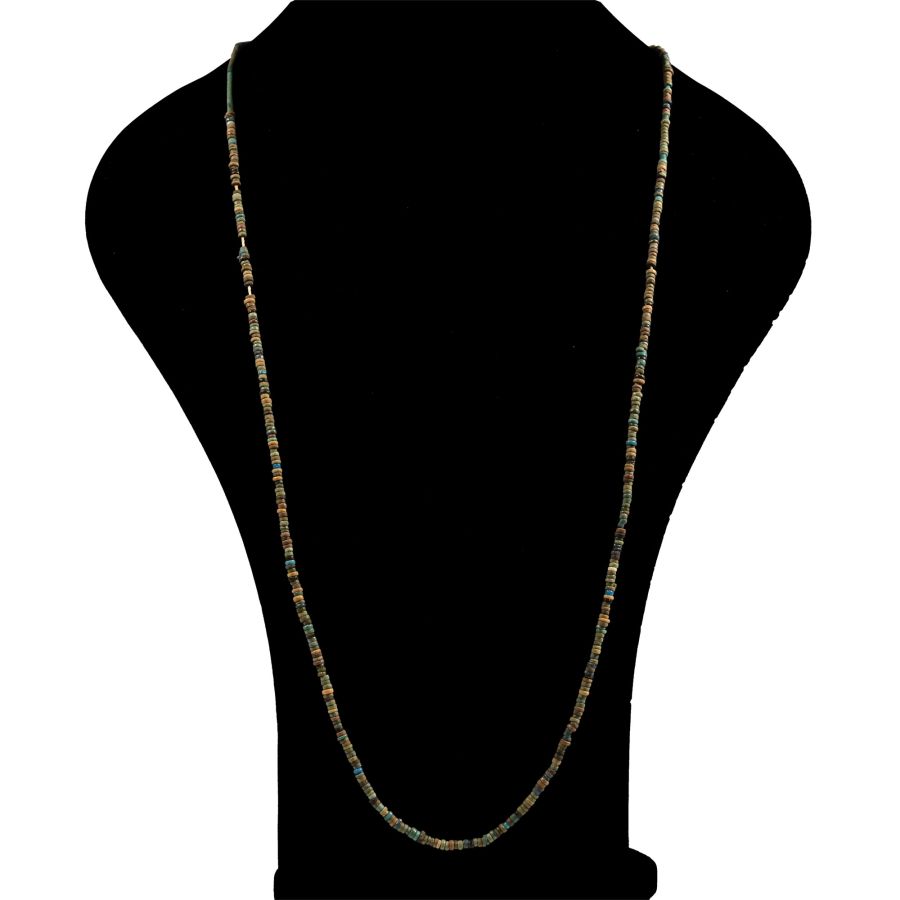
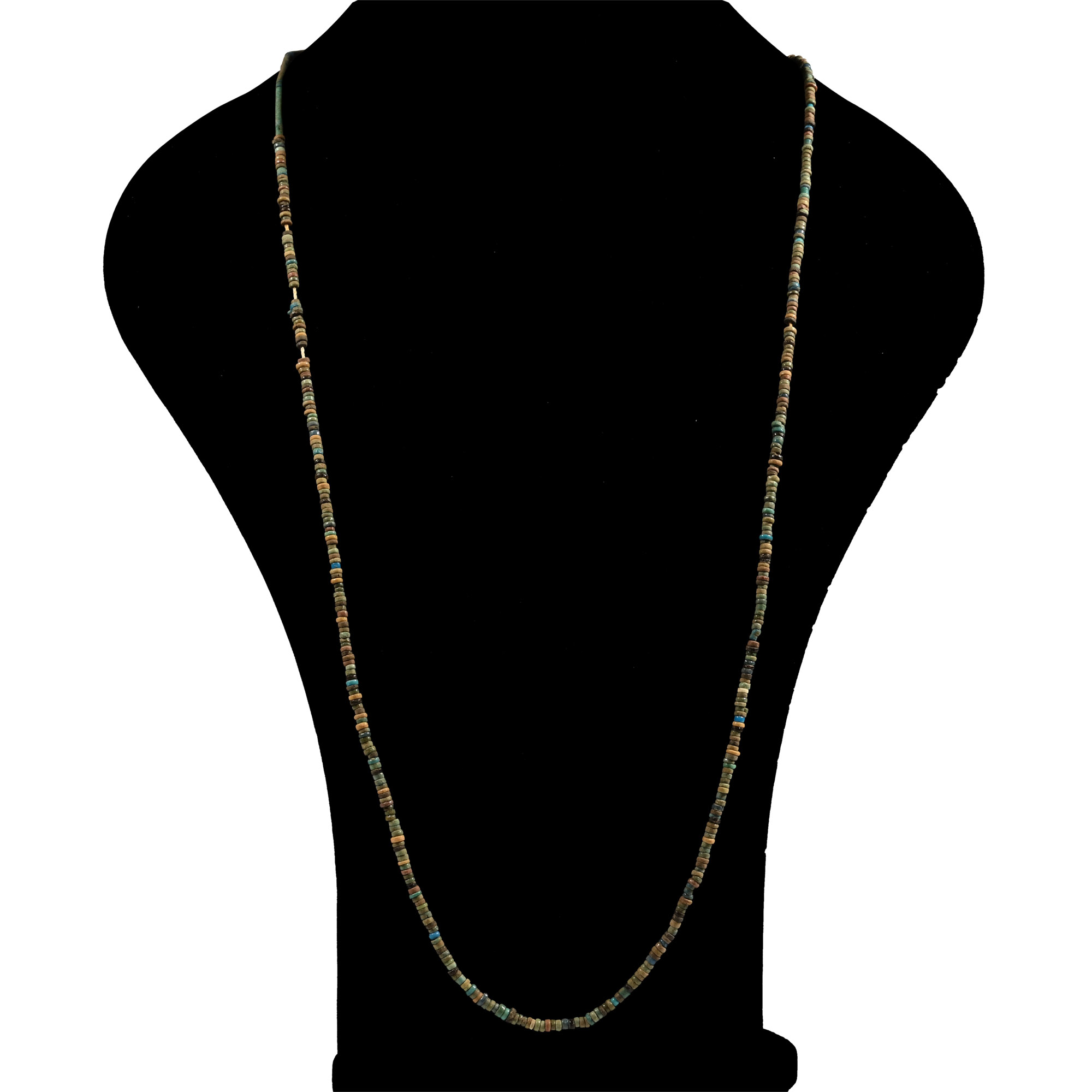
Egyptian Faience Mummy Bead Necklace
LATE PERIOD, 664-332 B.C.
41 in. (12.6 grams, 104 cm).
Mainly annular beads in various shades with tubular beads to one section. [No Reserve]
ProvenanceFrom an old English deceased estate.
Acquired on the Yorkshire art market in the early 1990s.
Property of a London, UK, collector.
This lot is accompanied by an illustrated lot declaration signed by the Head of the Antiquities Department, Dr Raffaele D’Amato.
TimeLine Auctions follows a vetting process to ensure the authenticity and legality of all items, reinforcing our commitment to integrity and responsible trading. Each antiquity, antique, and coin lot undergoes thorough examination by a vetting committee of at least ten external specialists, professional trade association members, scientists, and archaeologists: Our Vetting Process
AUCTIONS:
TimeLine is a leading auction house specialising in antiquities, ancient art, collectables, natural history, coins, medals, and books. Our auctions offer museums, collectors, historians, and enthusiasts the opportunity to acquire unique and historically significant pieces.
-
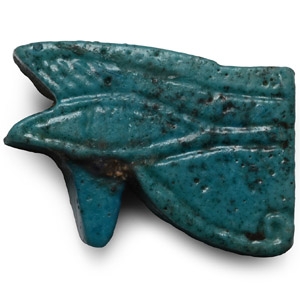
Egyptian Deep Blue Glazed Faience Eye of Horus Amulet
Late Period, 664-332 B.C.Sold for (Inc. bp): £234
Large wedjat-eye amulet with incised human and falcon elements. 11.7 grams, 38 mm
From the private collection of the late Mrs Belinda Ellison, a long time member of the Egyptian Exploration Society, c.1940-2020. This lot is accompanied by an illustrated lot declaration signed by the Head of the Antiquities Department, Dr Raffaele D’Amato.
The wedjat-eye amulet is a representation of the healed eye of the god Horus, featuring both human and falcon elements. The name wedjat in ancient Egyptian means ‘the one that is sound.’ According to Egyptian mythology, Horus' eye was wounded or taken by the god Seth and restored by Thoth. The wedjat-eye amulet was thought to protect its wearer and bestow the power of recovery and regeneration onto them. It was very popular and used by both the living and the dead. -
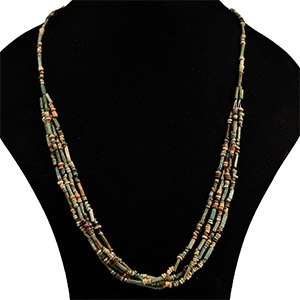
Egyptian Multi-Stranded Mummy Bead Necklace String
Late Period, 664-525 B.C.Sold for (Inc. bp): £143
A composition necklace composed of multiple strands of polychrome beads of mainly annular and tubular types. 28 grams total, 82 cm long
Acquired before 1979. From the private collection of Mr F. A., South Kensington, London, UK; thence by descent 2014. This lot is accompanied by an illustrated lot declaration signed by the Head of the Antiquities Department, Dr Raffaele D’Amato.
Red and yellow faience were among the new colours appeared in the 18th Dynasty, but they were in use until the Late Period. It was ideally formed from a core of sand and quartz and a vitreous alkaline glaze. It was the preferred medium of Egyptian jewellers even before the First Dynasty, because of its malleability and its ability to imitate other more expensive materials thanks to the colour of the glaze. -
.jpg)
Egyptian Gold Mounted Scarab Bead
Middle Kingdom-Second Intermediate Period, circa 1900-1560 B.C.Estimate: £400 - 600 (+bp*)
Opening Bid: £200
Comprising a faience scarab with a scroll-work border framing the vertically arranged hieroglyphs: kheper beetle, nwb sign for gold, and two nfr signs flanking an ankh sign, set in a gold funda with tubular collars. 3.36 grams, 20 mm
From an early 20th century Home Counties, UK, collection. This lot is accompanied by an illustrated lot declaration signed by the Head of the Antiquities Department, Dr Raffaele D’Amato.
