
Loading, please wait...
LOT 0473
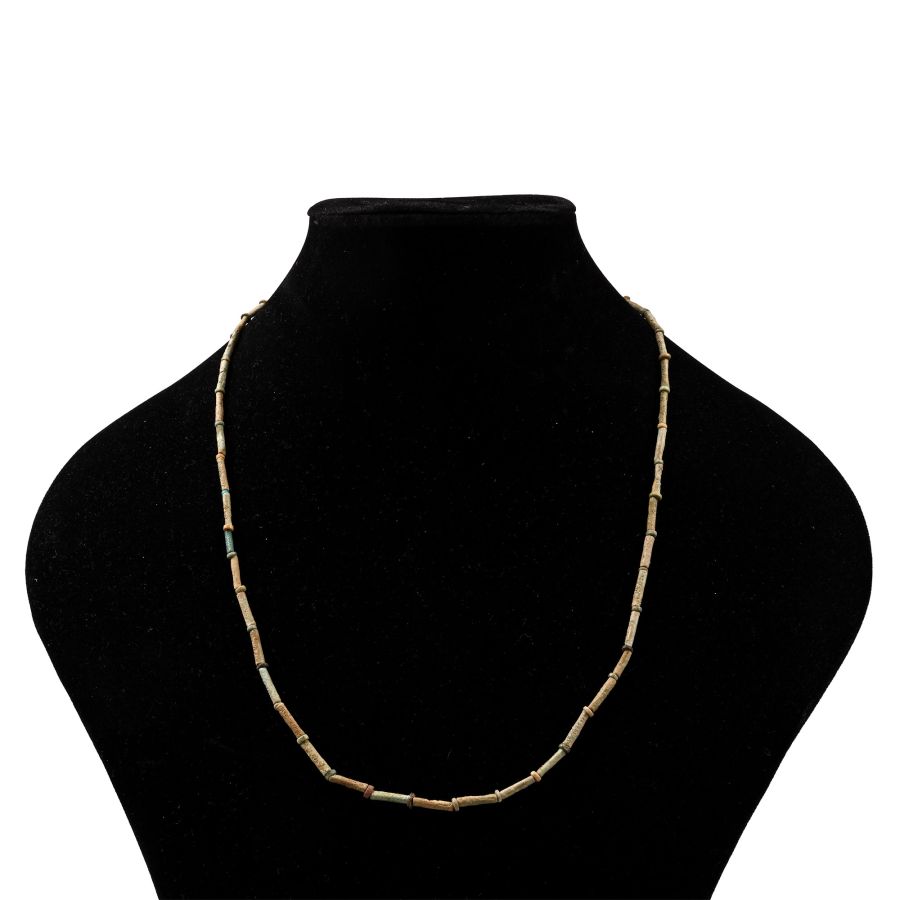
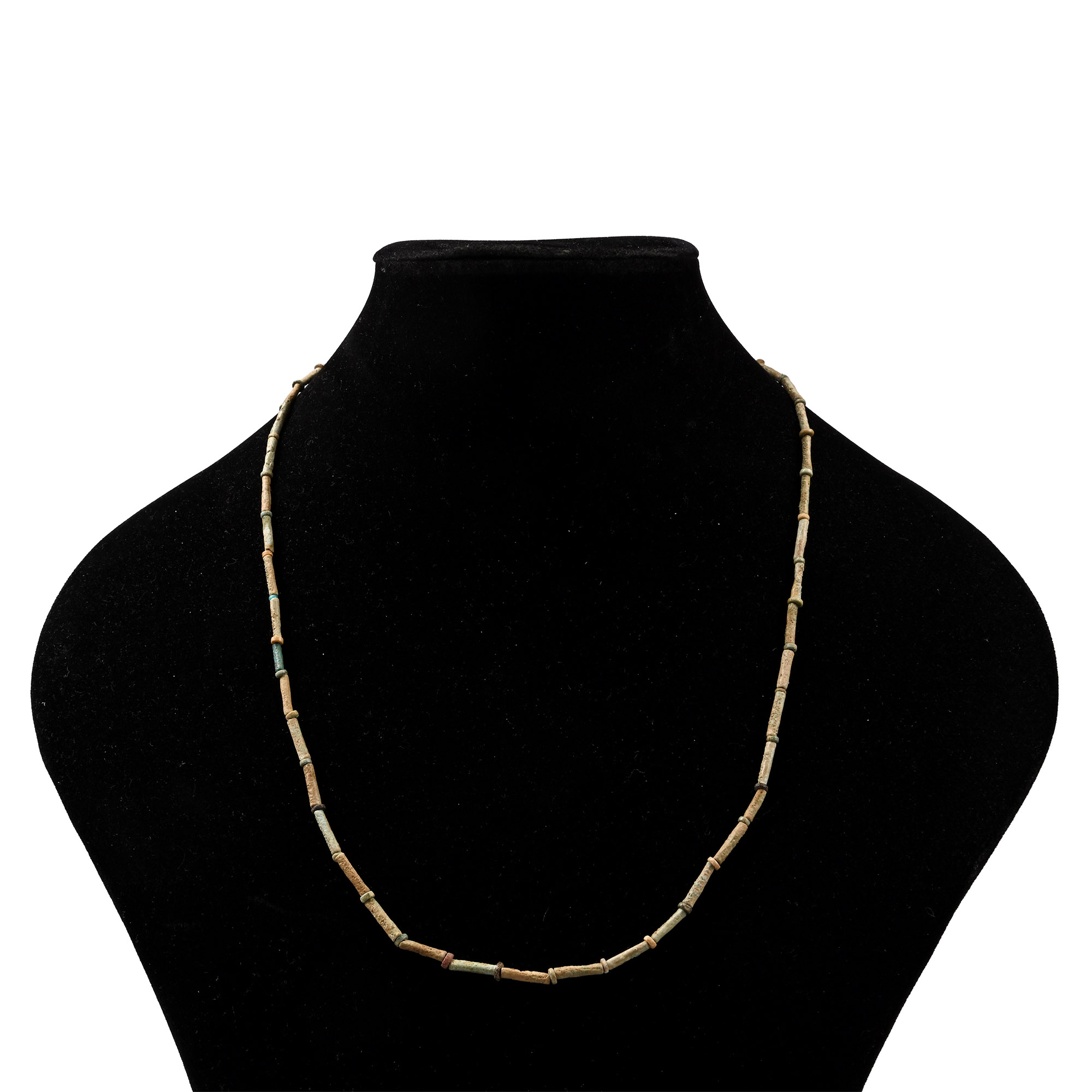
Egyptian Faience Mummy Bead Necklace String
LATE PERIOD, 664-332 B.C.
24 3/8 in. (4.97 grams, 62 cm).
Restrung group of tubular beads with cylindrical and small disc-shaped bead spacers. [No Reserve]
ProvenanceFrom the private collection of a Canadian gentleman living in Essex, UK, formed since the 1920s-circa 1990.
Property of an Essex lady until the late 1990s; thence by descent.
From the private collection of an Essex gentleman since the late 1990s.
This lot is accompanied by an illustrated lot declaration signed by the Head of the Antiquities Department, Dr Raffaele D'Amato.
TimeLine Auctions follows a vetting process to ensure the authenticity and legality of all items, reinforcing our commitment to integrity and responsible trading. Each antiquity, antique, and coin lot undergoes thorough examination by a vetting committee of at least ten external specialists, professional trade association members, scientists, and archaeologists: Our Vetting Process
AUCTIONS:
TimeLine is a leading auction house specialising in antiquities, ancient art, collectables, natural history, coins, medals, and books. Our auctions offer museums, collectors, historians, and enthusiasts the opportunity to acquire unique and historically significant pieces.
-
Phoenician Scarab in Bronze Pendant
6th-4th century B.C.Sold for (Inc. bp): £351
With integral loop and flanking uraei, underside features reserved depictions of a winged sun disc, with central human or divine figure below flanked by uraei and quadrupeds, and a vulture with outspread wings beneath; accompanied by a museum-quality impression. 9.06 grams, 22 mm
Ex London, UK, gentleman 1980-2000s. This lot is accompanied by an illustrated lot declaration signed by the Head of the Antiquities Department, Dr Raffaele D'Amato. -
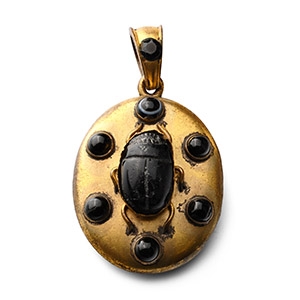
Egyptian Black Stone Scarab in Gilt Bronze Memorial Locket
Late Period, 664-332 B.C. and laterSold for (Inc. bp): £572
Haematite scarab with carapace and mouth, mounted in the centre of a 19th century memorial locket with glazed inner chamber, obverse with six agate cabochons in cells and applied filigree around the central cell mimicking legs. 24.95 grams, 53 mm
From a 19th century collection based on the locket. Acquired on the UK art market. From the collection of G.M.R.H., London, UK. This lot is accompanied by an illustrated lot declaration signed by the Head of the Antiquities Department, Dr Raffaele D'Amato. -
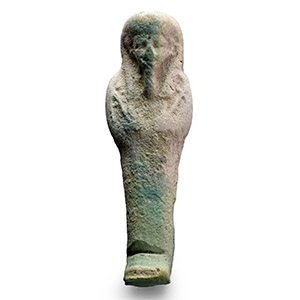
Egyptian Pale Blue Faience Shabti
Ptolemaic Period, 332-30 B.C.Sold for (Inc. bp): £169
Mummiform figure with false beard and holding agricultural implements in the crossed hands. 9.17 grams, 63 mm
Ex London, UK, collection, 1990s. This lot is accompanied by an illustrated lot declaration signed by the Head of the Antiquities Department, Dr Raffaele D'Amato.
