
Loading, please wait...
LOT 0430
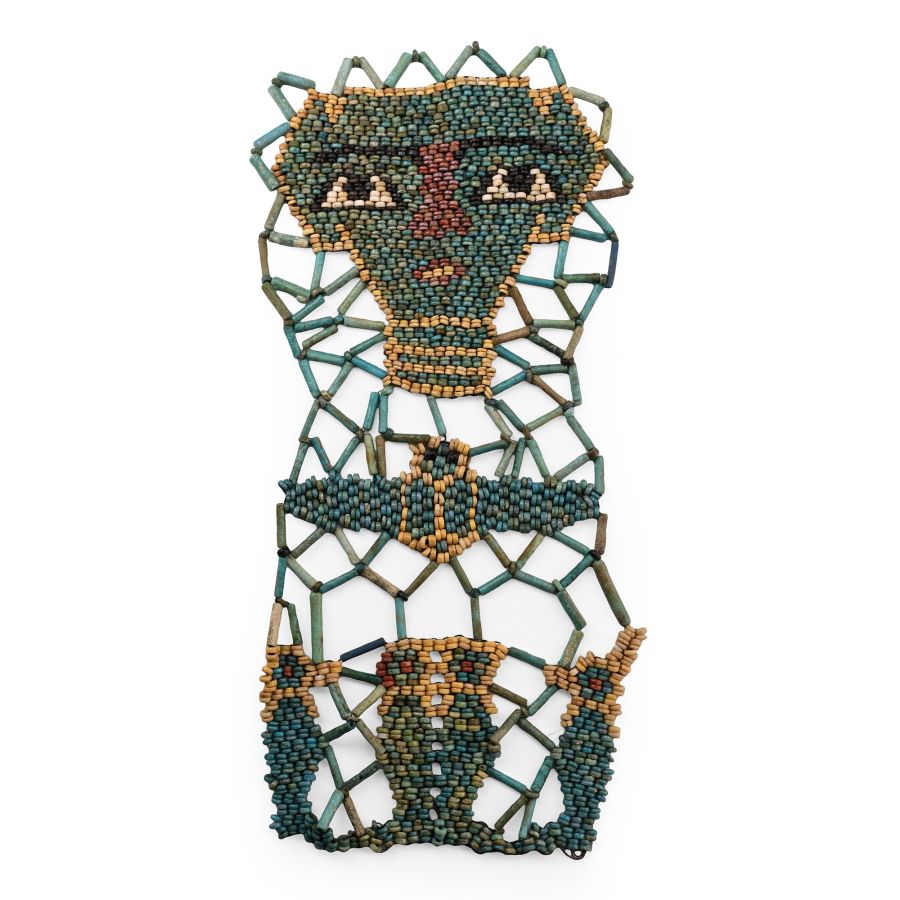
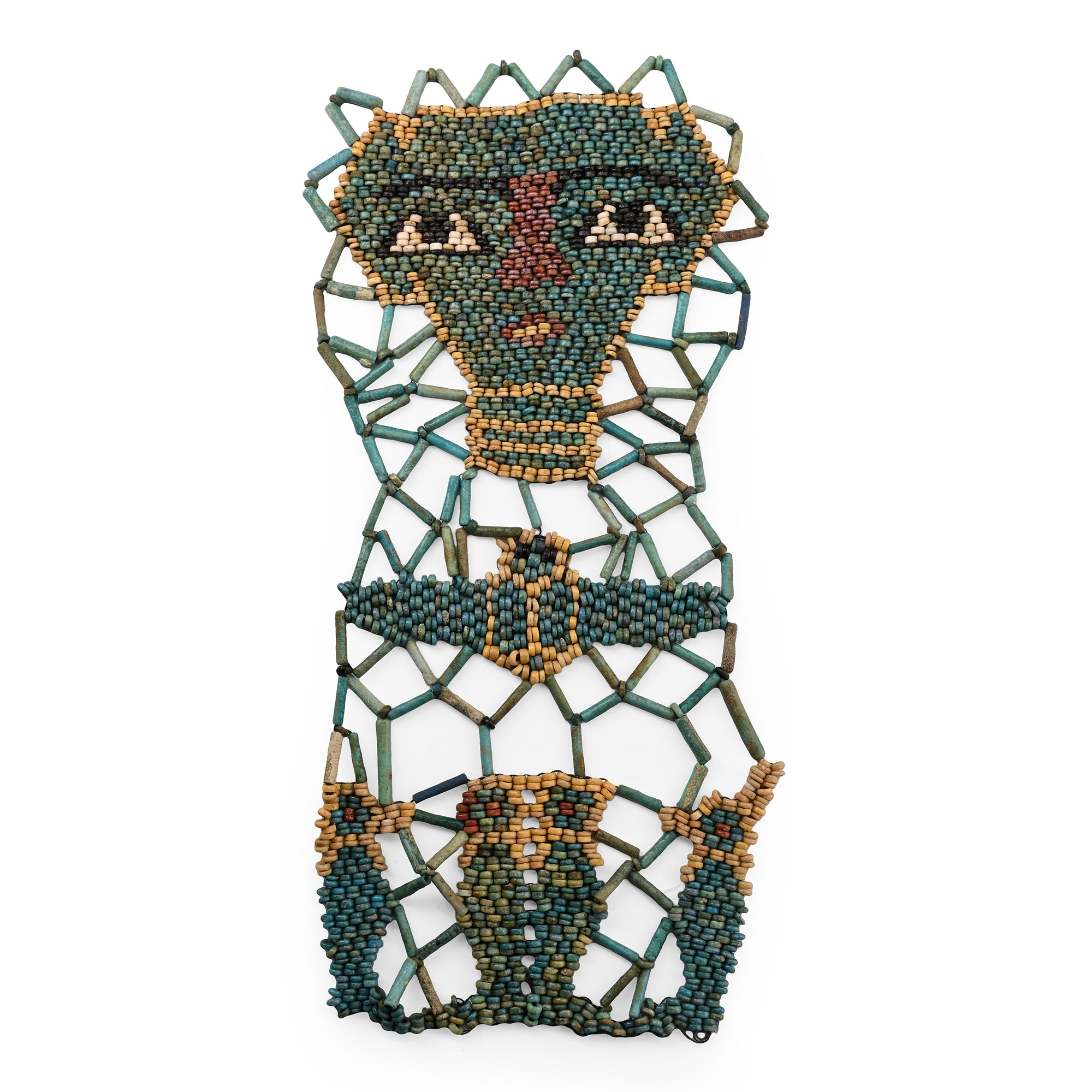
Egyptian Faience Mummy Bead Mask
LATE PERIOD-PTOLEMAIC PERIOD, CIRCA 664-30 B.C.
8 5/8 in. (40.7 grams, 22 cm).
Openwork beaded panel depicting a mummy mask with tripartite beard, a winged scarab below with the Four Sons of Horus, Hapy, Imsety, Qebehsenuef, and Duamutef below; restrung.
ProvenanceFrom the collection of Mariaud de Serres, Paris, France, 1980s-1990s.
Accompanied by a previously illustrated catalogue card with provenance.
TimeLine Auctions follows a vetting process to ensure the authenticity and legality of all items, reinforcing our commitment to integrity and responsible trading. Each antiquity, antique, and coin lot undergoes thorough examination by a vetting committee of at least ten external specialists, professional trade association members, scientists, and archaeologists: Our Vetting Process
AUCTIONS:
TimeLine is a leading auction house specialising in antiquities, ancient art, collectables, natural history, coins, medals, and books. Our auctions offer museums, collectors, historians, and enthusiasts the opportunity to acquire unique and historically significant pieces.
-
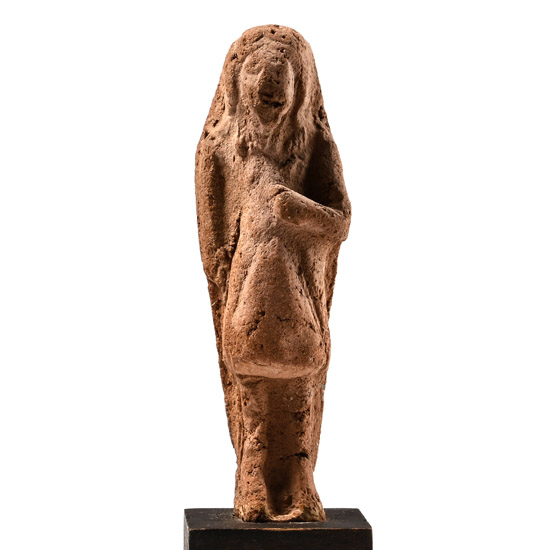
Egyptian Clay Overseer Shabti
Late Ramesside Period-early Third Intermediate Period, circa 1200-945 B.C.Sold for (Inc. bp): £208
A mould-made figurine depicting a figure wearing a duplex wig and the projecting apron of an overseer shabti, with defined legs and feet below; the right arm by the side and the left bent across the chest; mounted on a custom-made stand. 44 grams total, 10 cm including stand
From the collection of David Donlan (1947-2025), a dedicated and lifelong collector with a passion for the ancient world and the natural sciences, forming his collection from 1960s onwards, using many reputable dealers across the United Kingdom, including the well-regarded Coincraft and The Parthenon Gallery.
Shabtis in daily life dress appeared in the late 18th Dynasty. By the late Ramesside Period, the general form had developed into the so-called “reis” or overseer figure, often depicted holding a whip. This form gained popularity during the subsequent 21st and 22nd Dynasties. Although this shabti lacks a whip, the bent arm is characteristic of those holding such a tool, suggesting that it belongs to the “reis” type. Ideally, there was one overseer shabti for every ten, typically mummiform, “worker” shabtis. -
.jpg)
Egyptian Steatite Bust in a Gold Pendant
Ptolemaic-Roman Period, 2nd century B.C.-2nd century A.D.Sold for (Inc. bp): £1,300
Fragment of a carved panel or vessel depicting a female bust, possibly a queen or Isis, modelled in half-round relief, wearing a loosely draped tunic, a tiered wesekh collar, and a heavy curled, tripartite wig; reverse with lotus flower ropework and other ornamentation; mounted in a later gold suspension frame. 8.75 grams, 38 mm
Private collection, Southern France, 1970s. Acquired on the English art market.
This fragment likely originates from an elaborately decorated bowl belonging to a specific group thought to have been made in Alexandria (cf. Page-Gasser, M., Wiese, A.B., Ägypten: Augenblicke der Ewigkeit, Mainz, 1997, for a complete example). The purpose of these bowls is unclear, but they may have been used as votive offerings in sanctuaries. -
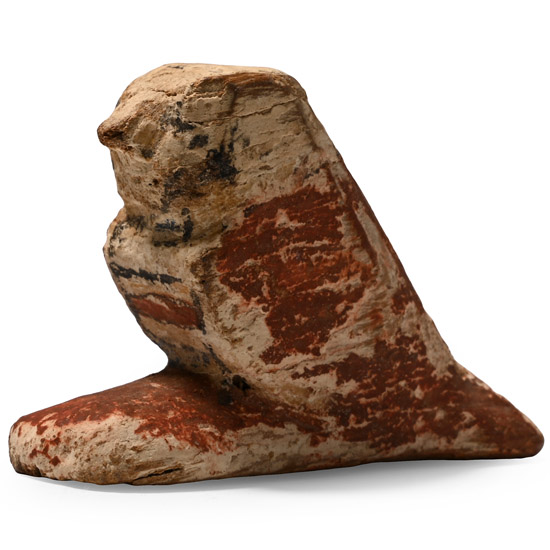
Egyptian Polychrome Wooden Sokar Falcon
Late Period, 664-332 B.C.Sold for (Inc. bp): £312
Statuette depicting the couchant falcon god Sokar with wings folded along the sides of the body; chest, wings, and legs with painted details; inked legend on the underside reading 'Ex George Wathen / 1893 / 12'. 16 grams, 71 mm
Ex George Henry Wathen collection from 1843, who wrote and illustrated the important work 'The Arts, Antiquity and Chronology of Ancient Egypt'. From the collection of David Donlan (1947–2025), a dedicated and lifelong collector with a passion for the ancient world and the natural sciences, forming his collection from 1960s onwards, using many reputable dealers across the United Kingdom, including the well-regarded Coincraft and The Parthenon Gallery.
Wooden images of the raptor-form god Sokar typically decorated the tops of rectangular wooden coffins and canopic chests, which held jars containing the deceased’s mummified organs. Sokar was a protective god of the Memphite necropolis and was often merged with the funerary god Osiris and Ptah, the creator deity of Memphis. George Henry Wathen, FGS (21 November 1816 – 10 November 1879) was a geologist, author, magazine publisher, and South African politician of the Victorian era known primarily for his books on the antiquities of Egypt and the gold fields of Victoria, Australia.
