
Loading, please wait...
LOT 0618
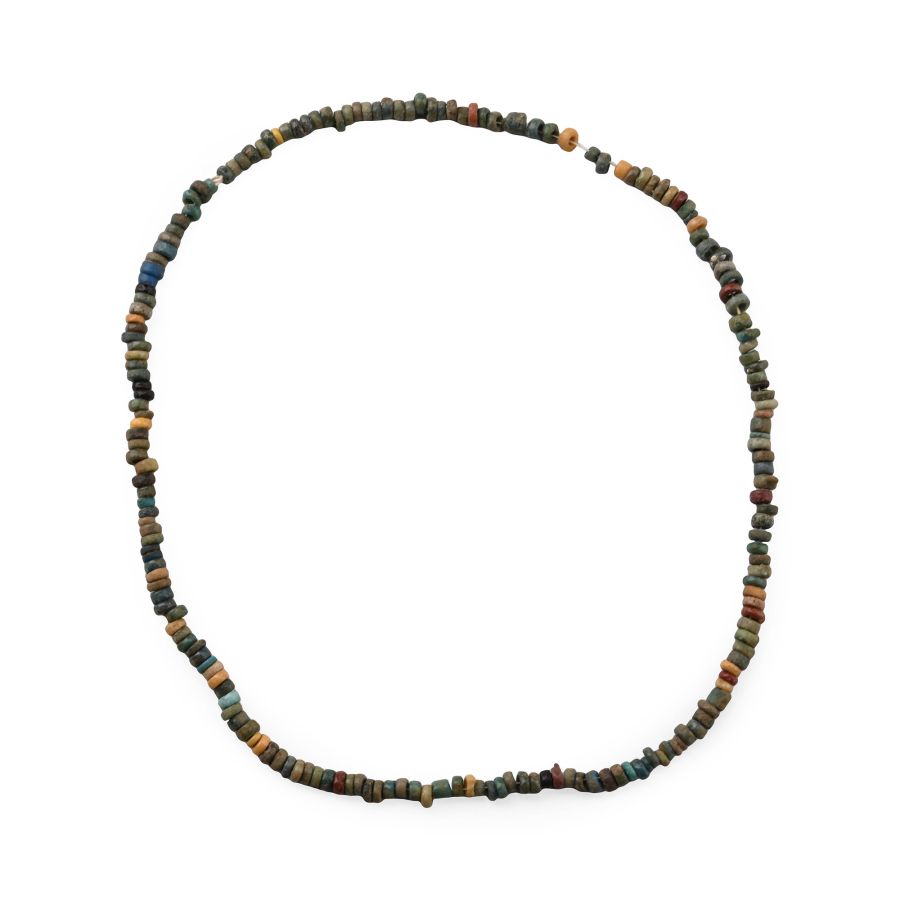
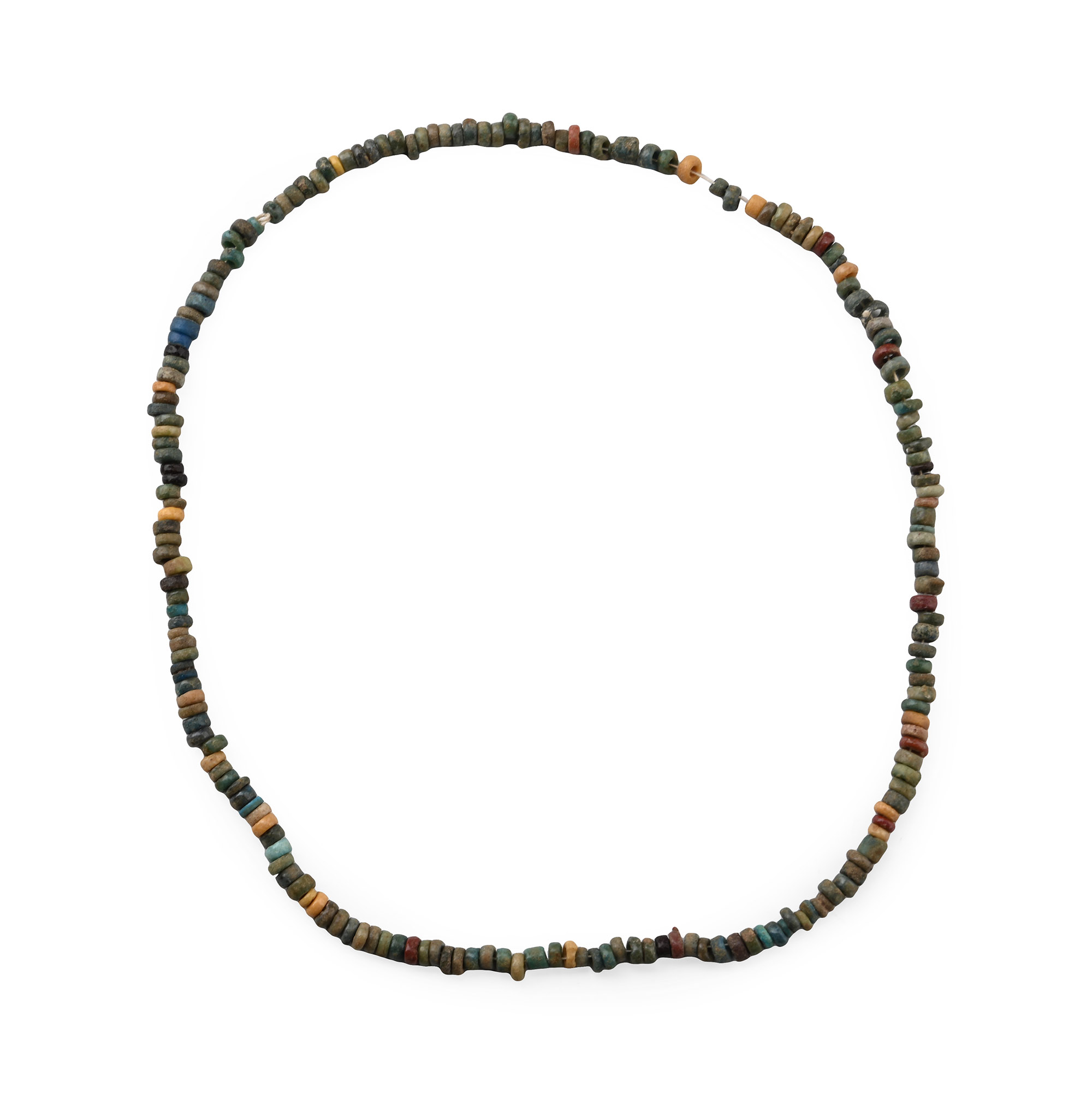
Egyptian Faience Mummy Bead Bracelet
LATE PERIOD-PTOLEMAIC PERIOD, CIRCA 664-30 B.C.
11 3/8 in. (3 grams, 29 cm).
Composed of green and blue glazed oblate beads, restrung. [No Reserve]
ProvenanceExcavated from Egypt in 1914.
From the private collection of Mr David Sams and his wife Elizabeth Kate Sams, gentry and amateur archaeologists who travelled to Egypt in 1914 with their daughter Ethel. Mr Sams and his wife led digging expeditions from which these items come, from the family estate of Mr and Mrs Sams, by direct descent to their granddaughter.
TimeLine Auctions follows a vetting process to ensure the authenticity and legality of all items, reinforcing our commitment to integrity and responsible trading. Each antiquity, antique, and coin lot undergoes thorough examination by a vetting committee of at least ten external specialists, professional trade association members, scientists, and archaeologists: Our Vetting Process
AUCTIONS:
TimeLine is a leading auction house specialising in antiquities, ancient art, collectables, natural history, coins, medals, and books. Our auctions offer museums, collectors, historians, and enthusiasts the opportunity to acquire unique and historically significant pieces.
LOT 0618
Egyptian Faience Mummy Bead Bracelet
Estimate £40 - 60€46 - 70 (for guidance only)$54 - 81 (for guidance only)
-
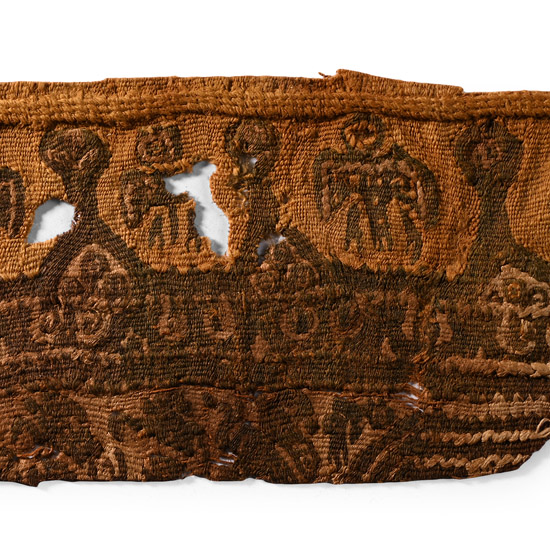
Egyptian Coptic Tunic Textile Fragment of a Segmentum with Eagles and Other Birds
Circa 7th century A.D.Estimate: £50 - 70 (+bp*)
Bids: 1 | Current Bid: £5
Fragment of a large segmentum in linen and wool, embroidered with rows of eagles and other birds, the borders with geometric decorations. 8 grams, 19 cm
Acquired 1970s-1996. Property of a North American collector. London collection, 2016.
The segment is realised in the tapestry technique. They were part of the decoration of a tunic, and the presence of the Imperial eagle, not a common pattern, could refer to a military tunic. -
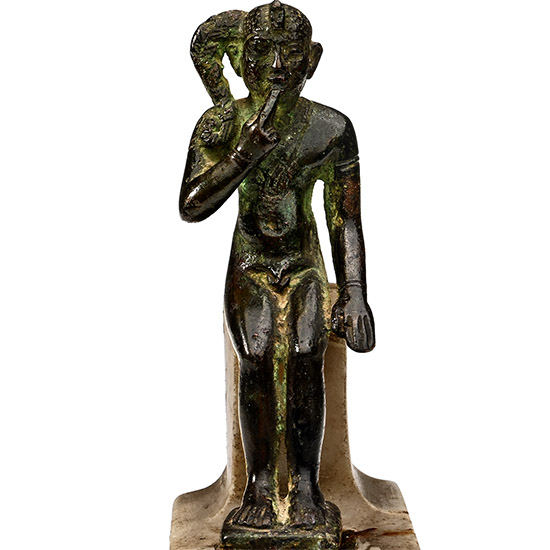
Egyptian Bronze Statuette of Harpocrates
3rd century B.C.Estimate: £2,000 - 3,000 (‡+bp*)
Opening Bid: £1,100
Votive statuette with youthful locks and a uraeus on his forehead; wearing the heart amulet around his neck; depicted nude, holding his finger to his mouth, a gesture identifying him as a child god; feet resting on a plinth. 281 grams, 10.7 cm high
Ex Tschudi Carlin, circa 1920. with Cahn Auktionen AG, Basel, Young Collectors Auction, 2015, no.147. This lot has been checked against the Interpol Database of stolen works of art and is accompanied by search certificate no.13472-263066.
Harpocrates is the Greek equivalent of the Egyptian name Hor-pa-khered, which means ‘Horus the Child’. This name refers to Horus as the divine infant of Isis and Osiris. Wearing an amulet of Harpocrates was believed to provide the same protection that Isis granted to her beloved son. Larger bronze statuettes were probably votive offerings to Harpocrates, intended to secure his favour and protection. -
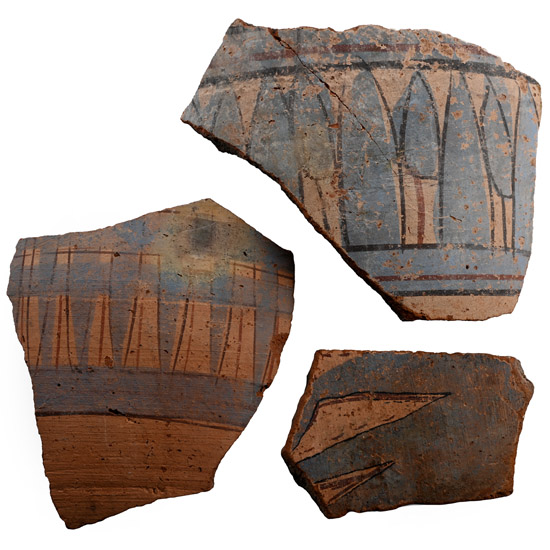
Large Egyptian Painted Bowl Fragments
New Kingdom, 18th Dynasty, Amarna Period, 1379-1362 B.C.Estimate: £80 - 100 (+bp*)
Opening Bid: £5
Three substantial fragments from blue-painted vessels, two with stylised floral motifs and one with a fragment of figurative decoration. 300 grams total, 8.3-13.2 cm
Acquired circa 1979. From the private collection of Peter Clayton, FCILIP, Dip, Arch, FSA, FRNS, Hemel Hempstead, Hertfordshire, UK; formed since the late 1950s.
The distinctive blue colour on these pottery fragments derives from a cobalt-and-aluminium slip that reacts during firing. The designs could incorporate floral, geometric, and figurative motifs (for an illustrated discussion of the technical production of blue-painted pottery, see Seyfried, F. (ed.), In the Light of Amarna: 100 Years of the Nefertiti Discovery, Berlin, 2012, pp. 132-135.
