
Loading, please wait...
LOT 0691
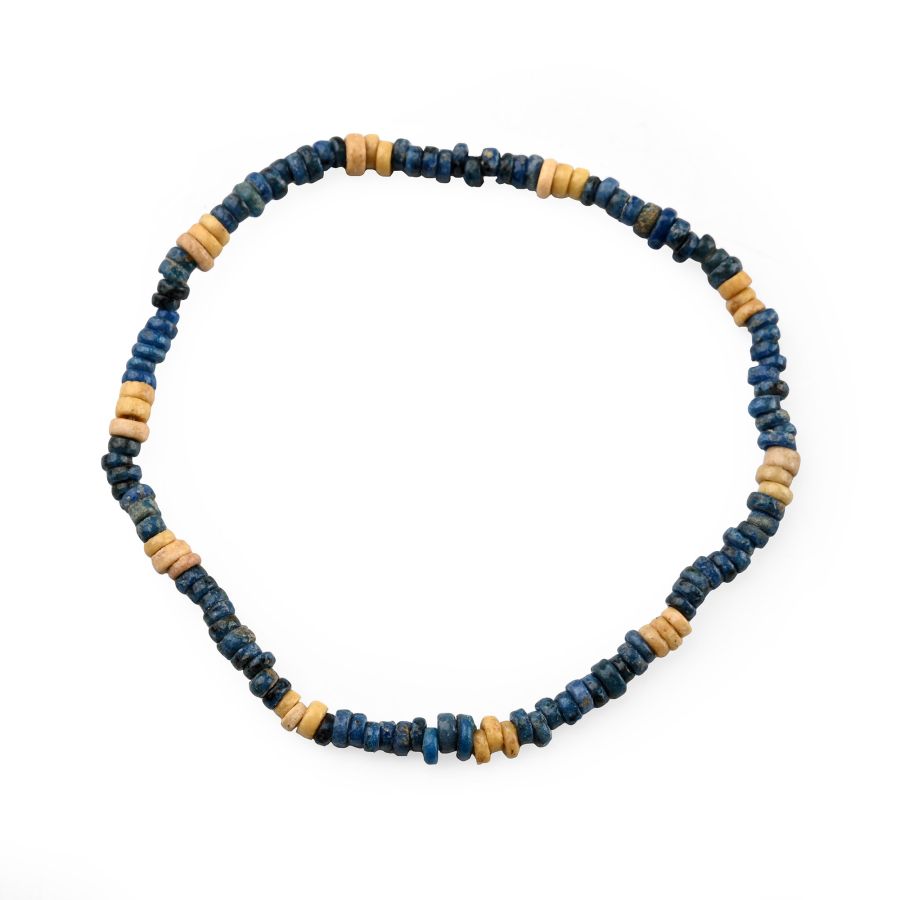
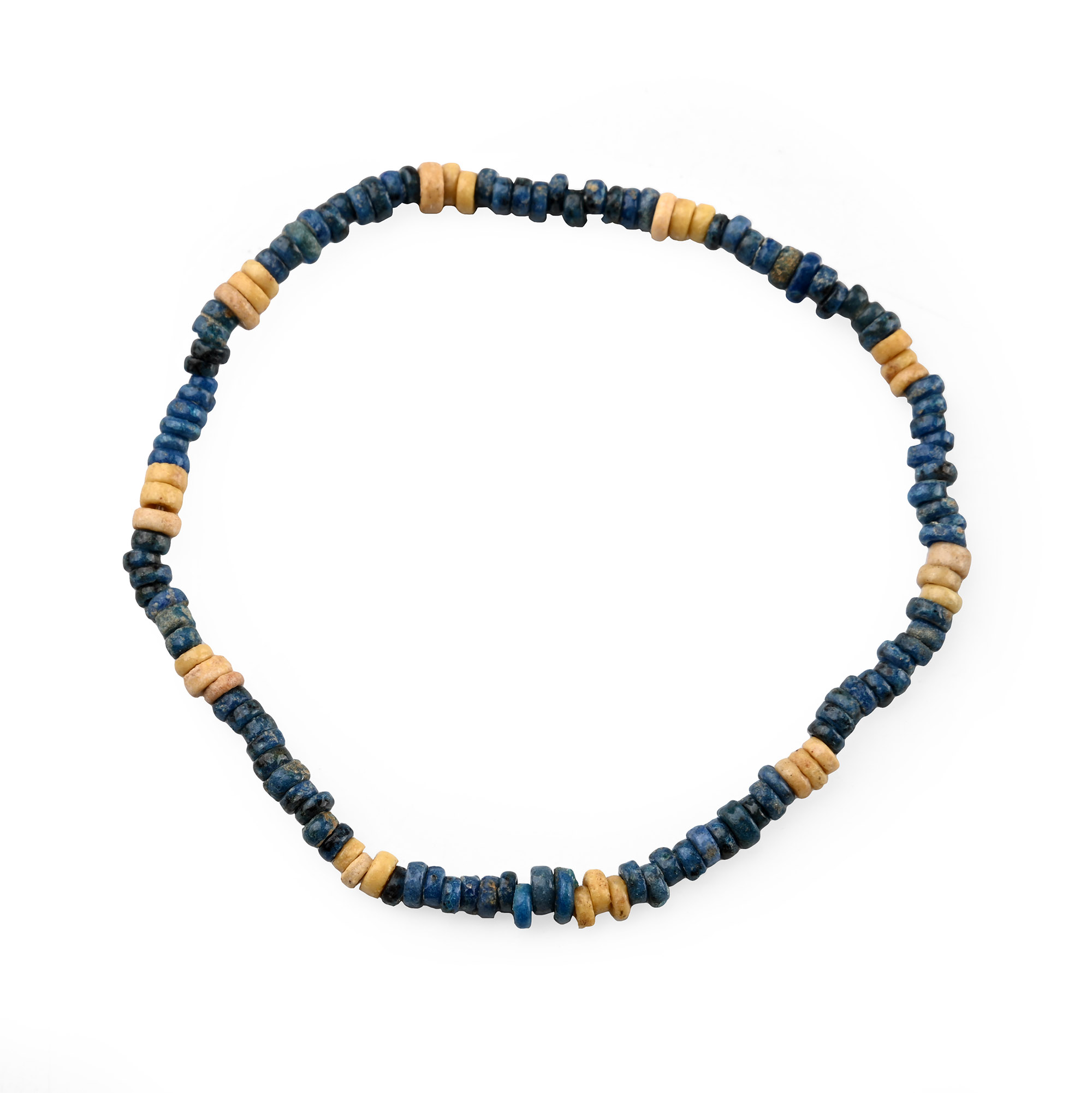
Egyptian Faience Mummy Bead Bracelet
LATE PERIOD, 664-332 B.C.
6 3/4 in. (2.19 grams, 17 cm).
Composed of alternating blue and cream annular beads, restrung with an elasticated string. [No Reserve]
ProvenanceEx Ancient Art Shop, Windsor, UK, 1990s.
Ex private collection.
TimeLine Auctions follows a vetting process to ensure the authenticity and legality of all items, reinforcing our commitment to integrity and responsible trading. Each antiquity, antique, and coin lot undergoes thorough examination by a vetting committee of at least ten external specialists, professional trade association members, scientists, and archaeologists: Our Vetting Process
AUCTIONS:
TimeLine is a leading auction house specialising in antiquities, ancient art, collectables, natural history, coins, medals, and books. Our auctions offer museums, collectors, historians, and enthusiasts the opportunity to acquire unique and historically significant pieces.
LOT 0691
Egyptian Faience Mummy Bead Bracelet
Estimate £60 - 80€70 - 93 (for guidance only)$81 - 108 (for guidance only)
Opening Bid
£5 (EUR 6; USD 7) +BP*
-
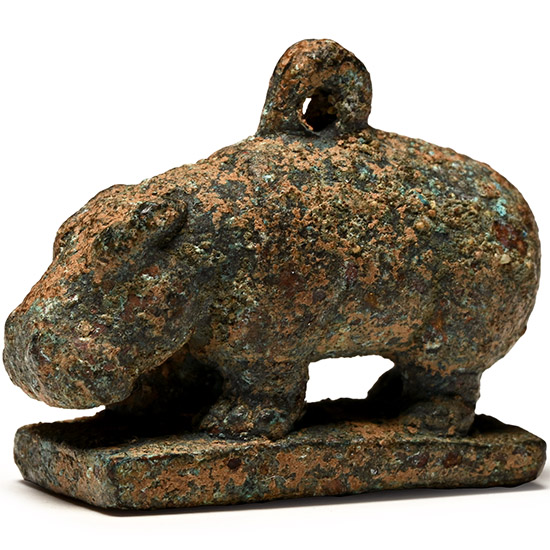
Egyptian Bronze Hippopotamus Amulet
Late Period, 664-332 B.C. or laterEstimate: £600 - 800 (+bp*)
Opening Bid: £300
Modelled in the round on a rectangular base with a dorsal loop. 20.5 grams, 26 mm
Ex mid 19th century London, UK, collection.
Metal hippopotamus amulets are comparatively rare compared with faience and stone examples. A gold hippopotamus amulet of similar size was discovered in Tomb W 643 at Meroe, Sudan, and is now in the Museum of Fine Arts, Boston (inv. no. 23.380). Egyptian art depicted the Nile hippopotamus in Old, Middle, and New Kingdom limestone reliefs, as well as in faience, stone, and metal statuettes. Egyptians both admired and feared them: powerful and unpredictable, hippos attack when threatened. Their fearsome reputation made them potent apotropaic amulets, giving the wearer power over evil and chaotic forces. -
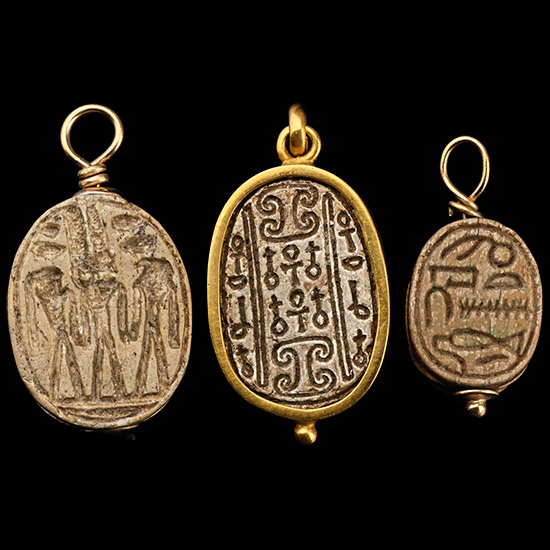
Collection of Egyptian Faience and Steatite Scarabs with Gold Mounts
Second Intermediate Period-Late Period, 1782-332 B.C.Estimate: £400 - 600 (‡+bp*)
Opening Bid: £200
Comprising: grey scarab with gold mounting pin, frame and loop, three panels on the underside with ankh and other motifs; grey scarab with traces of turquoise surface, gold mounting pin and loop, hieroglyphs on the underside; cream scarab with gold mounting pin and loop, frieze of three figures on the underside, the middle figure wearing an atef crown. 9.85 grams total, 24-32 mm
Private collection of Kal Noselson, New York, acquired between 1976 and the late 1990s; thence by descent. Accompanied by the collector's original inked images. -
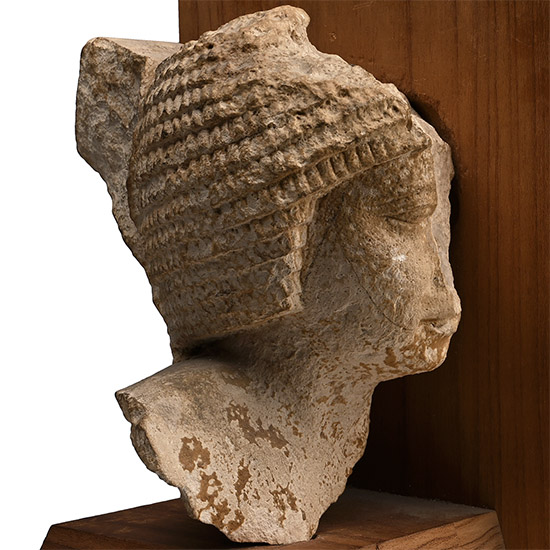
Egyptian Limestone Head of a Noble Wearing a Curled Wig
Old Kingdom, 5th-6th Dynasty, circa 2498-2181 B.C.Estimate: £2,000 - 3,000 (+bp*)
Bids: 2 | Current Bid: £10
Fragmentary limestone head of an elite official carved in the round, wearing a characteristic short wig composed of rows of small, tight concentric curls that completely cover the ears and terminate evenly at the brow; the rounded right side of the face preserves a carefully rendered almond-shaped eye, a raised relief eyebrow, and small yet prominent lips, with a custom wooden mount. 2.91 kg total, 25.4 cm high including stand
From the private collection of Norman Davis, Seattle, U.S.A. Received as a gift from Norman Davis in 1973. From the private collection of Peter Clayton, FCILIP, Dip, Arch, FSA, FRNS, Hemel Hempstead, Hertfordshire, UK; formed since the late 1950s. This lot has been checked against the Interpol Database of stolen works of art and is accompanied by search certificate no.13519-262983.
