
Loading, please wait...
LOT 0744
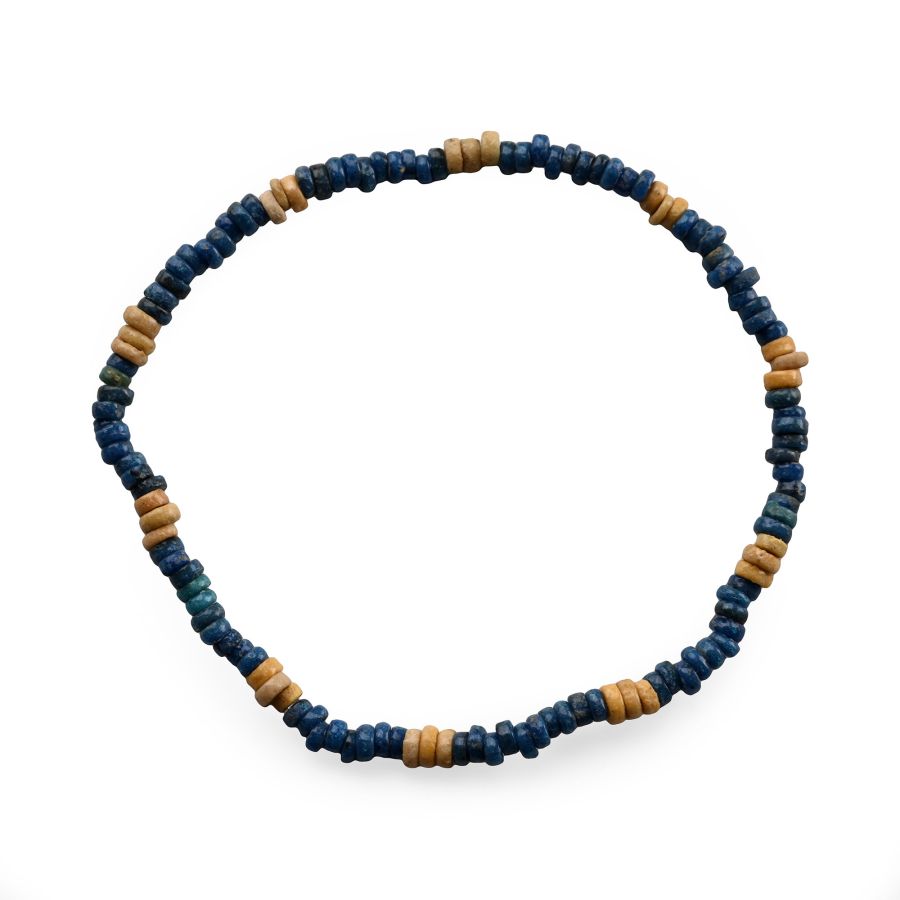
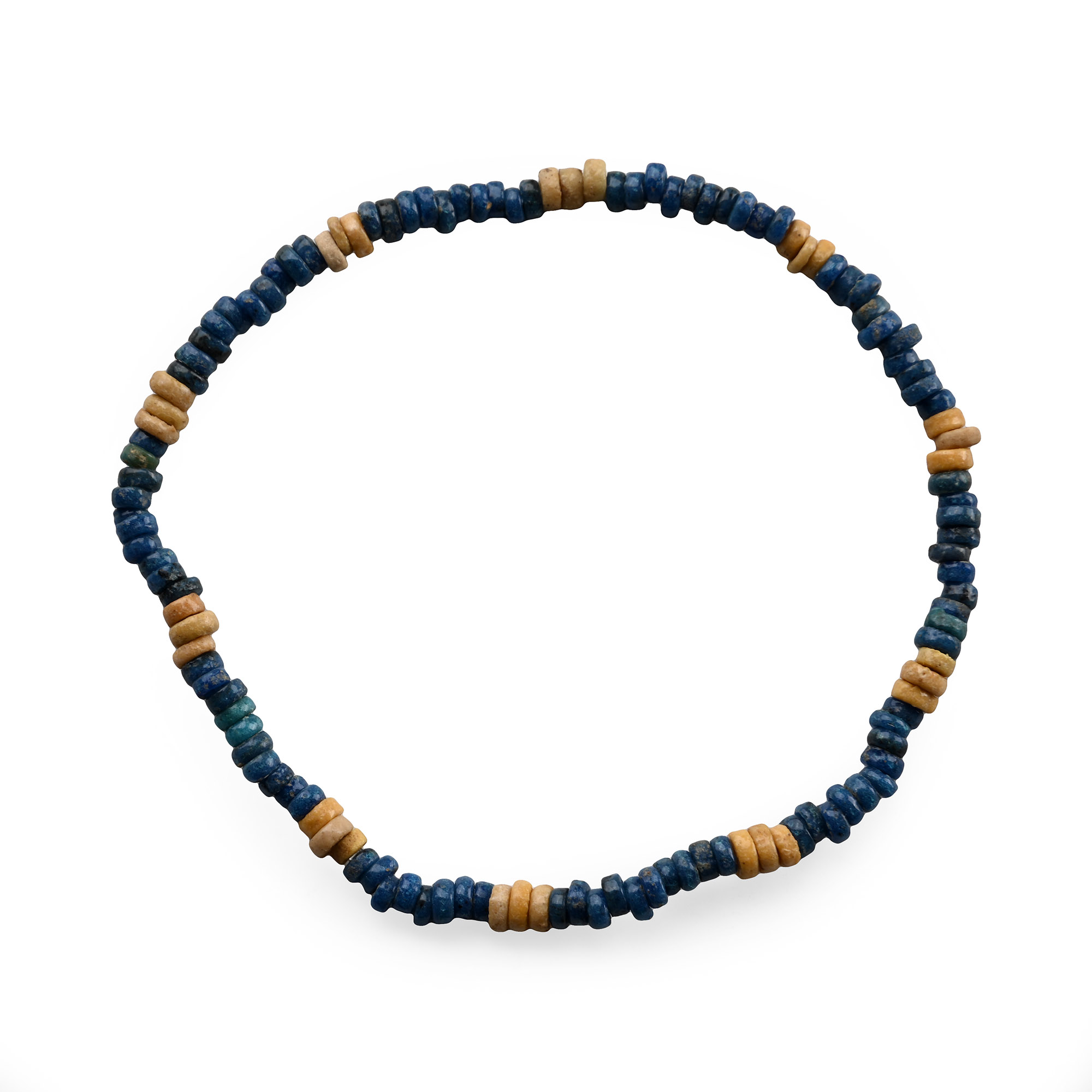
Egyptian Faience Mummy Bead Bracelet
LATE PERIOD, 664-332 B.C.
6 3/4 in. (2.09 grams, 17 cm).
Composed of alternating blue and cream annular beads, restrung with an elasticated string. [No Reserve]
ProvenanceEx Ancient Art Shop, Windsor, UK, 1990s.
Ex private collection.
TimeLine Auctions follows a vetting process to ensure the authenticity and legality of all items, reinforcing our commitment to integrity and responsible trading. Each antiquity, antique, and coin lot undergoes thorough examination by a vetting committee of at least ten external specialists, professional trade association members, scientists, and archaeologists: Our Vetting Process
AUCTIONS:
TimeLine is a leading auction house specialising in antiquities, ancient art, collectables, natural history, coins, medals, and books. Our auctions offer museums, collectors, historians, and enthusiasts the opportunity to acquire unique and historically significant pieces.
LOT 0744
Egyptian Faience Mummy Bead Bracelet
Estimate £60 - 80€70 - 93 (for guidance only)$81 - 108 (for guidance only)
Opening Bid
£5 (EUR 6; USD 7) +BP*
-
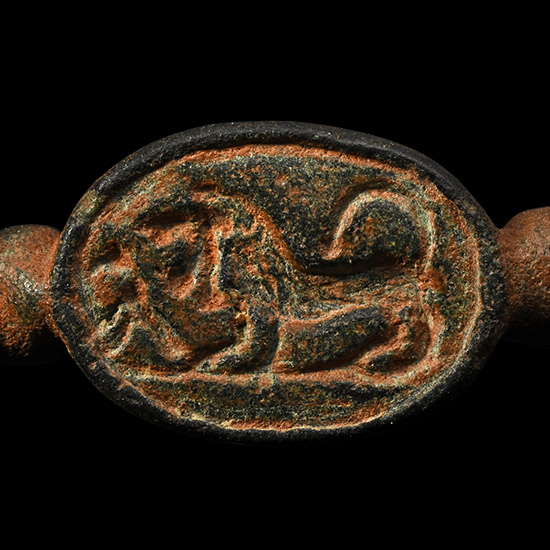
Phoenician Bronze Oval Seal Pendant with Lion
Late 1st millennium B.C.Estimate: £500 - 700 (+bp*)
Opening Bid: £250
Ellipsoid plaque with folded lateral arms and ribbed suspension loop above; the underside decorated with a depiction of a lion attacking a man or animal. 22 grams, 36 mm
London gentleman's collection, 1970-1990s, by descent. -
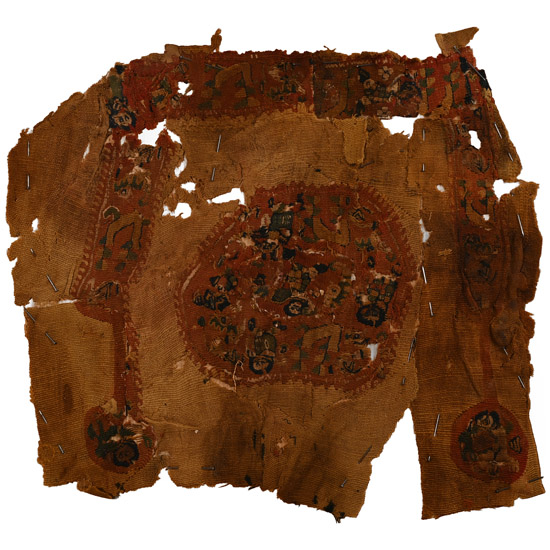
Large Egyptian Coptic Tunic Textile Fragment with Lateral Clavi and Central Orbiculus Representing Figures and Animals
Circa 6th century A.D.Estimate: £300 - 400 (+bp*)
Bids: 5 | Current Bid: £30
Larger portion of a tunic with decorative strips (clavi) ending with circular decorations (orbiculi), and central orbiculus in red, green and yellow wool, S-twist tapestry, decorated with Nilotic scenes including plants, animals, possibly human figures. 59 grams total including paper folder, 32.5 cm
Acquired 1970s-1996. Property of a North American collector. London collection, 2016.
Among the many fragments of wool tunics, there are several long strips that match to form nearly full-length central pectoral clavi and orbiculi. They are patterned with a profusion of small figures or interlaced abstract designs, birds, plants and animals, with a contrasting border filled with geometric motifs. -
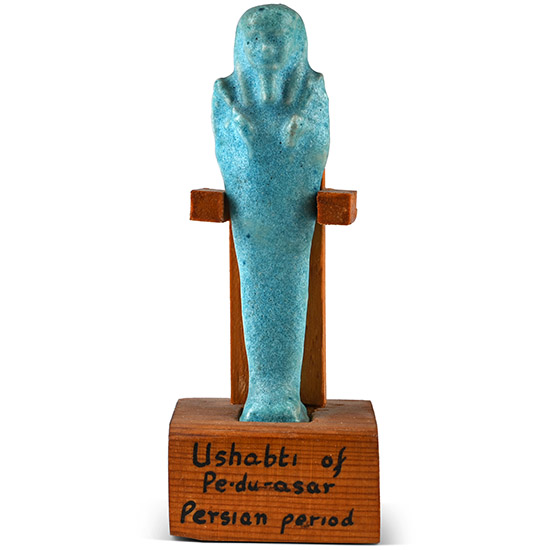
Egyptian Blue Glazed Faience Shabti
Ptolemaic Period, 323-30 B.C.Estimate: £200 - 300 (+bp*)
Bids: 2 | Current Bid: £20
Typical mummiform type wearing a lappet wig, with arms crossed and hands holding agricultural implements; uninscribed; mounted on a custom-made stand marked 'Ushabti of Pe-du-asar Persian period'. 41.3 grams total, 99 mm
Acquired Church Street, 14th December 1957, for 10 shillings. From the private collection of Peter Clayton, FCILIP, Dip, Arch, FSA, FRNS, Hemel Hempstead, Hertfordshire, UK; formed since the late 1950s. Accompanied by an old handwritten information card by Peter Clayton, collection no.6.
The 'Pe-du-asar' on the label likely refers to the individual whose burial Flinders Petrie discovered at Abydos in 1902, which contained many blue-glazed, uninscribed shabtis. However, his shabtis have different hand positions and a glassier, often bichrome, glaze, suggesting that this example comes from a different burial.
