
Loading, please wait...
LOT 0602
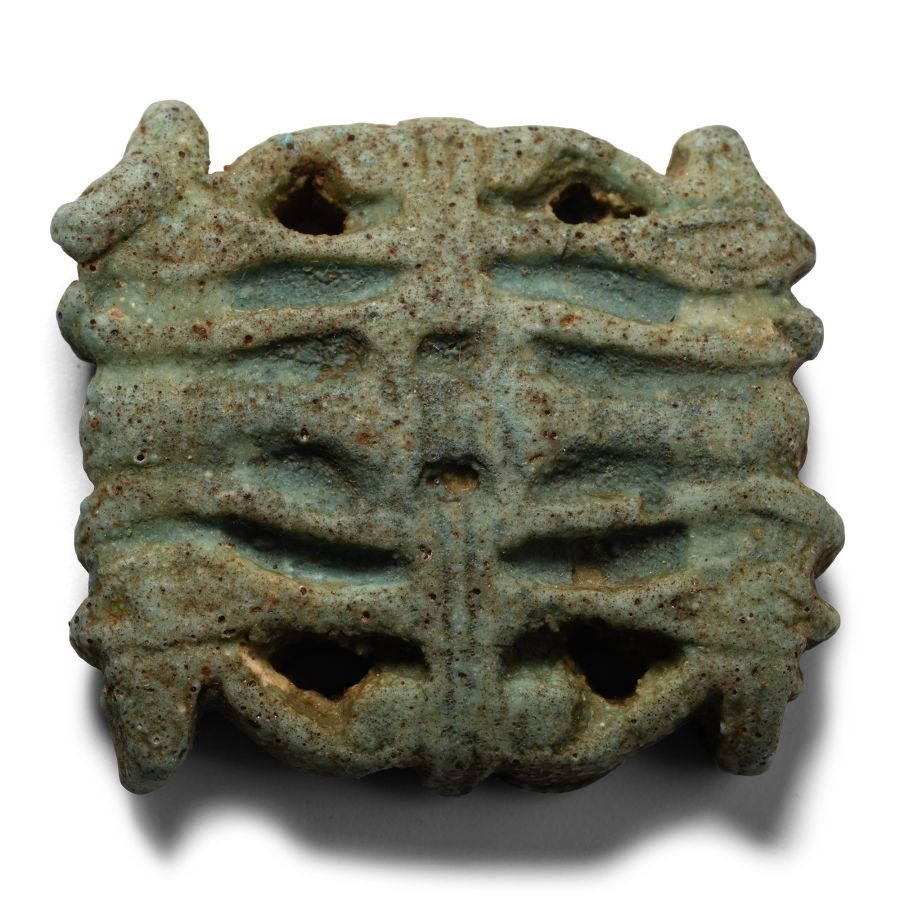
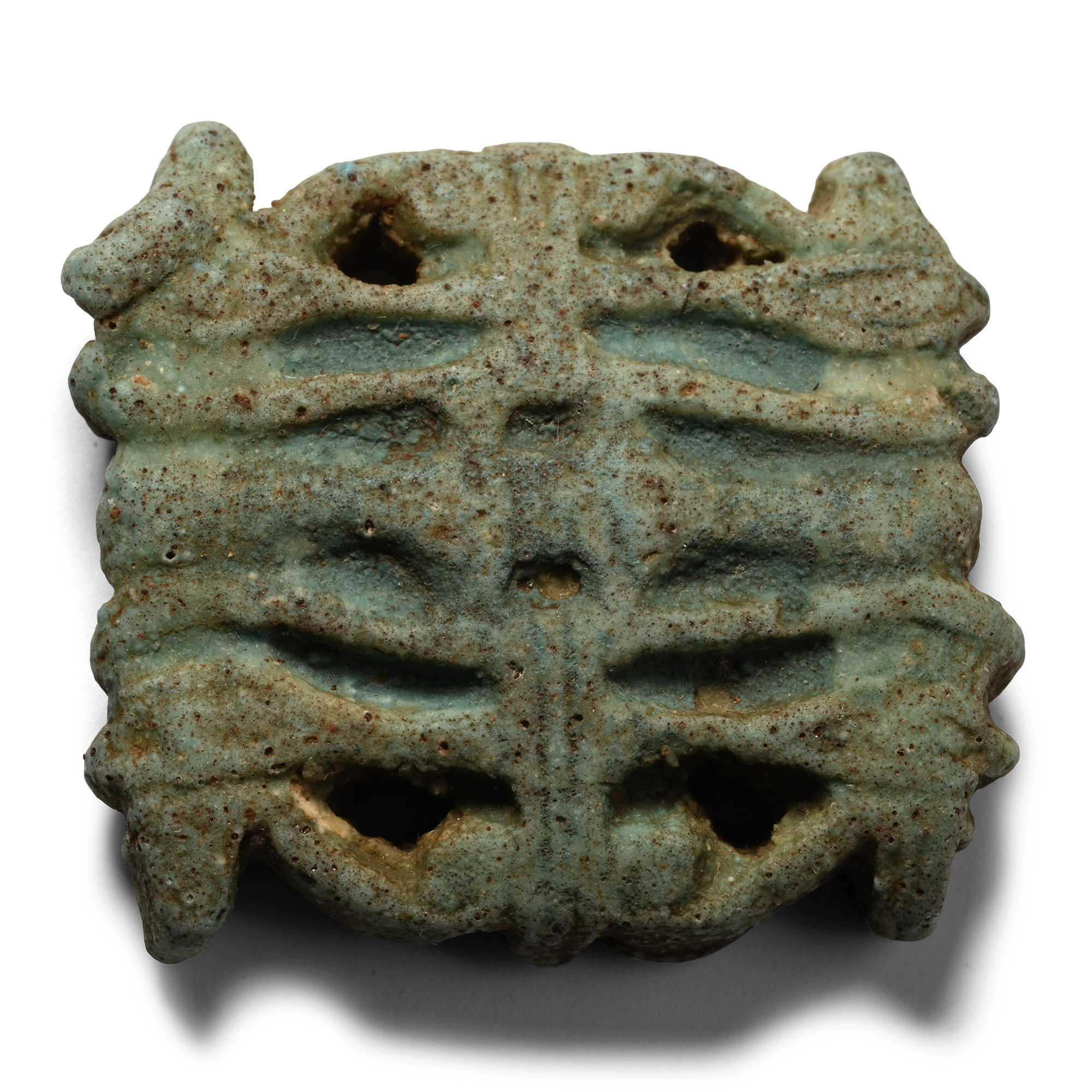
Egyptian Faience Multiple Eye of Horus Amulet
NEW KINGDOM-LATE PERIOD, 1550-332 B.C.
1 1/4 in. (11.83 grams, 33 mm).
Green-glazed amulet with two wedjat eyes at the top and a mirror image below, pierced longitudinally through the centre for suspension.
ProvenanceFrom an early 20th century UK collection.
Accompanied by a previously illustrated catalogue card with provenance.
Cf. Petrie, W.M.F., Amulets. Illustrated by the Egyptian Collection in University College, London, 1914, pl. XXV 140h, 140j, for examples of multiple wedjat-eye amulets.
CONDITIONTimeLine Auctions follows a vetting process to ensure the authenticity and legality of all items, reinforcing our commitment to integrity and responsible trading. Each antiquity, antique, and coin lot undergoes thorough examination by a vetting committee of at least ten external specialists, professional trade association members, scientists, and archaeologists: Our Vetting Process
AUCTIONS:
TimeLine is a leading auction house specialising in antiquities, ancient art, collectables, natural history, coins, medals, and books. Our auctions offer museums, collectors, historians, and enthusiasts the opportunity to acquire unique and historically significant pieces.
LOT 0602
Egyptian Faience Multiple Eye of Horus Amulet
Estimate £180 - 240€210 - 280 (for guidance only)$240 - 320 (for guidance only)
Opening Bid
£90 (EUR 104; USD 122) +BP*
-
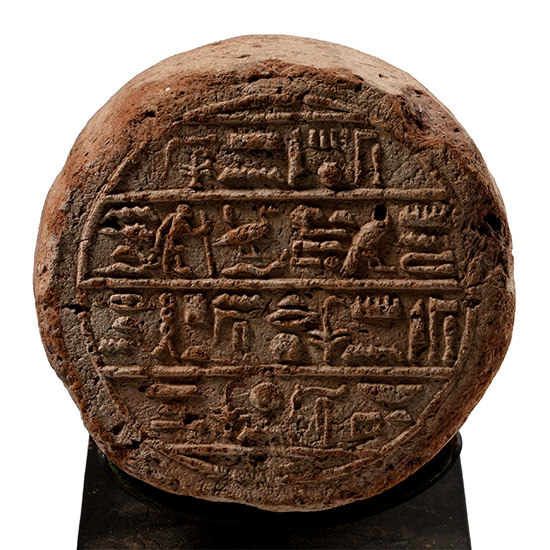
Egyptian Terracotta Funerary Cone of Montuemhat
Late Period, 25th-26th Dynasty, circa 700-650 B.C.Estimate: £500 - 700 (+bp*)
Bids: 7 | Current Bid: £320
The front portion of a tapering funerary cone, with the circular flat end bearing four horizontal lines of impressed hieroglyphic text, reading: 'Fourth god’s servant (of) Amun, overseer of Upper Egypt, Montuemhat, true of voice, the eldest son of his body, god’s servant (of) Amun, king’s acquaintance, Nes(u)ptah, born of the lady of the house, Nesykhonsu, true of voice'. 1.24 kg total, 15.5 cm wide including stand
Acquired from Abdoul Rassoul on the West Bank at Luxor, 1974-1980 when a guest lecturer. From the private collection of Peter Clayton, FCILIP, Dip, Arch, FSA, FRNS, Hemel Hempstead, Hertfordshire, UK; formed since the late 1950s.
Some funerary cones for Montuemhat, such as this example, include members of his family, in this instance naming his son, Nesuptah, and his son’s mother, Nesykhonsu, who was Montuemhat’s first wife. From Montuemhat's tomb in the Asasif at Thebes (TT34). -
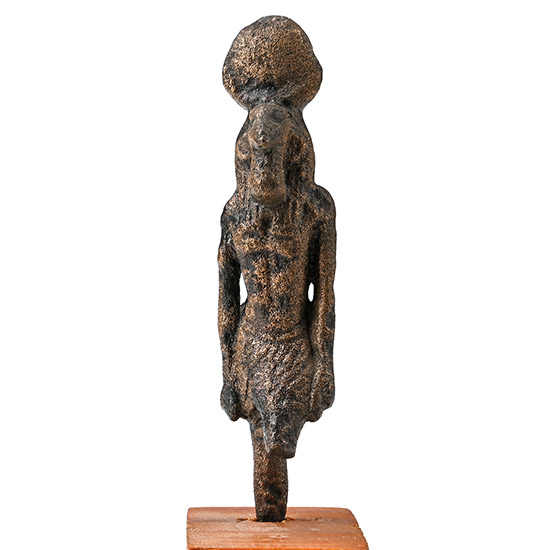
Egyptian Bronze Figure of the God Thoth
Late Period, circa 664-332 B.C.Estimate: £80 - 100 (+bp*)
Bids: 2 | Current Bid: £15
Modelled in the round in advancing pose with ibis head and sun-disc headdress, loop to rear, lower legs absent, display stand; restored in the Institute of Archaeology laboratory. 32.8 grams total, 80 mm including stand
Acquired from Caledonian market, January 1960, for 4 shillings. From the private collection of Peter Clayton, FCILIP, Dip, Arch, FSA, FRNS, Hemel Hempstead, Hertfordshire, UK; formed since the late 1950s. Accompanied by an old handwritten information card by Peter Clayton, collection no.90. -
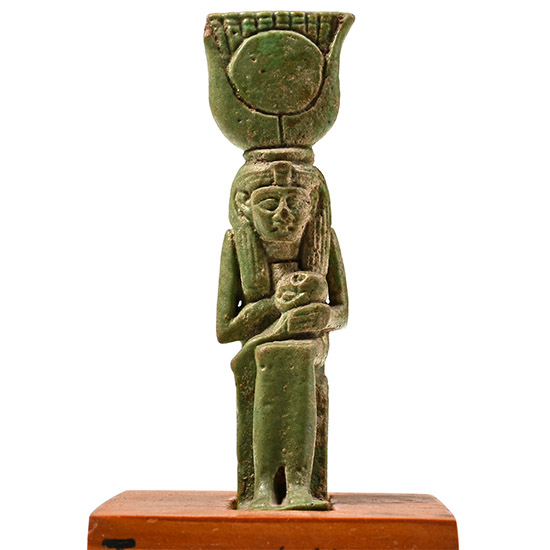
Egyptian Green Glazed Faience Amulet of the Goddess Isis with Horus
Late Period, 26th Dynasty, circa 600-700 B.C.Estimate: £400 - 600 (+bp*)
Bids: 6 | Current Bid: £45
Figurine of Isis nursing Horus, seated with a sun disc and a horned headdress; dorsal pillar with hieroglyphic text; suspension hole pierced through the back of the headdress; on a display stand with the legend 'Isis and Horus XXVI Dynasty'. 36.12 grams total, 80 mm including stand
Acquired Herne Bay High Street, circa June 1957, for £1.00. From the private collection of Peter Clayton, FCILIP, Dip, Arch, FSA, FRNS, Hemel Hempstead, Hertfordshire, UK; formed since the late 1950s. Accompanied by an old handwritten information card by Peter Clayton, collection no.3.
Isis, one of the principal goddesses of the Egyptian pantheon, was revered as the divine mother, protector of kingship, and mistress of magic. As Osiris's wife and Horus's mother, she embodied maternal care, resurrection, and cosmic order, playing a central role in mythological narratives of death and renewal. Isis lactans statuettes, in particular, emphasise intimate maternal interaction, embodying the protective and regenerative aspects of the Isis-Horus myth. Such bronzes were widely dedicated in temple contexts and domestic shrines, where they served as votive objects invoking divine protection, healing, and royal legitimacy.
