
Loading, please wait...
LOT 0053
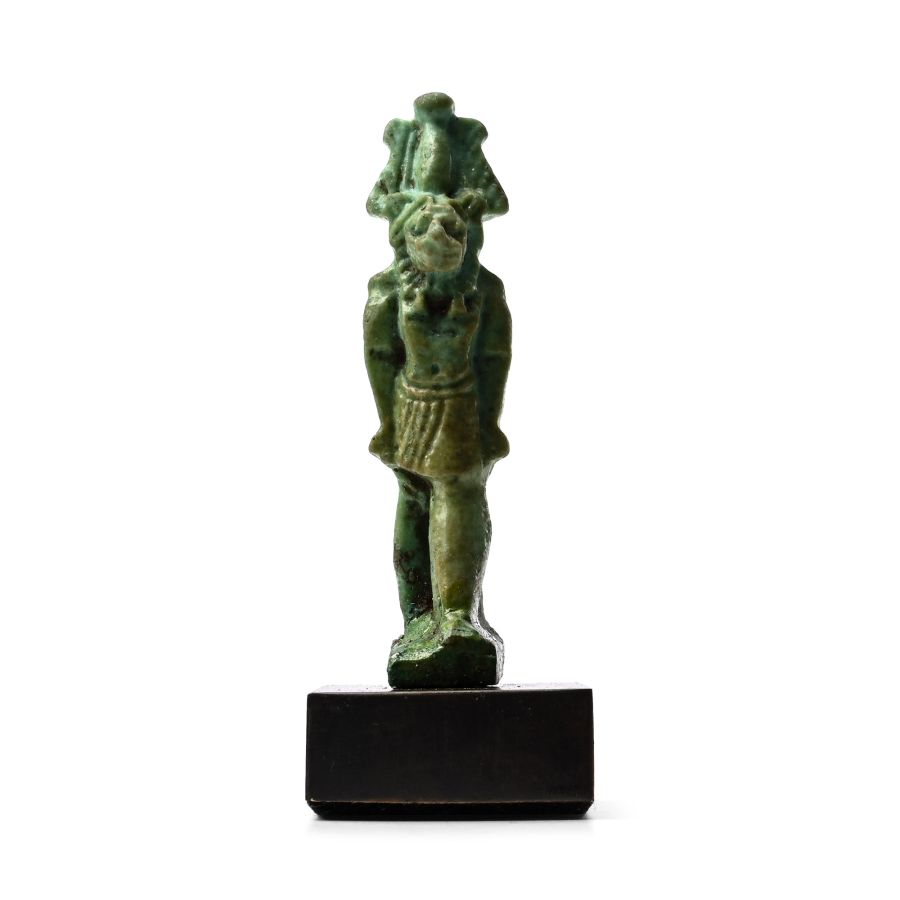
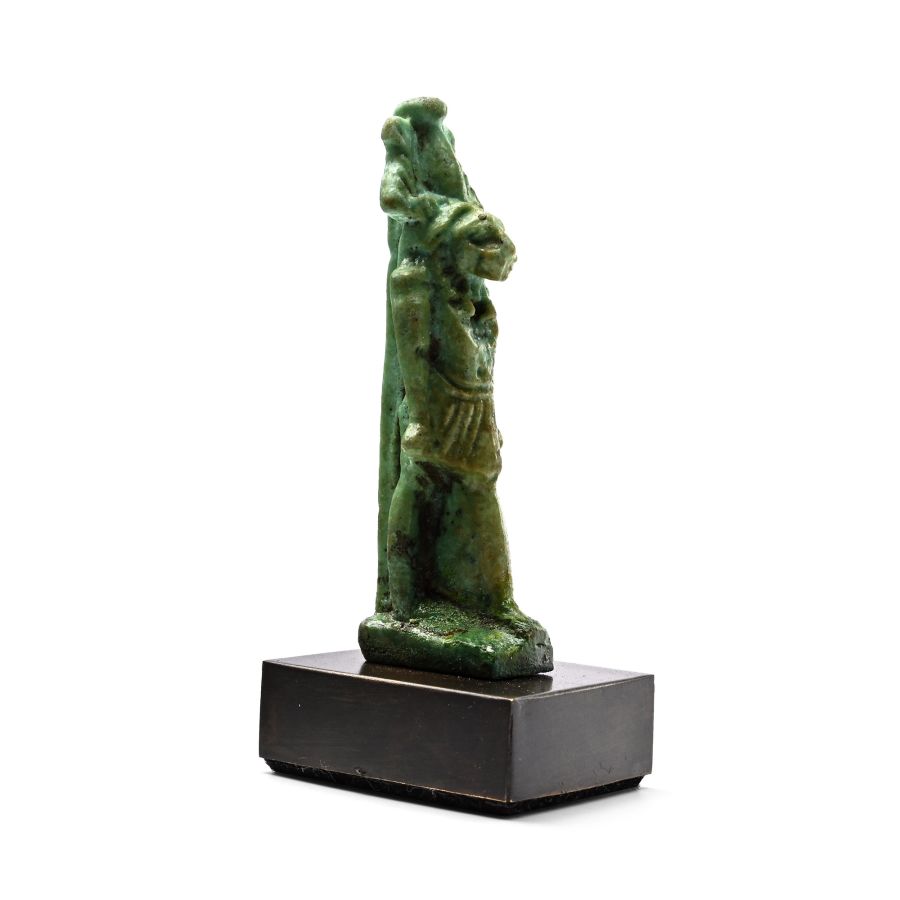
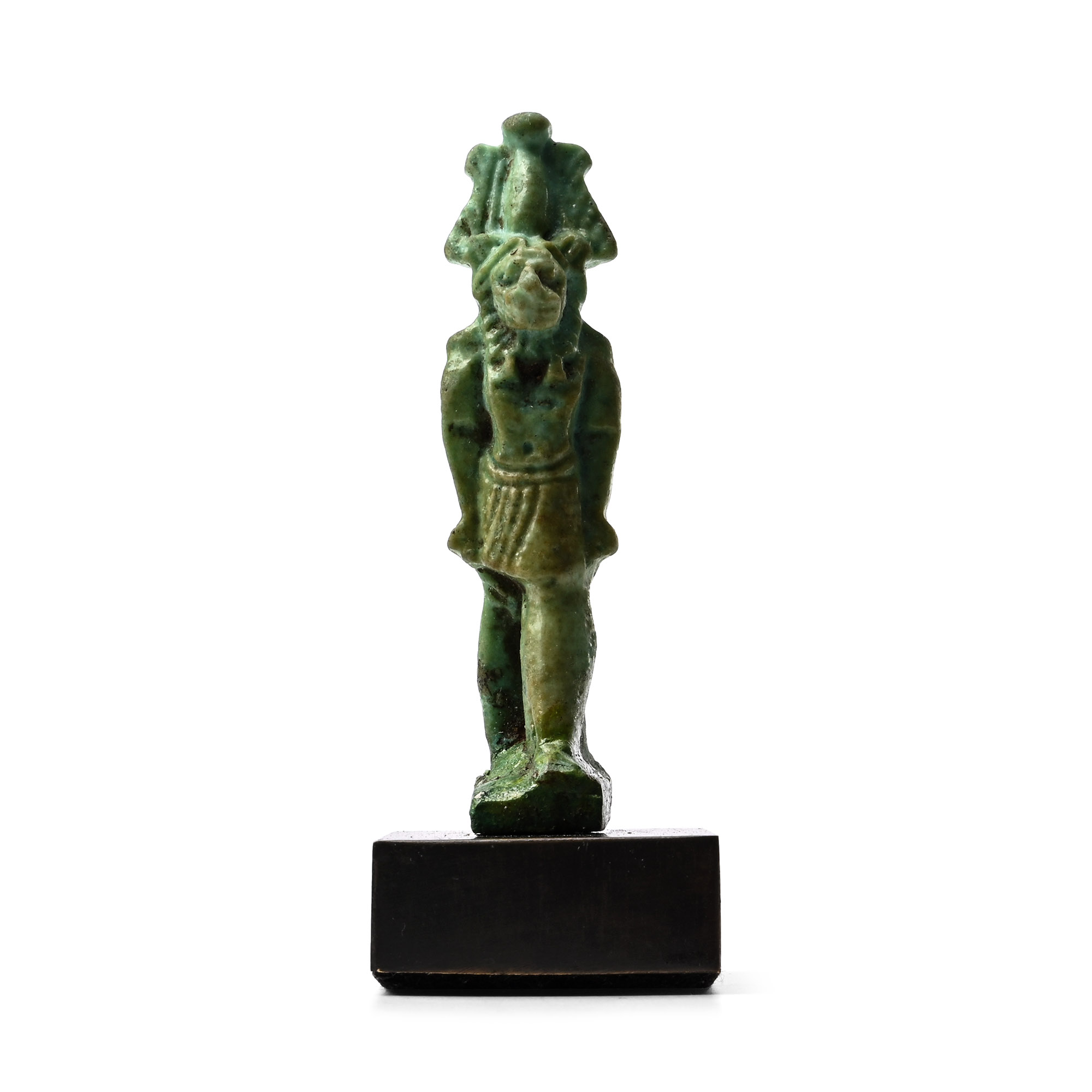
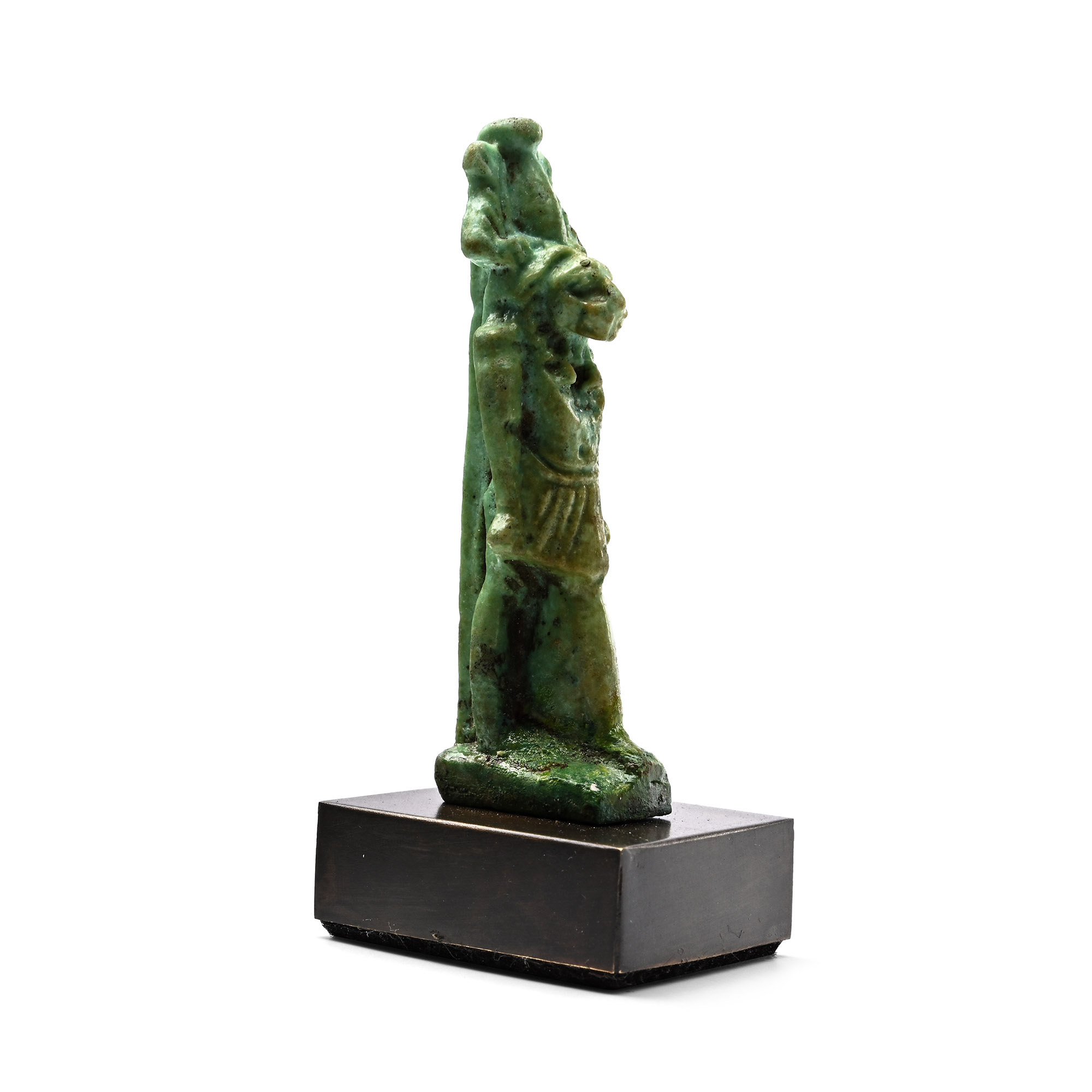
Egyptian Faience Mayhes Amulet
LATE PERIOD, 664-332 B.C.
3 1/4 in. (50.8 grams total, 84 mm including stand).
Standing erect with dorsal pillar and rectangular base, arms straight and one leg advancing; lion-head wearing atef crown and a uraeus; mounted on a custom-made stand.
ProvenanceEx early 20th century London, UK, collection.
LiteratureCf. Daressy, G., Catalogue général des antiquités égyptiennes du Musée du Caire N° 38001-39384 Statues de divinités, Cairo, 1906, p. 151 (inv. no. 38579), pl. XXXII, for a similar example from Abydos.
FootnotesMahes was an Egyptian lion-headed deity linked to divine protection, royal authority, and retributive justice. Considered a son of the goddess Bastet—or, in some traditions, Sekhmet—he embodied the fierce, solar power of the sun god Re and served as a fierce protector of cosmic order. Mahes was especially venerated in the Delta region, notably at Leontopolis, where his leonine form highlighted his role as a guardian and destroyer of enemies. Iconographically, he is commonly depicted as a lion or, as here, a man with a lion’s head, wearing an atef- crown.
CONDITIONTimeLine Auctions follows a vetting process to ensure the authenticity and legality of all items, reinforcing our commitment to integrity and responsible trading. Each antiquity, antique, and coin lot undergoes thorough examination by a vetting committee of at least ten external specialists, professional trade association members, scientists, and archaeologists: Our Vetting Process
AUCTIONS:
TimeLine is a leading auction house specialising in antiquities, ancient art, collectables, natural history, coins, medals, and books. Our auctions offer museums, collectors, historians, and enthusiasts the opportunity to acquire unique and historically significant pieces.
-
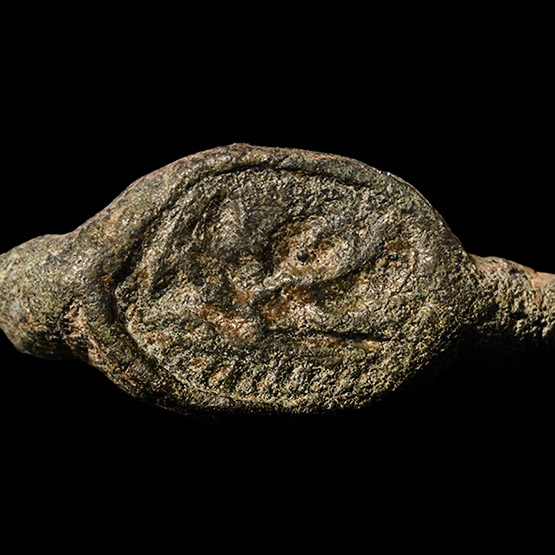
Phoenician Inscribed Bronze Scaraboid Seal
600-400 B.C.Sold for (Inc. bp): £65
With ribbed loop and ellipsoid face, gryphon motif. 10.9 grams, 26 mm wide
Ex London, UK, gentleman, 1990. -
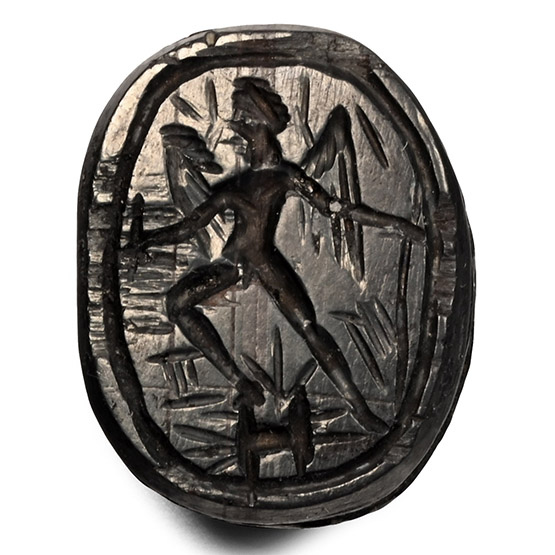
Romano-Egyptian Haematite Scarab with Gnostic Figure
3rd century A.D.Estimate: £600 - 800 (‡+bp*)
Opening Bid: £333
With scene to underside of a winged figure advancing. 6.52 grams, 17 mm
Acquired in the mid 1980s-1990s. Private collection, Switzerland, thence by descent. Private collection, since the late 1990s. -
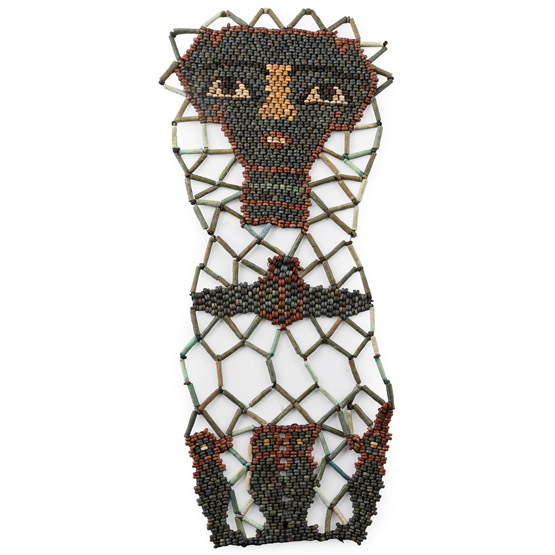
Egyptian Faience Mummy Bead Mask with Scarab and Four Sons of Horus
Ptolemaic Period, 332-30 B.C.Sold for (Inc. bp): £338
A restrung netted beadwork panel of annular and tubular glazed composition beads in blues, greens, black, cream and red-brown colours, depicting a mummy face mask with false beard, a scarab with extended wings below, the 'Four Sons of Horus’ beneath the scarab, joined together with areas of open netting of tubular beads. 63 grams, 28.2 cm
Ex Mariaud de Serres, Paris, 1990s.
