
Loading, please wait...
LOT 0481
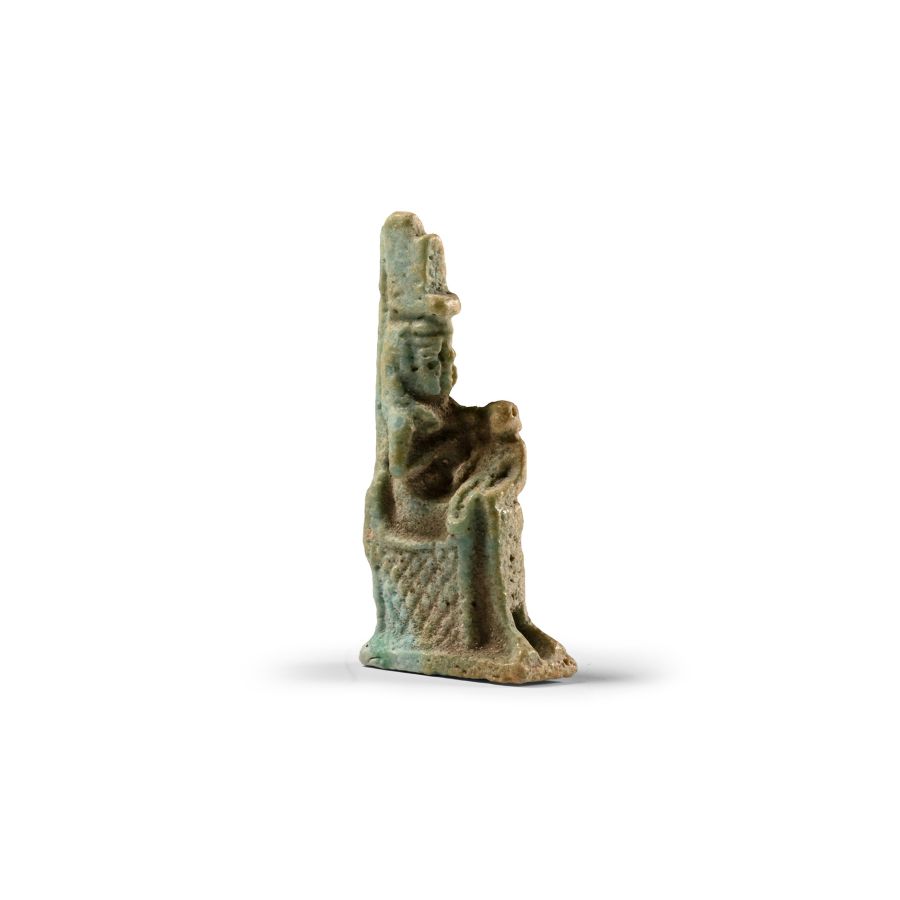
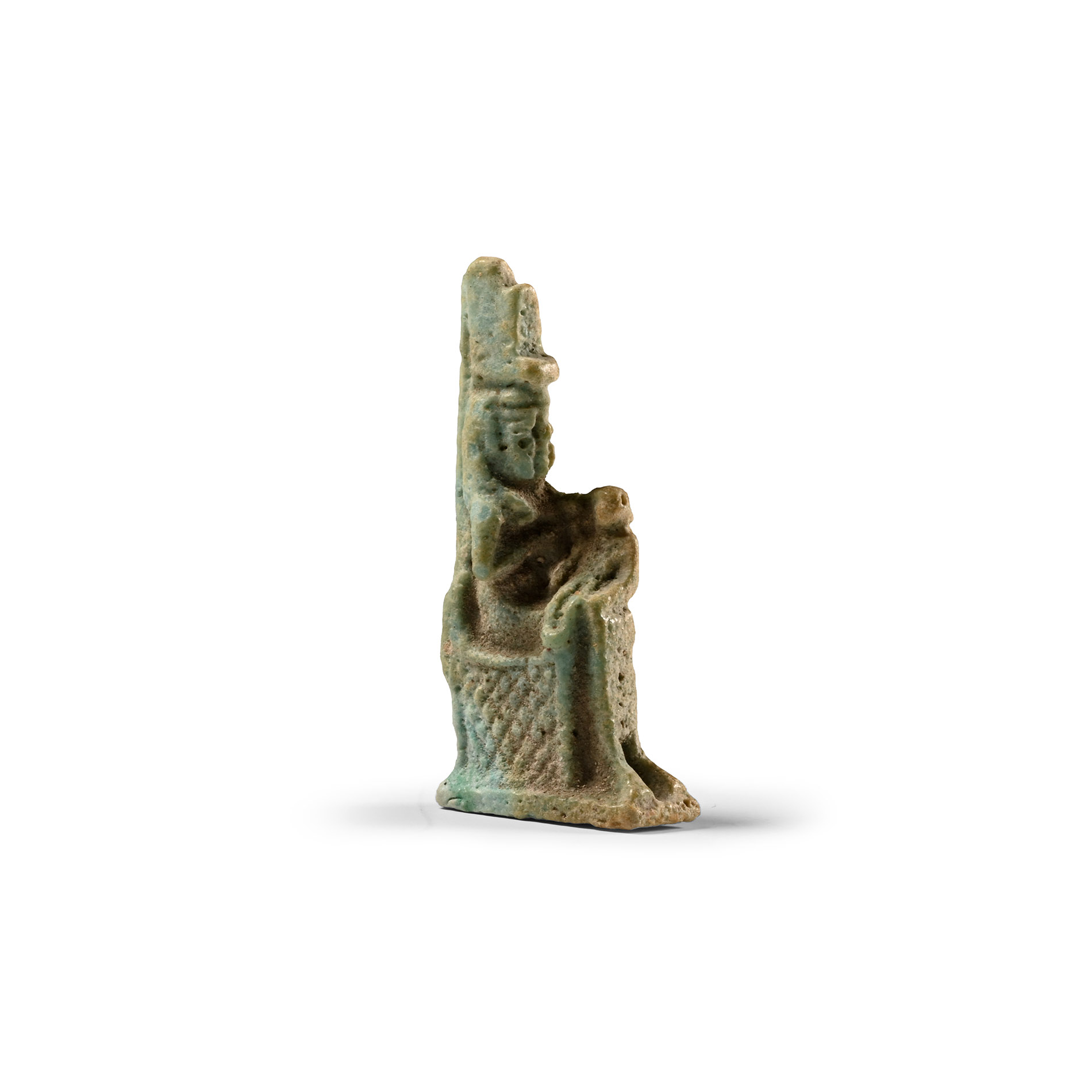
Egyptian Faience Isis with Horus Amulet
PTOLEMAIC PERIOD, 332-30 B.C.
1 1/2 in. (4.25 grams, 40 mm).
The goddess seated on a throne and wearing a vulture headdress with her hieroglyph above, the infant god Horus with Sidelock of Youth being nursed on her knee; turquoise glaze.
ProvenanceAcquired in Europe before 1992.
LiteratureCf. The Metropolitan Museum, New York, accession number 55.121.5, for similar.
FootnotesIn ancient Egyptian belief, the image of Isis suckling her son Horus was a potent symbol of rebirth. The goddess sits on the throne (which was the hieroglyphic form of her name).
CONDITIONTimeLine Auctions follows a vetting process to ensure the authenticity and legality of all items, reinforcing our commitment to integrity and responsible trading. Each antiquity, antique, and coin lot undergoes thorough examination by a vetting committee of at least ten external specialists, professional trade association members, scientists, and archaeologists: Our Vetting Process
AUCTIONS:
TimeLine is a leading auction house specialising in antiquities, ancient art, collectables, natural history, coins, medals, and books. Our auctions offer museums, collectors, historians, and enthusiasts the opportunity to acquire unique and historically significant pieces.
-
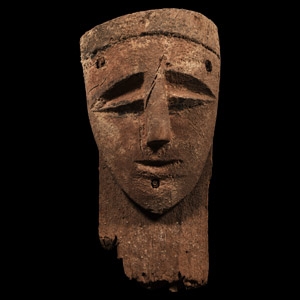
Egyptian Wooden Face Mask
Ptolemaic Period, 332-30 B.C.Sold for (Inc. bp): £455
With carved and painted facial details, fixed to a wooden board with pegs. 509 grams, 27.5 cm
Acquired 1970s-1996. Property of a North American collector. London collection, 2016. -
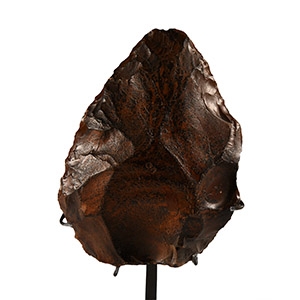
Stone Age Flint Hand Axe
Lower Palaeolithic Period, circa 400,000-200,000 B.P.Sold for (Inc. bp): £286
Finely knapped bifacial hand axe of triangular form with rounded butt; with printed and inked 'MADIJEN / EI:190M / THEBES / 1905' findspot label; with custom-made display stand. 480 grams total, 16.5 cm
Found Madijen, Thebes, 1905. Old German collection, before 1920. -
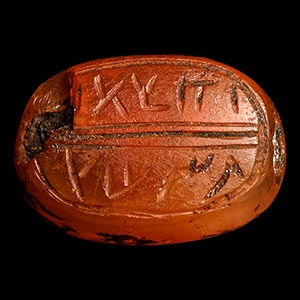
Phoenician Carnelian Scaraboid with Semitic Inscription
8th-7th century B.C.Sold for (Inc. bp): £520
With a domed upper face and bevelled side edge; base inscribed over two lines or columns separated by three lines; pierced for suspension; chip to base. 1.9 grams, 15 mm
From an old French collection, formed in the 1980s-1990s. Property of a North London antiquary.
