
Loading, please wait...
LOT 0484
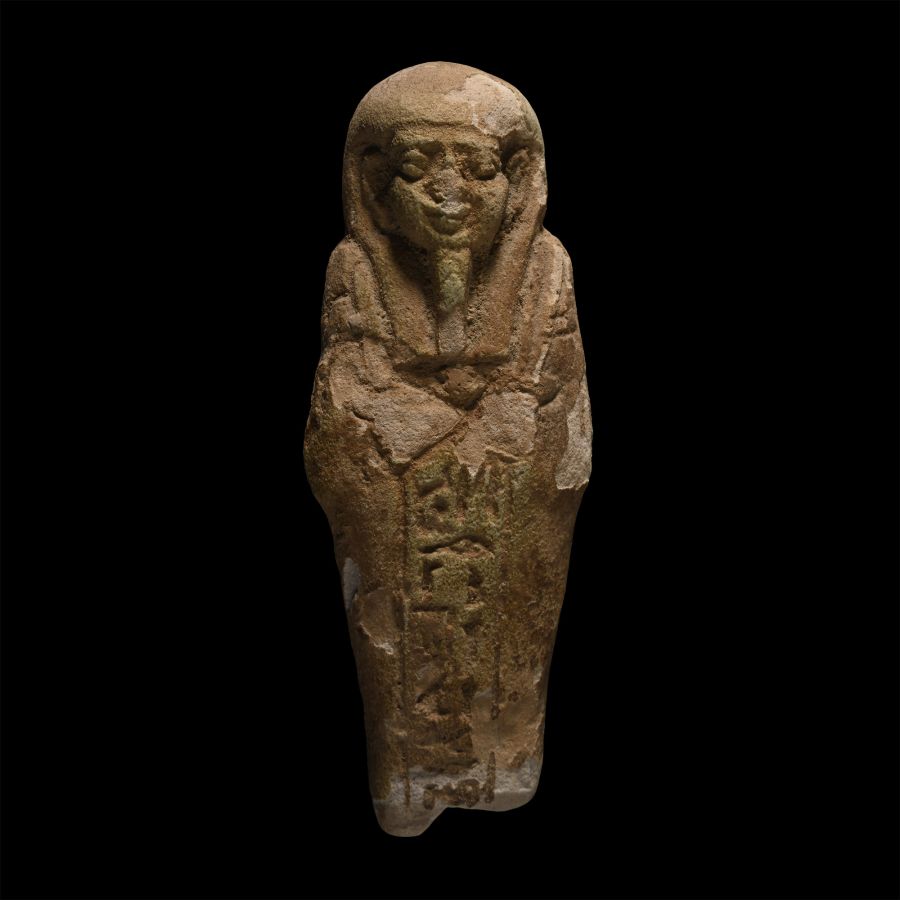
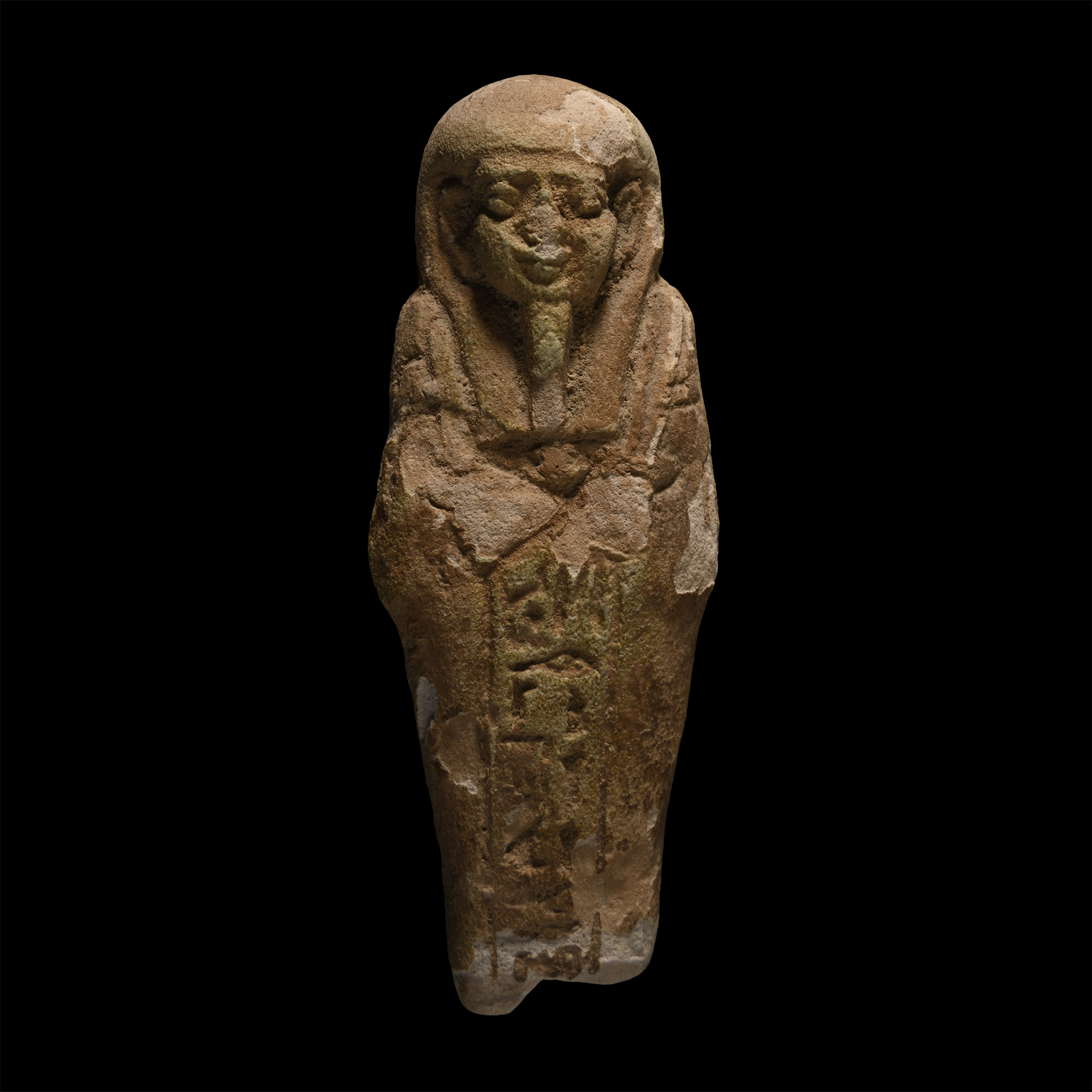
Egyptian Faience Hierogyphic Shabti
LATE PERIOD, 664-332 B.C.
3 3/4 in. (56.3 grams, 95 mm).
With moulded facial features, tripartite wig, agricultural tools in the crossed hands and a seed-bag to the left shoulder; dorsal pillar; vertical panel to lower body with impressed hieroglyphic inscription: 'The illuminated one, the Osiris, the Controller of the Estates.... (sḥḏ wsı͗r ḫrp-ḥwwt....); lower legs absent. [No Reserve]
ProvenanceFrom the private collection of a Canadian gentleman living in Essex, UK, formed since the 1920s-circa 1990.
Property of an Essex lady until the late 1990s; thence by descent.
From the private collection of an Essex gentleman since the late 1990s.
Cf. Schneider, H.D., Shabtis. An Introduction to the History of Ancient Egyptian Funerary Statuettes with a Catalogue of the Collection of Shabtis in the National Museum of Antiquities at Leiden, Vol.3, Leiden, 1977, p. 67, no. 5.3.1.88, for an example of the type.
CONDITIONTimeLine Auctions follows a vetting process to ensure the authenticity and legality of all items, reinforcing our commitment to integrity and responsible trading. Each antiquity, antique, and coin lot undergoes thorough examination by a vetting committee of at least ten external specialists, professional trade association members, scientists, and archaeologists: Our Vetting Process
AUCTIONS:
TimeLine is a leading auction house specialising in antiquities, ancient art, collectables, natural history, coins, medals, and books. Our auctions offer museums, collectors, historians, and enthusiasts the opportunity to acquire unique and historically significant pieces.
-
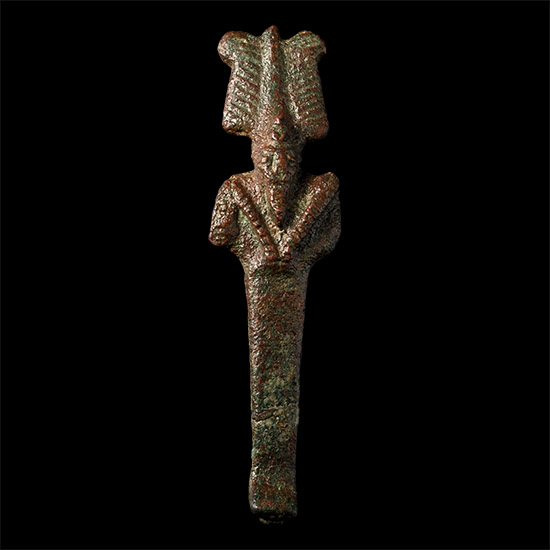
Egyptian Bronze Osiris Figure
Late-Ptolemaic Period, circa 664-30 B.C.Sold for (Inc. bp): £156
Standing pose wearing the atef crown with flanking ostrich plumes and frontal uraeus; holding the crook (heka) and flail (nekhakha) regalia in his crossed hands; peg to underside of feet; repaired. 16.17 grams, 68 mm
From the private collection of a Canadian gentleman living in Essex, UK, formed since the 1920s-circa 1990. Property of an Essex lady until the late 1990s; thence by descent. From the private collection of an Essex gentleman since the late 1990s. -
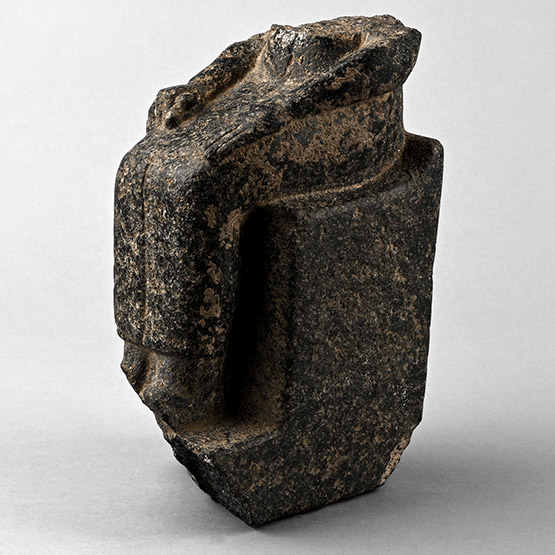
Egyptian Granite Seated Figure of an Official
Middle Kingdom, 2nd millennium B.C.Estimate: £2,500 - 3,500 (‡+bp*)
Opening Bid: £1,389
Comprising the torso and legs clad in an ankle-length robe and seated on a rectangular-section seat with stepped base and short, curved backrest and rear dorsal pillar; the left hand carved with the palm resting along the thigh; the right hand similarly placed but with the hand gripping a folded piece of cloth of which the ends are draped over the lower thigh above the knee; traces of an old label to reverse. 4.1 kg, 18.7 cm
Private collection, Europe. with Bonhams & Brooks, 8th November 2001, no.265. Private collection, Europe. Accompanied by copies of the relevant Bonhams & Brooks catalogue pages. This lot has been checked against the Interpol Database of stolen works of art and is accompanied by a search certificate number no.12584-232097.
The official would have been shown wearing a longer cloak-like garment rather than a waist-height kilt, as the line of the folded edge is visible above where a waistband would typically be. -
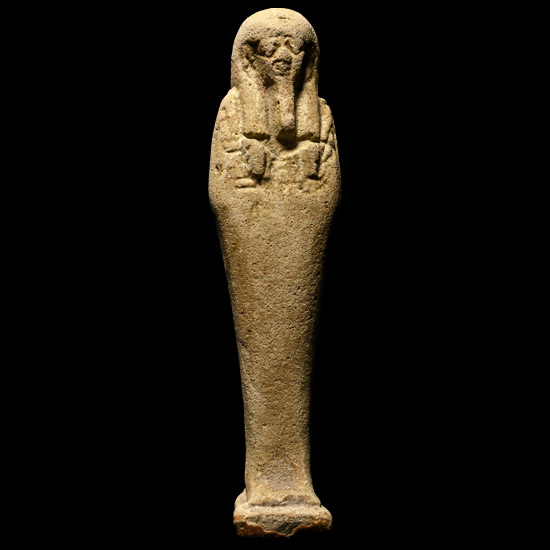
Egyptian Faience Hieroglyphic Shabti
Late Period-Ptolemaic Period, 525-30 B.C.Sold for (Inc. bp): £390
Slender in profile with tripartite wig and incised tools in the crossed hands, net to the left shoulder; dorsal pillar with impressed hieroglyphic legend. 23.6 grams, 89 mm
Ex Alexander Crawford Collection. From the collection of David Donlan (1947-2025), a dedicated and lifelong collector with a passion for the ancient world and the natural sciences, forming his collection from 1960s onwards, using many reputable dealers across the United Kingdom, including the well-regarded Coincraft and The Parthenon Gallery.
Alexander Crawford Lamb (1843-1897) was a Scottish hotelier, art collector, antiquarian and collector of paintings, literary works, china, furniture, antiquities and other ephemera and memorabilia. His most notable literary achievement was the publication of a massive volume entitled Dundee: Its Quaint and Historic Buildings, 1895.
