
Loading, please wait...
LOT 0553
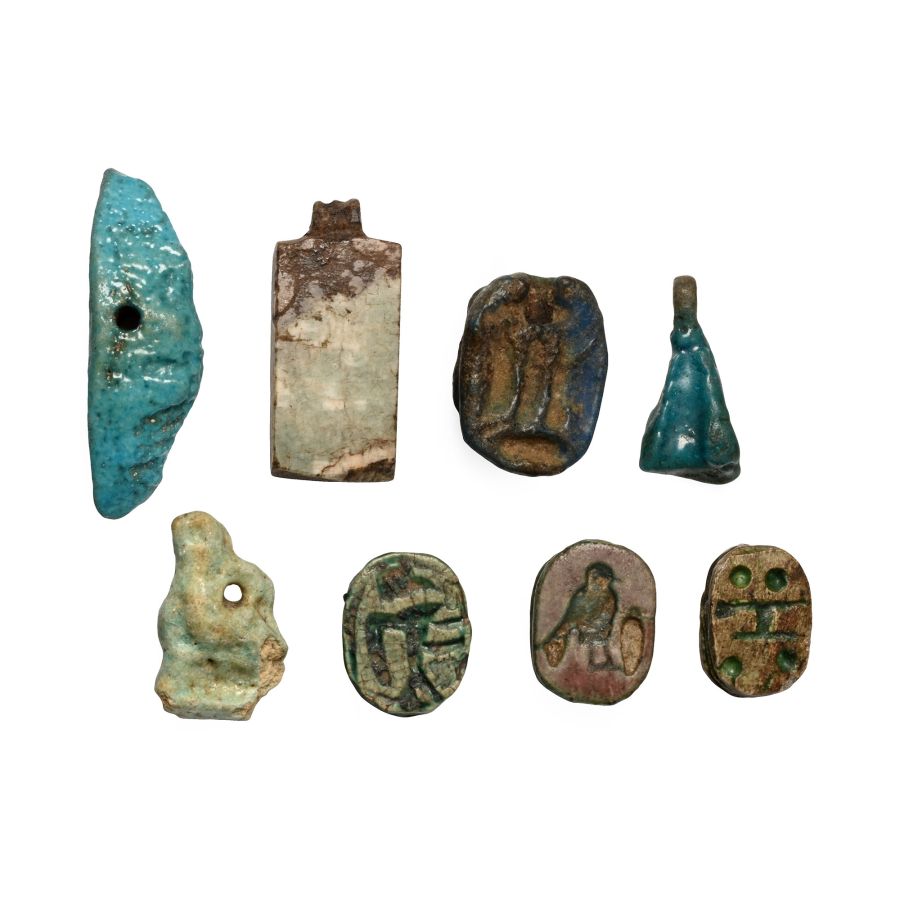
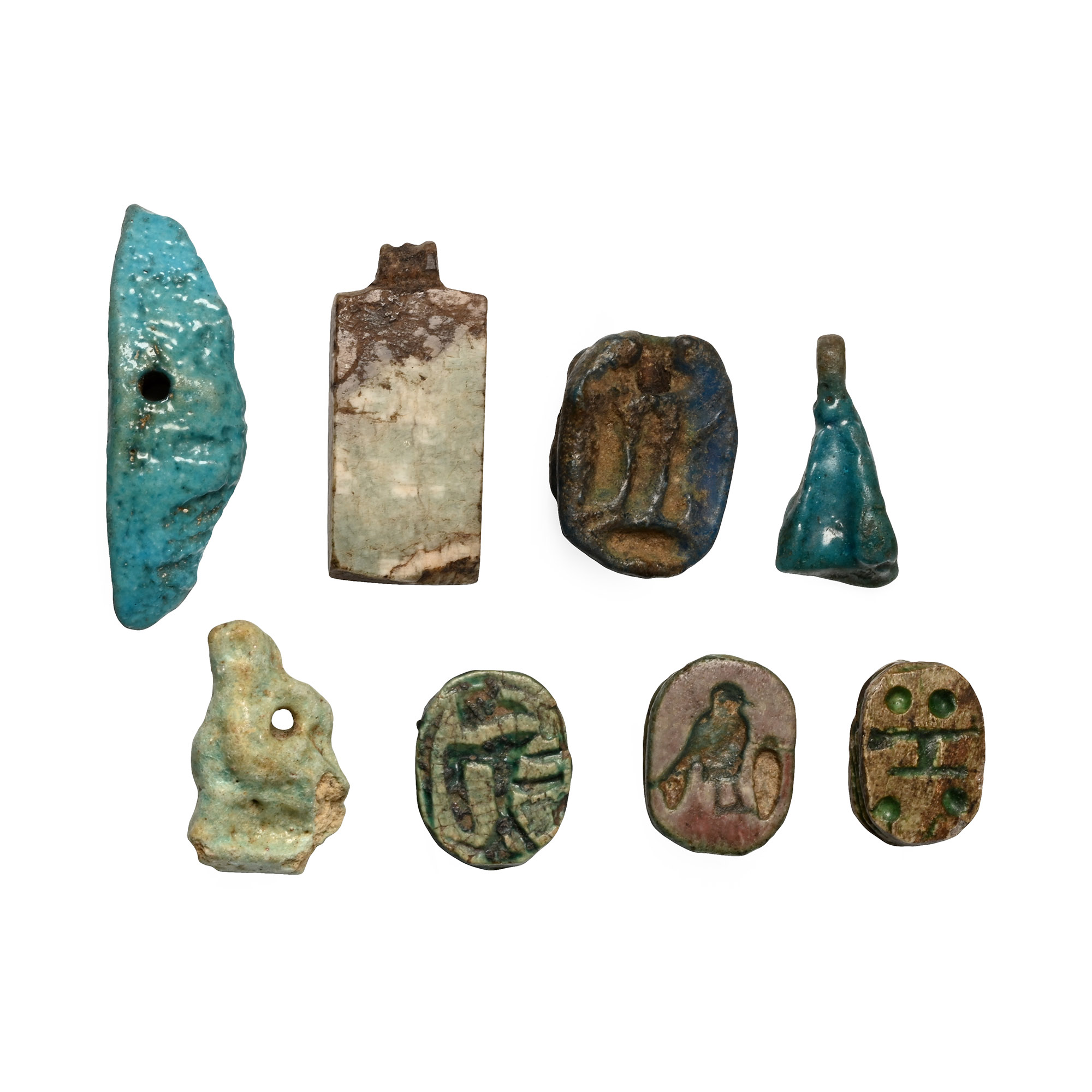
Egyptian Faience Group of Amulets
NEW KINGDOM-PTOLEMAIC PERIOD, 1550-30 B.C.
3/8 - 1 in. (6.17 grams total, 10-24 mm).
Comprising of blue-glazed composite amulets including lotus flower; crescentic bead; bird amulet with minor chips to the body; four scarabs with longitudinal piercing and carvings to the underside; a plain green stone rectangular plaque with ribbed suspension bar to the top. [8, No Reserve]
ProvenanceFrom the Walter Thomas Gaze Cooper (1895-1980) collection; thence by descent.
LiteratureCf. Andrews, C., Amulets of Ancient Egypt, London, 1994, p. 98, fig. 99b, for a similar green feldspar writing tablet amulet.
CONDITIONTimeLine Auctions follows a vetting process to ensure the authenticity and legality of all items, reinforcing our commitment to integrity and responsible trading. Each antiquity, antique, and coin lot undergoes thorough examination by a vetting committee of at least ten external specialists, professional trade association members, scientists, and archaeologists: Our Vetting Process
AUCTIONS:
TimeLine is a leading auction house specialising in antiquities, ancient art, collectables, natural history, coins, medals, and books. Our auctions offer museums, collectors, historians, and enthusiasts the opportunity to acquire unique and historically significant pieces.
-
.jpg)
Egyptian Steatite Fish Amulet with Horse
New Kingdom, 1550-1070 B.C.Sold for (Inc. bp): £130
A bifacial rectangular amulet with incised fish in profile to the obverse, a standing horse to the reverse; drilled for suspension. 3.04 grams, 20 mm
Ex Constable collection, 1990s. Ex P. Morris collection. Accompanied by an old photograph dated 'London 1997'.
This amulet depicts a ‘Tilapia nilotica’ or ‘bolti’, a prevalent fish species found in the Nile. Not only was it esteemed for its delicious taste, but it was also regarded as a symbol of rebirth and resurrection due to its unique ability to carry its eggs in its mouth, symbolising self-creation. -
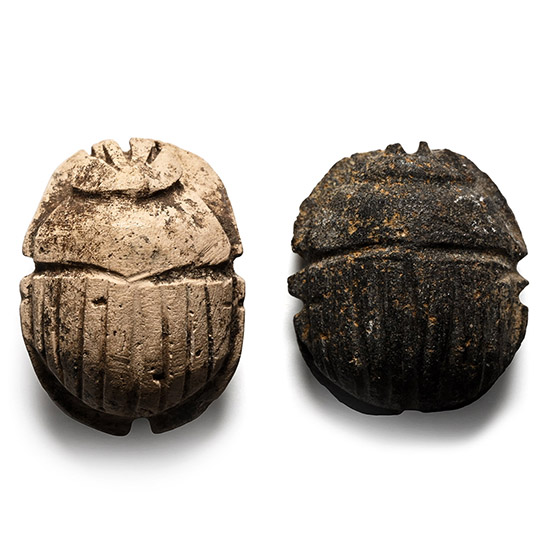
Egyptian Heart Scarab Group
Late Period, 664-332 B.C.Estimate: £140 - 180 (+bp*)
Opening Bid: £70
Comprising two scarabs with striated wing cases and ribbed underside. 7.5 grams total, 18-20 mm
From the collection of a gentleman, acquired on the London art market in the 1990s.
The scarab amulet was a powerful symbol of rebirth, transformation, and protection in ancient Egypt. Modelled after the beetle linked to the sun god Khepri, it represented the cycle of life and regeneration. Used from the Middle Kingdom (c. 2050 BCE) onwards, scarabs served as funerary amulets, personal charms, and seals—often inscribed with prayers or names—reflecting both spiritual beliefs and daily life. -
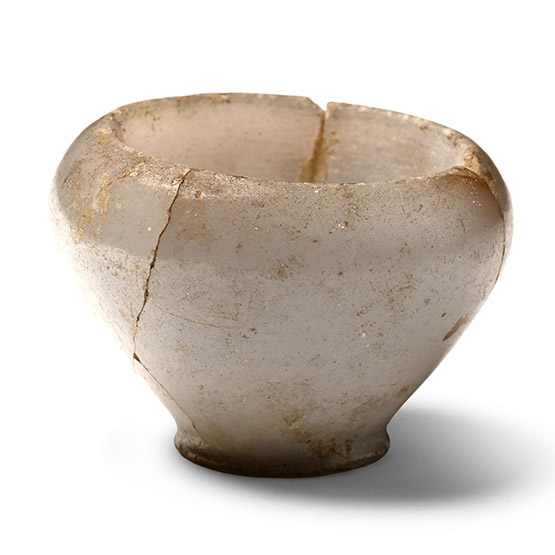
Egyptian Anhydrite Cosmetic Bowl
Middle Kingdom, circa 2040-1780 B.C.Sold for (Inc. bp): £156
Conical in profile with rounded rim, narrow disc base; repaired; a rare stone. 33.68 grams, 39 mm
Ex William Ohly, 1883-1955. Ex Abbey Museum, Barnet, by descent.
Anhydrite, incorrectly called "blue marble" by early excavators, was a stone favoured by the ancient Egyptians from the Middle Kingdom to the Second Intermediate Period. This particular example follows a Middle Kingdom-style cosmetic kohl jar that could be modelled with or without an integral rim.
