
Loading, please wait...
LOT 0468
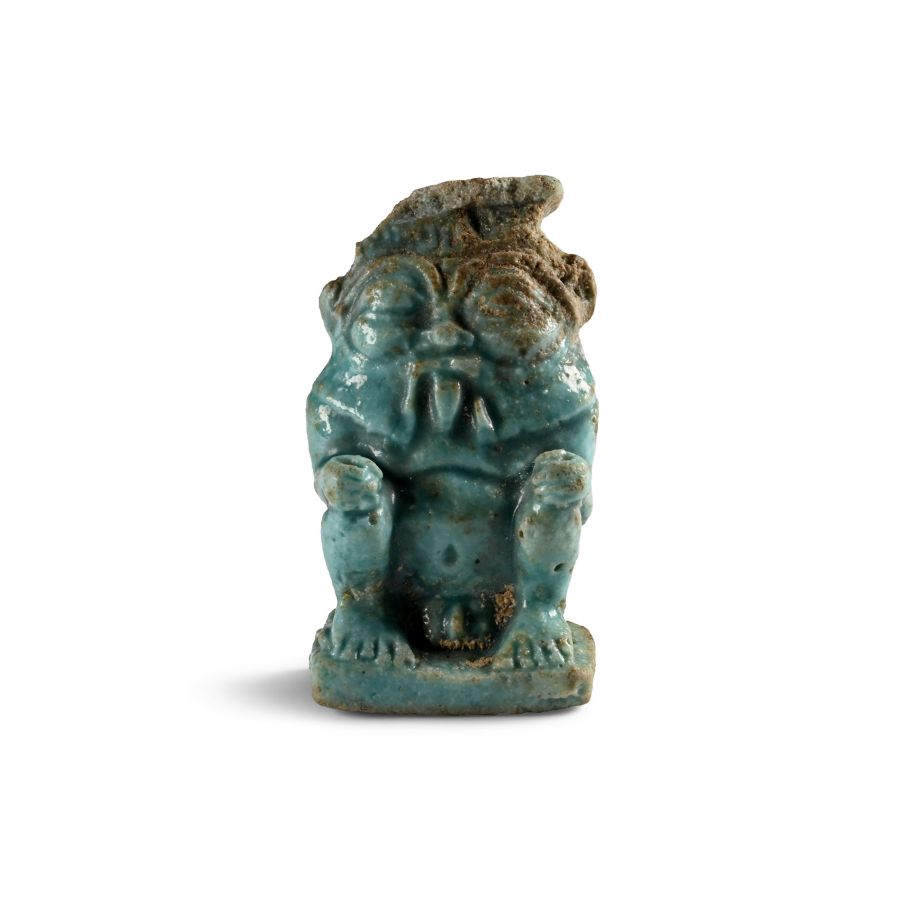
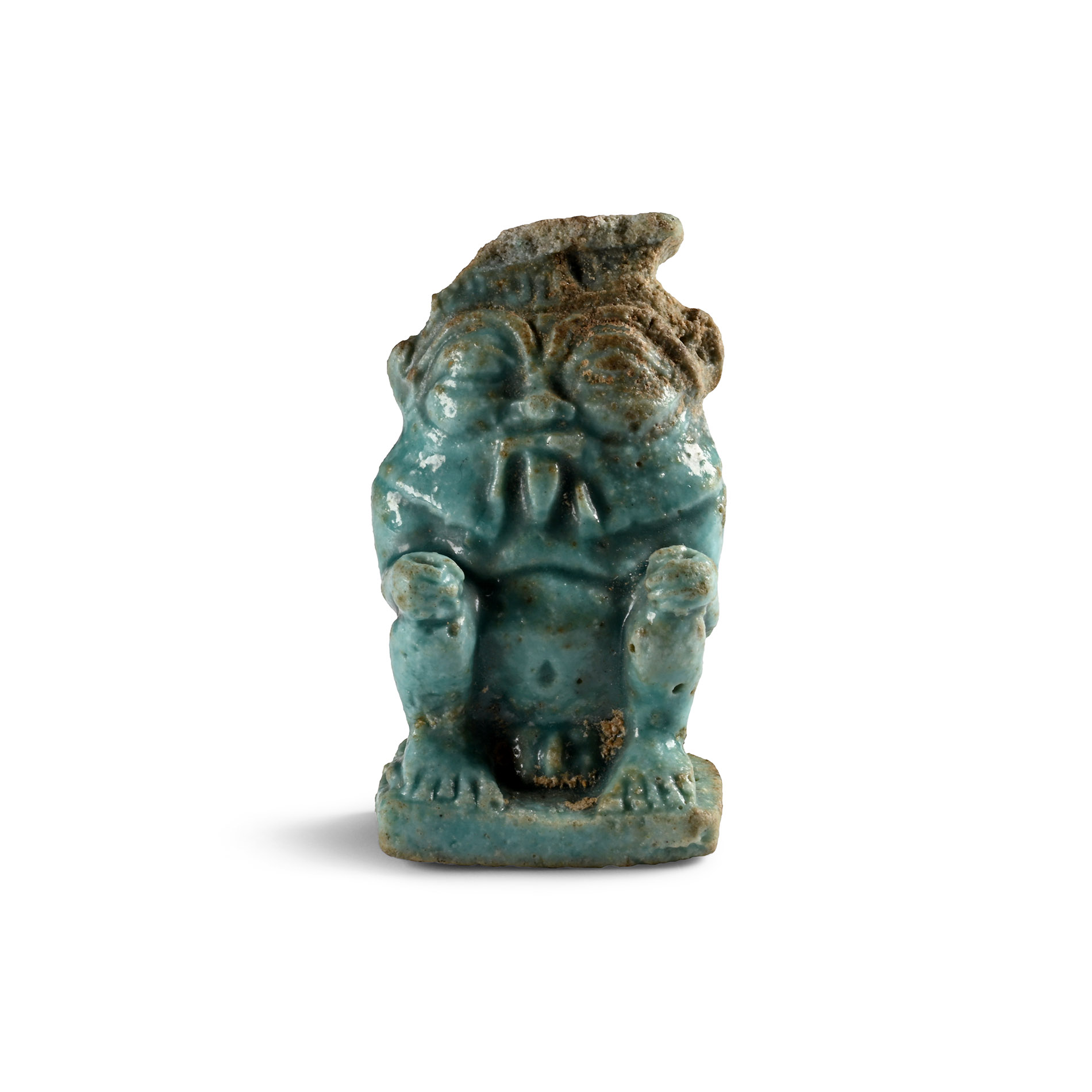
Egyptian Faience God Bes Amulet
LATE PERIOD, 664-332 B.C.
1 3/8 in. (10.8 grams, 34 mm).
Glazed composition with Bes squatting on a rectangular base; headdress and suspension loop absent.
ProvenanceEx West London, UK, collection pre 1990.
From a London, UK, collection.
Cf. Andrews, C., Amulets of Ancient Egypt, London, 1994, item 37d.
FootnotesBes became one of ancient Egypt's most popular apotropaic deities from the New Kingdom onwards. Despite his rather fearsome appearance, Bes was the patron and protector of pregnant women and children. He was also believed to provide protection from snakes.
CONDITIONTimeLine Auctions follows a vetting process to ensure the authenticity and legality of all items, reinforcing our commitment to integrity and responsible trading. Each antiquity, antique, and coin lot undergoes thorough examination by a vetting committee of at least ten external specialists, professional trade association members, scientists, and archaeologists: Our Vetting Process
AUCTIONS:
TimeLine is a leading auction house specialising in antiquities, ancient art, collectables, natural history, coins, medals, and books. Our auctions offer museums, collectors, historians, and enthusiasts the opportunity to acquire unique and historically significant pieces.
-
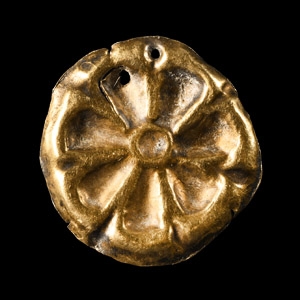
Egyptian Gold Rosette Mount
Late Period, 664-323 B.C.Sold for (Inc. bp): £195
Made of a round gold sheet composing distinctive seven-petalled flower. 0.48 grams, 15 mm
Acquired 1980-2015. Ex Abelita family collection.
Rosettes, such as this lovely example, have a long history in Egyptian decorative art and were popular at most sites. This small decoration could be the central nail of a daisy pattern provided for architectural purposes, or could be an applique of furniture or dress. -
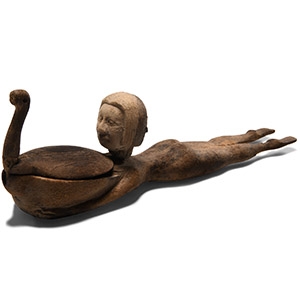
Egyptian Wooden Cosmetic Spoon
New Kingdom, 1550-1070 B.C.Sold for (Inc. bp): £910
Carved in the round, the handle formed as the extended nude female body, the extended arms holding out a pear-shaped bowl; separate carved head with bobbed hair; offered with a flattish lid with attached goose's neck and partial head; female head possibly a later addition. 42 grams, 17.5 cm
Part of an old collection dating back to the 19th century. Ex property of a gentleman, acquired before the 1980s. Private collection of Mr T.H., Norfolk, UK. -
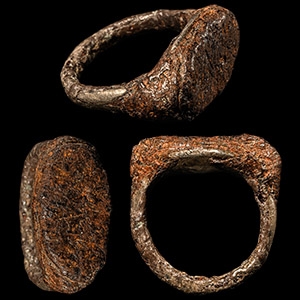
Egyptian Silver Signet Ring
Late Period, 664-332 B.C.Sold for (Inc. bp): £156
With a round-section hoop, the wide bezel encrusted but with decoration beneath. 7.11 grams, 26.03 mm overall, 18.22 mm internal diameter (approximate size British O 1/2, USA 7 1/4, Europe 15.61, Japan 15)
Collected from 1969-1999. From the collection of the late Mr S.M., London, UK.
