
Loading, please wait...
LOT 0022
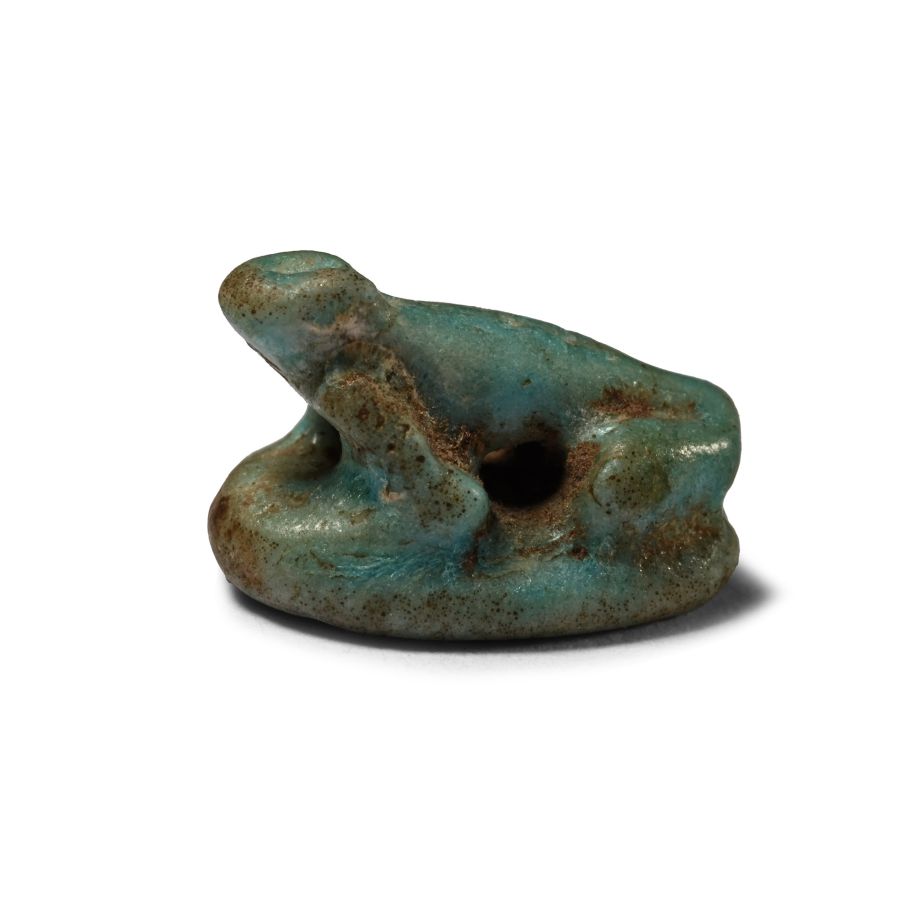
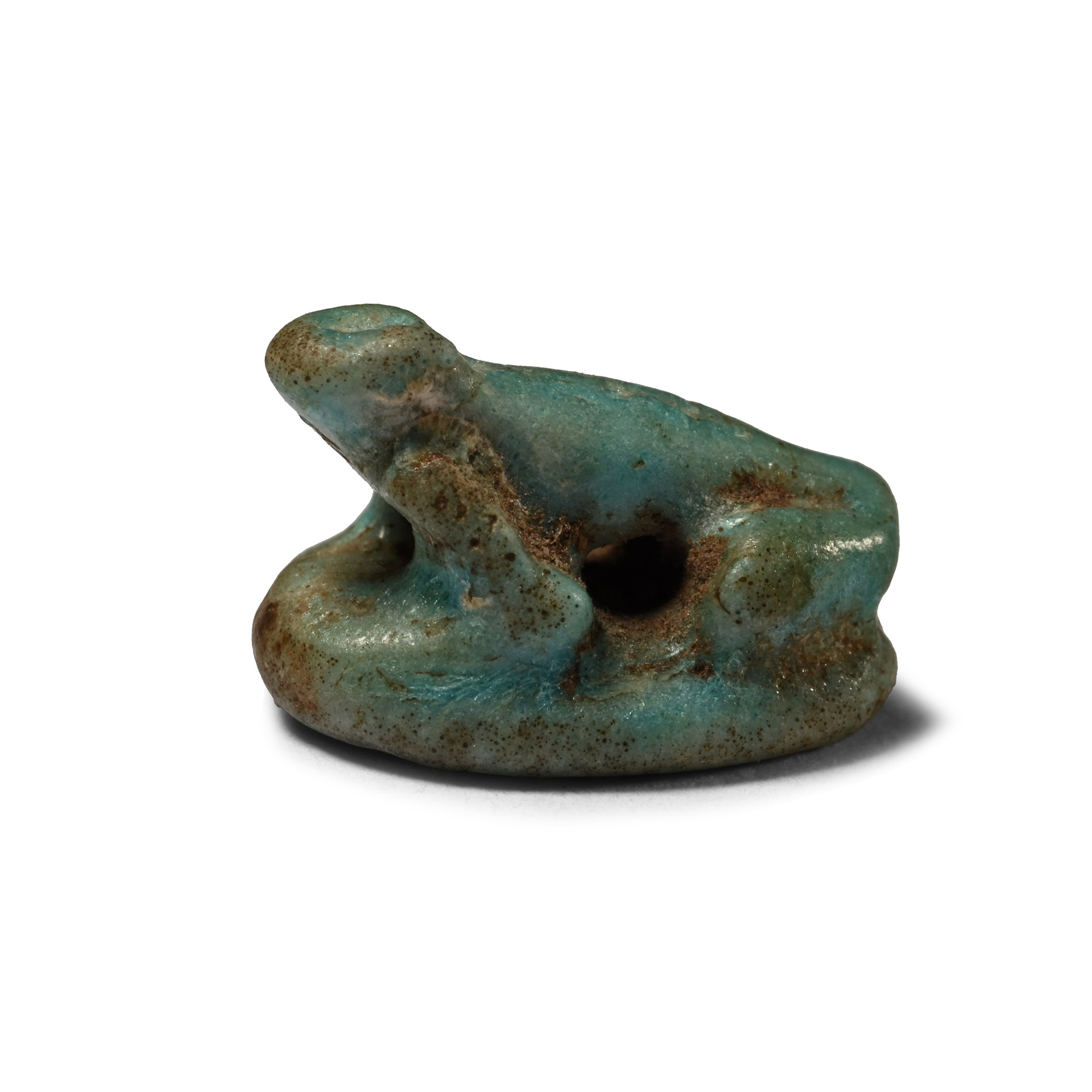
Egyptian Faience Frog Scarab
PTOLEMAIC PERIOD, CIRCA 300 B.C.
1/2 in. (0.56 grams, 13 mm).
Discoid base with crouching frog pierced longitudinally for threading; underside with a solar disc and unidentified symbol.
ProvenanceEx R. Liechti (1934-2010) Geneva, Switzerland, formed between 1950-1990s.
Accompanied by a copy of an old collection inventory note.
Cf. Lacovara, P., and Markowitz, Y.J., Jewels of the Nile: Ancient Egyptian Treasures from the Worcester Art Museum, Worcester MA, 2020, p. 116, no.1925.594, for similar.
CONDITIONTimeLine Auctions follows a vetting process to ensure the authenticity and legality of all items, reinforcing our commitment to integrity and responsible trading. Each antiquity, antique, and coin lot undergoes thorough examination by a vetting committee of at least ten external specialists, professional trade association members, scientists, and archaeologists: Our Vetting Process
AUCTIONS:
TimeLine is a leading auction house specialising in antiquities, ancient art, collectables, natural history, coins, medals, and books. Our auctions offer museums, collectors, historians, and enthusiasts the opportunity to acquire unique and historically significant pieces.
LOT 0022
Egyptian Faience Frog Scarab
Estimate £400 - 600€460 - 700 (for guidance only)$540 - 810 (for guidance only)
-
.jpg)
Phoenician Painted Terracotta Wine Jug
Circa 900-800 B.C.Sold for (Inc. bp): £176
With globular body and carinated tubular neck, flared rim to the mouth; loop handle to the shoulder and low basal ring; painted radiating strokes to the shoulder, segmented band to the equator with hatching and other decoration. 720 grams, 20.6 cm
Property of a British collector, acquired in the 1980s. From a family collection of a North American gentleman living in the UK. -
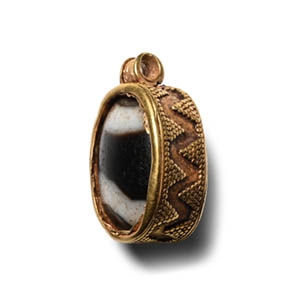
Gold Pendant with Agate Scaraboid
5th-3rd century B.C.Sold for (Inc. bp): £1,170
Banded agate scaraboid with openwork gold frame, tubular suspension loop, triangular clusters of granules to the edge; Phoenician or Achaemenid. 4.20 grams, 21 mm
Acquired in the mid 1980s-1990s. Private collection, Switzerland, thence by descent. Private collection, since the late 1990s. -
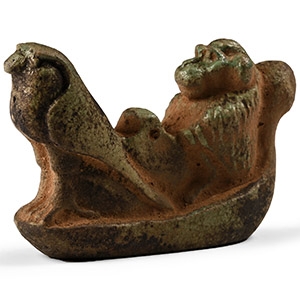
Egyptian Faience Thoth and Horus in a Boat
Late Period, 664-332 B.C.Sold for (Inc. bp): £1,235
Modelled in the round, comprising a small barque with a seated baboon and a falcon, possibly Thoth and Horus, with a slot to the underside. 35.9 grams, 64 mm
From the collection of a gentleman, acquired on the London art market in the 1990s.
In Egyptian mythology, Thoth restored the eye of Horus, suggesting that this may be the theme of the figurine's composition. Alternatively, the composition may be a condensed depiction of the funerary vignette, which shows the falcon form of the sun god Re in his solar barque flanked by baboons in an attitude of praise. The slot in the underside suggests it was once attached to a separate base.
