
Loading, please wait...
LOT 0473
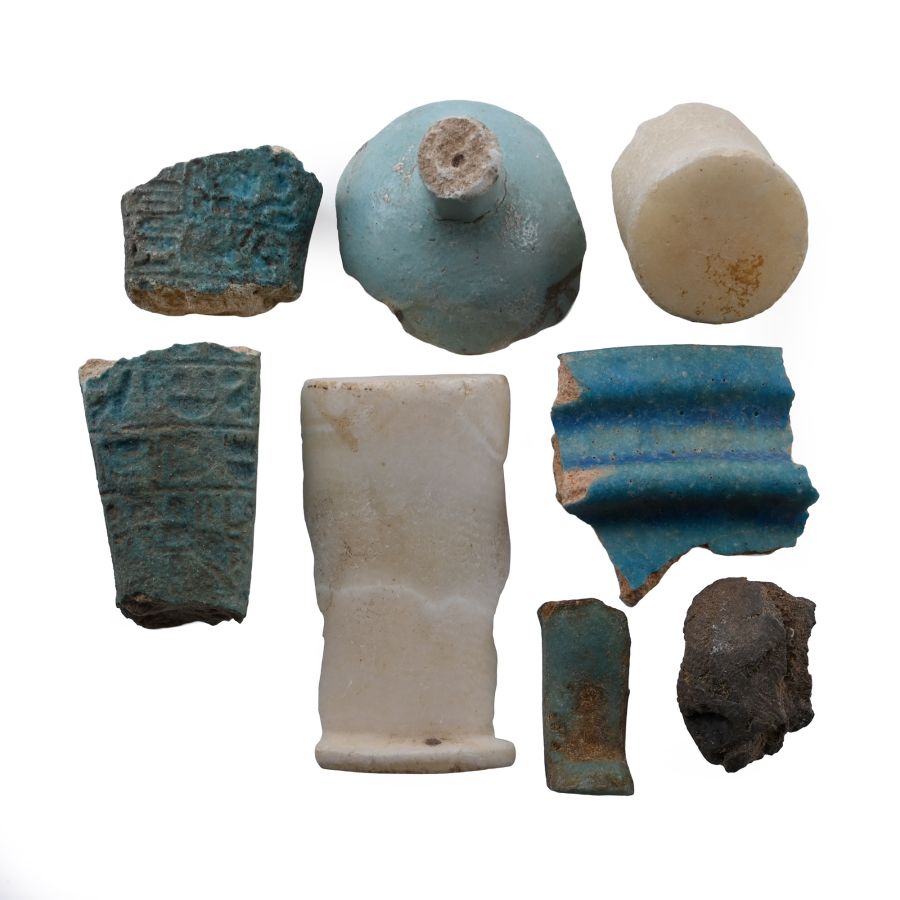
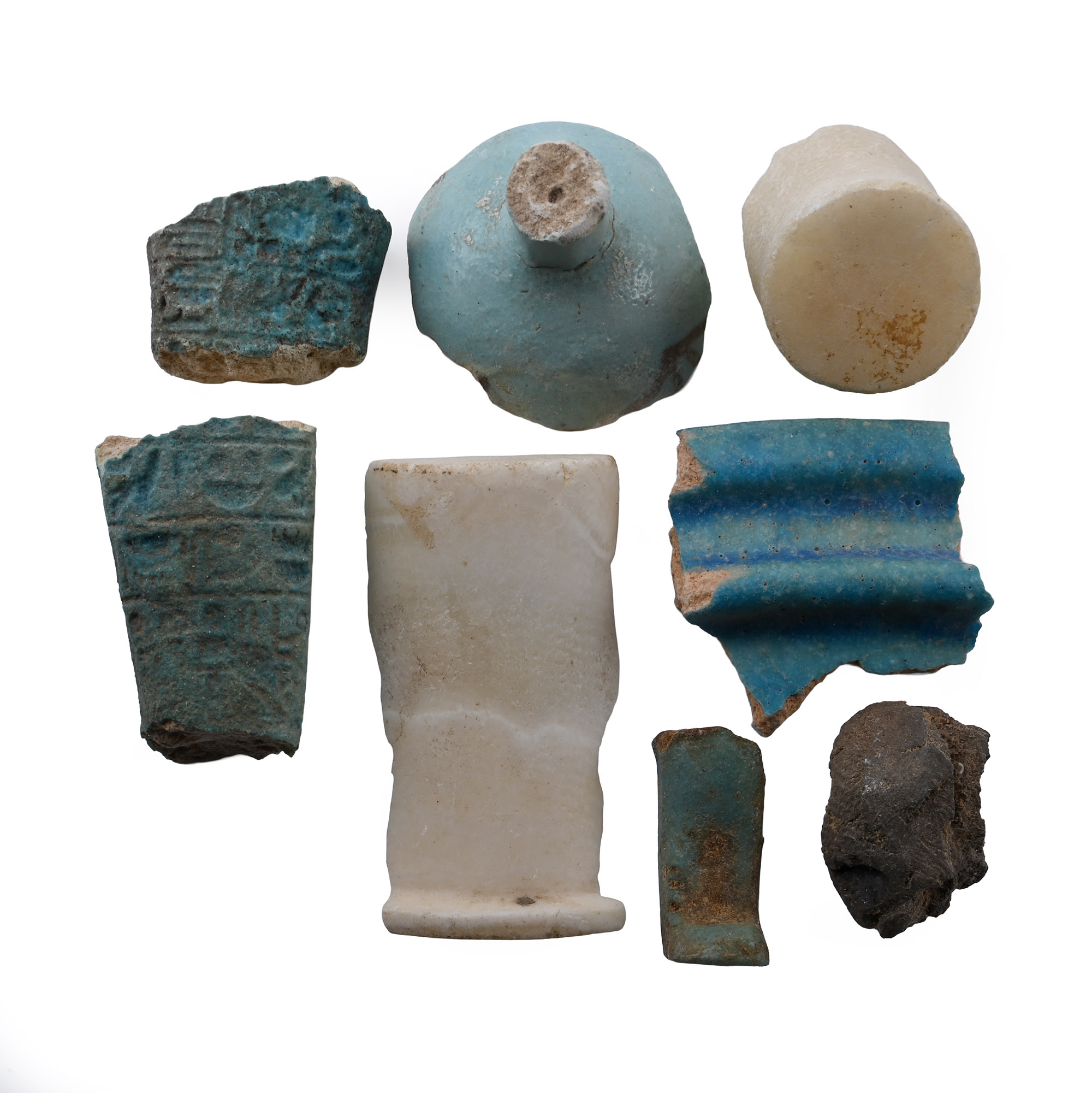
Egyptian Faience Fragment Group
MOSTLY LATE PERIOD, 664-332 B.C.
1 - 2 in. (75 grams total, 26-53 mm).
Mixed group of fragments, including two from a shabti figure. [8, No Reserve]
ProvenanceFrom the late collection of a Cornish couple, formed from the early 1990s.
CONDITIONTimeLine Auctions follows a vetting process to ensure the authenticity and legality of all items, reinforcing our commitment to integrity and responsible trading. Each antiquity, antique, and coin lot undergoes thorough examination by a vetting committee of at least ten external specialists, professional trade association members, scientists, and archaeologists: Our Vetting Process
AUCTIONS:
TimeLine is a leading auction house specialising in antiquities, ancient art, collectables, natural history, coins, medals, and books. Our auctions offer museums, collectors, historians, and enthusiasts the opportunity to acquire unique and historically significant pieces.
-
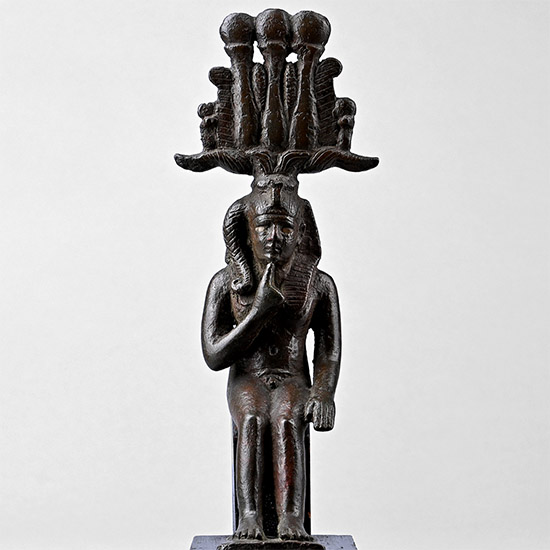
Egyptian Bronze Harpocrates Statue
26th Dynasty, 664-525 B.C.Estimate: £5,000 - 7,000 (+bp*)
Opening Bid: £2,500
Modelled in the round, shown nude, seated with his left arm by his side and his right forefinger on his chin, wearing a sidelock of youth, nemes headdress surmounted by an elaborate hem-hem crown; mounted on a custom-made stand with dealer's label to underside. 480 grams total, 19.8 cm including stand
Ex Fitzthum collection, Vermont, New England. Acquired New York, USA, 2000. Acquired from Royal Athena Galleries, New York, USA, 20 March 2008. Ex Keane collection, UK. Accompanied by a copy of the original Royal Athena Galleries invoice no.11164. This lot has been checked against the Interpol Database of stolen works of art and is accompanied by search certificate number no.13272-252852.
Harpocrates is the Greek equivalent of the Egyptian name Hor-pa-khered, which means ‘Horus the Child’. This name refers to Horus as the divine infant of Isis and Osiris. Wearing an amulet of Harpocrates was believed to provide the same protection that Isis granted to her beloved son. Larger bronze statuettes were probably votive offerings to Harpocrates, intended to secure his favour and protection. -
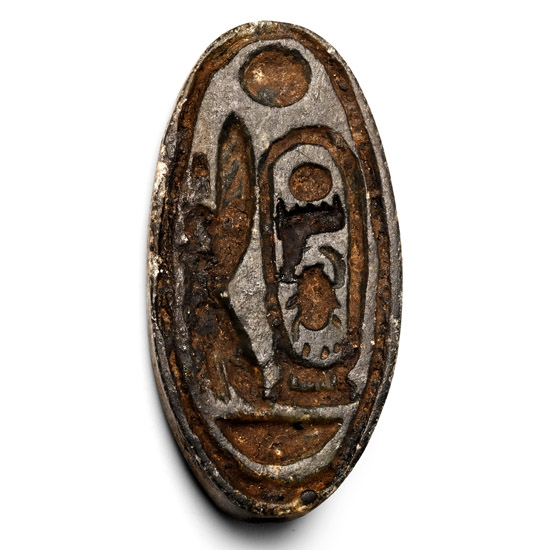
Egyptian Stone Scaraboid with Cartouche of Thutmose IV
New Kingdom, 18th Dynasty, circa 1415 B.C.Sold for (Inc. bp): £260
Keeled body pierced longitudinally, underside with cartouche for Thutmose IV (Men-kheperru-re) and other hieroglyphs. 5.79 grams, 34 mm
From the collection of a gentleman, acquired on the London art market in the 1990s. -
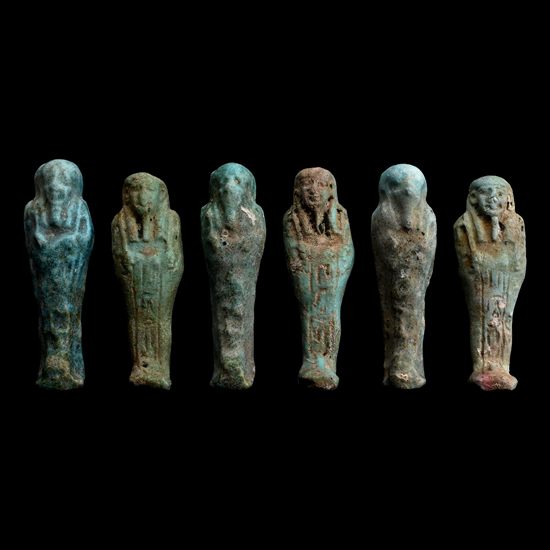
Egyptian Faience Shabti Collection
Late Period-Ptolemaic Period, 664-30 B.C.Sold for (Inc. bp): £468
Comprising mainly D-section types with moulded facial detailing some with vertical band of hieroglyphs to the lower body. 11.1 grams total, 67-72 mm
From the collection of a gentleman, acquired on the London art market in the 1990s.
