
Loading, please wait...
_900x900.jpg "Egyptian Faience Fish Amulet with Hieroglyphs")
_200x200.jpg "Egyptian Faience Fish Amulet with Hieroglyphs")
.jpg "Egyptian Faience Fish Amulet with Hieroglyphs")
LOT 0016
Egyptian Faience Fish Amulet with Hieroglyphs
SECOND INTERMEDIATE PERIOD, CIRCA 1650 B.C.
7/8 in. (5.43 grams, 23 mm).
Green glazed composition plaque with two tilapia fish placed tête-bêche, two groups of hieroglyphs to the underside.
ProvenanceFrom a family collection formed 1900-1950; by descent circa 1980.
LiteratureCf. Andrews, C., Amulets of Ancient Egypt, London, 1994, item 54(h).
CONDITIONTimeLine Auctions follows a vetting process to ensure the authenticity and legality of all items, reinforcing our commitment to integrity and responsible trading. Each antiquity, antique, and coin lot undergoes thorough examination by a vetting committee of at least ten external specialists, professional trade association members, scientists, and archaeologists: Our Vetting Process
AUCTIONS:
TimeLine is a leading auction house specialising in antiquities, ancient art, collectables, natural history, coins, medals, and books. Our auctions offer museums, collectors, historians, and enthusiasts the opportunity to acquire unique and historically significant pieces.
-
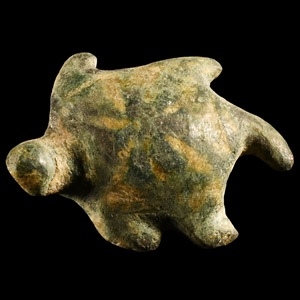
Romano-Egyptian Bronze Turtle Statuette
Roman Period, 30 B.C.-323 A.D.Sold for (Inc. bp): £98
Modelled in the round with naturalistic detailing. 8.03 grams, 24 mm
‘The Ancient Menagerie Collection’ formerly the property of a Cambridgeshire lady, collected since the 1990s and acquired from auctions and dealers throughout Europe and the USA, now ex London collection. -
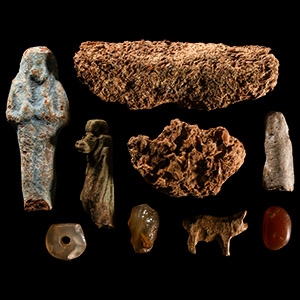
Egyptian and Other Artefact Collection
Late Period, 664-323 B.C. and laterSold for (Inc. bp): £156
Comprising: a blue-glazed shabti; remains of a rock crystal stamp seal and other stone items; carved pig figure; fragment of a Taweret amulet; together with other items. 43 grams total, 18-79 mm
From an early 20th century collection, Carnavon, North Wales, UK. -
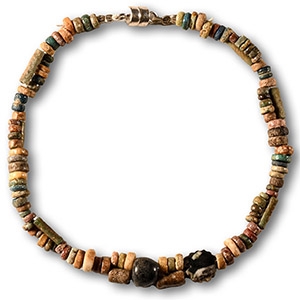
Egyptian Faience Mummy Bead Bracelet
Late Period, 664-525 B.C.Sold for (Inc. bp): £78
Restrung designer bracelet and with a modern magnetic clasp; composed primarily of disc-shaped and tubular beads, together with feature beads, one possibly amuletic. 4.3 grams, 18 cm long
Acquired on the UK art market. Property of a Ruislip, UK, gentleman, by inheritance.
