
Loading, please wait...

LOT 0453
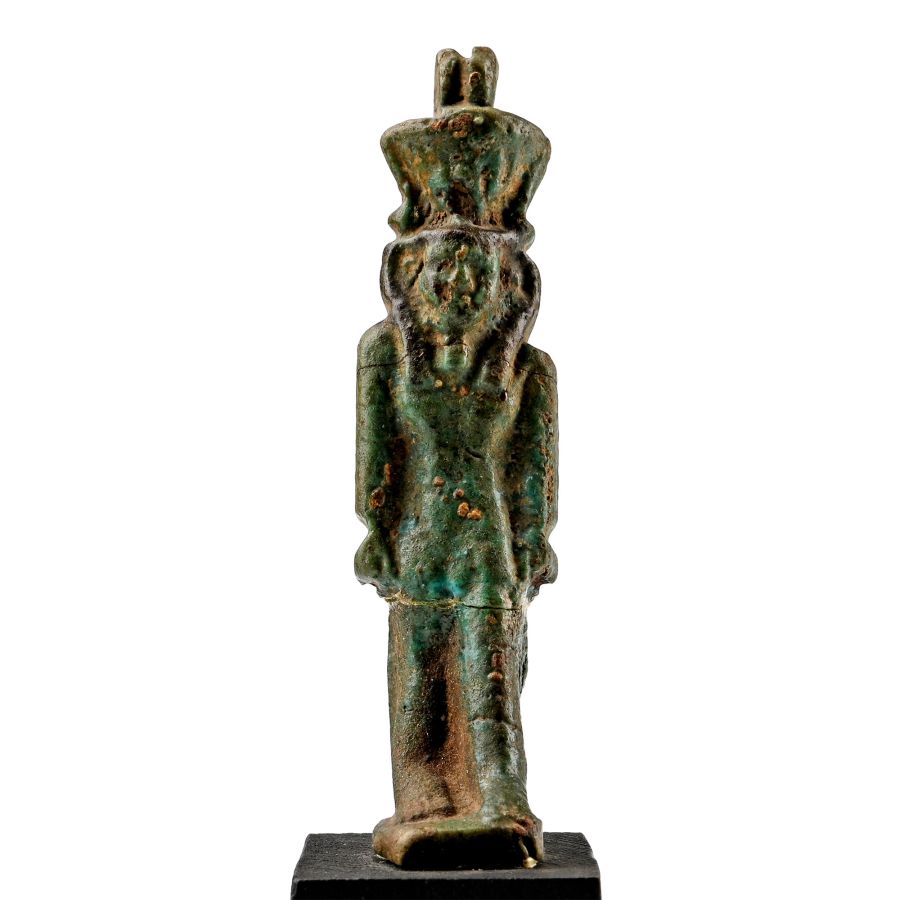
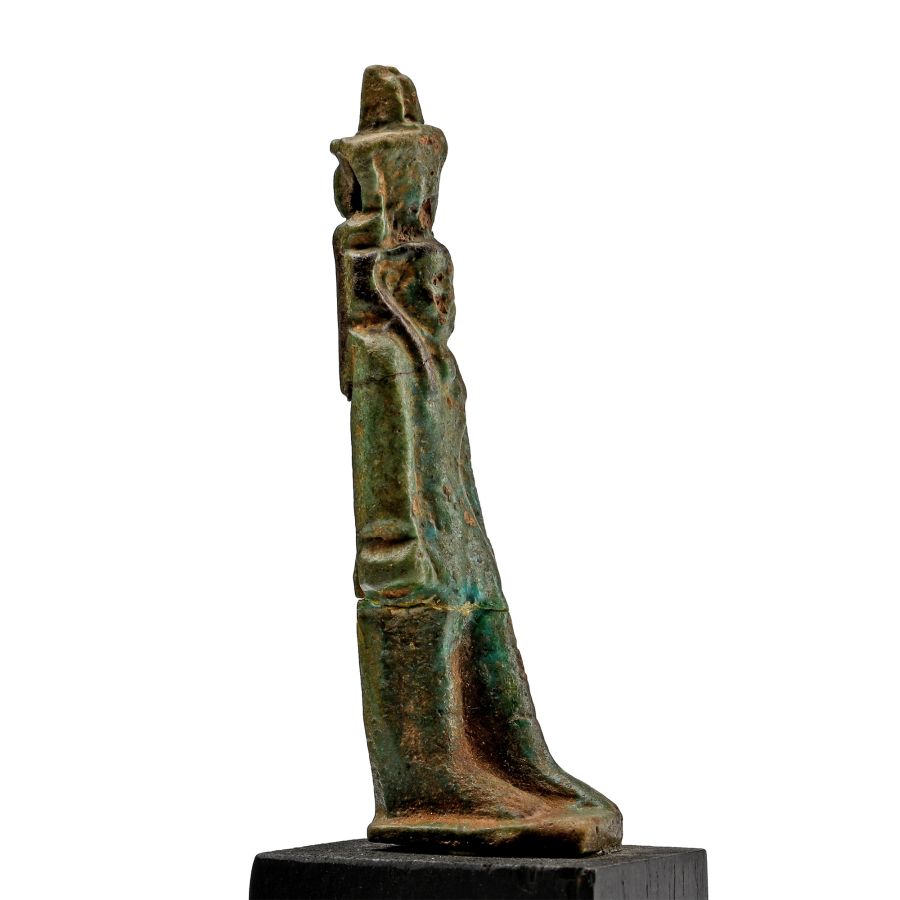
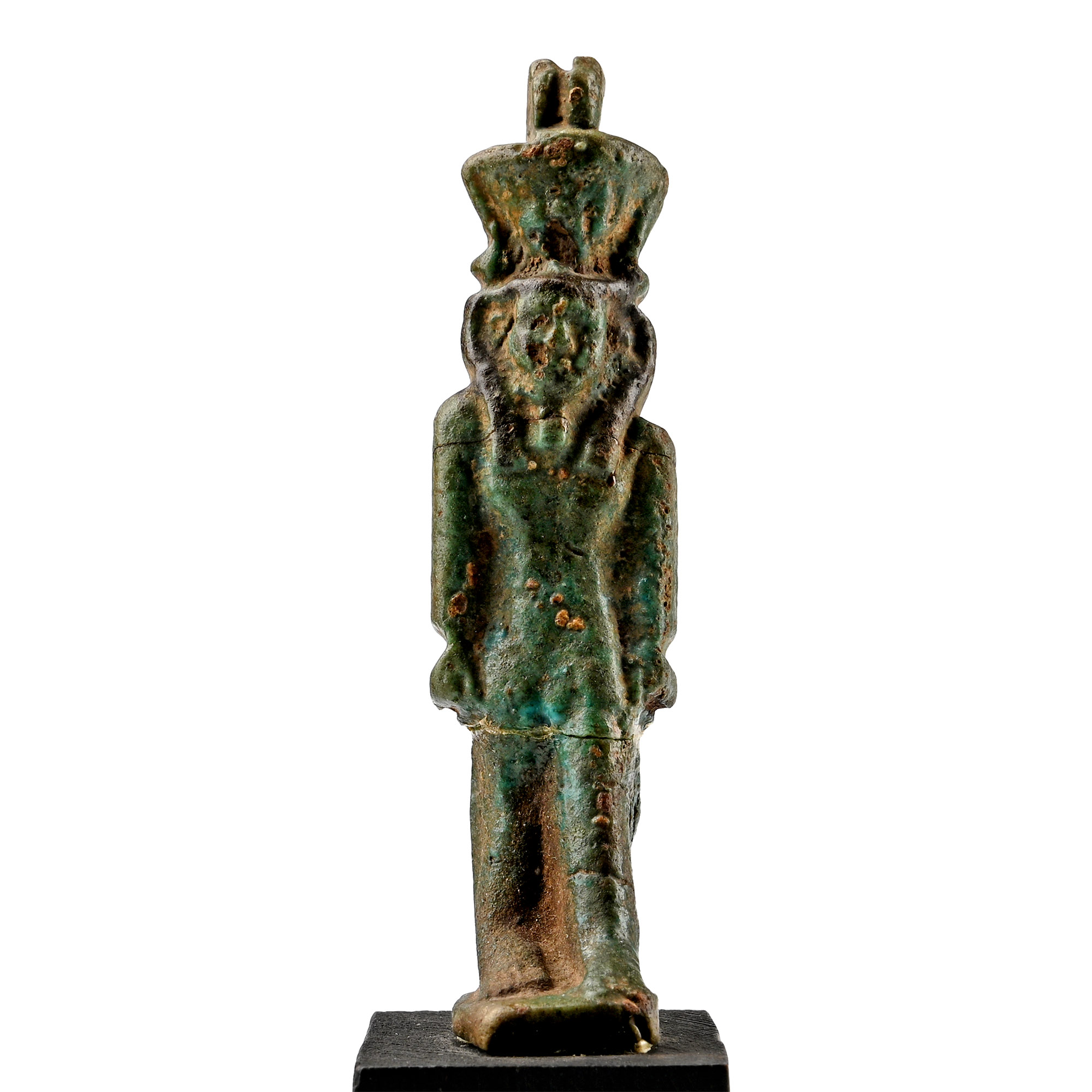
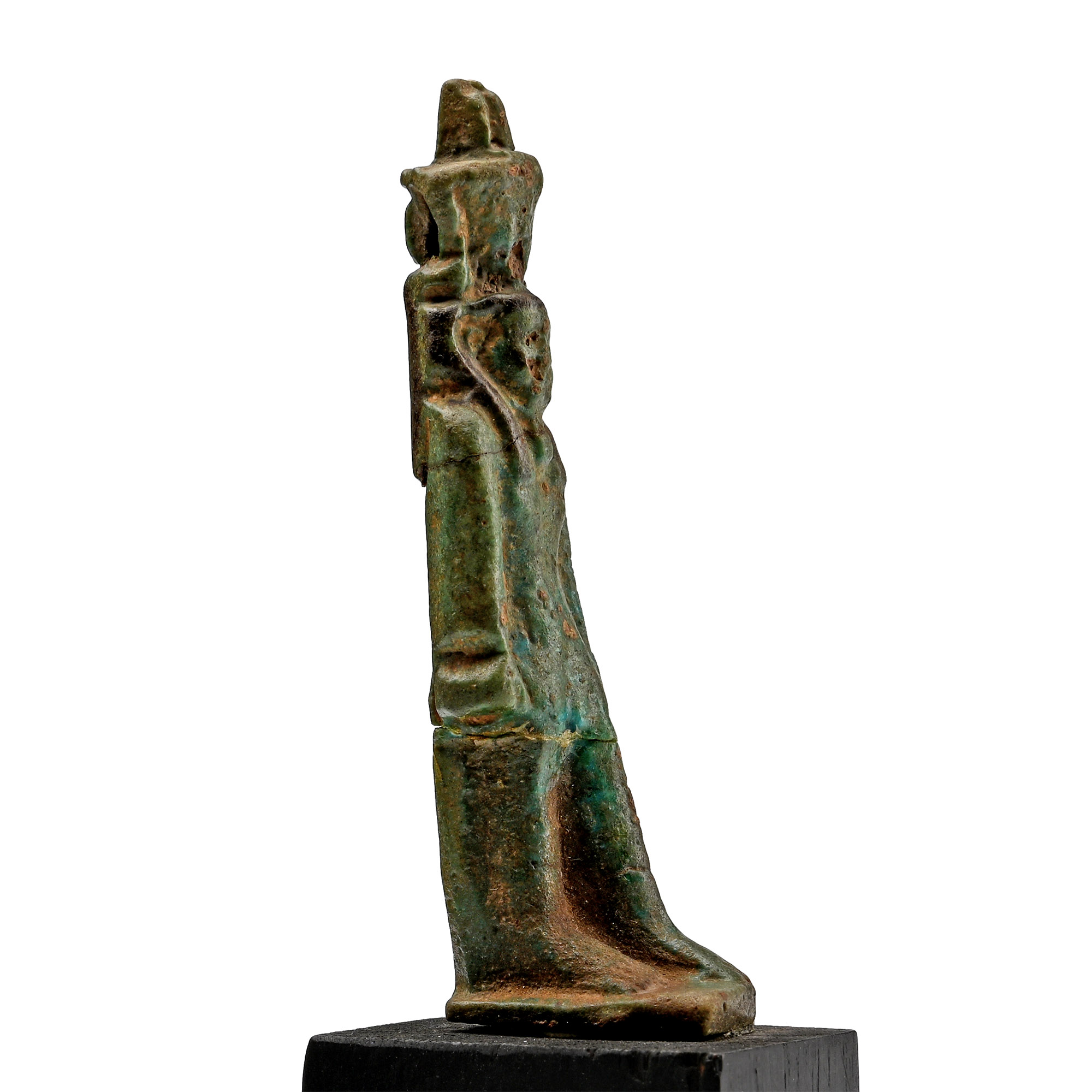
Egyptian Faience Figure of Nefertum
PTOLEMAIC PERIOD, 332-30 B.C.
5 1/8 in. (71 grams total, 13 cm including stand).
In a striding pose with arms at the sides, sporting a black coloured tripartite wig surmounted by the god's distinctive headdress consisting of a lotus flower with two plumes on top; a suspension loop at the back; repaired.
ProvenanceProperty from an American deceased estate, acquired between 1970 and 1989.
with Bonham's, London, 28 October 2009, no.81 [Part].
Cf. Andrews, C., and van Dijk, J., Objects for Eternity: Egyptian Antiquities from the W. Arnold Meijer Collection, Mainz am Rhein, 2006, p.229, no.3.41, for a similar faience figurine.
FootnotesNefertum was closely associated with the creator god Ptah and the goddesses Sekhmet and Bastet. He represented the first sunlight and the sweet scent of the Egyptian blue lotus flower (nymphaea caerulea). According to beliefs, the sun rose from the bloom of a blue lotus, embodying notions of rebirth and rejuvenation. Additionally, as the lotus was seen as a symbol of fertility, it is possible that this amulet was also worn for that purpose.
CONDITIONTimeLine Auctions follows a vetting process to ensure the authenticity and legality of all items, reinforcing our commitment to integrity and responsible trading. Each antiquity, antique, and coin lot undergoes thorough examination by a vetting committee of at least ten external specialists, professional trade association members, scientists, and archaeologists: Our Vetting Process
AUCTIONS:
TimeLine is a leading auction house specialising in antiquities, ancient art, collectables, natural history, coins, medals, and books. Our auctions offer museums, collectors, historians, and enthusiasts the opportunity to acquire unique and historically significant pieces.
LOT 0453
Egyptian Faience Figure of Nefertum
Estimate £500 - 700€580 - 810 (for guidance only)$680 - 950 (for guidance only)
-
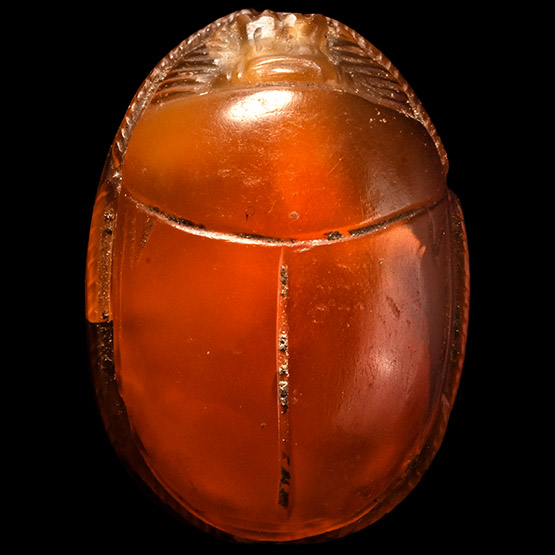
Large Egyptian Carnelian Scarab
Ptolemaic-Roman Period, circa 332 B.C.-300 A.D.Estimate: £1,000 - 1,400 (+bp*)
Opening Bid: £500
Carved in the round with segmented carapace, pierced longitudinally for suspension. 4.75 grams, 22 mm
UK private collection before 2000. Acquired on the UK art market. Private collection, London, UK. -
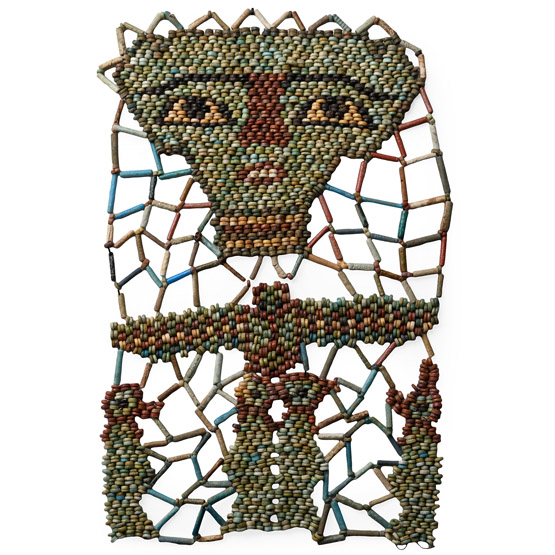
Egyptian Faience Mummy Bead Mask with Scarab and Four Sons of Horus
Ptolemaic Period, 332-30 B.C.Sold for (Inc. bp): £780
A restrung netted beadwork panel of annular and tubular glazed composition beads in blues, greens, black, cream and red-brown colours, depicting a mummy face mask with false beard, a scarab with extended wings below, the 'Four Sons of Horus’ beneath the scarab, joined together with areas of open netting of tubular beads. 100 grams, 24 cm
Ex North London, UK, gallery. Ex Cambridgeshire, UK, collection.
The Four Sons of Horus were deities responsible for protecting the deceased's internal organs. The human-headed Imsety protected the liver, the baboon-headed Hapy protected the lungs, the jackal-headed Duamutef protected the stomach, and the falcon-headed Qebehsenuef protected the intestines. -
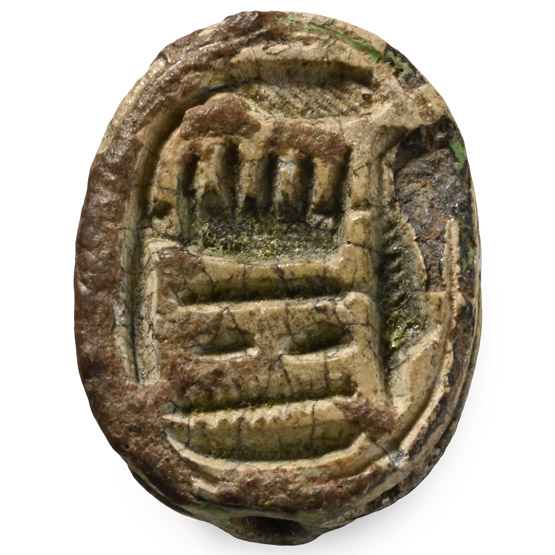
Egyptian Steatite Scarab with Hieroglyphs
New Kingdom, circa 1300 B.C.Sold for (Inc. bp): £92
A scarab with detailing to the upper face; the underside inscribed with hieroglyphs writing the name of Amun-Re, accompanied by a wab sign on the left and neb sign below; pierced longitudinally. 2.09 grams, 15 mm
Ex Constable collection, 1990s. Ex P. Morris collection.
