
Loading, please wait...

LOT 0002
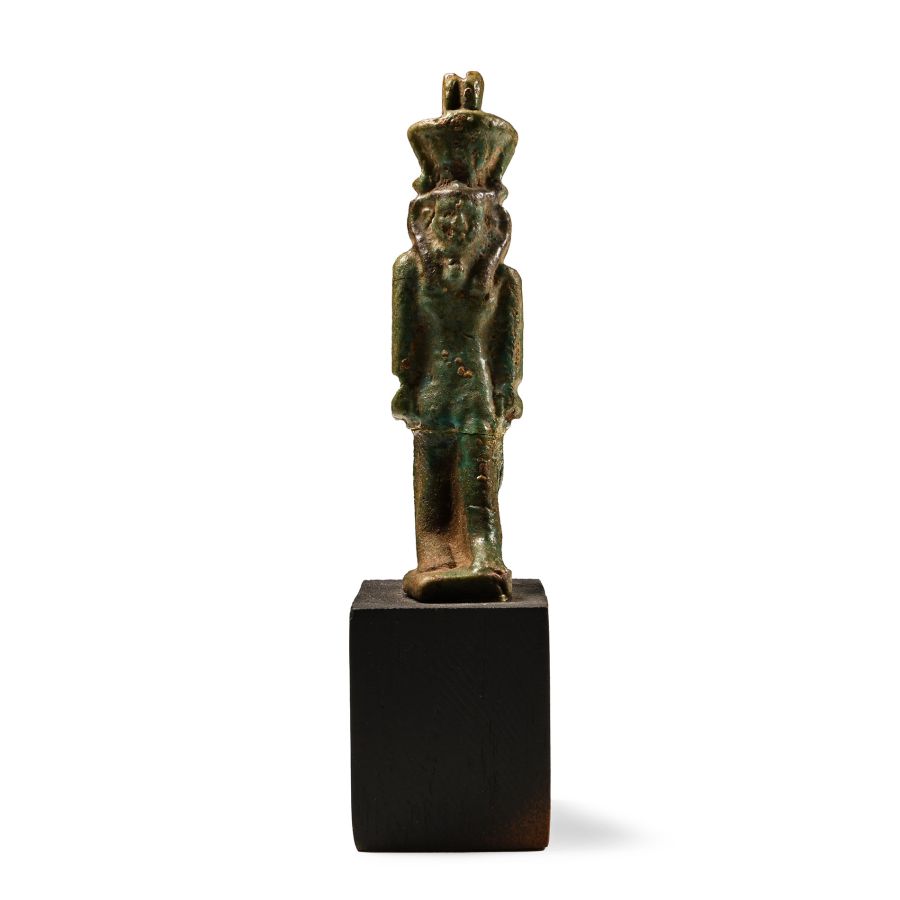
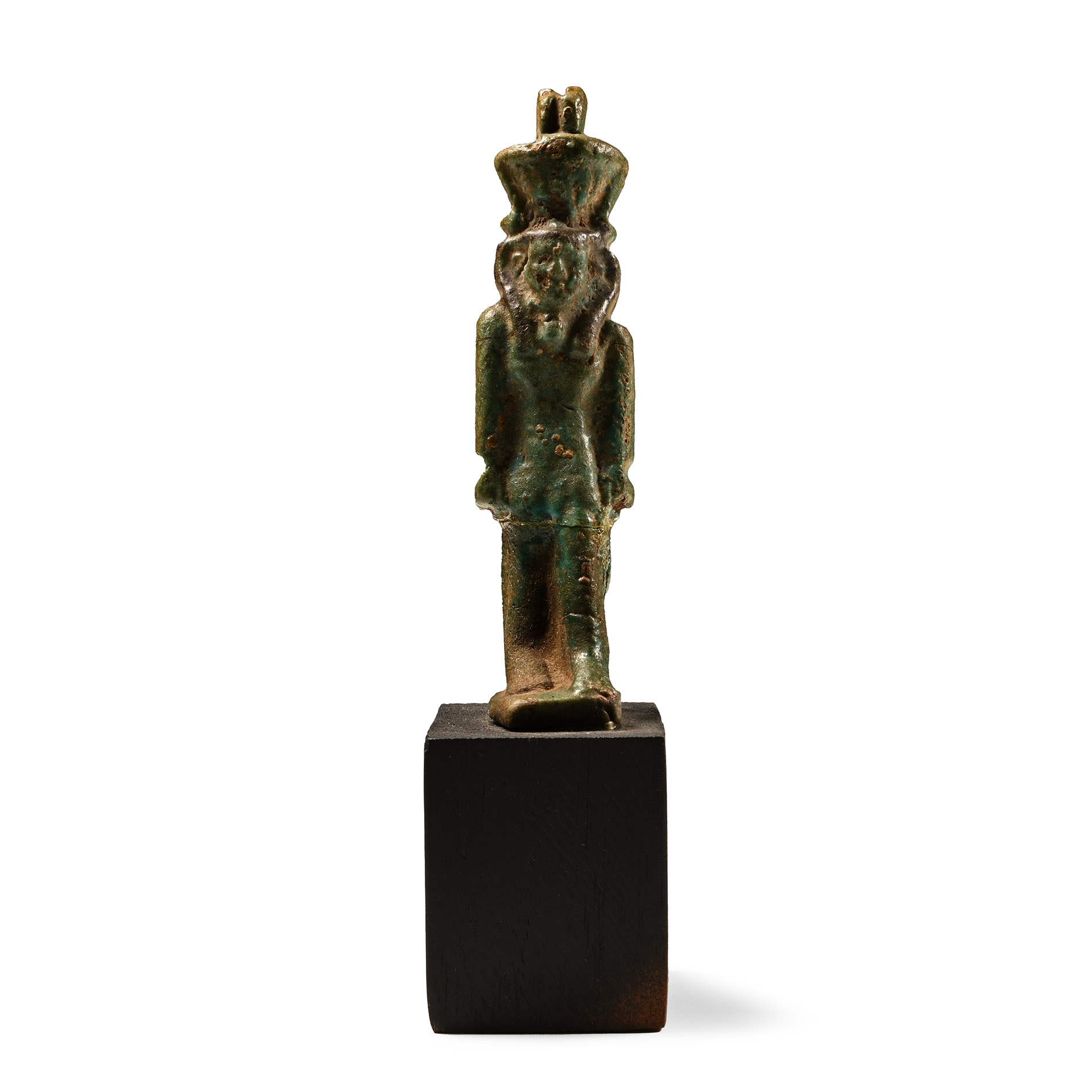
Egyptian Faience Figure of Nefertum
PTOLEMAIC PERIOD, 332-30 B.C.
5 1/8 in. (71 grams total, 13 cm including stand).
Turquoise faience standing figure of Nefertum in a striding pose with arms at the sides, sporting a black coloured tripartite wig surmounted by the god's distinctive headdress consisting of a lotus flower with two plumes on top; a suspension loop at the back; repaired.
ProvenanceProperty from an American deceased estate, acquired between 1970 and 1989.
with Bonham's, London, 28 October 2009, no.81 [Part].
This lot is accompanied by an illustrated lot declaration signed by the Head of the Antiquities Department, Dr Raffaele D’Amato.
Cf. Andrews, C., and van Dijk, J., Objects for Eternity: Egyptian Antiquities from the W. Arnold Meijer Collection, Mainz am Rhein, 2006, p.229, no.3.41, for a similar faience figurine.
FootnotesNefertum was closely associated with the creator god Ptah and the goddesses Sekhmet and Bastet. He represented the first sunlight and the sweet scent of the Egyptian blue lotus flower (nymphaea caerulea). According to beliefs, the sun rose from the bloom of a blue lotus, embodying notions of rebirth and rejuvenation. Additionally, as the lotus was seen as a symbol of fertility, it is possible that this amulet was also worn for that purpose.
CONDITIONTimeLine Auctions follows a vetting process to ensure the authenticity and legality of all items, reinforcing our commitment to integrity and responsible trading. Each antiquity, antique, and coin lot undergoes thorough examination by a vetting committee of at least ten external specialists, professional trade association members, scientists, and archaeologists: Our Vetting Process
AUCTIONS:
TimeLine is a leading auction house specialising in antiquities, ancient art, collectables, natural history, coins, medals, and books. Our auctions offer museums, collectors, historians, and enthusiasts the opportunity to acquire unique and historically significant pieces.
LOT 0002
Egyptian Faience Figure of Nefertum
Estimate £600 - 800€700 - 930 (for guidance only)$810 - 1,080 (for guidance only)
-
Egyptian Terracotta of a Concubine
Middle Kingdom, 12th Dynasty, circa 1976-1793 B.C.Sold for (Inc. bp): £1,235
D-shaped in section with tongue-shaped base, slender, long-limbed female figure modelled in the half-round with tightly curled, shoulder length hair, the chest and abdomen with linear and dotted decoration. 69 grams, 14.6 cm
From an old English deceased estate. Property of a London, UK, collector. This lot is accompanied by an illustrated lot declaration signed by the Head of the Antiquities Department, Dr Raffaele D’Amato. -
Egyptian Blue Faience Clothing Mounts
Roman Period, 30 B.C.-323 A.D.Estimate: £300 - 400 (+bp*)
Opening Bid: £135
Group of rosette mounts, each plano-convex in profile with two attachment holes to the centre and pierced loops to the rim. 124 grams total, 25-30 mm
UK private collection, formed in the 1980s. This lot is accompanied by an illustrated lot declaration signed by the Head of the Antiquities Department, Dr Raffaele D’Amato. -
.jpg)
Egyptian Gold Mounted Scarab Bead
Middle Kingdom-Second Intermediate Period, circa 1900-1560 B.C.Estimate: £400 - 600 (+bp*)
Opening Bid: £200
Comprising a faience scarab with a scroll-work border framing the vertically arranged hieroglyphs: kheper beetle, nwb sign for gold, and two nfr signs flanking an ankh sign, set in a gold funda with tubular collars. 3.36 grams, 20 mm
From an early 20th century Home Counties, UK, collection. This lot is accompanied by an illustrated lot declaration signed by the Head of the Antiquities Department, Dr Raffaele D’Amato.
