
Loading, please wait...
LOT 0419
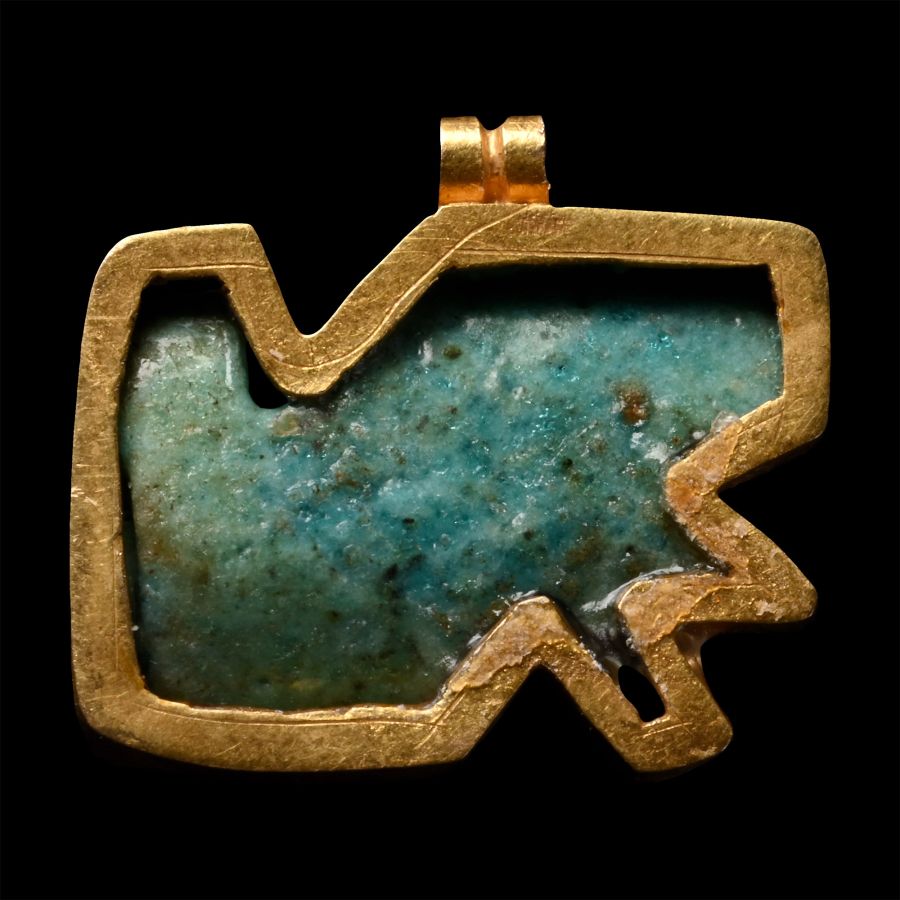
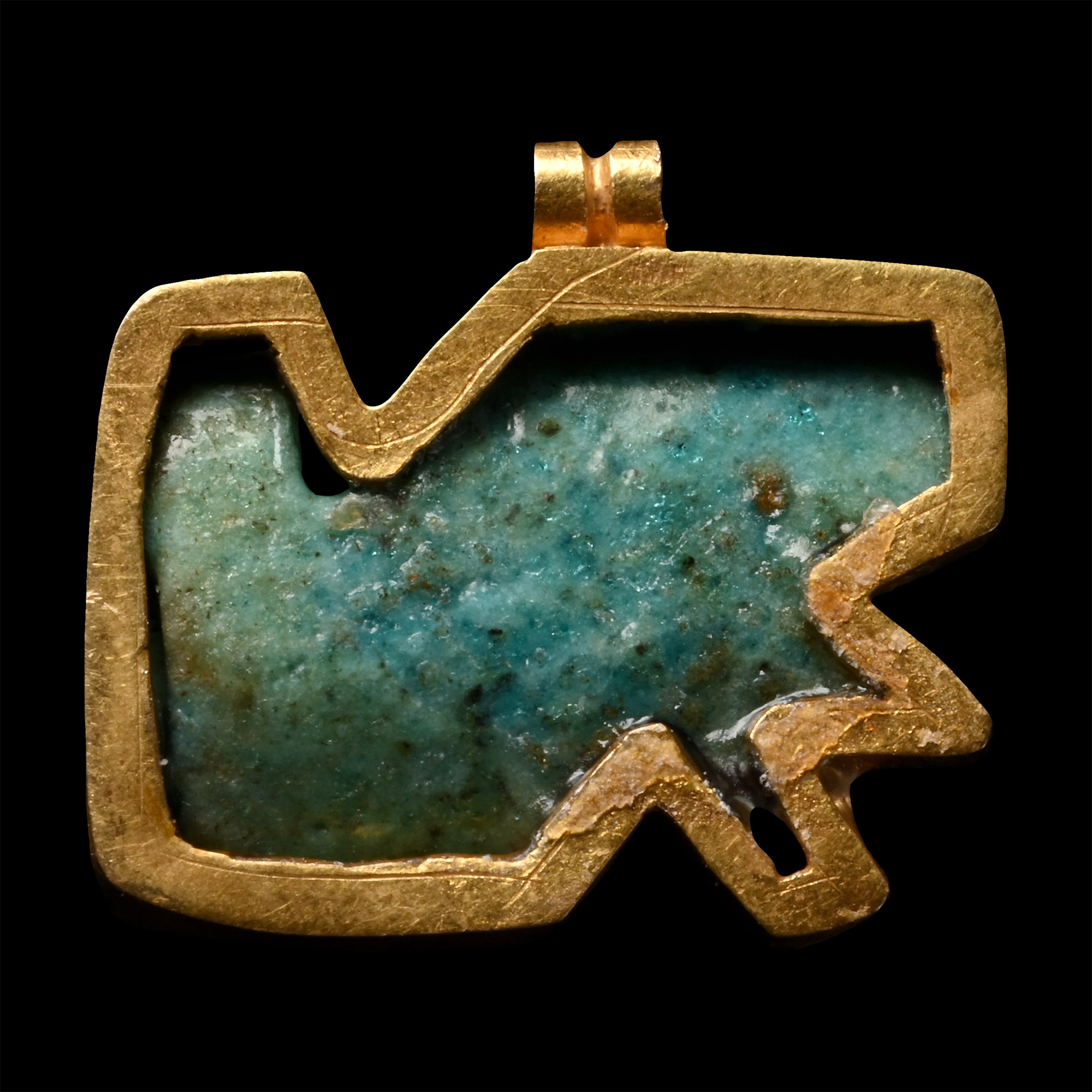
Egyptian Faience Eye of Horus in Gold Pendant
LATE PERIOD, 664-332 B.C. AND LATER
1/2 in. (1.09 grams, 14 mm).
Comprising a turquoise-glazed wedjat amulet set in a 14-carat gold pendant mount.
ProvenanceEx important German collection, 1960-1990.
FootnotesThe wedjat-eye amulet (also called the Eye of Horus) became one of the most recognisable symbols in ancient Egyptian culture. It signifies protection, healing, and restoration. In myth, Horus lost his eye during his battle with Seth, and it was later magically restored, symbolising healing and the return to wholeness. The Eye of Horus came to embody divine power and protection, and was often used in amulets to safeguard and promote well-being.
CONDITIONTimeLine Auctions follows a vetting process to ensure the authenticity and legality of all items, reinforcing our commitment to integrity and responsible trading. Each antiquity, antique, and coin lot undergoes thorough examination by a vetting committee of at least ten external specialists, professional trade association members, scientists, and archaeologists: Our Vetting Process
AUCTIONS:
TimeLine is a leading auction house specialising in antiquities, ancient art, collectables, natural history, coins, medals, and books. Our auctions offer museums, collectors, historians, and enthusiasts the opportunity to acquire unique and historically significant pieces.
-
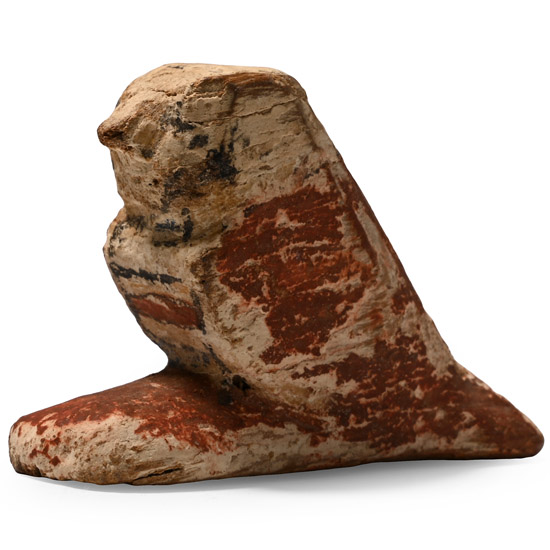
Egyptian Polychrome Wooden Sokar Falcon
Late Period, 664-332 B.C.Sold for (Inc. bp): £312
Statuette depicting the couchant falcon god Sokar with wings folded along the sides of the body; chest, wings, and legs with painted details; inked legend on the underside reading 'Ex George Wathen / 1893 / 12'. 16 grams, 71 mm
Ex George Henry Wathen collection from 1843, who wrote and illustrated the important work 'The Arts, Antiquity and Chronology of Ancient Egypt'. From the collection of David Donlan (1947–2025), a dedicated and lifelong collector with a passion for the ancient world and the natural sciences, forming his collection from 1960s onwards, using many reputable dealers across the United Kingdom, including the well-regarded Coincraft and The Parthenon Gallery.
Wooden images of the raptor-form god Sokar typically decorated the tops of rectangular wooden coffins and canopic chests, which held jars containing the deceased’s mummified organs. Sokar was a protective god of the Memphite necropolis and was often merged with the funerary god Osiris and Ptah, the creator deity of Memphis. George Henry Wathen, FGS (21 November 1816 – 10 November 1879) was a geologist, author, magazine publisher, and South African politician of the Victorian era known primarily for his books on the antiquities of Egypt and the gold fields of Victoria, Australia. -
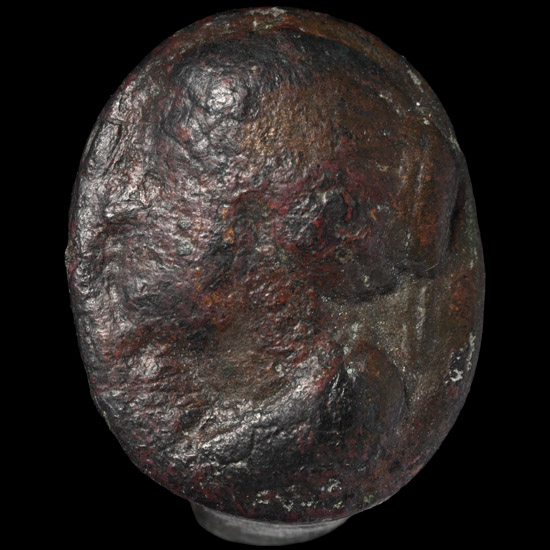
Romano-Egyptian Bronze 'Cleopatra' Ring
Ptolemaic Period, circa 1st century B.C.Sold for (Inc. bp): £169
Thick rounded hoop with ellipsoid bezel, low-relief female profile bust with hair dressed in a chignon. 11.66 grams, 24.82 mm overall, 17.22 mm internal diameter (approximate size British M 1/2, USA 6 1/4, Europe 13.09, Japan 12)
From the private collection of Mr Brian Edwards, New Malden, Surrey, UK, formed from the late 1970s-early 1980s; thence by descent. Accompanied by the original collector's data sheet(s) with reference no.A127. -
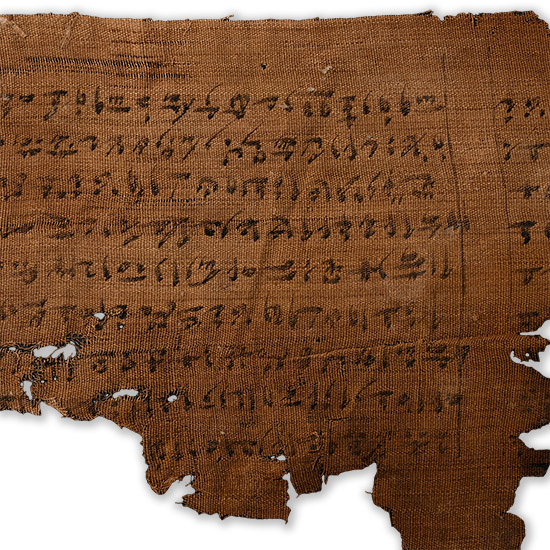
Egyptian Funerary Linen Fragment with Hieratic Text from the Book of the Dead for Ta-sherit-n-ta-ihet
Graeco-Roman Period, circa 3rd century B.C.-2nd century A.D.Sold for (Inc. bp): £1,690
Bearing a portion of Chapter 17, a spell written in late hieratic script executed in black ink on woven linen, consistent with funerary bandages of the Graeco-Roman period; the inscription identifies the owner as a woman named Ta-sherit-n-ta-ihet, with her mother named Iset-(m-)khebit; as is typical for funerary manuscripts of this period, the father’s name is not recorded. 5.08 grams, 22 cm wide
Found inside an 18th-century Bible and believed to be a souvenir acquired in the 19th century. From the private collection of a North American lady. An academically identified and unpublished fragment, offering potential for further scholarly study and publication. Accompanied by a report in progress dated 28 April 2026 by Holly Lund.
Spell 17 is among the most important and widely transmitted compositions in the Book of the Dead, concerned with cosmology, divine knowledge, and the transformation of the deceased in the afterlife. Even in fragmentary form, such texts provide valuable insight into funerary belief and scribal practice during the later phases of ancient Egyptian religion. This description was prepared using information provided by Dr Ann-Katrin Gill, Academic Assistant at the Egyptological Institute, University of Leipzig, and a separate assessment by Steve Vinson, Professor and Director of Graduate Studies in the Department of Middle Eastern Languages and Cultures at Indiana University, Bloomington. The linen fragment may derive from a nineteenth-century mummy unwrapping, a practise widely attested in this period.
