
Loading, please wait...
_900x900.jpg "Egyptian Faience Duck Amulet")
_200x200.jpg "Egyptian Faience Duck Amulet")
.jpg "Egyptian Faience Duck Amulet")
LOT 0006
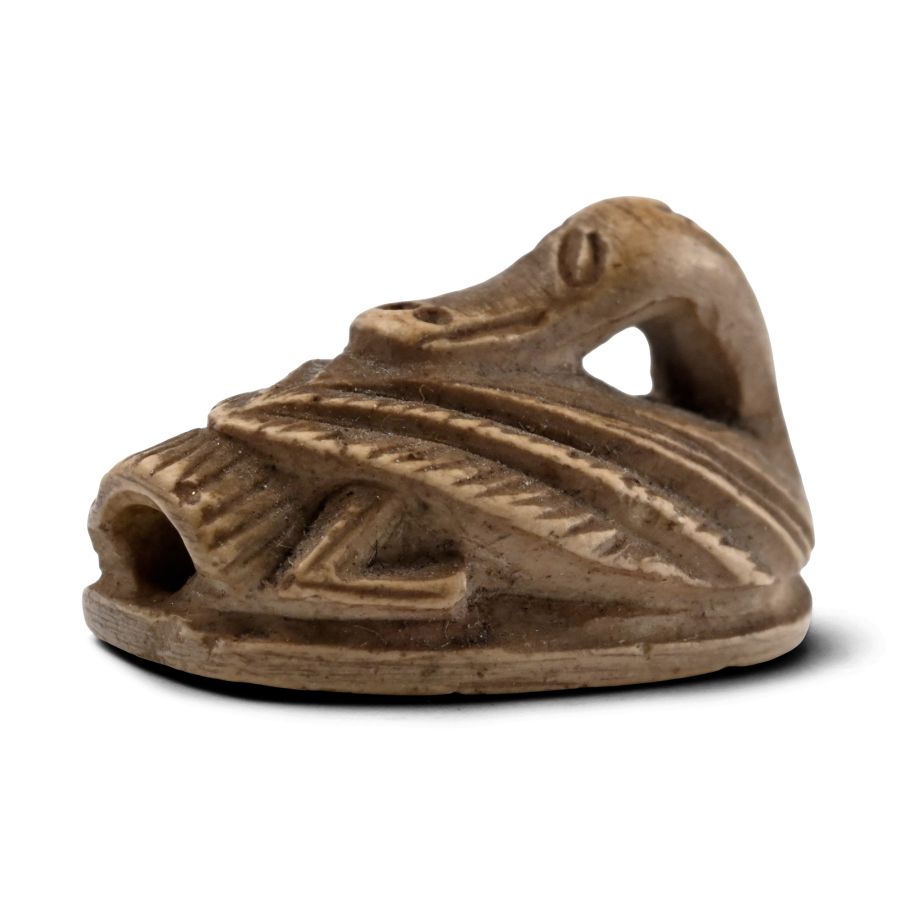
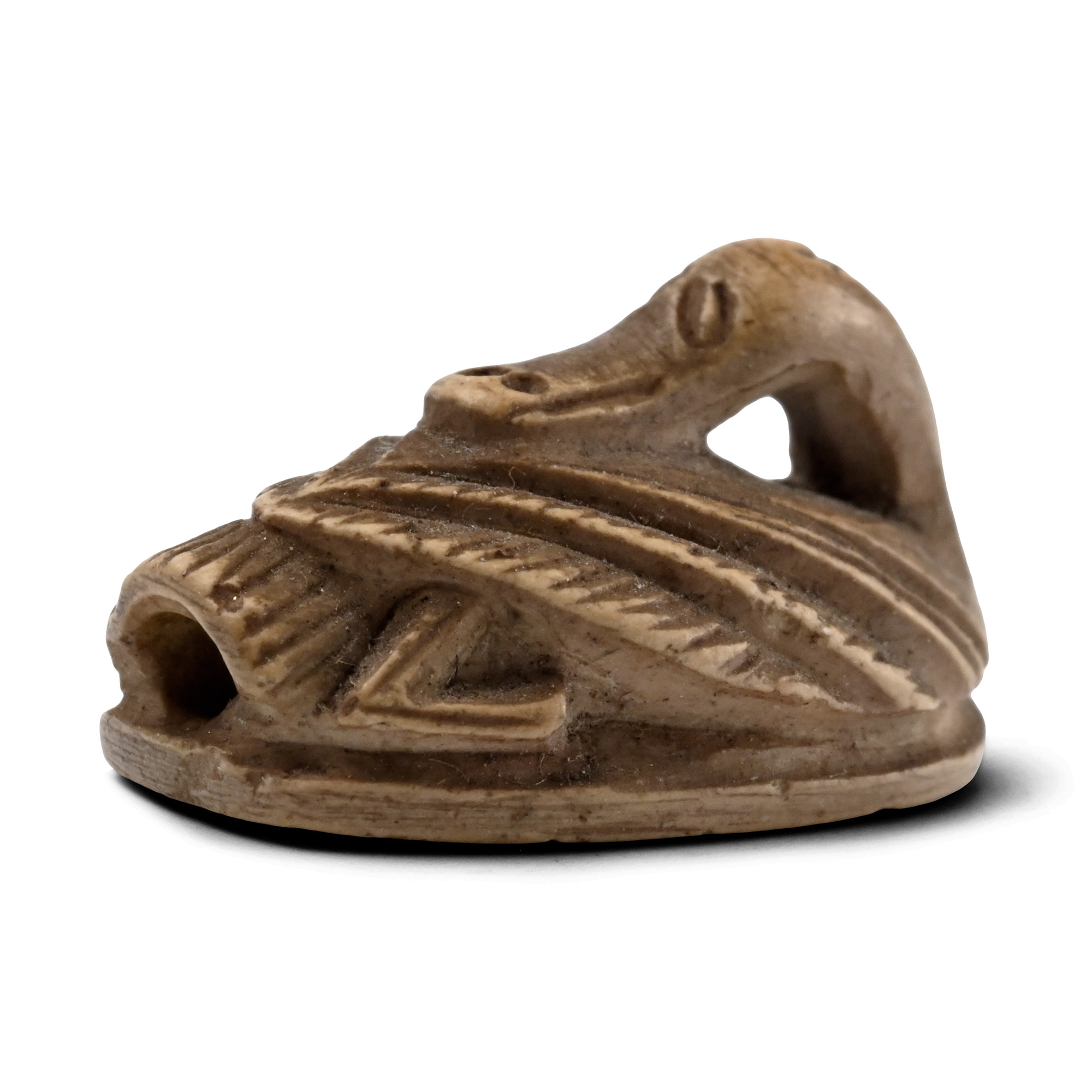
Egyptian Faience Duck Amulet
THIRD INTERMEDIATE-LATE PERIOD, 750-332 B.C.
5/8 in. (1.18 grams, 15 mm).
Modelled in the round, the head placed resting along the spine, loop formed by the neck; underside with hieroglyphic text.
ProvenanceOld private French collection.
Anonymous sale, Beaussant Lefevre, Paris, 2015.
Private European collection, acquired in 2015.
This lot is accompanied by an illustrated lot declaration signed by the Head of the Antiquities Department, Dr Raffaele D'Amato.
Cf. Andrews, C., Amulets of Ancient Egypt, London, 1994, p. 53, fig. 54d, for a similar duck scaraboid; Matouk, F.S., Corpus du scarabée égyptien. Vol. 2: Analyse thématique, Beirut, 1976, p. 388, nos. 814-815, for similar-themed scarabs.
CONDITIONTimeLine Auctions follows a vetting process to ensure the authenticity and legality of all items, reinforcing our commitment to integrity and responsible trading. Each antiquity, antique, and coin lot undergoes thorough examination by a vetting committee of at least ten external specialists, professional trade association members, scientists, and archaeologists: Our Vetting Process
AUCTIONS:
TimeLine is a leading auction house specialising in antiquities, ancient art, collectables, natural history, coins, medals, and books. Our auctions offer museums, collectors, historians, and enthusiasts the opportunity to acquire unique and historically significant pieces.
-
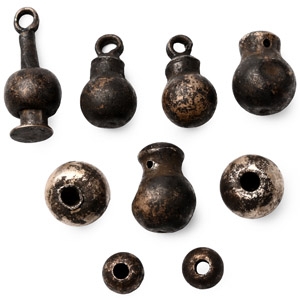
Egyptian Silver Poppy Amulet Collection
Late-Ptolemaic Period, 664-30 B.C.Sold for (Inc. bp): £234
Group of poppy-head amulets, some with suspension loop, others pierced. 7.21 grams total, 5-18 mm
Ex London, UK, gentleman 1980-1990s. This lot is accompanied by an illustrated lot declaration signed by the Head of the Antiquities Department, Dr Raffaele D'Amato.
Amulets in the form of poppies were used to heal and alleviate pain and to ward off death. These types of amulets were also linked to Osiris, the Egyptian deity of agriculture, death, and the afterlife. -
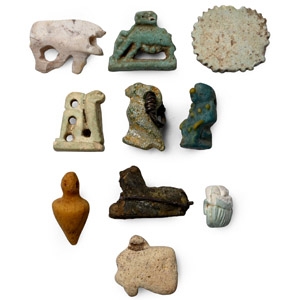
Egyptian Faience and Hardstone Amulet Group
Late-Ptolemaic Period, 664-30 B.C.Sold for (Inc. bp): £221
Including two wedjat eyes, a seated baboon, plumb bob, uraeus, scarab, falcon, recumbent lion, suckling sow (representing Nut), and a fringe-edged disc bead. 8.08 grams total, 9-18 mm
From an early 20th century collection. This lot is accompanied by an illustrated lot declaration signed by the Head of the Antiquities Department, Dr Raffaele D'Amato. -
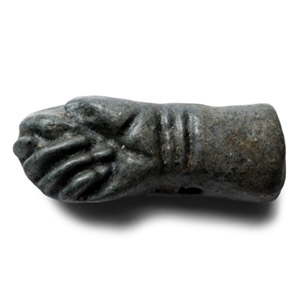
Egyptian Faience Fist Amulet
Ptolemaic-Roman Period, 323 B.C.-323 A.D.Sold for (Inc. bp): £124
Modelled as a right hand in fica protective gesture; pierced at wrist. 1.48 grams, 20 mm
From an early 20th century collection. This lot is accompanied by an illustrated lot declaration signed by the Head of the Antiquities Department, Dr Raffaele D'Amato.
