
Loading, please wait...
LOT 0458
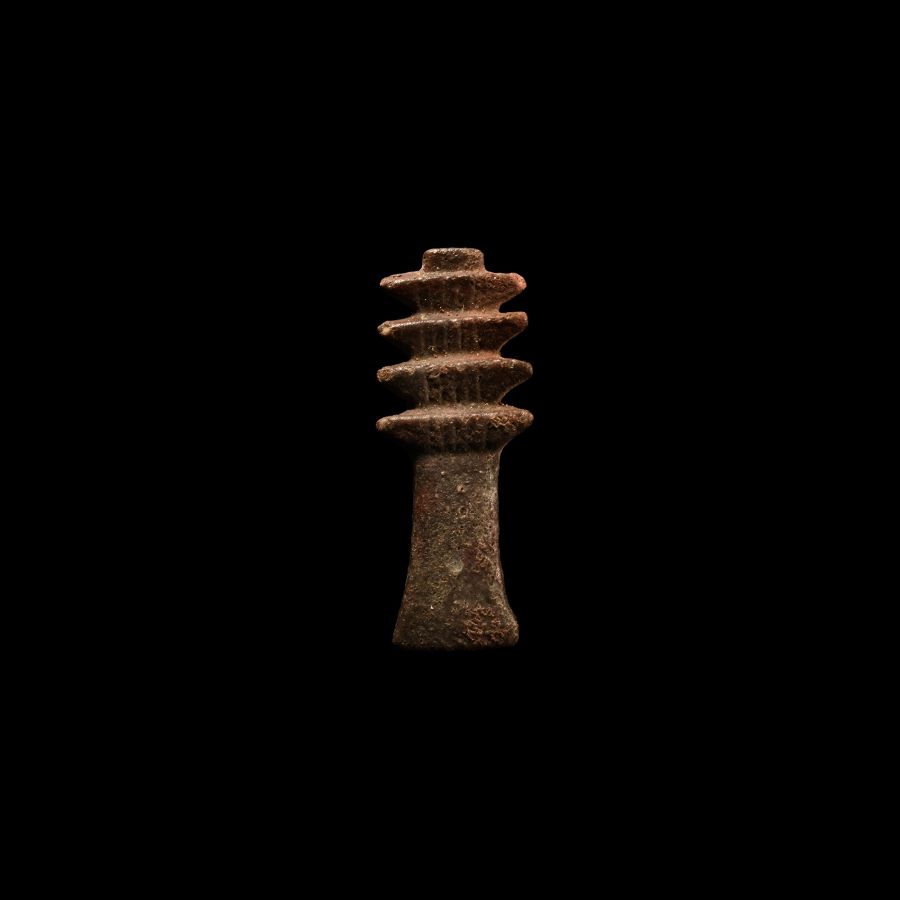
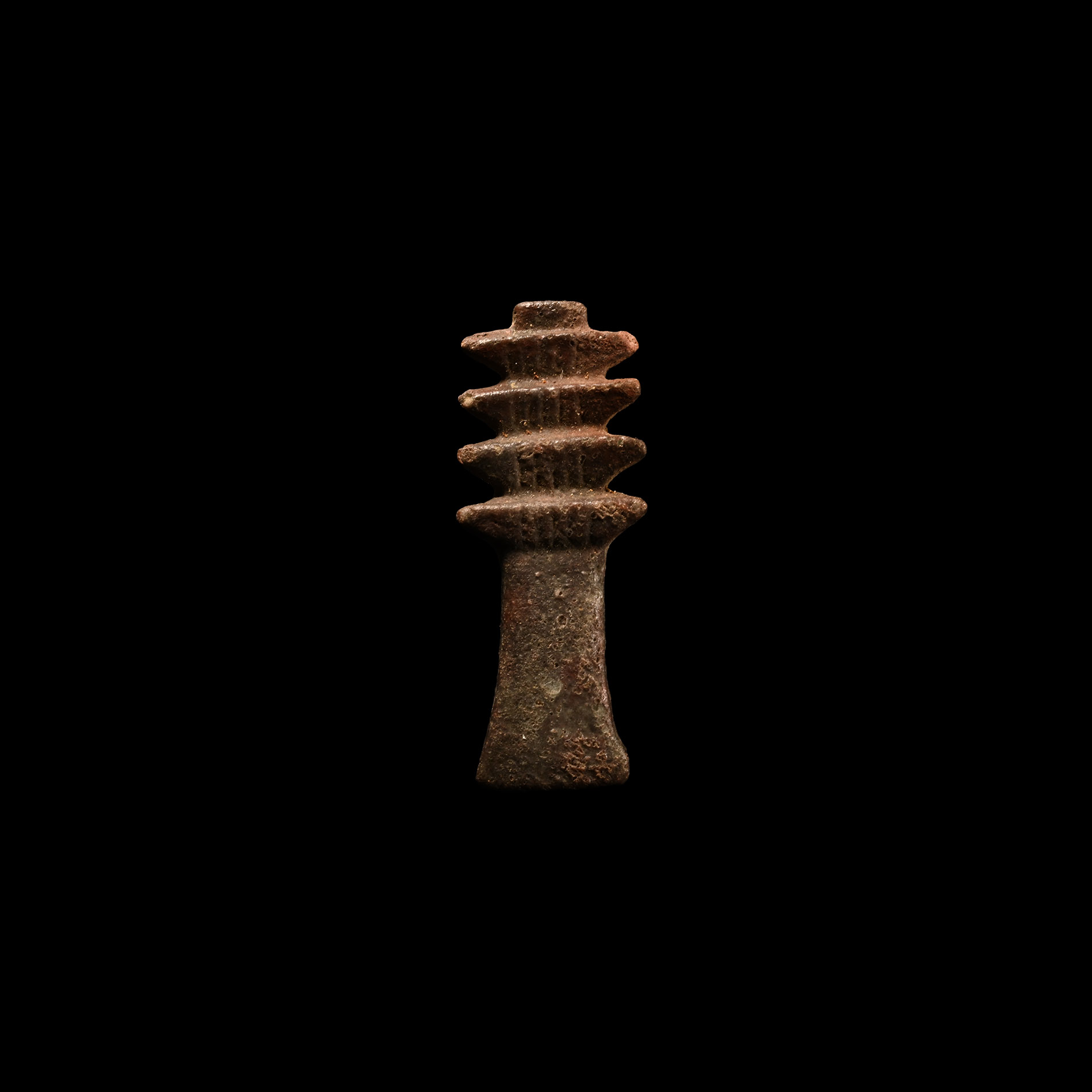
Egyptian Faience Djed Pillar Amulet
LATE PERIOD, 664-323 B.C.
1 3/8 in. (3.52 grams, 36 mm).
Decorated with a brown glaze; pierced pillar to reverse for suspension. [No Reserve]
ProvenanceFrom an early 20th century collection, Carnavon, North Wales, UK.
FootnotesAssociated with the god Osiris.
CONDITIONTimeLine Auctions follows a vetting process to ensure the authenticity and legality of all items, reinforcing our commitment to integrity and responsible trading. Each antiquity, antique, and coin lot undergoes thorough examination by a vetting committee of at least ten external specialists, professional trade association members, scientists, and archaeologists: Our Vetting Process
AUCTIONS:
TimeLine is a leading auction house specialising in antiquities, ancient art, collectables, natural history, coins, medals, and books. Our auctions offer museums, collectors, historians, and enthusiasts the opportunity to acquire unique and historically significant pieces.
-
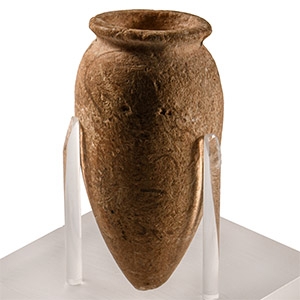
Egyptian Stone Alabastron
Late Period, 664-332 B.C.Estimate: £400 - 600 (‡+bp*)
Opening Bid: £200
The body with rounded shoulders, convex outer face and pointed base, everted rim; accompanied by a custom-made display base. 34.2 grams, 48 mm high (48.9 grams, 55 mm including stand)
Acquired in Europe before 1994. European collection. -
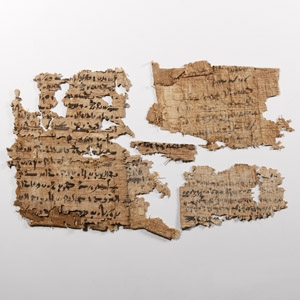
Egyptian Papyrus Fragment Group
Circa 100 B.C.Sold for (Inc. bp): £715
Fragments of a papyrus manuscript with text in Demotic script, remains of a painted grid or decorative figure. 35 grams, 26 x 14.5 cm
Acquired 1970s-1996. Property of a North American collector. London collection, 2016. -
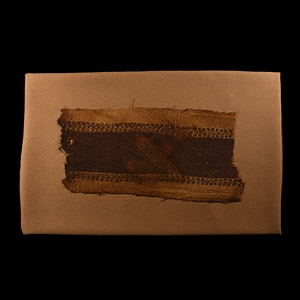
Egyptian Mounted Coptic Textile
Circa 5th-6th century A.D.Sold for (Inc. bp): £33
The decorative border from a garment (cloak?), wool weaving on linen and purple, tendril pattern; the wide, undecorated central red purple panel framed with purple wavy tendrils with arrowhead-shaped leaves. 131 grams, 41.5 x 26 cm
Acquired 1970s-1996. Property of a North American collector. London collection, 2016.
Cloaks and mantles were the main type of outer garments worn by men in late antiquity. They are mentioned in the sources under a variety of names: birrus, caracallus,cucullus, lacerna, sagum, paenula and paludamentum. Unfortunately, despite the fact that cloaks were such important garments they are preserved in far fewer numbers from burials in Egypt than tunics, except as fragments.
