
Loading, please wait...
LOT 0485
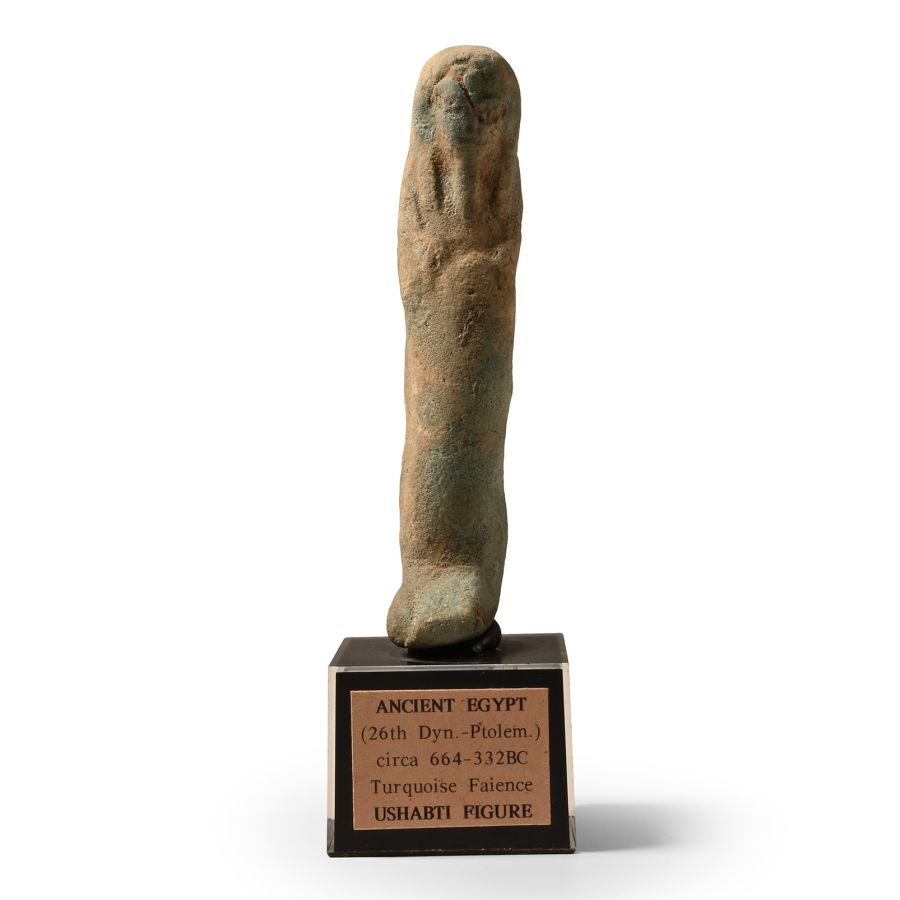
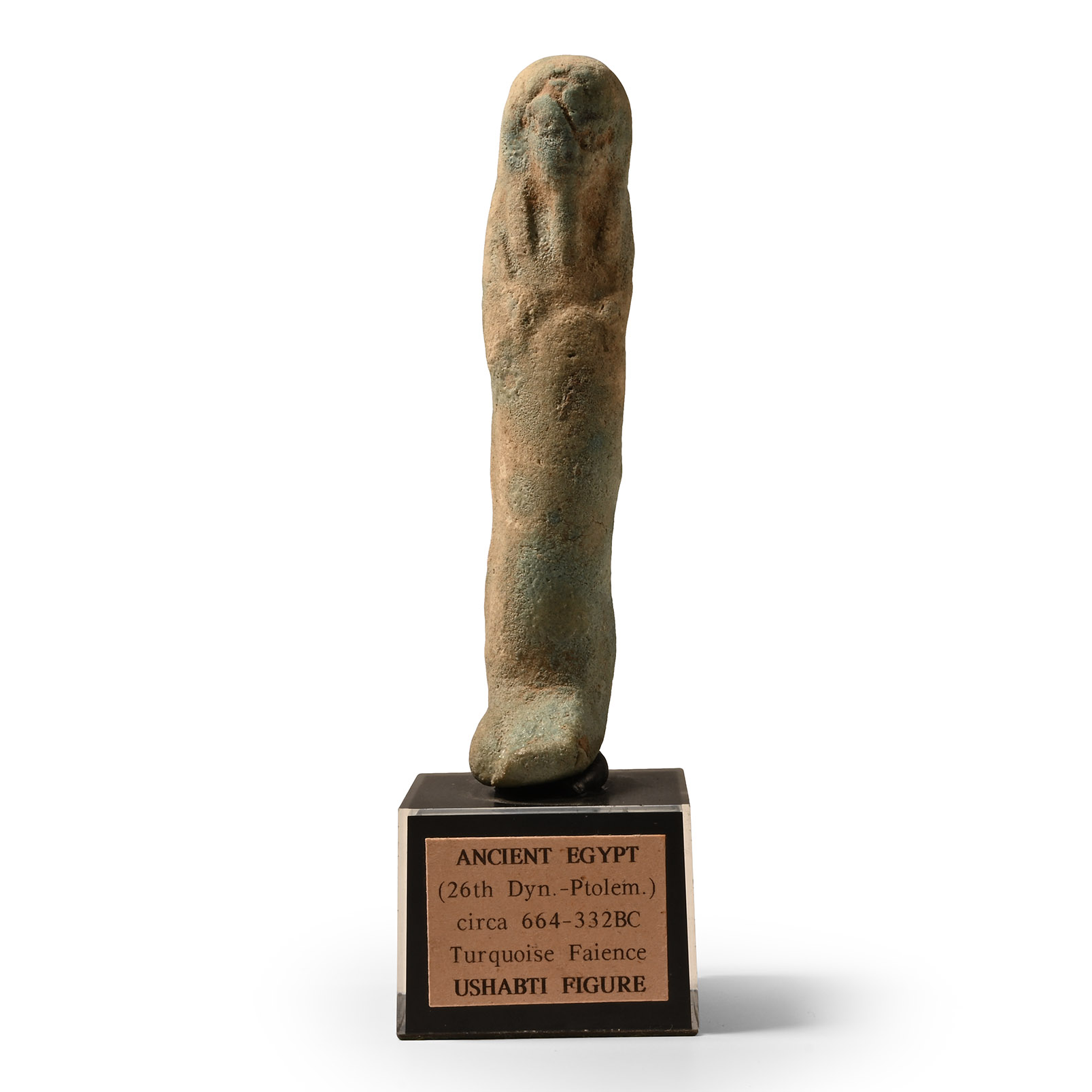
Egyptian Faience Blue Glazed Shabti
PTOLEMAIC PERIOD, 323-30 B.C.
5 1/8 in. (91 grams total, 13 cm high including stand).
A typical mummiform figure with moulded facial detailing, a lappet wig, and hands holding a pick and hoe, the back with a possible hieratic inscription, mounted on a custom-made stand with label 'Ancient Egypt / (26th Dyn - Ptolem.) / circa 664-332 BC / Turquoise Faience / Ushabti Figure'. [No Reserve]
ProvenanceEx old UK collection.
Acquired from Cestrian Antiques, Chester, UK, 2002.
Ex Pemberton collection, Wales, UK.
Accompanied by old information labels with collection reference C.234.
Accompanied by the original Cestrian Antiques invoice.
Cf. Schneider, H.D., Shabtis. An Introduction to the History of Ancient Egyptian Funerary Statuettes with a Catalogue of the Collection of Shabtis in the National Museum of Antiquities at Leiden, Vol.3, Leiden, 1977, p.78, no. 5.3.4.82, for a similar slender figurine.
CONDITIONTimeLine Auctions follows a vetting process to ensure the authenticity and legality of all items, reinforcing our commitment to integrity and responsible trading. Each antiquity, antique, and coin lot undergoes thorough examination by a vetting committee of at least ten external specialists, professional trade association members, scientists, and archaeologists: Our Vetting Process
AUCTIONS:
TimeLine is a leading auction house specialising in antiquities, ancient art, collectables, natural history, coins, medals, and books. Our auctions offer museums, collectors, historians, and enthusiasts the opportunity to acquire unique and historically significant pieces.
-
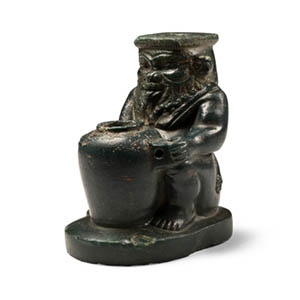
Egyptian Green Jasper Bes Cosmetic Pot
Late Period-Ptolemaic Period, 6th-2nd century B.C.Sold for (Inc. bp): £6,500
Carved in the round figure of Bes sitting on an ellipsoid base; the god in crouching pose wearing a lionskin girdle, his forearms on his thighs and hands holding the pierced lug handles of a storage jar; the jar and Bes's head topped by a low square modius with a round opening to the top. 188 grams, 66 mm
Early 20th century South East England, UK, collection. Formerly in North American collection, 1990s. From the collection of a London, UK, gentleman. Accompanied by an academic report by Egyptologist Paul Whelan. This lot has been checked against the Interpol Database of stolen works of art and is accompanied by a search certificate number no.12376-225408.
This vessel's style continues that of New Kingdom and Third Intermediate Period kohl (eye paint) or unguent Bes-shaped containers, suggesting that it served as a household object rather than an item of funerary equipment. -
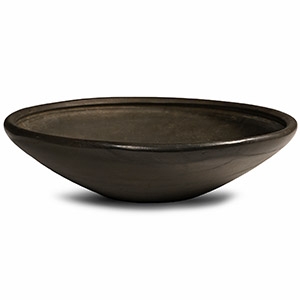
Egyptian Black Stone Lipped Bowl
2nd-3rd Dynasty, 2860-2640 B.C.Sold for (Inc. bp): £2,860
Shallow and broad in profile with carinated rim. 627 grams, 20 cm
From the private collection of Mr K.A., acquired in the 1990s-early 2000s. This lot has been checked against the Interpol Database of stolen works of art and is accompanied by a search certificate number no.12367-225768.
Stone vessels, made from various styles and types of stone, were commonly found in Early Dynastic and Old Kingdom tombs as funerary equipment. One of the most significant discoveries was the recovery of over 30,000 stone vessels in King Djoser's Step Pyramid complex. -
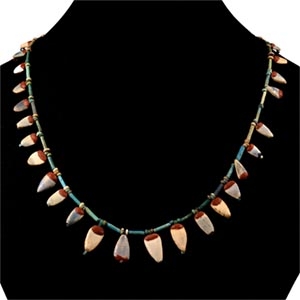
Egyptian Faience Bead Necklace with Petal Beads
New Kingdom, Amarna Period, 1550-1070 B.C.Sold for (Inc. bp): £572
Restrung using turquoise tubular beads interspersed with annular beads of various colours and graduated polychrome petal-shaped beads, some with a loop at each end. 9.19 grams, 52 cm long
From an early 20th century UK collection. Accompanied by a previous typed cataloguing card.
