
Loading, please wait...
LOT 0549
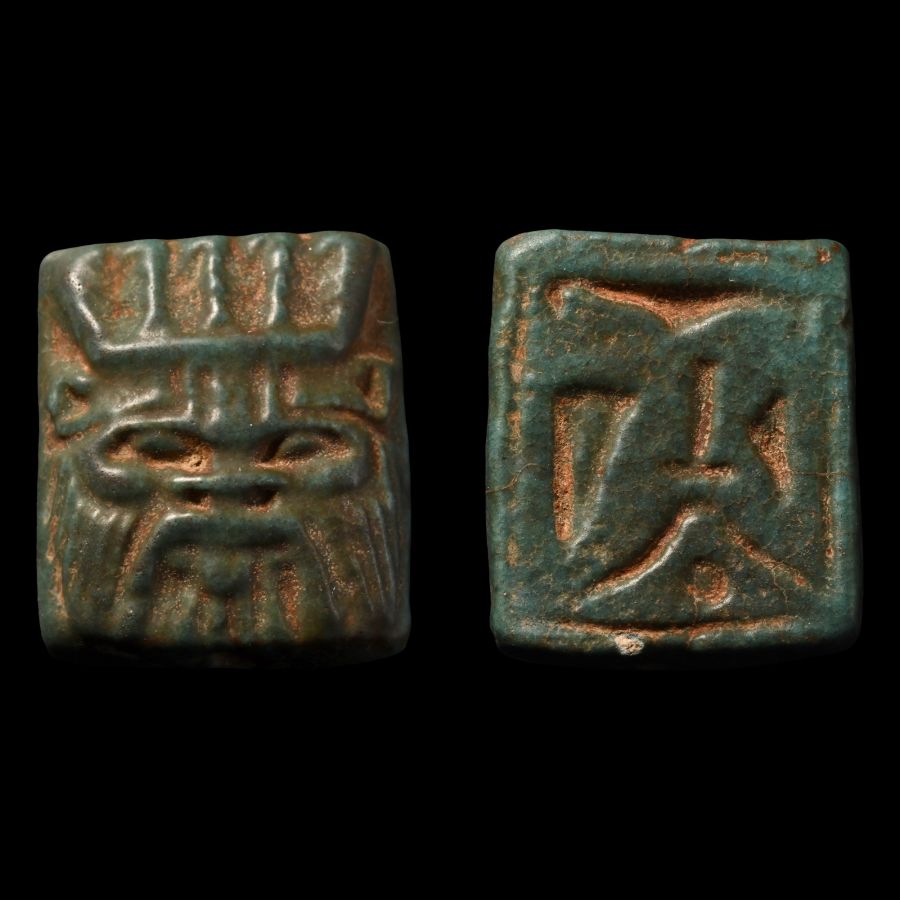
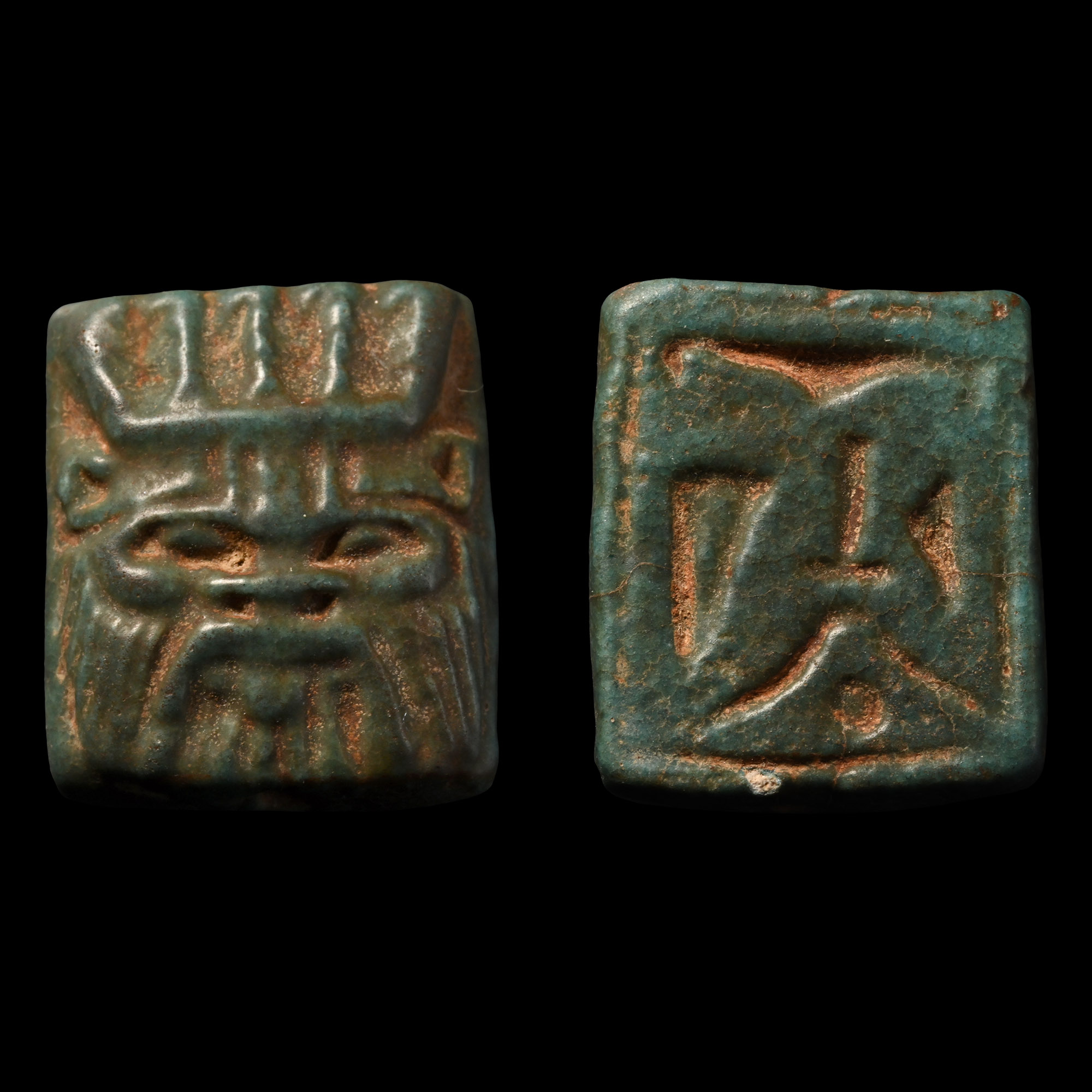
Egyptian Faience Bes Amulet
LATE PERIOD, 664-332 B.C.
7/8 in. (3.54 grams, 20 mm).
Rectangular plaque with a head of Bes modelled in low relief on one side and symbols on the reverse; pierced longitudinally.
ProvenanceEx early 20th century collection, London, UK.
FootnotesFrom the New Kingdom onwards, Bes became one of ancient Egypt's most popular apotropaic deities. Despite his somewhat fearsome appearance, Bes served as the patron and protector of pregnant women and children, and was also believed to shield them from snakes.
Double-sided Bes amulets appear during the Third Intermediate Period and continued into the Late Period, possibly perpetuated in part by Levantine demand (Cf. Pierrat-Bonnefois, G., ”Les questions d'identité culturelle que soulèvent certaines faïences de la première moitié du Ier millénaire”, dans Bonadies, L., Chirpanlieva, I., Guillon, É. (dir.), Les Phéniciens, les Puniques et les autres. Échanges et identités en Méditerranée ancienne, Orient & Méditerranée 31, Paris, 2019, pp. 58-60, fig. 5b).
TimeLine Auctions follows a vetting process to ensure the authenticity and legality of all items, reinforcing our commitment to integrity and responsible trading. Each antiquity, antique, and coin lot undergoes thorough examination by a vetting committee of at least ten external specialists, professional trade association members, scientists, and archaeologists: Our Vetting Process
AUCTIONS:
TimeLine is a leading auction house specialising in antiquities, ancient art, collectables, natural history, coins, medals, and books. Our auctions offer museums, collectors, historians, and enthusiasts the opportunity to acquire unique and historically significant pieces.
-
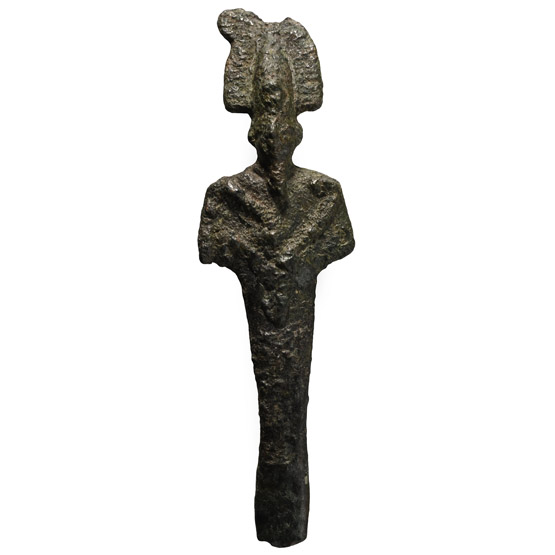
Egyptian Bronze Osiris Statuette
Late Period, 664-332 B.C.Sold for (Inc. bp): £130
Standing mummiform figure, wearing the conical Atef crown with flanking ostrich plumes and frontal uraeus, holding the crook (heka) and flail (nekhakha) regalia; minor chip to the crown. 16.5 grams, 69 mm
Ex Constable collection, 1990s. Ex P. Morris collection. -
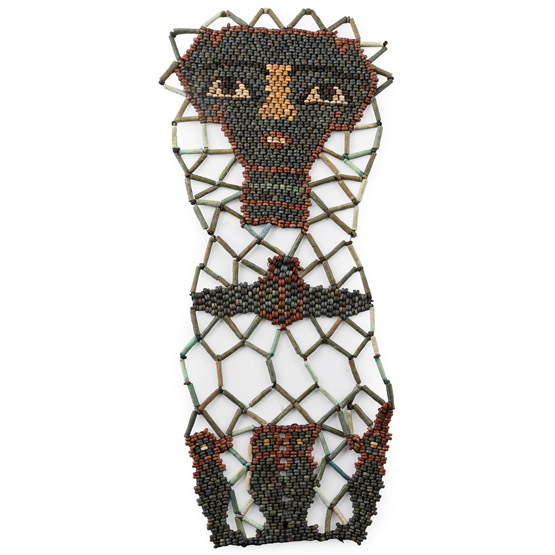
Egyptian Faience Mummy Bead Mask with Scarab and Four Sons of Horus
Ptolemaic Period, 332-30 B.C.Sold for (Inc. bp): £338
A restrung netted beadwork panel of annular and tubular glazed composition beads in blues, greens, black, cream and red-brown colours, depicting a mummy face mask with false beard, a scarab with extended wings below, the 'Four Sons of Horus’ beneath the scarab, joined together with areas of open netting of tubular beads. 63 grams, 28.2 cm
Ex Mariaud de Serres, Paris, 1990s. -
.jpg)
Egyptian Steatite Fish Amulet with Horse
New Kingdom, 1550-1070 B.C.Sold for (Inc. bp): £130
A bifacial rectangular amulet with incised fish in profile to the obverse, a standing horse to the reverse; drilled for suspension. 3.04 grams, 20 mm
Ex Constable collection, 1990s. Ex P. Morris collection. Accompanied by an old photograph dated 'London 1997'.
This amulet depicts a ‘Tilapia nilotica’ or ‘bolti’, a prevalent fish species found in the Nile. Not only was it esteemed for its delicious taste, but it was also regarded as a symbol of rebirth and resurrection due to its unique ability to carry its eggs in its mouth, symbolising self-creation.
