
Loading, please wait...
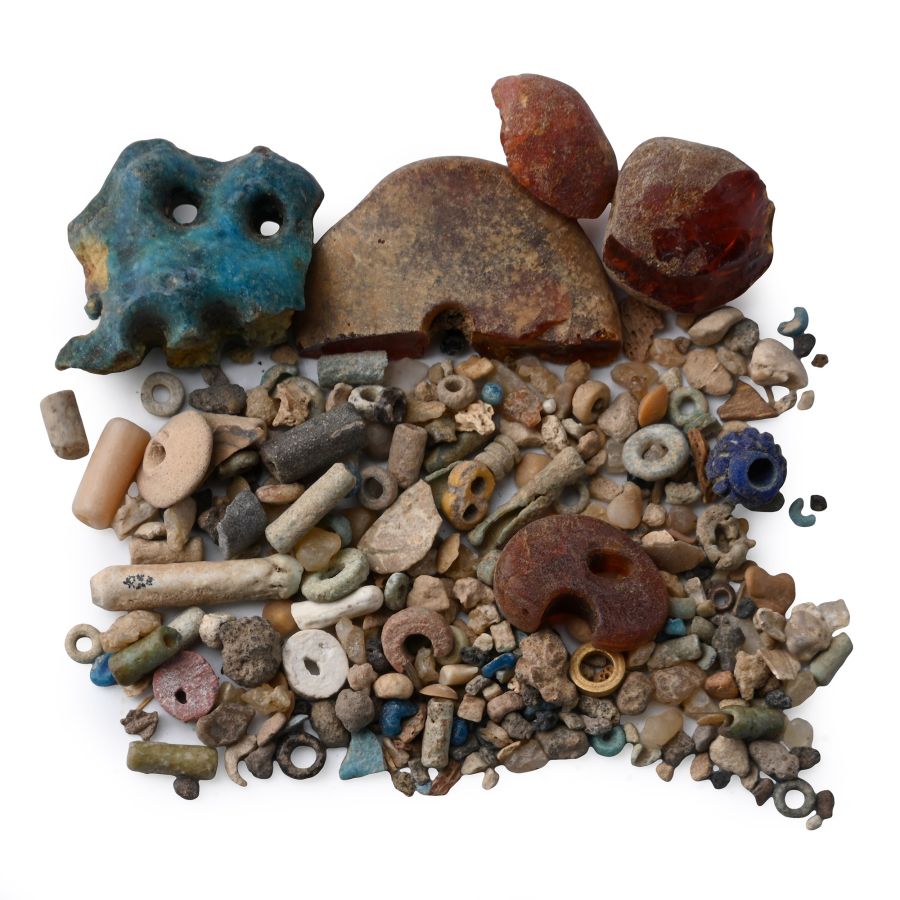
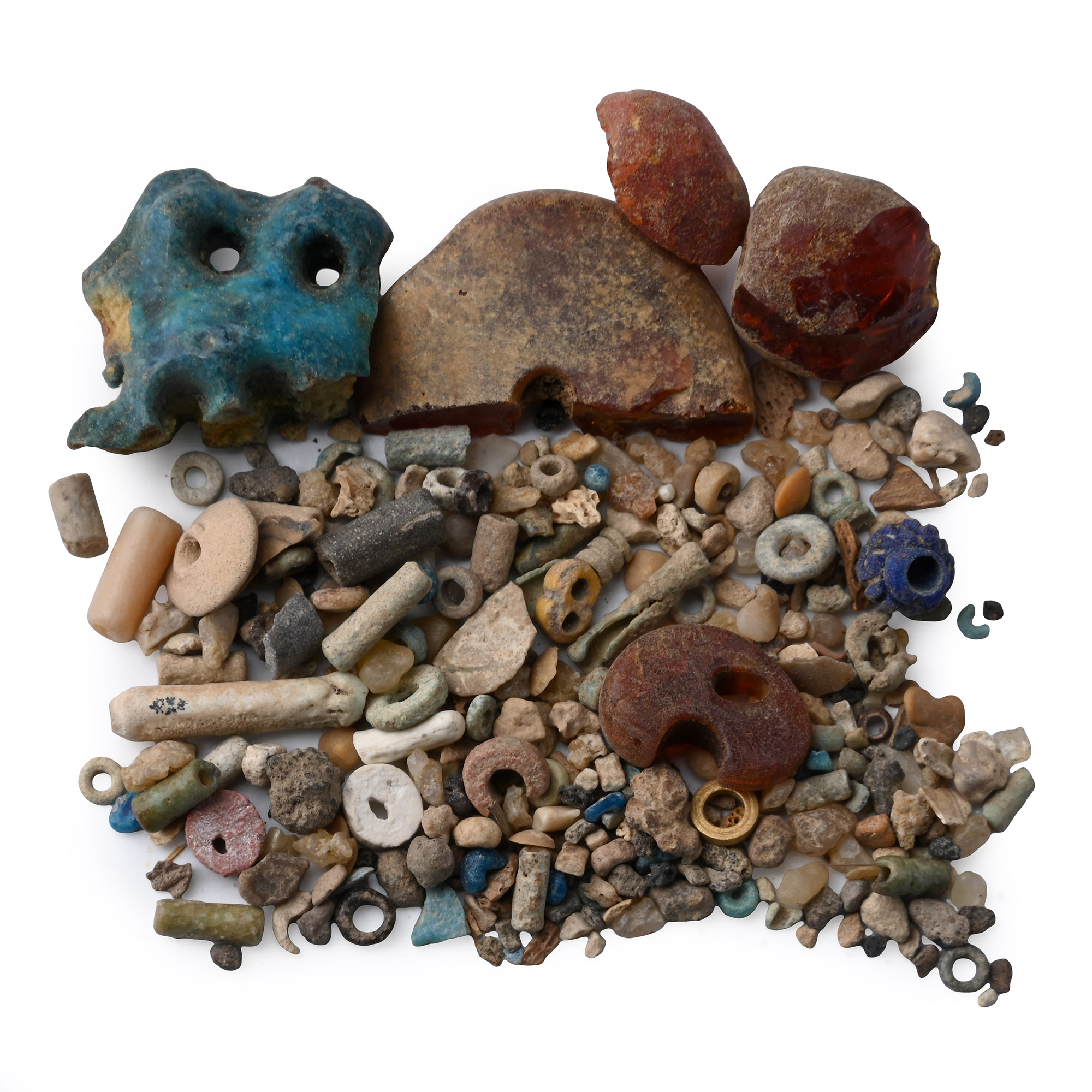
LOT 0445
Egyptian Faience Beads and Other Fragments
LATE PERIOD, 664-332 B.C.
1/8 - 7/8 in. (9.6 grams total, 1-23 mm).
Comprising annular and tubular beads, amber bead fragments, and others. [No Reserve]
ProvenanceFrom an old English collection.
Acquired from Brigantia, York, 1990s.
Ian Wilkinson collection, Nottinghamshire, UK, formed since 1985.
TimeLine Auctions follows a vetting process to ensure the authenticity and legality of all items, reinforcing our commitment to integrity and responsible trading. Each antiquity, antique, and coin lot undergoes thorough examination by a vetting committee of at least ten external specialists, professional trade association members, scientists, and archaeologists: Our Vetting Process
AUCTIONS:
TimeLine is a leading auction house specialising in antiquities, ancient art, collectables, natural history, coins, medals, and books. Our auctions offer museums, collectors, historians, and enthusiasts the opportunity to acquire unique and historically significant pieces.
-
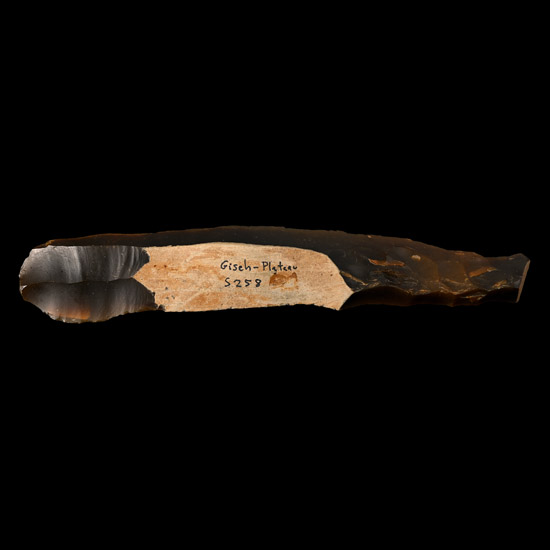
Exceptionally Long Egyptian Stone Age Knapped Flint Blade
Neolithic Period, circa 6,000 B.P.Sold for (Inc. bp): £293
Curved in profile, tongue-shaped with two cutting edges; from the Giza Plateau, Egypt. 77 grams, 19.8 cm
Ex J Dickey collection. Ex Jerry Sherman collection, acquired on the US art market. -
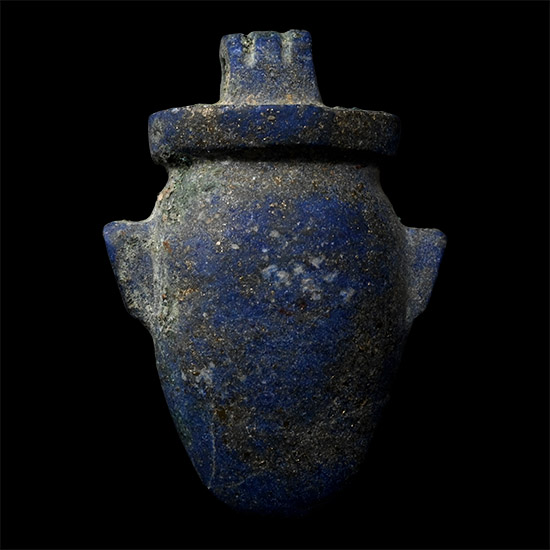
Egyptian Lapis Lazuli Heart Amulet
Late Period, 664-332 B.C.Sold for (Inc. bp): £234
Carved in the round with lateral lugs and integral loop above. 2.05 grams, 19 mm
Ex D collection, 1940. Property of a North London, UK, gentleman. -
.jpg)
Egyptian Bronze Kneeling Figure of a King
Late Period-Ptolemaic Period, circa 664-30 B.C.Estimate: £30,000 - 40,000 (‡+bp*)
Opening Bid: £15,000
A solid cast statuette modelled in the round as a kneeling pharaoh wearing a thigh-length shendyt kilt, a broad collar and a nemes headdress adorned with a uraeus to the brow; with open hands positioned as though they once held an object, palms facing inward; mounted on a custom-made stand. 1.62 kg total, 16.7 cm high including stand
Private collection, E.M. (1880-1954), since the 1930s. Accompanied by an academic report by Egyptologist Paul Whelan. This lot has been checked against the Interpol Database of stolen works of art and is accompanied by search certificate number no.13196-249244.
The figure's overall appearance, particularly the muscular upper body, resembles two kneeling bronze figures – Brooklyn Museum 71.11 and Pennsylvania Museum E.13004 – both bearing the cartouche of 26th Dynasty pharaoh Necho II (610-595 BC). Unlike the varied poses of kneeling stone statues, those in bronze consistently rest on their knees and toes, with heels positioned under their buttocks. Figures with this hand gesture are often thought to have originally held an offering vessel or ritual object. However, none of the existing examples shows signs of having held an object. Instead, the gesture may symbolise both giving and receiving, representing veneration, offering, and a plea for protection to a particular deity.
