
Loading, please wait...


LOT 0432
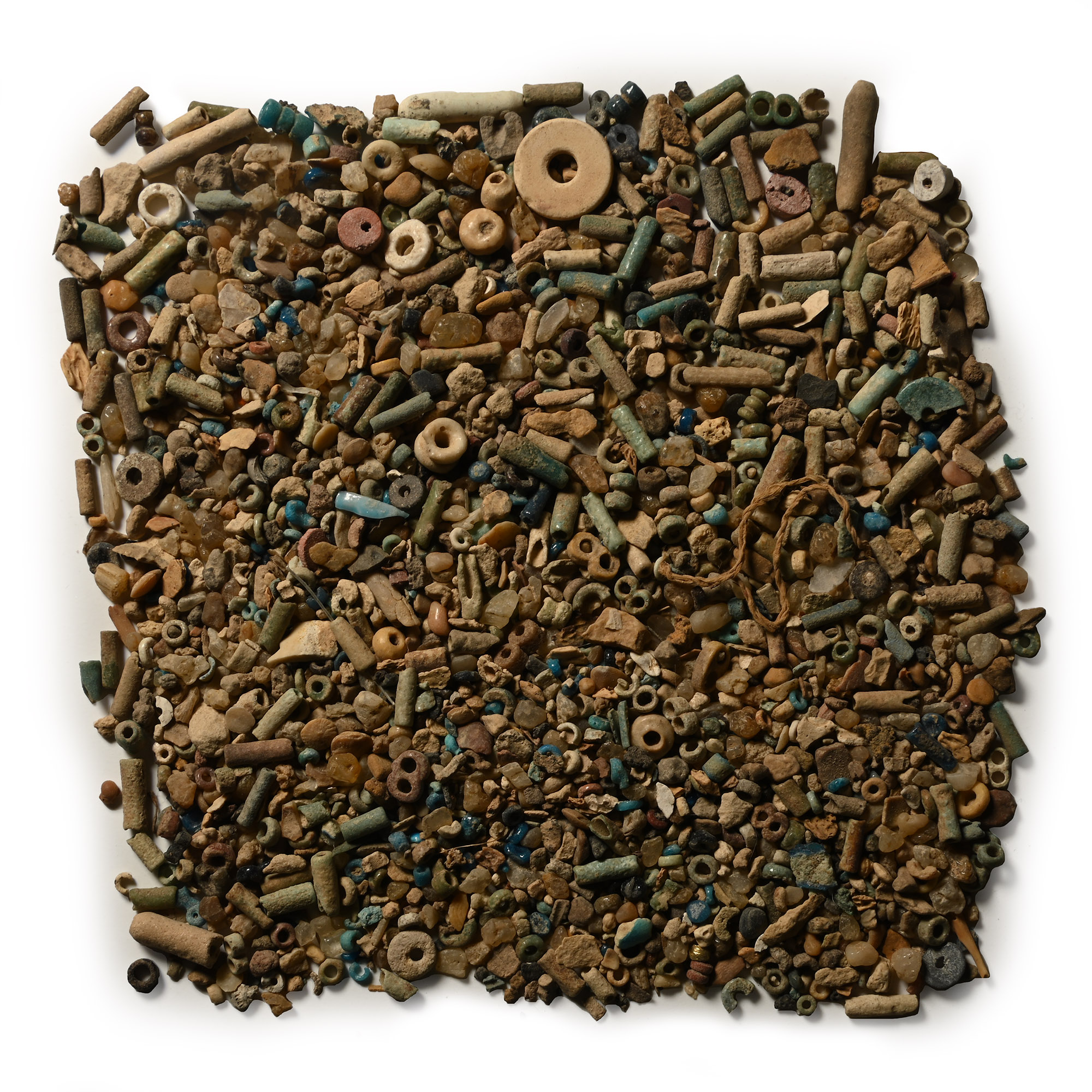
Egyptian Faience Beads and Other Fragments
LATE PERIOD, 664-332 B.C.
1/8 - 1/2 in. (35 grams total, 1-14 mm).
Including seed and tubular beads, and other items. [No Reserve]
ProvenanceFrom an old English collection.
Acquired from Brigantia, York, 1990s.
Ian Wilkinson collection, Nottinghamshire, UK, formed since 1985.
This lot is accompanied by an illustrated lot declaration signed by the Head of the Antiquities Department, Dr Raffaele D’Amato.
TimeLine Auctions follows a vetting process to ensure the authenticity and legality of all items, reinforcing our commitment to integrity and responsible trading. Each antiquity, antique, and coin lot undergoes thorough examination by a vetting committee of at least ten external specialists, professional trade association members, scientists, and archaeologists: Our Vetting Process
AUCTIONS:
TimeLine is a leading auction house specialising in antiquities, ancient art, collectables, natural history, coins, medals, and books. Our auctions offer museums, collectors, historians, and enthusiasts the opportunity to acquire unique and historically significant pieces.
-
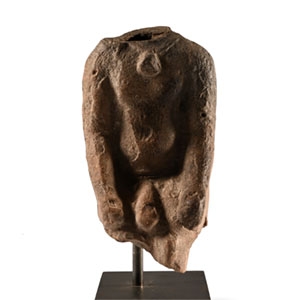
Egyptian Terracotta Seated Torso
Ptolemaic Period, 4th-3rd century B.CSold for (Inc. bp): £65
The headless deity, possibly Harpocrates, seated on a throne, forearms resting on thighs and flanking a protruding phallus, wearing a medallion around the neck; mounted on a custom-made display stand. 280 grams total, 97 mm including stand
The Erotica Collection Christian von Faber-Castell, Küsnacgt ZH, Switzerland, since the late 1970s. This lot is accompanied by an illustrated lot declaration signed by the Head of the Antiquities Department, Dr Raffaele D’Amato.
Figural plaques of ithyphallic Harpocrates seated on a block seat with forearms on thighs and hands each side of a projecting phallus were rare types from Naukratis, Temai el-Amohel. They can be dated to the early Hellenistic Period, circa 330 B.C. Christian von Faber-Castell (born 1950) is a renowned German entrepreneur and art collector, best known as a member of the prominent Faber-Castell family, famed for their iconic writing instruments. A passionate advocate for art and culture, Christian von Faber-Castell curated an extensive and diverse private collection of erotica, spanning centuries and cultures. His collection reflects a deep appreciation for the interplay of beauty, sensuality, and artistic expression, bringing together rare and unique works that explore themes of intimacy and human connection. Pieces from this collection have been featured in notable exhibitions and are celebrated for their artistic and historical significance. This offering represents a rare opportunity to acquire works from one of the most fascinating and eclectic private collections of its kind. -
.jpg)
Monumental Levantine-Egyptian Stone Head of a Pharaoh
Ptolemaic Period, 332-30 B.C. or laterSold for (Inc. bp): £46,800
An over-life-size head of a pharaoh, likely from a monumental sphinx, wearing the royal nemes headdress with a prominent headband and the remains of a rearing uraeus on the brow with a single coil of the body on either side of the cobra’s hood, its tail extending towards the back of the headdress; the large, almond-shaped eyes prominently outlined, and unlike on some portraits, the cosmetic lines do not extend beyond the outer corner; the fragmentary nose almost spanning the width of the small mouth modelled with straight and somewhat pursed lips; mounted on a custom-made display stand. 45.15 kg, 43 cm
Private collection, Germany, 1975. European collection, 1980s-late 1990s. By descent from the above to the present owner. Accompanied by an academic report by Egyptologist Paul Whelan. This lot has been checked against the Interpol Database of stolen works of art and is accompanied by search certificate number no.12201-218142. This lot has been cleared against the Art Loss Register database, and is accompanied by an illustrated lot declaration signed by the Head of the Antiquities Department, Dr Raffaele D’Amato.
The presence of tool marks around the neck and sides of the head, contrasting the smooth surface of the face and front part of the headdress, suggests that the sculpture is an unfinished piece. The noticeably heavy brow line is a feature of the 30th Dynasty style, which then influenced Ptolemaic royal portraiture (cf. Tomoum, N., The Sculptors' Models of the Late and Ptolemaic Periods, Cairo, 2006, pl.17, for a finished portrait assigned to the 30th Dynasty). -
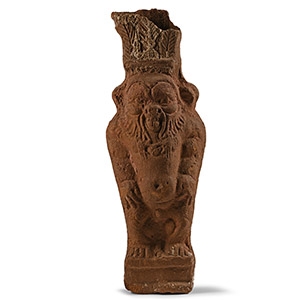
Egyptian Ceramic Statuette of the God Bes Wearing a Feather Crown
Roman Period, 2nd-3rd century A.D.Sold for (Inc. bp): £910
Standing on a pillar and wearing a feather crown and a panther skin cloak, his hands resting on his knees, large protruding ears and grimacing expression. 362 grams, 24 cm
The Erotica Collection Christian von Faber-Castell, Küsnacgt ZH, Switzerland, since the late 1970s. This lot is accompanied by an illustrated lot declaration signed by the Head of the Antiquities Department, Dr Raffaele D’Amato.
Christian von Faber-Castell (born 1950) is a renowned German entrepreneur and art collector, best known as a member of the prominent Faber-Castell family, famed for their iconic writing instruments. A passionate advocate for art and culture, Christian von Faber-Castell curated an extensive and diverse private collection of erotica spanning centuries and cultures. His collection reflects a deep appreciation for the interplay of beauty, sensuality, and artistic expression, bringing together rare and unique works that explore themes of intimacy and human connection. Pieces from this collection have been featured in notable exhibitions and are celebrated for their artistic and historical significance. This offering represents a rare opportunity to acquire works from one of the most fascinating and eclectic private collections of its kind. Bes became one of ancient Egypt's most popular apotropaic deities from the New Kingdom onwards. Despite his somewhat fearful appearance, Bes was the patron and protector of pregnant women and children and was also believed to protect from snakes.
