
Loading, please wait...
LOT 0545
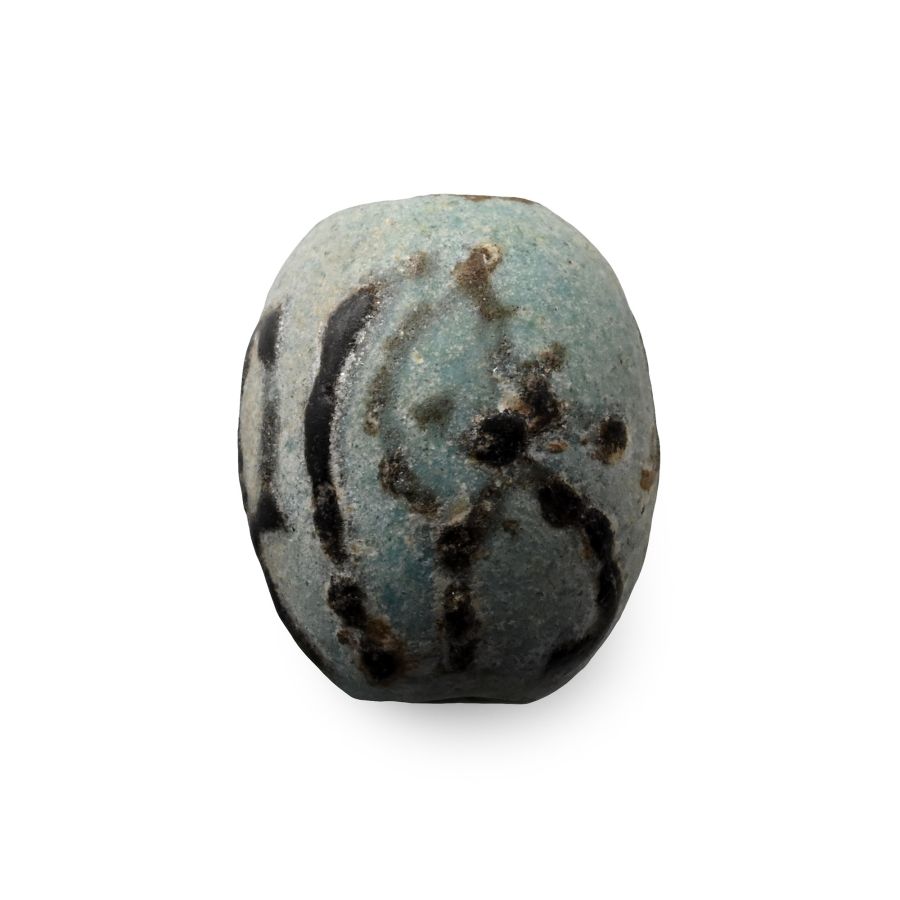
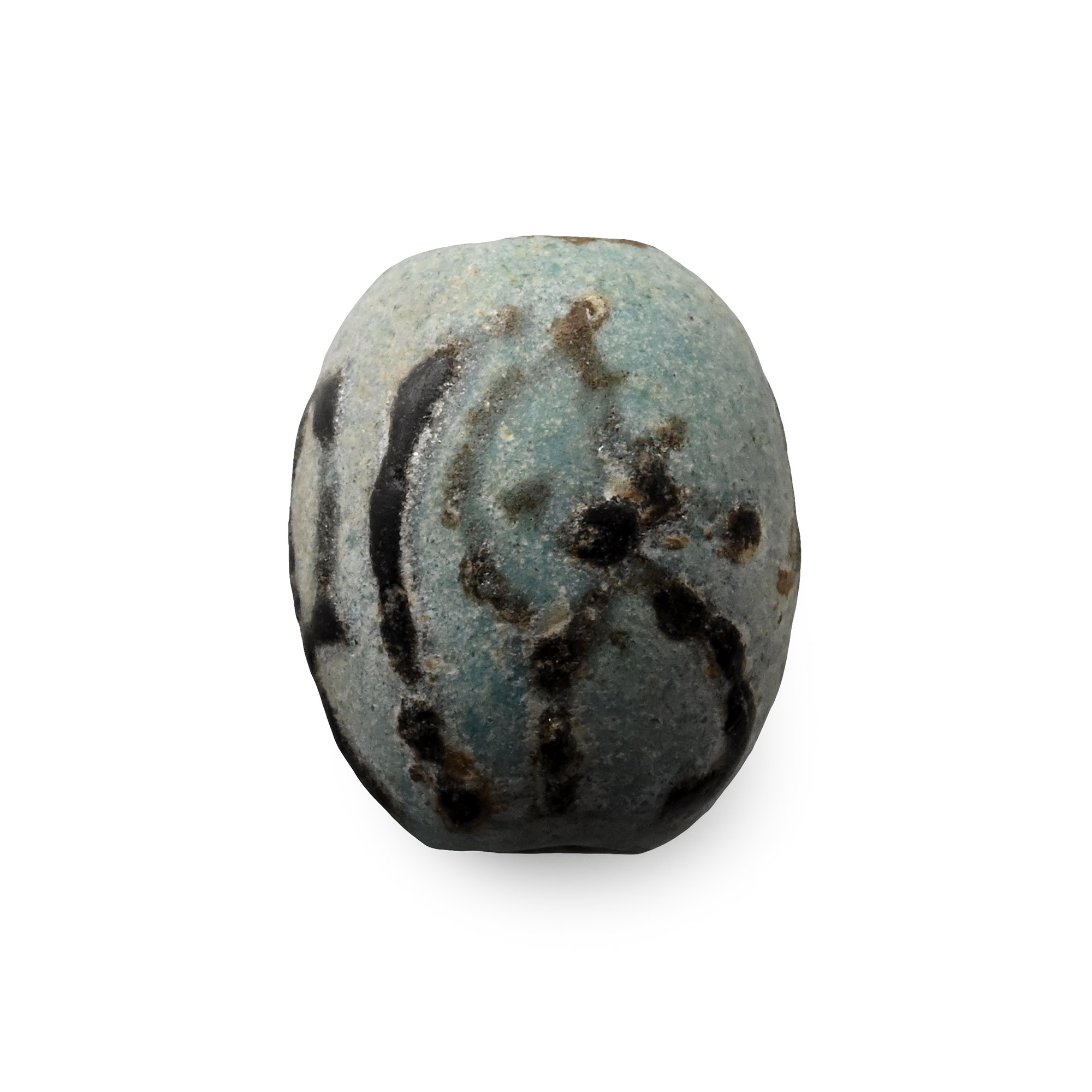
Egyptian Faience Bead with Eye of Horus and Ankh Symbols
LATE PERIOD, 664-332 B.C.
1/2 in. (2.09 grams, 14 mm).
Barrel-shaped bead with blue glaze, wedjat and ankh in black glaze.
ProvenanceFrom an early 20th century collection.
This lot is accompanied by an illustrated lot declaration signed by the Head of the Antiquities Department, Dr Raffaele D'Amato.
The wedjat-eye amulet is a representation of the healed eye of the god Horus, featuring both human and falcon elements. The name wedjat in ancient Egyptian means ‘the one that is sound.’ According to Egyptian mythology, Horus' eye was wounded or taken by the god Seth and restored by Thoth. The wedjat-eye amulet was thought to protect its wearer and bestow the power of recovery and regeneration onto them. It was very popular and used by both the living and the dead.
CONDITIONTimeLine Auctions follows a vetting process to ensure the authenticity and legality of all items, reinforcing our commitment to integrity and responsible trading. Each antiquity, antique, and coin lot undergoes thorough examination by a vetting committee of at least ten external specialists, professional trade association members, scientists, and archaeologists: Our Vetting Process
AUCTIONS:
TimeLine is a leading auction house specialising in antiquities, ancient art, collectables, natural history, coins, medals, and books. Our auctions offer museums, collectors, historians, and enthusiasts the opportunity to acquire unique and historically significant pieces.
LOT 0545
Egyptian Faience Bead with Eye of Horus and Ankh Symbols
Estimate £100 - 140€120 - 160 (for guidance only)$140 - 190 (for guidance only)
-
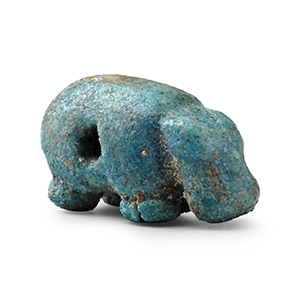
Egyptian Light Blue Faience Hippopotamus Amulet
Late Period, 664-332 B.C.Sold for (Inc. bp): £195
Blue glazed figure modelled in the round as a standing hippopotamus, pierced to the centre. 3.63 grams, 20 mm
From an early 20th century collection. This lot is accompanied by an illustrated lot declaration signed by the Head of the Antiquities Department, Dr Raffaele D'Amato.
In ancient Egypt, hippos symbolised both danger and protection, representing chaos and fertility. Feared for their aggression along the Nile, they were also associated with the protective goddess Taweret and the river’s life-giving power. -
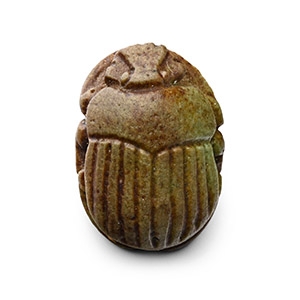
Egyptian Steatite Heart Scarab
Late Period, 664-332 B.C.Estimate: £150 - 200 (‡+bp*)
Opening Bid: £75
With ribbed carapace and suspension loop to underside. 2.89 grams, 22 mm
Acquired on the European art market in the early 2000s. with Galerie Rhéa, Zurich, Switzerland. This lot is accompanied by an illustrated lot declaration signed by the Head of the Antiquities Department, Dr Raffaele D'Amato. -
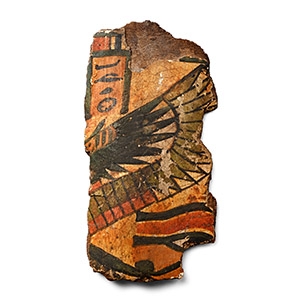
Egyptian Cartonnage Section with Eye and Wing
Third Intermediate Period, circa 1069-860 B.C.Sold for (Inc. bp): £416
Sub-rectangular in plan with irregular and fragmented edge; prepared plaster surface featuring a line-bordered column with four cursive hieroglyphs naming Behedet (bḥdt); a section of finely painted outstretched wing with feather detailing to lower edge in red and blue; below, a wedjat eye in black with red medial band; fabric back to reverse. 48 grams, 17 cm
Formerly from an old collection of a Wiltshire, UK, collector, acquired before 1980. Property of a private collector, West London, UK. This lot is accompanied by an illustrated lot declaration signed by the Head of the Antiquities Department, Dr Raffaele D'Amato.
This fragment most likely originates from the lower chest section of a so-called anthropoid 'yellow coffin' from the Third Intermediate Period. The wing belongs to a protective deity; as Behedet is a name given to several locations (Edfu, Tell el-Balamun, and Lepidotonpolis) associated with Horus, it seems probable that the wing belongs to the falcon form of this god.
