
Loading, please wait...
LOT 0454
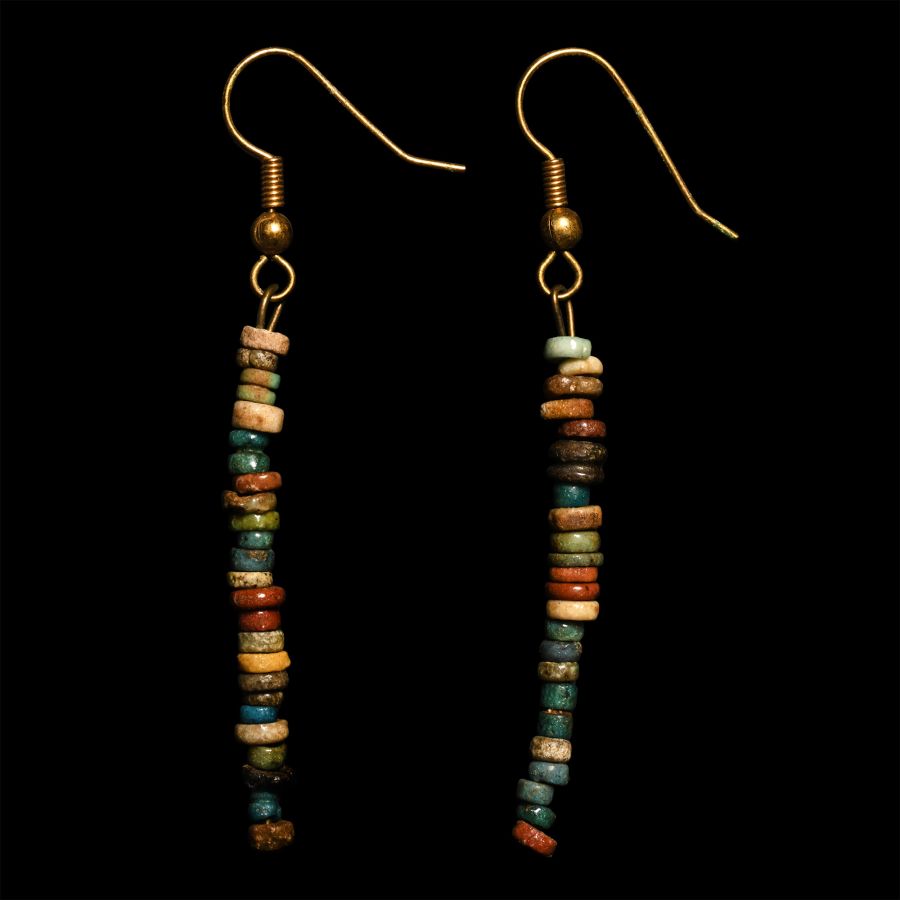
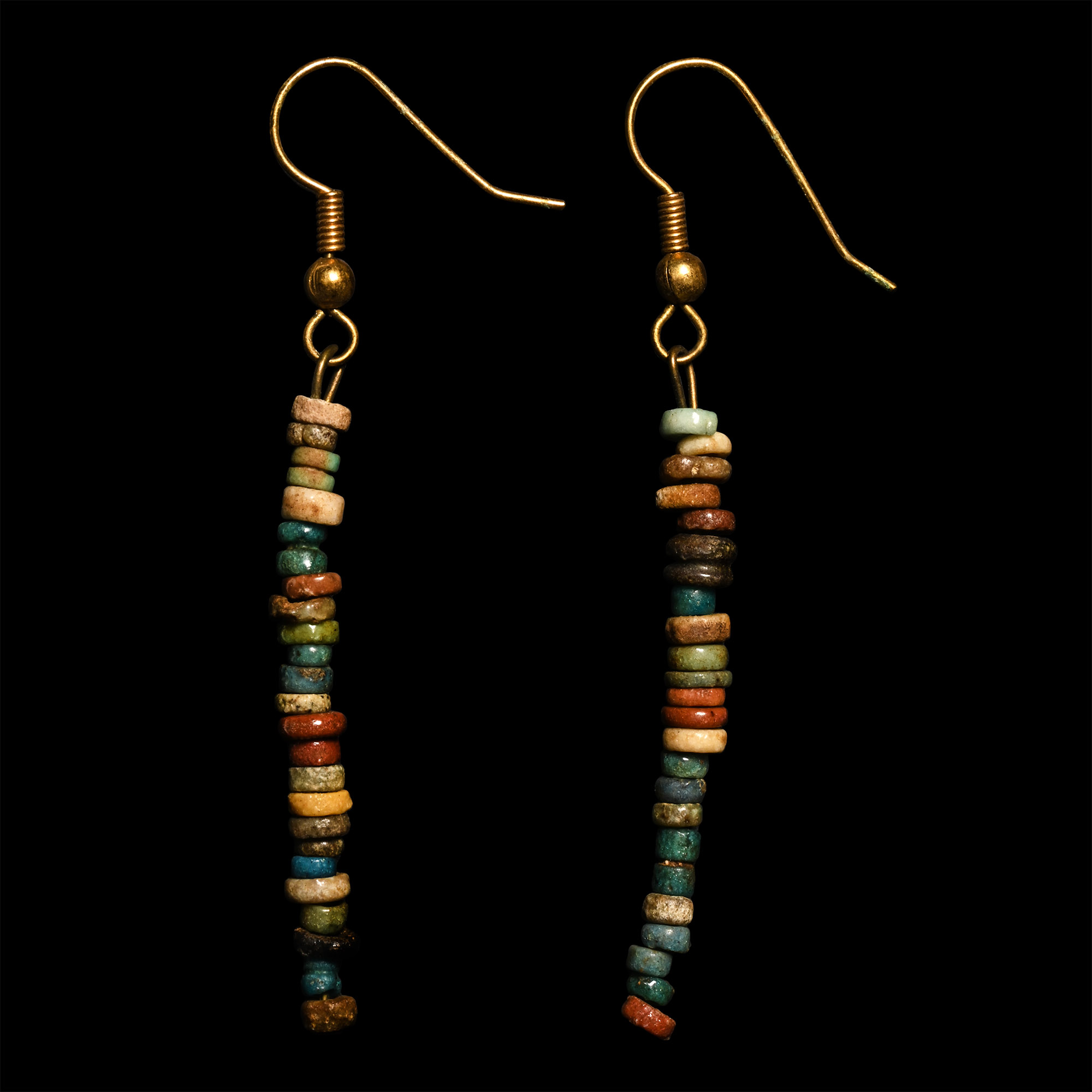
Egyptian Faience Bead Earring Pair
LATE PERIOD-PTOLEMAIC PERIOD, 664-30 B.C.
2 1/2 in. (1.99 grams total, 62 mm each).
Composed of colourful annular beads threaded to a modern bar with an earring hook. [2, No Reserve]
ProvenanceAcquired from Ancient Art, London, UK.
From the collection of a Nottingham, UK, collector, established from the early 2000s.
Accompanied by the original Ancient Art certificate of authenticity.
TimeLine Auctions follows a vetting process to ensure the authenticity and legality of all items, reinforcing our commitment to integrity and responsible trading. Each antiquity, antique, and coin lot undergoes thorough examination by a vetting committee of at least ten external specialists, professional trade association members, scientists, and archaeologists: Our Vetting Process
AUCTIONS:
TimeLine is a leading auction house specialising in antiquities, ancient art, collectables, natural history, coins, medals, and books. Our auctions offer museums, collectors, historians, and enthusiasts the opportunity to acquire unique and historically significant pieces.
-
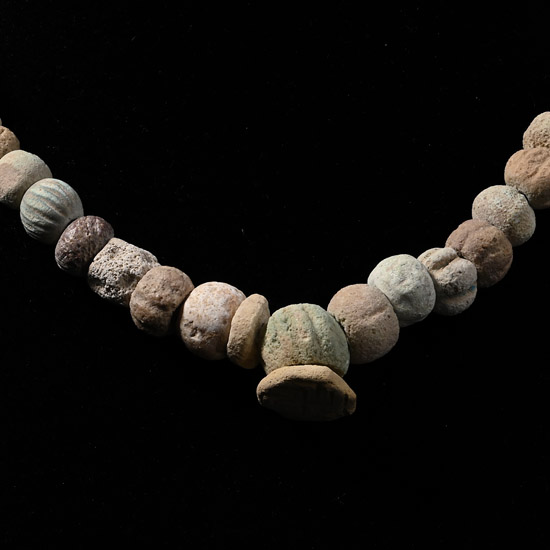
Phoenician Faience Melon Bead Necklace
1st millennium B.C.Sold for (Inc. bp): £98
Composed of graduated melon and other beads, the central feature a discoid pendant with a hooked cross symbol; restrung with a modern clasp. 47.4 grams, 42 cm
Ex London, UK, gallery, 1990s. Accompanied by a previous typed catalogue information card. -
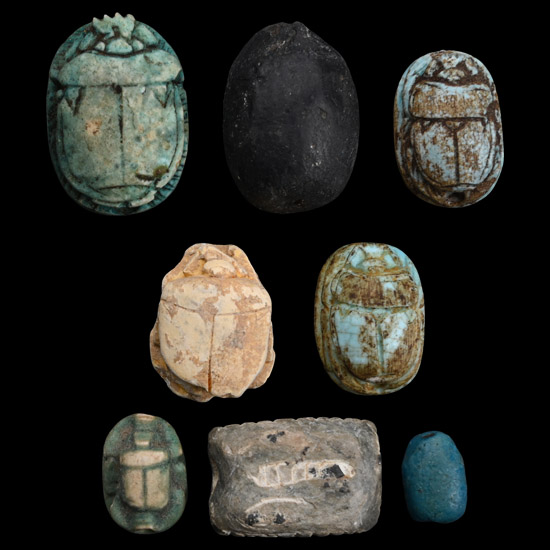
Egyptian Stone Scarab and Amulet Collection
New Kingdom-Late Period, 1550-332 B.C.Sold for (Inc. bp): £585
The group comprising scarabs, scaraboids, and other types, some with hieroglyphs on their undersides, including the throne names of Thutmose IV (Men-kheperu-re) and Ramesses II (User-maat-re Setep-en-re)., 13.65 grams total, 9-19 mm
From the collection of a gentleman, acquired on the London art market in the 1990s. -
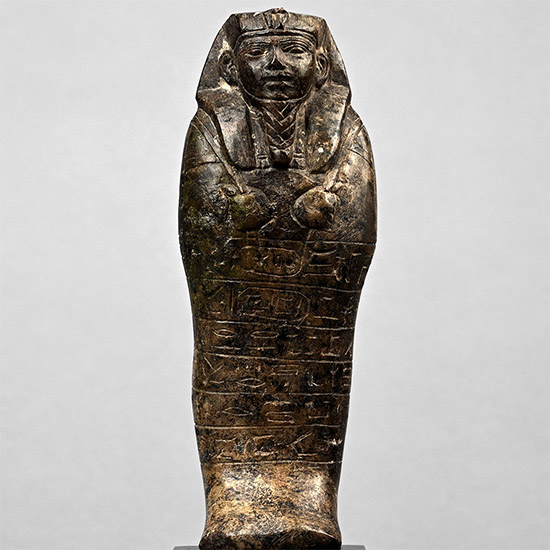
Egyptian Serpentine Shabti for King Senkamenisken
Nubia, Napatan Period, 643-623 B.C.Sold for (Inc. bp): £21,450
Mummiform figure wearing a braided beard with chin-straps in relief, broad collar visible between the lappets of the nemes headdress adorned with a double uraeus, the crossed hands holding a hoe and pick, with a seed bag over the left shoulder, his broad face with straight nose, wide-set eyes and large ears, six horizontal lines of inscription, giving a version of Chapter 6 from the Book of the Dead; mounted on a custom-made display stand. 659 grams total, 21 cm including stand
J.J. Klejman, Madison Avenue, New York, USA, 1960s. UK private collection, acquired from the above, 1960s. Bluett and Sons, London, 1979. Sheppard & Cooper, UK, private collection, 1980s. Sheikh Saoud Al-Thani, the 'Princely' private collection, UK. Acquired from the above in 2017. with Sotheby's, London, 5 July 2024, no.126. Accompanied by a copy of the Bluett and Sons invoice, 22 January 1979. This lot has been checked against the Interpol Database of stolen works of art and is accompanied by search certificate number no.13273-254064.
Of the 1277 shabtis of Senkamenisken found in the king's burial chamber of his pyramid tomb at Nuri (Pyramid 3), 410 are made of serpentine, the remaining 867 of faience. The inscription reads: 'The illuminated one, the Osiris, the good god, lord of the two lands, Sekheper[en]re, true of voice, He says: "O this shabti, if anyone summons the Osiris Senkamenisken, true of voice, in order to do any work which is to be done in the God's Land (i.e. necropolis), to cultivate the fields, to irrigate the canals, to carry sand from the east to the west and vice versa, 'Here I am', you shall say".
