
Loading, please wait...
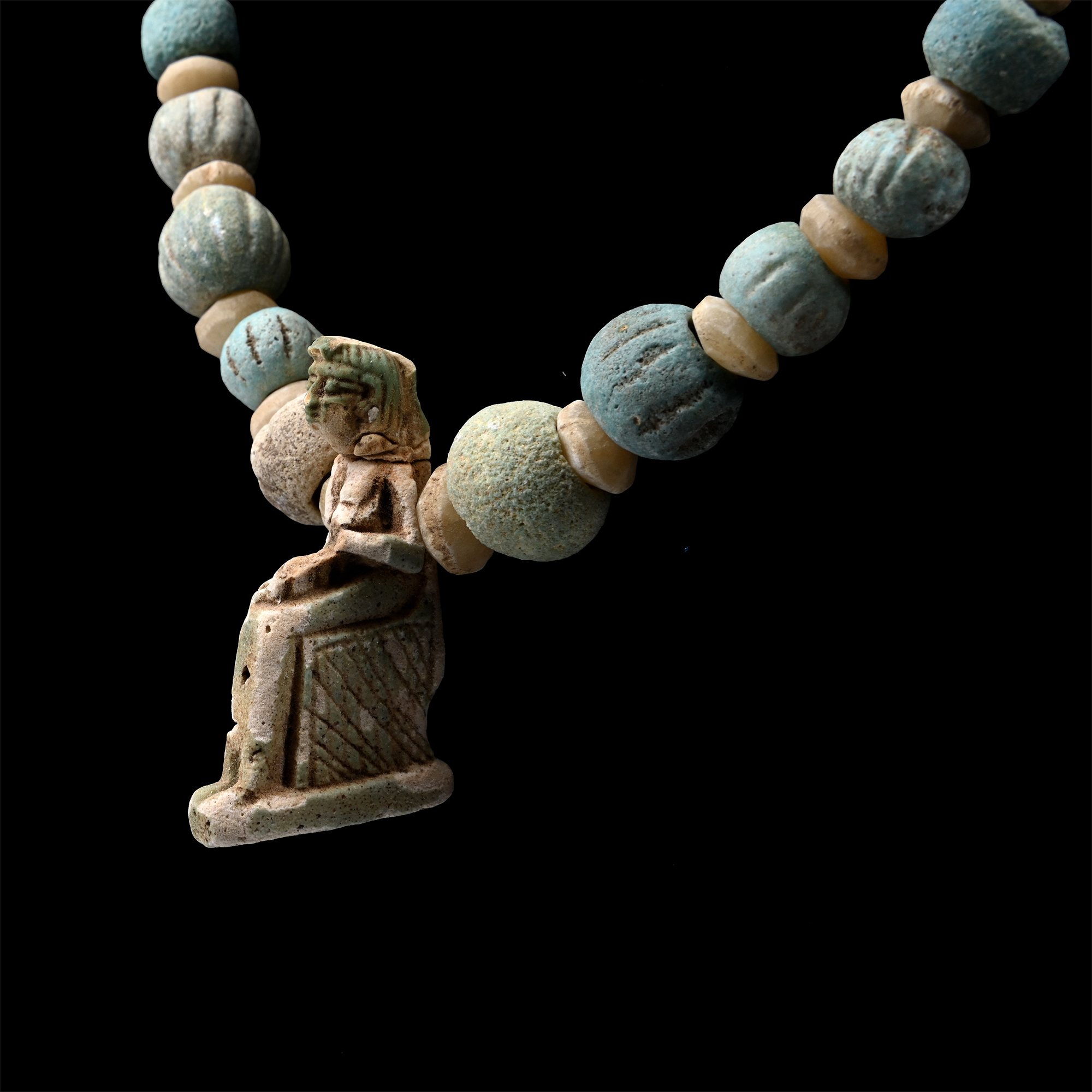
LOT 0432
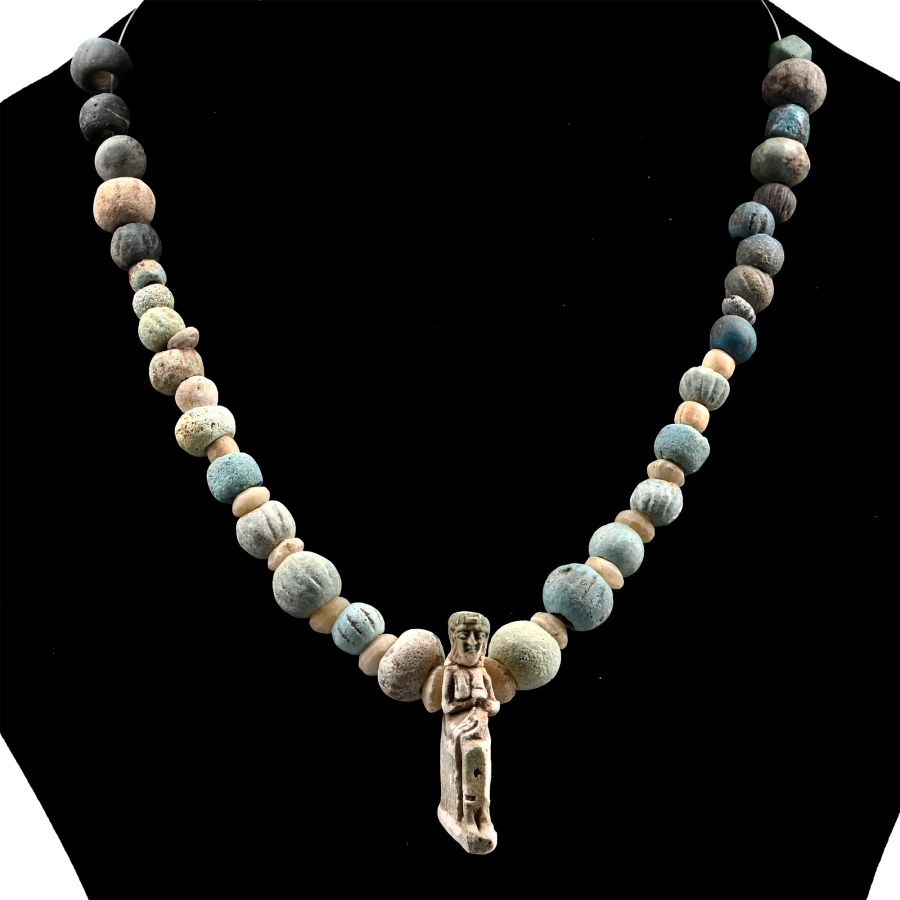
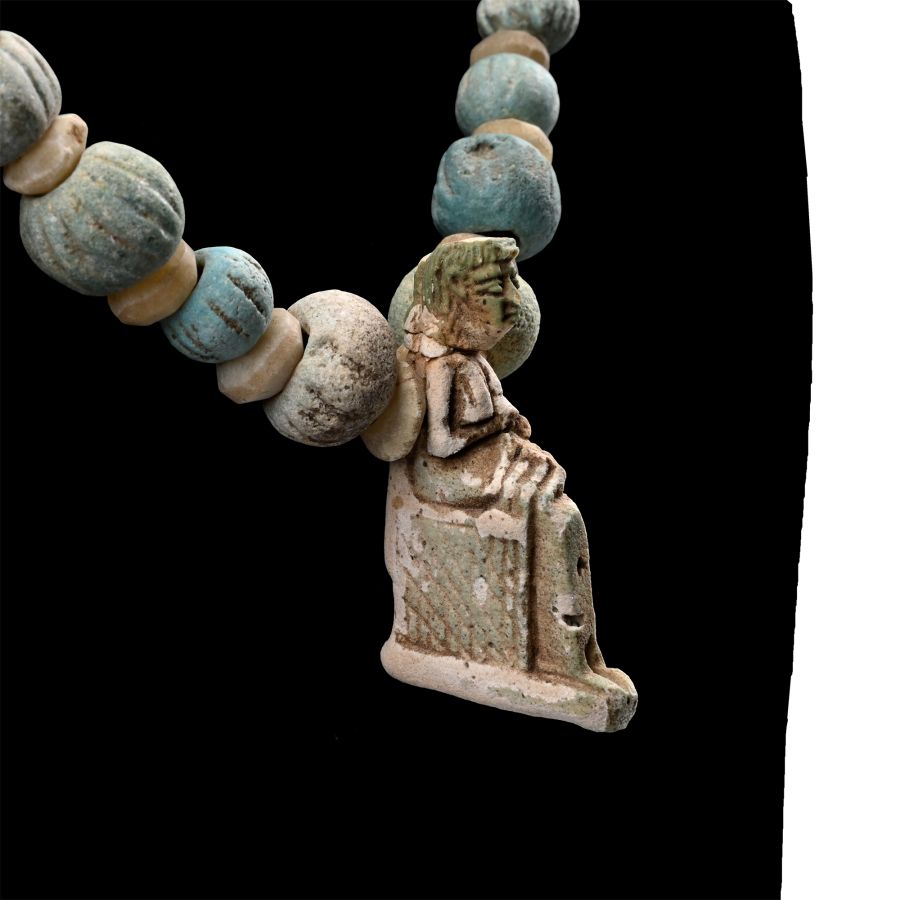
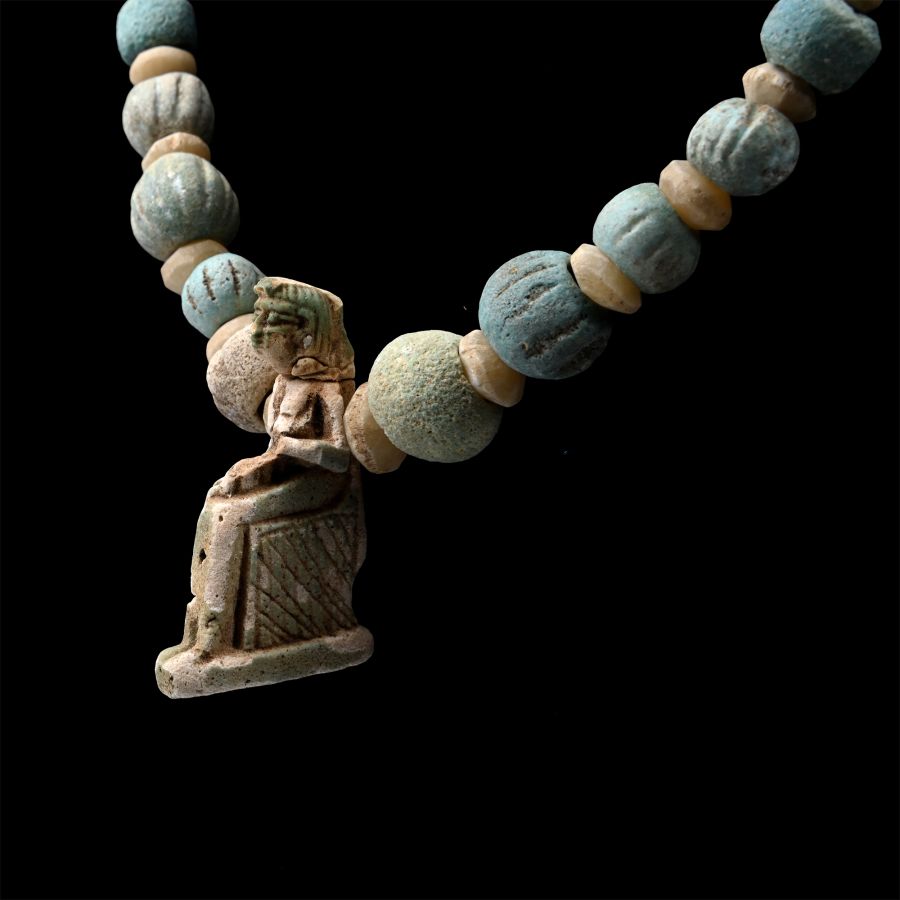
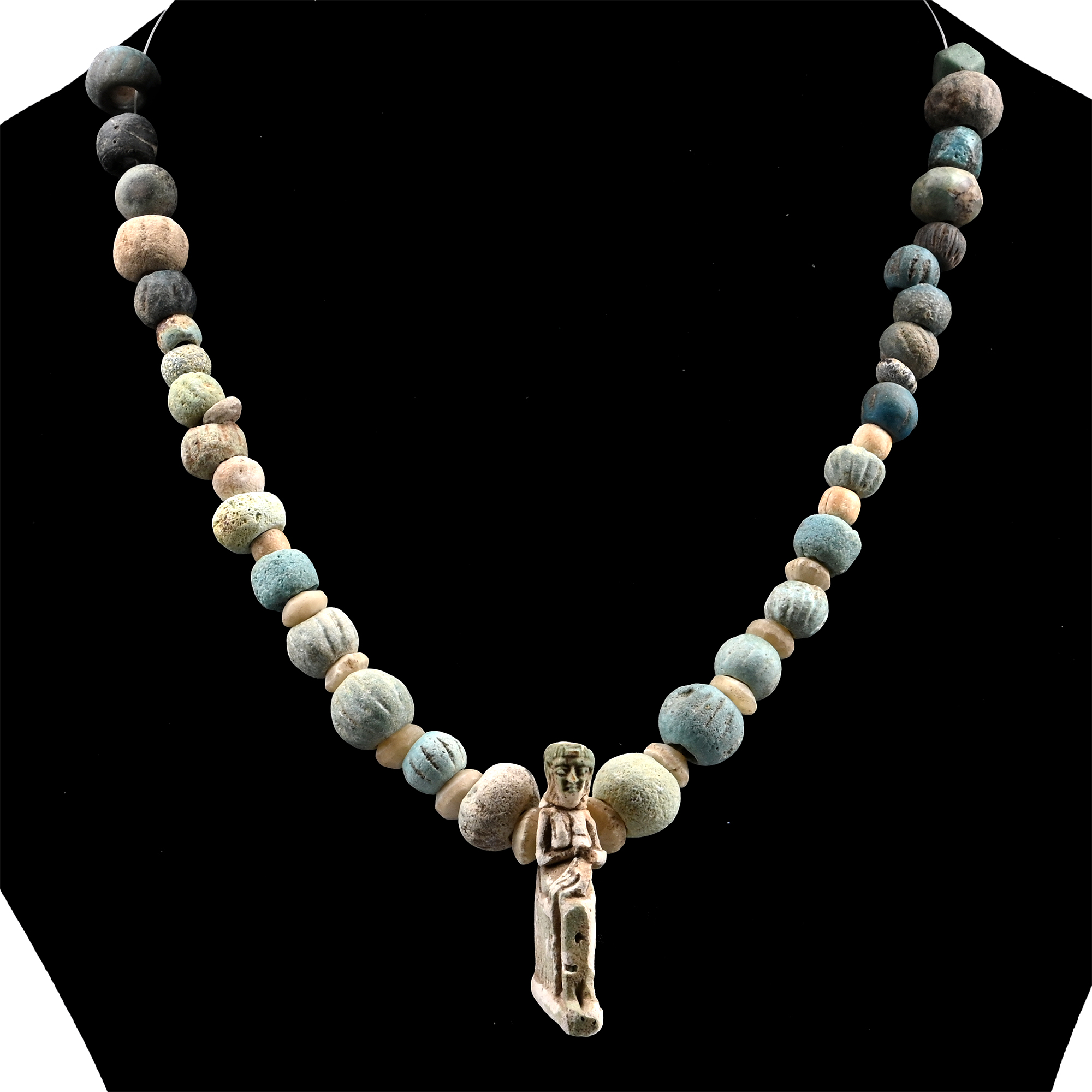
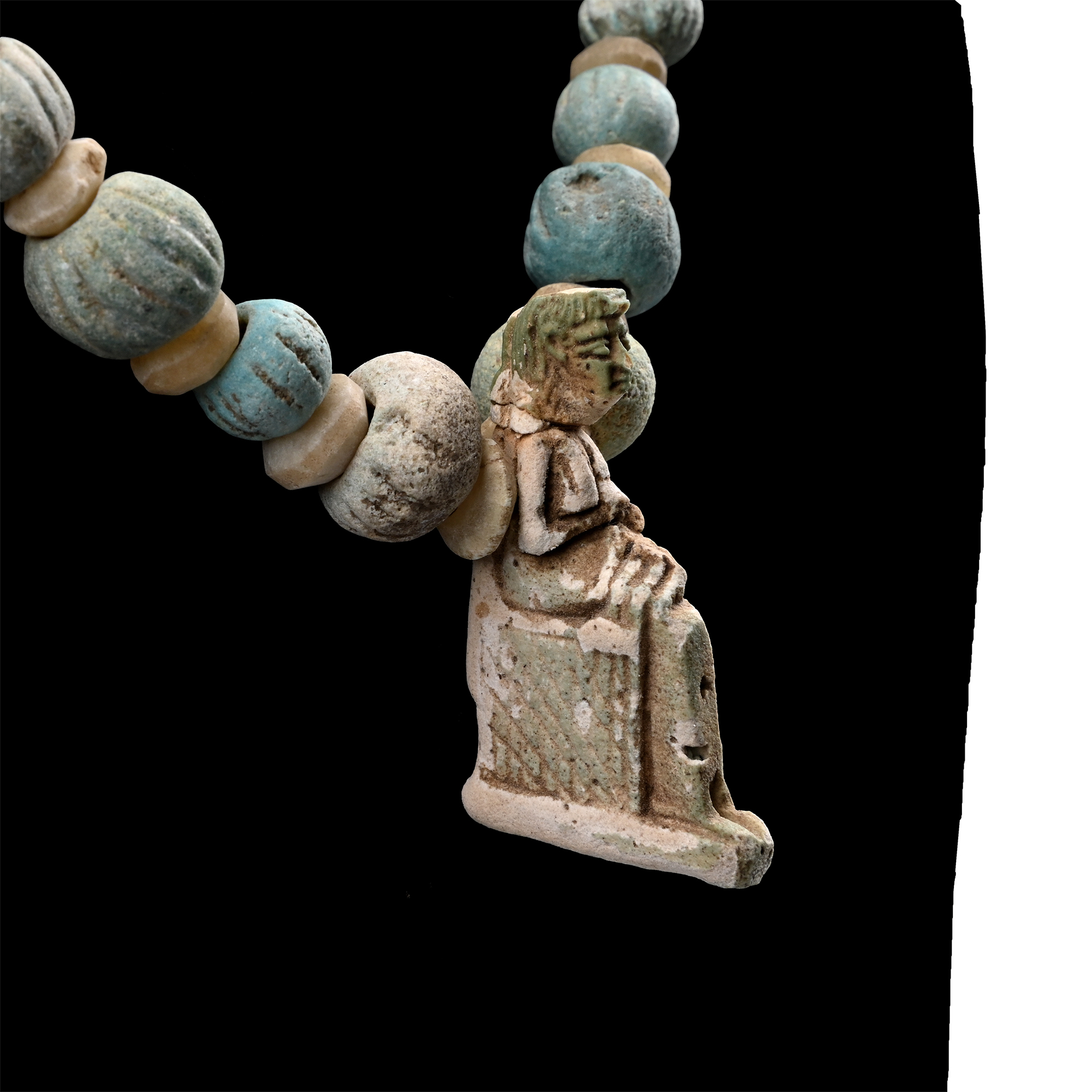
Egyptian Faience Bead and Amulet Necklace
LATE PERIOD-PTOLEMAIC PERIOD, 664-30 B.C.
13 3/4 in. (57 grams, 35 cm long, amulet 47 mm).
Restrung group of melon, barrel-shaped and other beads with centrepiece of Isis nursing Horus.
ProvenanceFrom the collection of a gentleman, acquired on the London art market in the 1990s.
CONDITIONTimeLine Auctions follows a vetting process to ensure the authenticity and legality of all items, reinforcing our commitment to integrity and responsible trading. Each antiquity, antique, and coin lot undergoes thorough examination by a vetting committee of at least ten external specialists, professional trade association members, scientists, and archaeologists: Our Vetting Process
AUCTIONS:
TimeLine is a leading auction house specialising in antiquities, ancient art, collectables, natural history, coins, medals, and books. Our auctions offer museums, collectors, historians, and enthusiasts the opportunity to acquire unique and historically significant pieces.
-
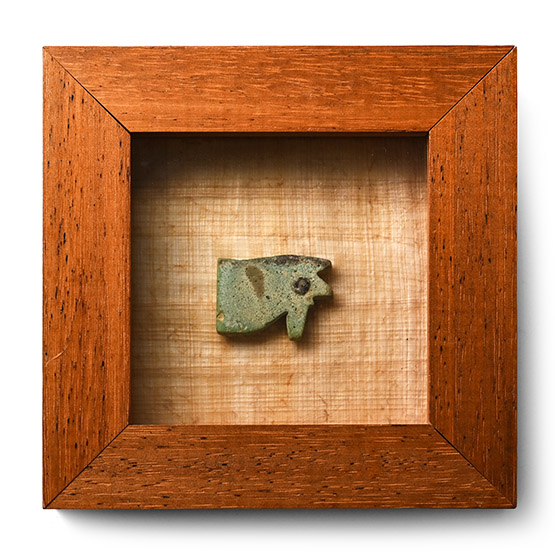
Framed Egyptian Faience Eye of Horus Amulet
Late Period-Ptolemaic Period, 664-30 B.C.Sold for (Inc. bp): £65
The amulet in blue-green faience with black detailing, set in a glazed wooden frame with modern papyrus backing. 207 grams total, 12.2 x 12.3 cm including frame
Acquired from Ancient Art, London, UK. From the collection of a Nottingham, UK, collector, established from the early 2000s. Accompanied by the original Ancient Art certificate of authenticity. -
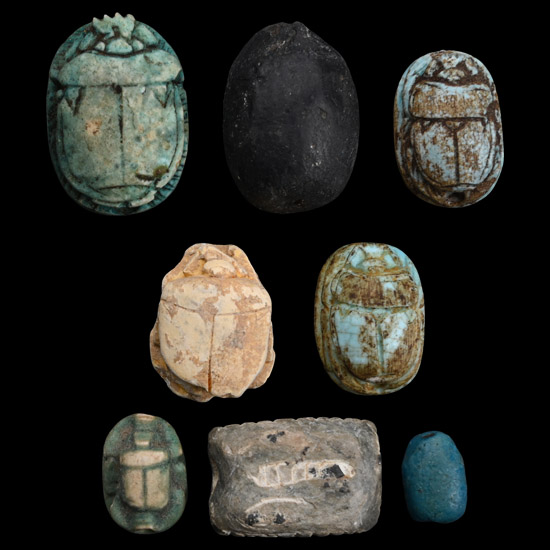
Egyptian Stone Scarab and Amulet Collection
New Kingdom-Late Period, 1550-332 B.C.Sold for (Inc. bp): £585
The group comprising scarabs, scaraboids, and other types, some with hieroglyphs on their undersides, including the throne names of Thutmose IV (Men-kheperu-re) and Ramesses II (User-maat-re Setep-en-re)., 13.65 grams total, 9-19 mm
From the collection of a gentleman, acquired on the London art market in the 1990s. -
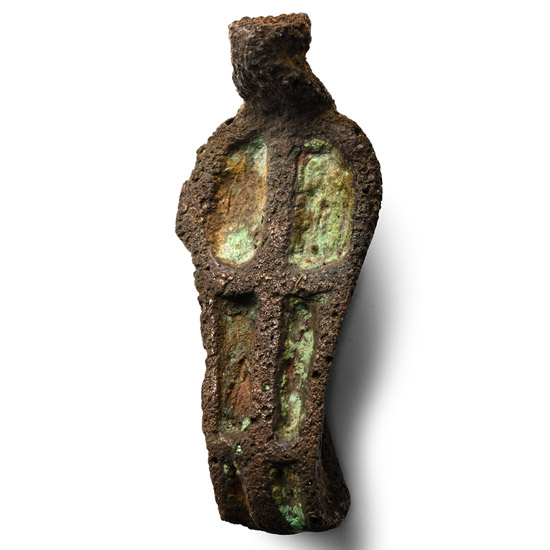
Egyptian Bronze Uraeus Mount
Late Period-Ptolemaic Period, circa 664-30 B.C.Sold for (Inc. bp): £59
Formed as a rearing cobra with the hood divided into cells to accept inlay. 6.54 grams, 35 mm
From the collection of a gentleman, acquired on the London art market in the 1990s.
The uraeus depicts a rearing cobra and symbolises royal power and authority, as well as the Lower Egyptian goddess Wadjet.
