
Loading, please wait...
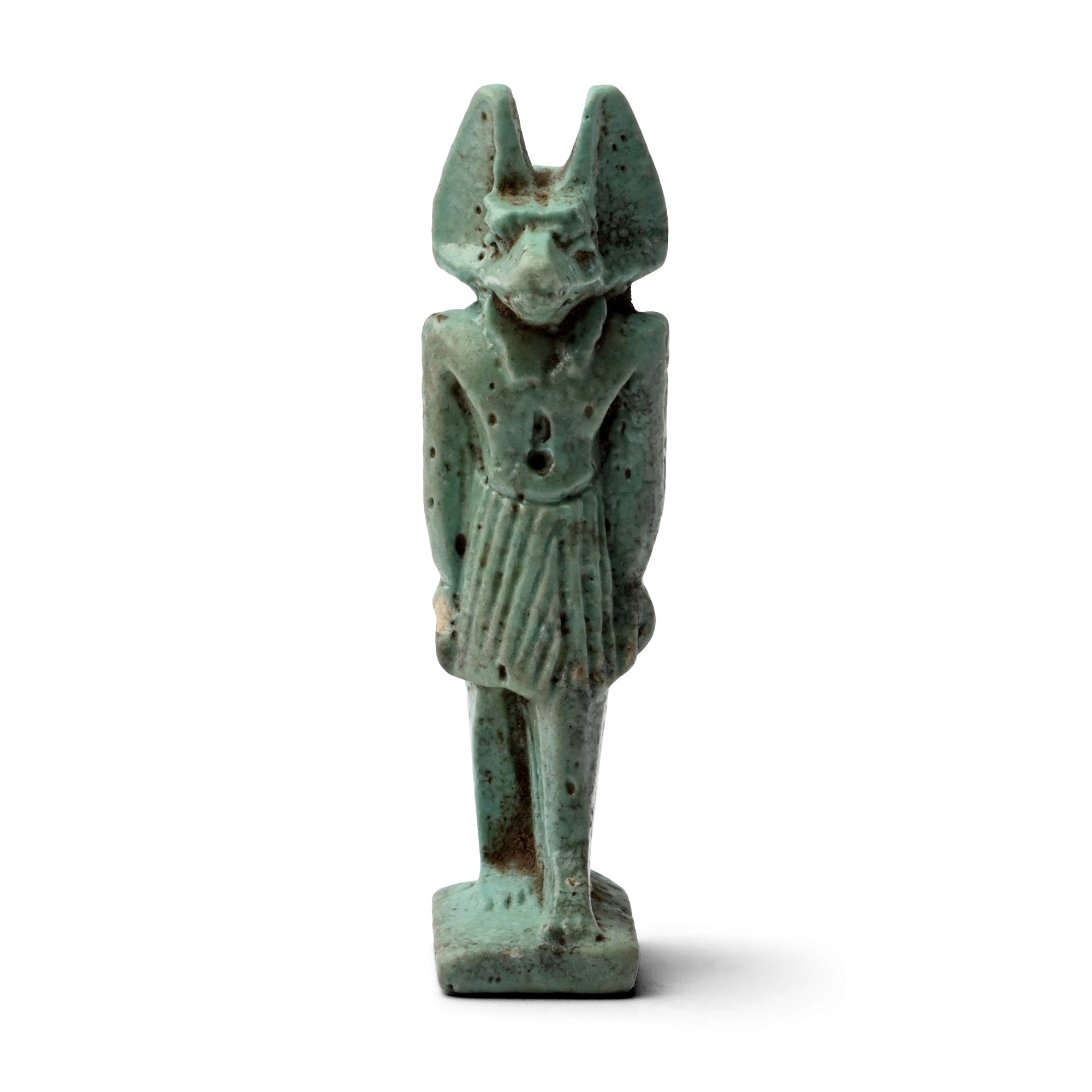
LOT 0515
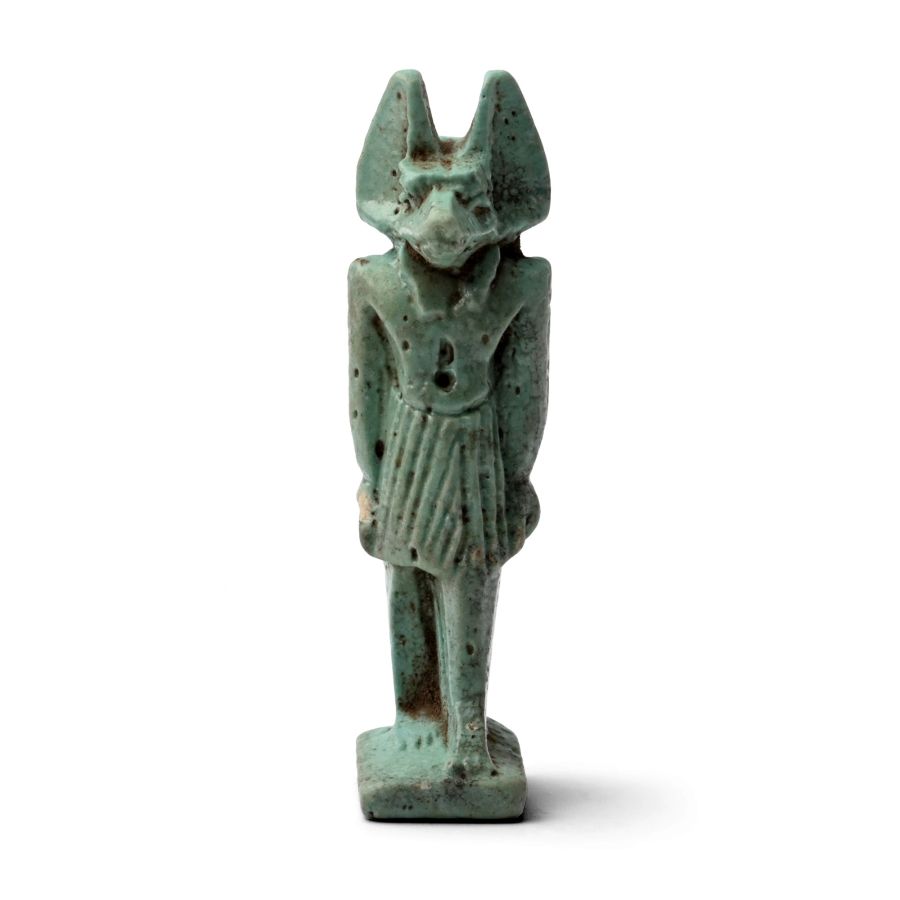
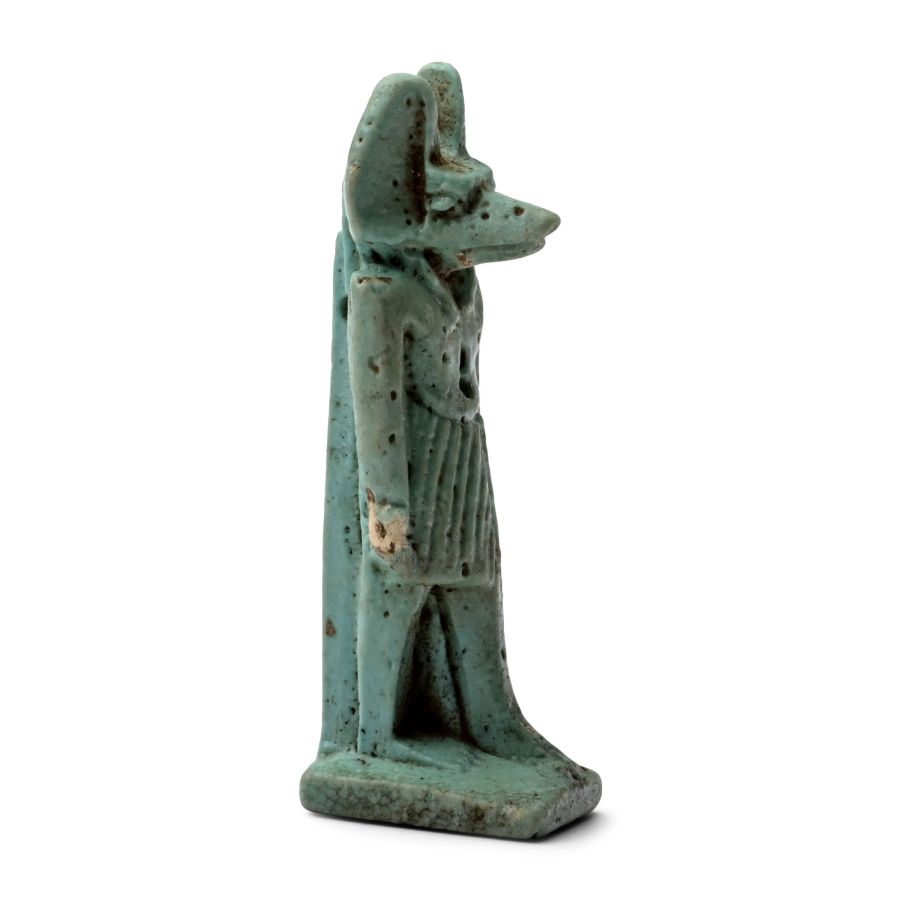
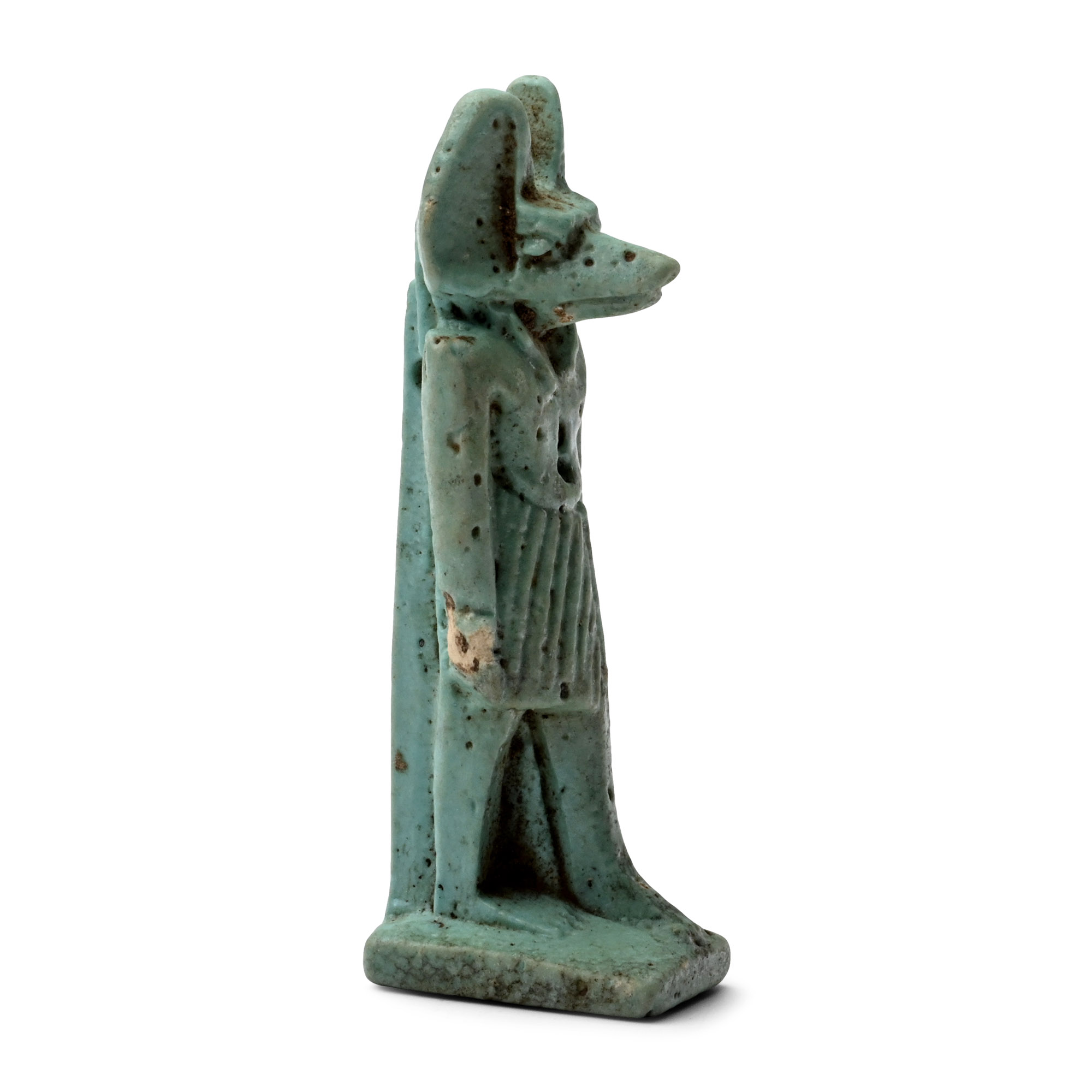
Egyptian Faience Anubis Amulet
664-332 B.C.
1 3/4 in. (4.92 grams, 46 mm).
With rectangular base and dorsal pillar pierced at the shoulders, Anubis in human form with short klt, jackal's head with large ears.
ProvenanceCollection of an amateur, Carouge, Switzerland, assembled in the 1980s-1990s.
Thence by descent to the collection of Mr S.P., since 2020.
This lot is accompanied by an illustrated lot declaration signed by the Head of the Antiquities Department, Dr Raffaele D'Amato.
TimeLine Auctions follows a vetting process to ensure the authenticity and legality of all items, reinforcing our commitment to integrity and responsible trading. Each antiquity, antique, and coin lot undergoes thorough examination by a vetting committee of at least ten external specialists, professional trade association members, scientists, and archaeologists: Our Vetting Process
AUCTIONS:
TimeLine is a leading auction house specialising in antiquities, ancient art, collectables, natural history, coins, medals, and books. Our auctions offer museums, collectors, historians, and enthusiasts the opportunity to acquire unique and historically significant pieces.
-
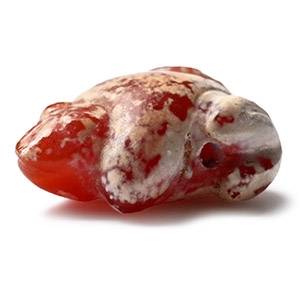
Egyptian Carnelian Frog Amulet
Late Period, 664-332 B.C.Sold for (Inc. bp): £572
Carved in the round, pierced through the body for suspension. 298 grams, 19 mm
UK private collection before 2000. Acquired on the UK art market. Private collection, London, UK. This lot is accompanied by an illustrated lot declaration signed by the Head of the Antiquities Department, Dr Raffaele D'Amato.
Frog amulets in ancient Egypt symbolised fertility, rebirth, and regeneration. Associated with the goddess Heqet, linked to childbirth and life-giving forces, these amulets were especially popular in contexts related to fertility and protection during pregnancy and childbirth. Their connection to the annual Nile flood, which brought new life to the land, further reinforced their symbolism of renewal and abundance. -
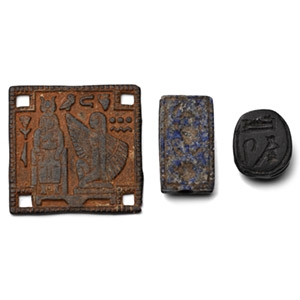
Egyptian Artefact Group
Late Period, 664-332 B.C. and laterSold for (Inc. bp): £117
Comprising: a scarab with text to underside; a plano-convex section bead; a bifacial square plaque with worship scene and hieroglyphs to each face, after the antique. 8.16 grams total, 13-25 mm
From the collection of a gentleman, acquired on the London art market in the 1990s. This lot is accompanied by an illustrated lot declaration signed by the Head of the Antiquities Department, Dr Raffaele D'Amato. -
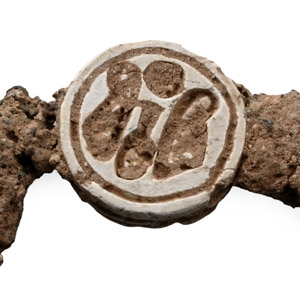
Egyptian Ring with Button Scarab
Late Period, 664-332 B.C.Sold for (Inc. bp): £124
Comprising a bronze D-shaped finger ring, the bezel formed by a faience discoid with a radiating geometric stylised rosette pattern on one side and the other featuring a central nefer sign with sun disc above flanked by two maat feathers. 4.47 grams, 27.51 mm overall, 18.98 mm internal diameter (approximate size British M, USA 6, Europe 12.46, Japan 12)
Ex London, UK, art market, 1990s. From a private UK collection. This lot is accompanied by an illustrated lot declaration signed by the Head of the Antiquities Department, Dr Raffaele D'Amato.
