
Loading, please wait...
LOT 0643
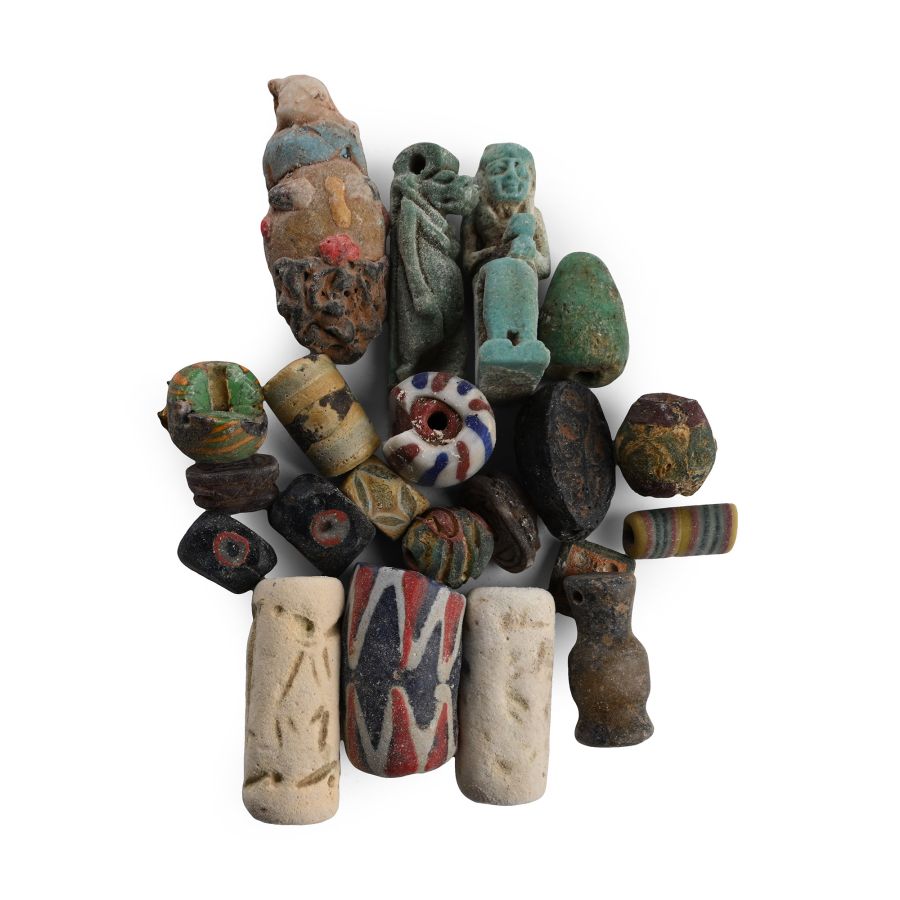
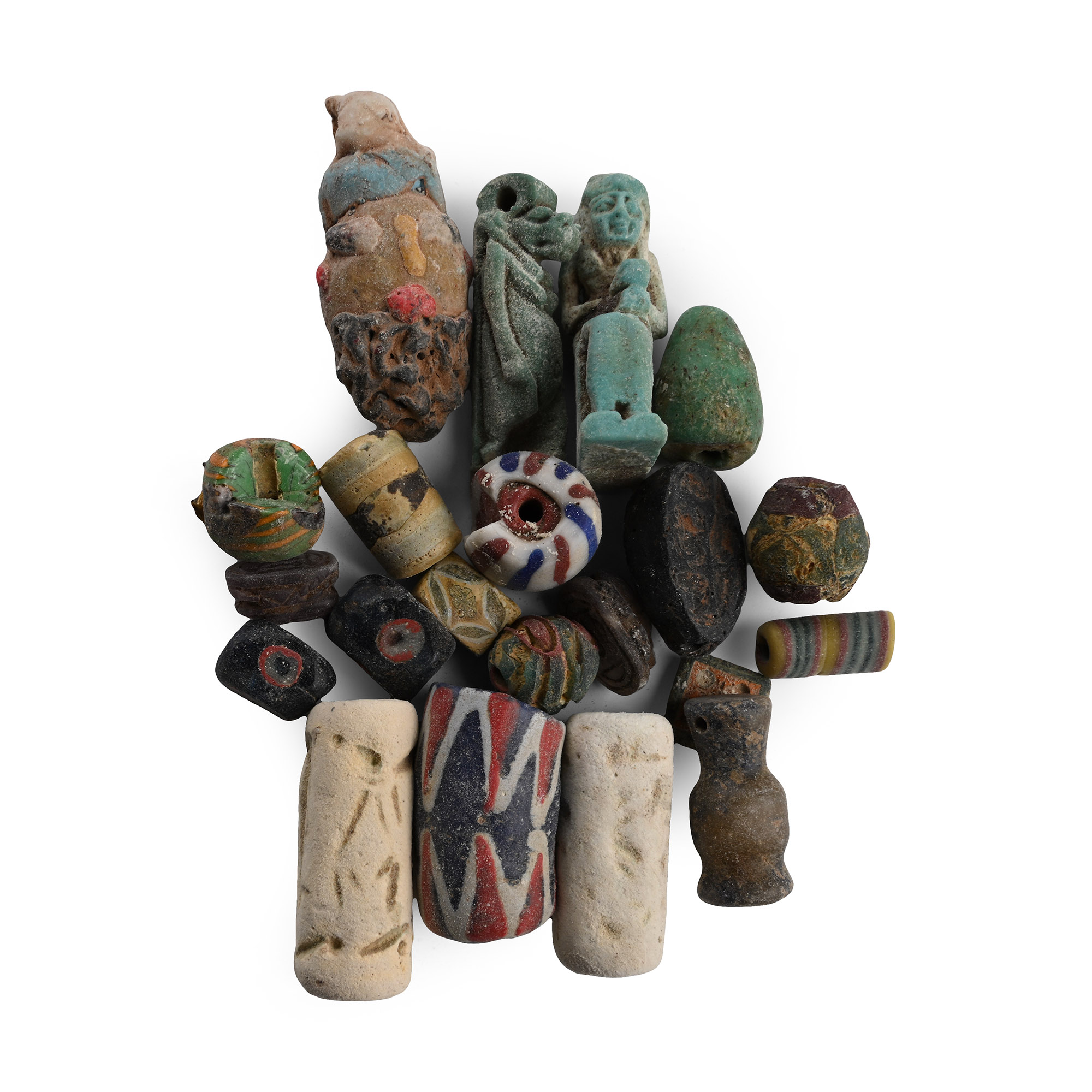
Egyptian Faience and Glass Bead and Amulet Collection
LATE-ROMAN PERIOD, CIRCA 664-323 A.D.
3/8 - 1 1/4 in. (59 grams total, 10-33 mm).
Including pendant amulets of Isis Lactans and Taweret; an amethyst scarab with wadj, nefer, and neb hieroglyphs on the underside; tubular beads with dragged trails; a face pendant; and other types. [21]
ProvenanceLondon gentleman's collection, 1970-1990s, by descent.
CONDITIONTimeLine Auctions follows a vetting process to ensure the authenticity and legality of all items, reinforcing our commitment to integrity and responsible trading. Each antiquity, antique, and coin lot undergoes thorough examination by a vetting committee of at least ten external specialists, professional trade association members, scientists, and archaeologists: Our Vetting Process
AUCTIONS:
TimeLine is a leading auction house specialising in antiquities, ancient art, collectables, natural history, coins, medals, and books. Our auctions offer museums, collectors, historians, and enthusiasts the opportunity to acquire unique and historically significant pieces.
LOT 0643
Egyptian Faience and Glass Bead and Amulet Collection
Estimate £150 - 200€170 - 230 (for guidance only)$200 - 270 (for guidance only)
Opening Bid
£75 (EUR 87; USD 101) +BP*
-
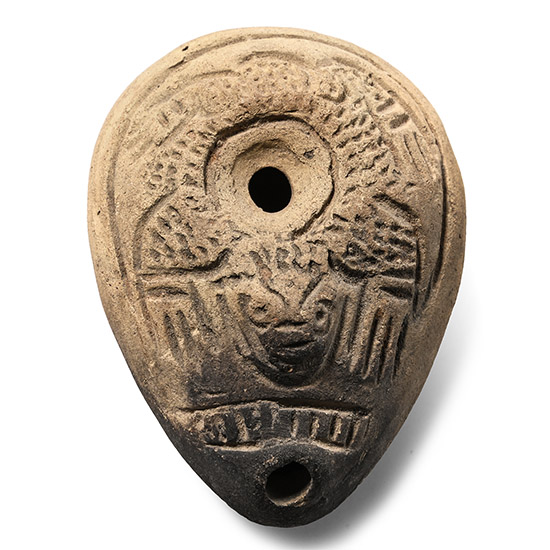
Romano-Egyptian Terracotta Frog Oil Lamp
Roman Period, 3rd-4th century A.D.Estimate: £50 - 70 (+bp*)
Bids: 2 | Current Bid: £20
Ovoid in plan and biconvex in section, low-relief frog image on the discus, starburst on the underside; old collector's note: 'Very light buff coloured frog lamp. Exact type as illustrated in Bailey, [?] Roman pottery lamps. B.17.1963 pl. 14 d. Decorated base. 3-4th century A.D. Found in Alexandria. From Puys-Aubert collection in Alexandria. March 1963.' 71 grams, 81 mm
From the private collection of Peter Clayton, FCILIP, Dip, Arch, FSA, FRNS, Hemel Hempstead, Hertfordshire, UK; formed since the late 1950s. Accompanied by an old handwritten identification card written by Peter Clayton. -
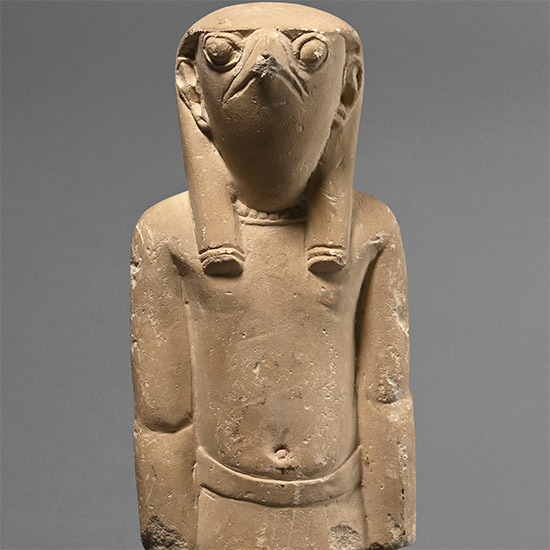
Large Egyptian Limestone Statue of the Falcon God Horus
Graeco-Roman Period, 332 B.C.-323 A.D.Estimate: £1,500 - 2,000 (+bp*)
Bids: 1 | Current Bid: £600
Carved in the round figure of Horus wearing a tripartite wig and beaded collar, a belted kilt to the waist; mounted on a custom-made stand. 2.42 kg total, 33.5 cm high including stand
From a UK private collection. with Mallams, Oxford, Library Sale, 2025. Acquired by the current owner from the above. Accompanied by a copy of an illustrated academic report by Simone Musso. -
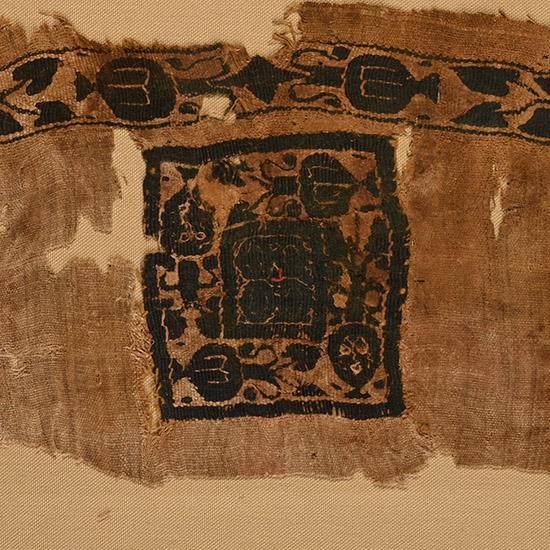
Egyptian Mounted Coptic Tunic Textile Fragment with Clavus and Tabula
Circa 6th century A.D.Estimate: £80 - 100 (+bp*)
Bids: 2 | Current Bid: £15
Showing a large portion of a tunic, decorated with a clavus and a tablion, both featuring foliate ornaments alternating with kantharoi, the centre of the tablion patterned with rosettes surrounded by kantharoi on the four sides; mounted on a backing board. 174 grams total, 57 cm
Acquired 1970s-1996. Property of a North American collector. London collection, 2016.
This type of embroidery was typical of tunics and garments characterised by full-length clavi and segmenta, decorated with either intricate geometric patterns or floral and vegetal motifs. In Christian symbology, the kantharos was an ancient Greek wine cup that symbolised resurrection and eternal life through Christ.
