
Loading, please wait...
LOT 0730
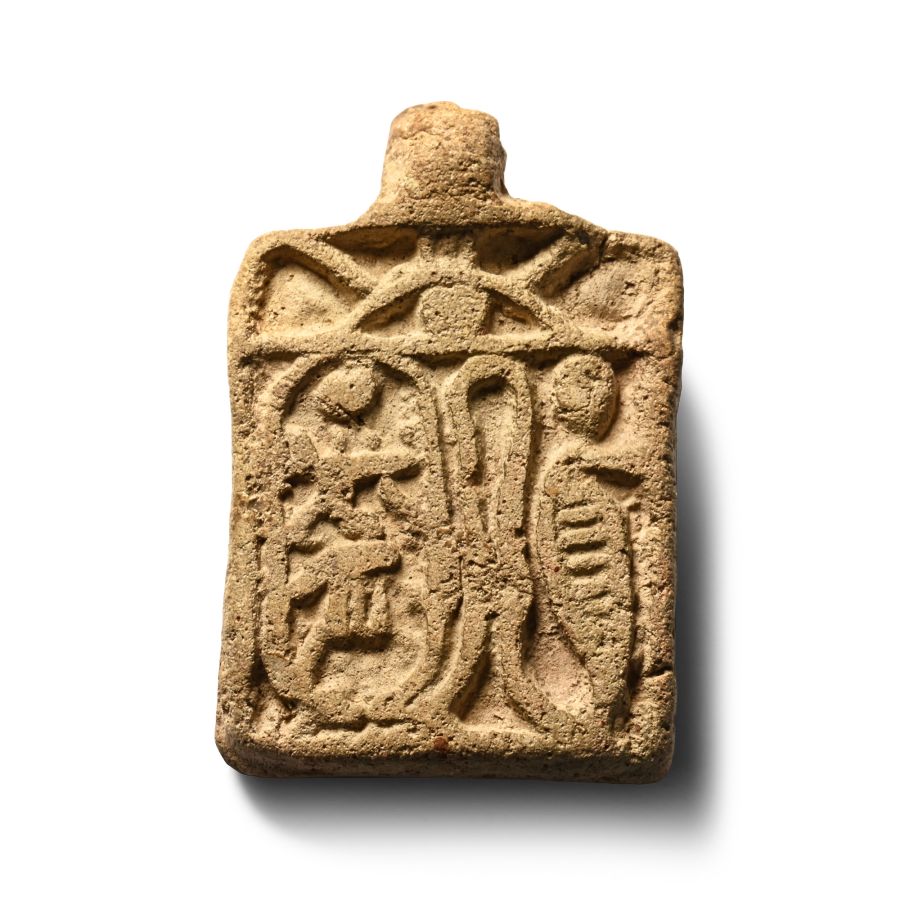
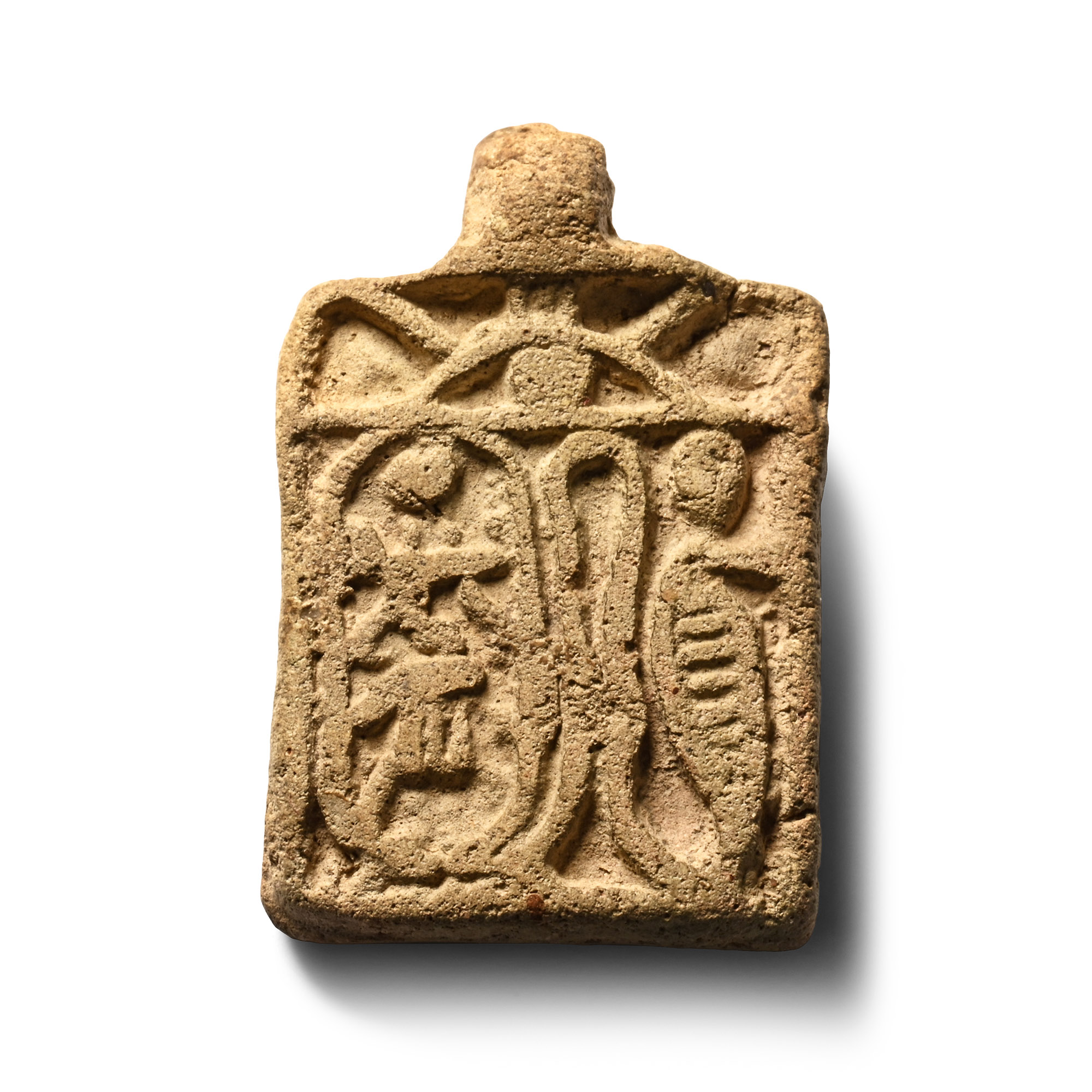
Egyptian Faience Amuletic Plaque with Cartouche of Pharaoh Thutmose III
NEW KINGDOM, CIRCA 1400-1292 B.C.
1 1/4 in. (4.68 grams, 33 mm).
Formed as a rectangular plaque with the cartouche of Thutmosis III and a uraeus; attachment loop to the top. [No Reserve]
ProvenanceLondon, UK, art market, 1980s.
Private collection, London, UK.
For the catouche, see The Metropolitan Museum of Art, Object Number 10.130.122.
CONDITIONTimeLine Auctions follows a vetting process to ensure the authenticity and legality of all items, reinforcing our commitment to integrity and responsible trading. Each antiquity, antique, and coin lot undergoes thorough examination by a vetting committee of at least ten external specialists, professional trade association members, scientists, and archaeologists: Our Vetting Process
AUCTIONS:
TimeLine is a leading auction house specialising in antiquities, ancient art, collectables, natural history, coins, medals, and books. Our auctions offer museums, collectors, historians, and enthusiasts the opportunity to acquire unique and historically significant pieces.
LOT 0730
Egyptian Faience Amuletic Plaque with Cartouche of Pharaoh Thutmose III
Estimate £200 - 300€230 - 350 (for guidance only)$270 - 410 (for guidance only)
-
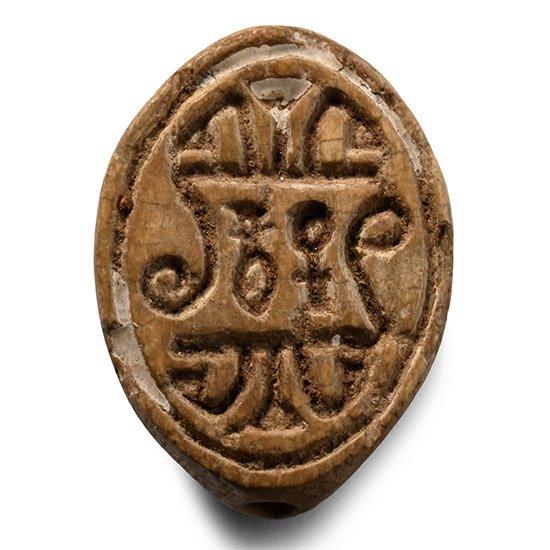
Egyptian Steatite Scaraboid Amulet with Hieroglyphs
Hyksos Period-early New Kingdom, circa 1782-1500 B.C.Estimate: £40 - 60 (+bp*)
Bids: 1 | Current Bid: £5
Plano-convex in section, underside with nfr and ankh hieroglyphs meaning 'good life', with a stylised lotus plant motif above and below. 2.36 grams, 20 mm
Excavated from Egypt in 1914. From the private collection of Mr David Sams and his wife, Elizabeth Kate Sams, gentry and amateur archaeologists who travelled to Egypt in 1914 with their daughter, Ethel. Mr Sams and his wife led digging expeditions from which these items come, from the family estate of Mr and Mrs Sams, by direct descent to their granddaughter. -
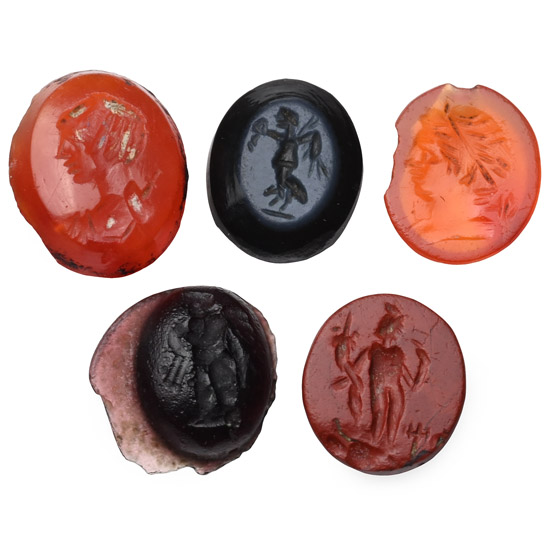
Romano-Egyptian Carved Gemstone Collection
1st-3rd century A.D.Estimate: £400 - 600 (+bp*)
Bids: 3 | Current Bid: £15
Comprising: an oval intaglio with a female profile bust; a red jasper intaglio with a standing figure holding a cornucopia; a translucent carnelian intaglio with a profile bust; a glass intaglio with a putto; a banded agate intaglio with a winged figure. 1.86 grams total, 9-11 mm
UK private collection assembled 1970s-90s, and thence to the liquidated state of above. -
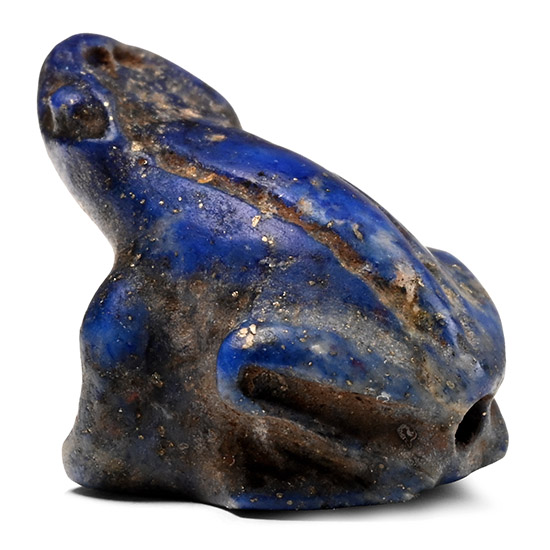
Egyptian Lapis Lazuli Frog Amulet
Late Period, 664-332 B.C.Estimate: £200 - 300 (+bp*)
Opening Bid: £60
Carved in the round in a crouched pose, with hind legs folded behind the body, pierced through the stomach for suspension. 1.02 grams, 14 mm
From a mid 20th century collection.
Frog amulets in ancient Egypt symbolised fertility, rebirth, and renewal. Associated with the goddess Heqet, linked to childbirth and life-giving forces, they were especially popular for fertility and protection during pregnancy and labour. Their association with the annual Nile flood, which brought new life to the land, further emphasised their symbolism of revival and abundance.
