
Loading, please wait...
LOT 0754
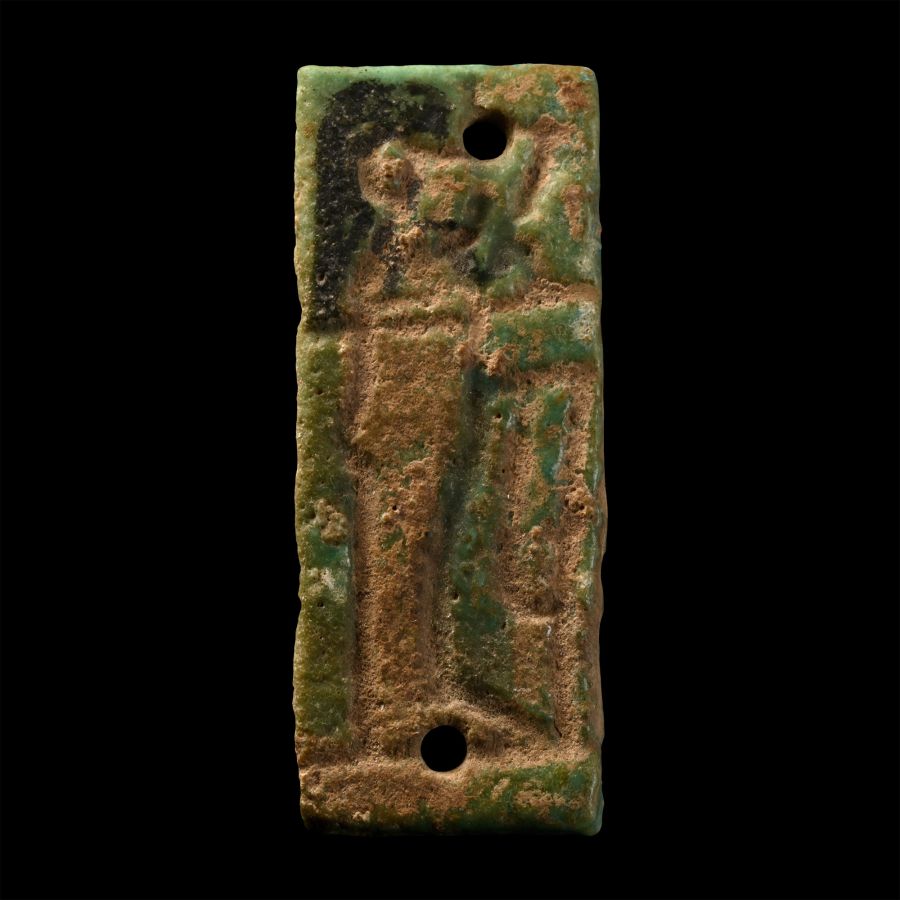
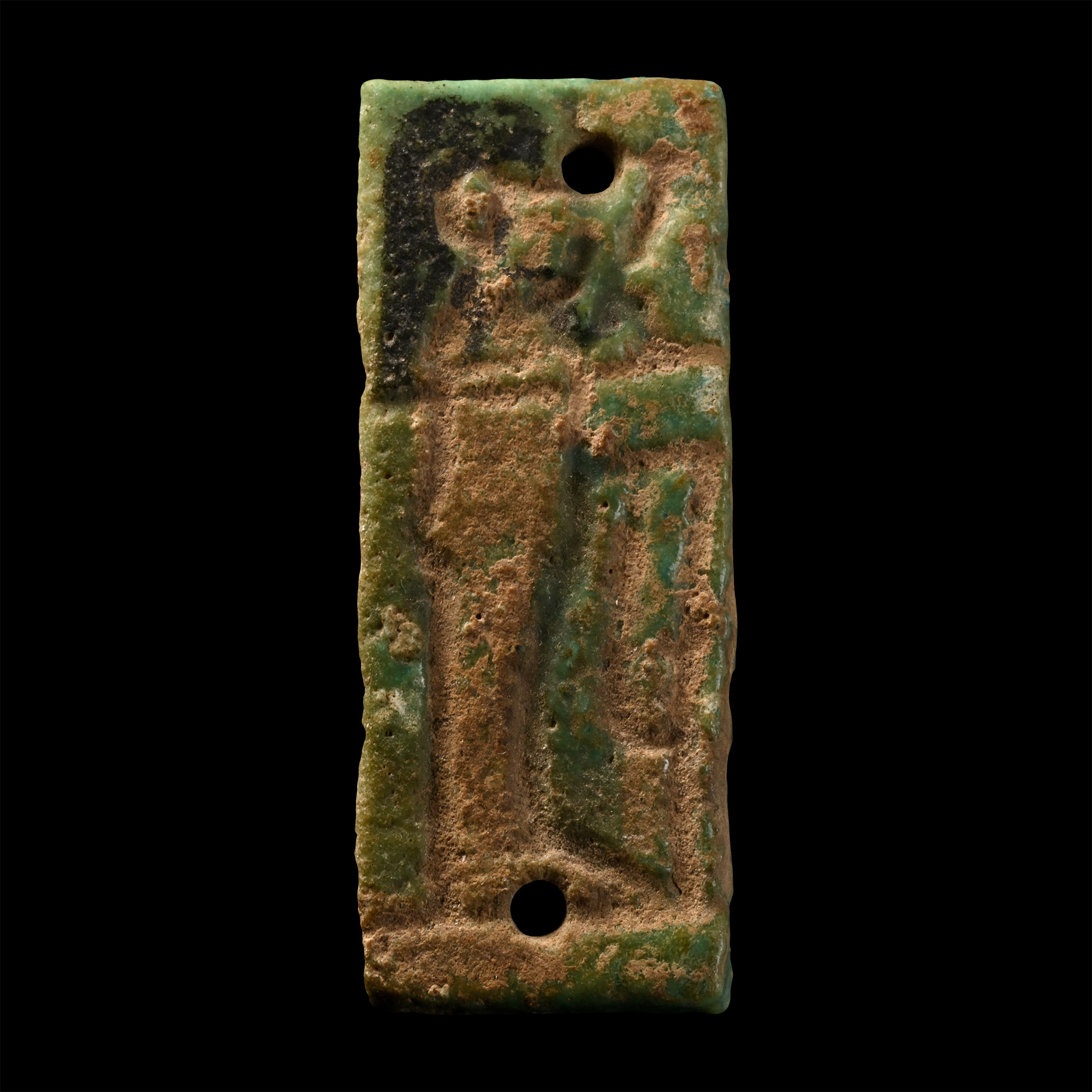
Egyptian Faience Amuletic Imsety Son of Horus Plaque
LATE PERIOD, CIRCA 664-332 B.C.
2 in. (5.98 grams, 49 mm).
Rectangular green-glazed plaque with standing figure of Imsety in profile, with black pigment to the wig; pierced to the top and bottom; accompanied with a handwritten note reading 'Ancient Egyptian. Fayence pectoral amulet- impressive figure of Imseti, one of the four sons of Horus'. [No Reserve]
ProvenanceFrom the collection of David Donlan (1947-2025), a dedicated and lifelong collector with a passion for the ancient world and the natural sciences, forming his collection from 1960s onwards, using many reputable dealers across the United Kingdom, including the well-regarded Coincraft and The Parthenon Gallery.
Accompanied by an old handwritten information ticket.
Cf. Petrie, W.M.F., Amulets. Illustrated by the Egyptian Collection in University College, London, 1914, pl. XI, no. 93g, for Four Sons of Horus plaques.
FootnotesThe Four Sons of Horus safeguarded the deceased's internal organs. The human-headed Imsety protected the liver, the baboon-headed Hapy the lungs, the jackal-headed Duamutef the stomach, and the falcon-headed Qebehsenuef the intestines. Plaques, such as this one, were sewn onto the mummy's wrappings or visceral packages.
CONDITIONTimeLine Auctions follows a vetting process to ensure the authenticity and legality of all items, reinforcing our commitment to integrity and responsible trading. Each antiquity, antique, and coin lot undergoes thorough examination by a vetting committee of at least ten external specialists, professional trade association members, scientists, and archaeologists: Our Vetting Process
AUCTIONS:
TimeLine is a leading auction house specialising in antiquities, ancient art, collectables, natural history, coins, medals, and books. Our auctions offer museums, collectors, historians, and enthusiasts the opportunity to acquire unique and historically significant pieces.
LOT 0754
Egyptian Faience Amuletic Imsety Son of Horus Plaque
Estimate £100 - 140€120 - 160 (for guidance only)$140 - 190 (for guidance only)
-
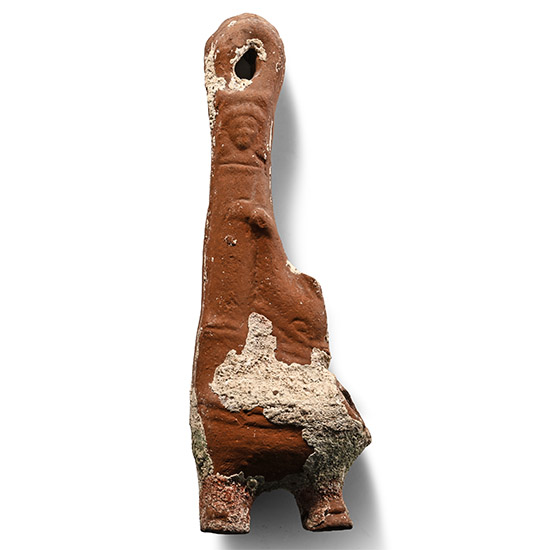
Egyptian Terracotta Alexandrian Figure
Roman Period, 30 B.C.-323 A.D.Estimate: £120 - 170 (+bp*)
Bids: 1 | Current Bid: £5
Hollow-formed vessel with bulbous body and two flared feet below, vertical handle with loop finial and moulded mummy and dolphin motif; marine accretion; inked to underside 'Ex M. Suzanne / Alexandria / 1903-1920'. 178 grams, 19.5 cm
From the collection of David Donlan (1947-2025), a dedicated and lifelong collector with a passion for the ancient world and the natural sciences, forming his collection from 1960s onwards, using many reputable dealers across the United Kingdom, including the well-regarded Coincraft and The Parthenon Gallery. -
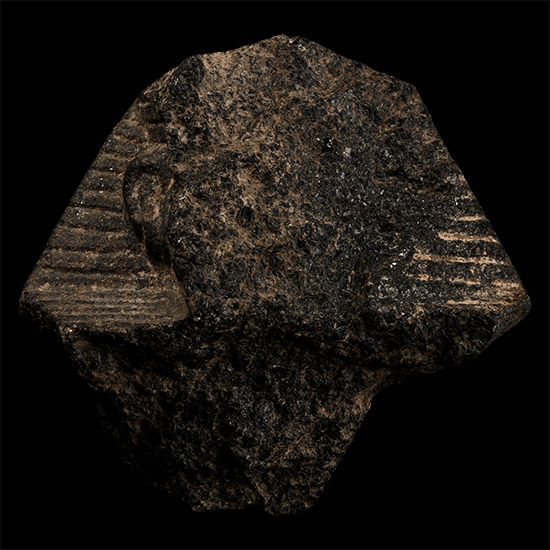
Egyptian Fragmentary Granite Head of a Pharaoh
Middle Kingdom, circa late 12th-13th Dynasty, circa 1860-1649 B.C.Estimate: £400 - 600 (+bp*)
Bids: 2 | Current Bid: £30
With a distinctive striated royal nemes headcloth, one large forward-facing ear preserved, and a largely absent face, the gathered 'tail' of the headdress hanging down at the back. 406 grams, 96 mm
Acquired March 1965. From the private collection of Peter Clayton, FCILIP, Dip, Arch, FSA, FRNS, Hemel Hempstead, Hertfordshire, UK; formed since the late 1950s. Accompanied by an old handwritten information card by Peter Clayton, collection no.110.
Dark, hard stones were favoured for royal statuary in the late Middle Kingdom. The internal treatment of the forward-facing ears and the markings of the nemes are comparable to those of more complete royal heads from this period (cf. Bourriau, J., Pharaohs and Mortals. Egyptian art in the Middle Kingdom, Cambridge, 1988, p. 38, no. 32, for a portrait head of Amenemhat III). -
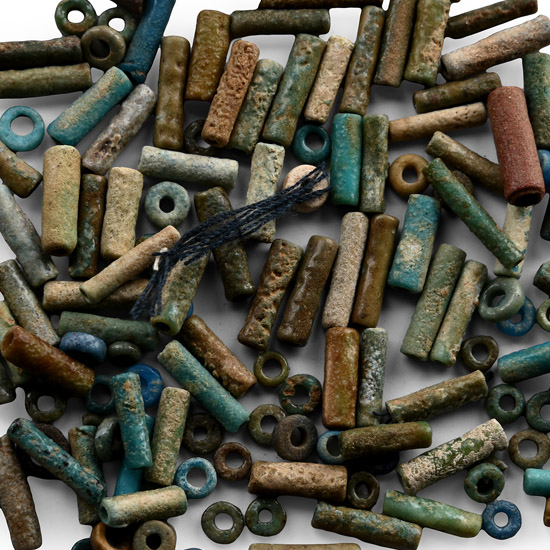
Egyptian Mummy Bead Group
Late Period-Ptolemaic Period, circa 664-30 B.C.Estimate: £40 - 60 (+bp*)
Opening Bid: £5
Group of tubular and annular beads in green, blue, and beige colours. 7.4 grams total, 3-12 mm
Ex Art Shop Windsor, 1990s. From a private UK collection.
