
Loading, please wait...
LOT 0455
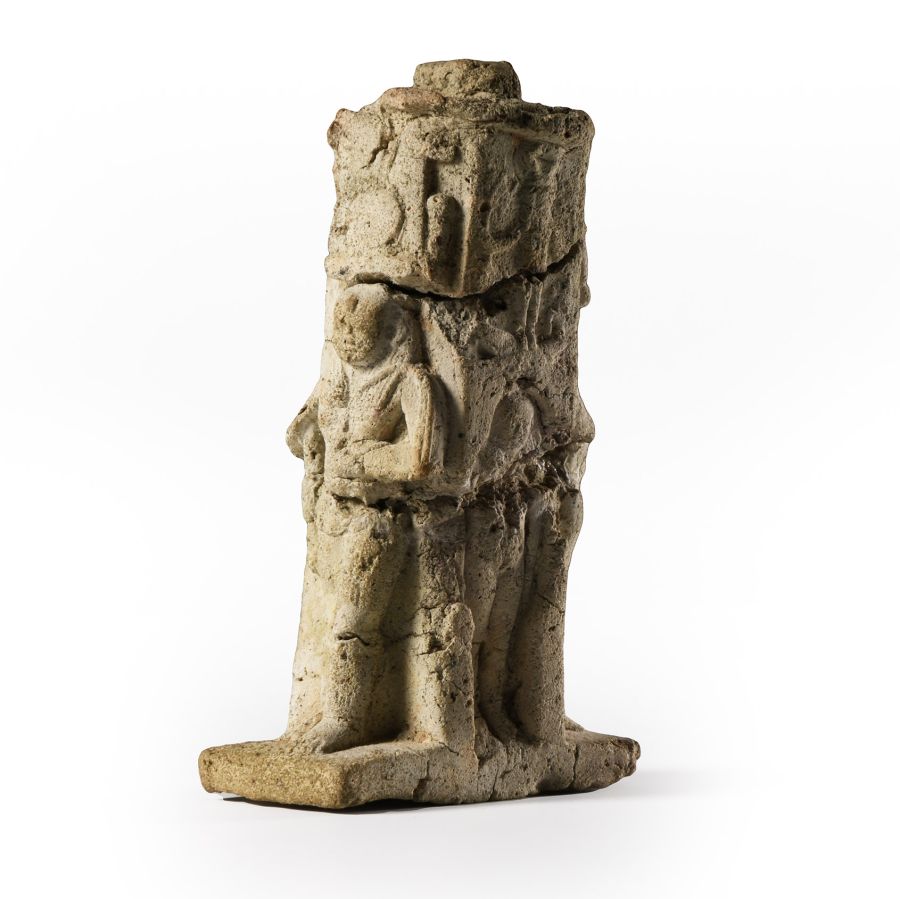
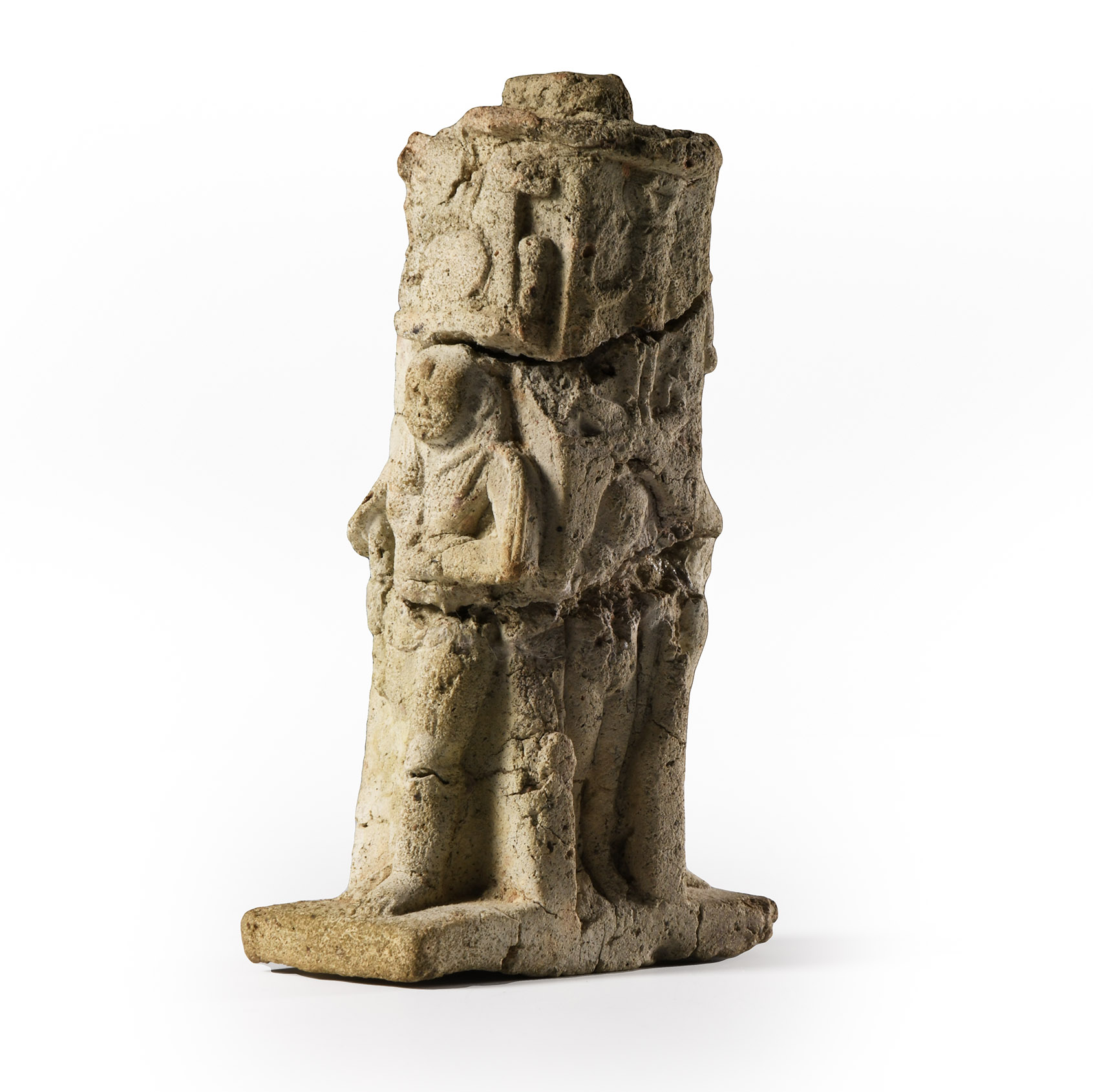
Egyptian Faience Amulet with Figures
LATE PERIOD-PTOLEMAIC PERIOD, 664-30 B.C.
3 3/4 in. (100 grams, 95 mm).
The large architectural amulet, rectangular in section with base and scarab finial; the narrow sides each with a high-relief standing figure, both holding a flail, wearing a royal nemes headdress and solar disc; the wider sides each with a facing male figure within a naos surmounted by a smaller facing figure, one Harpocrates holding a snake, the other Bes(?) with a high-plumed headress; repaired.
ProvenanceEx property of a London gentleman; acquired in the 1970s.
Private collection of Mr T.H., Norfolk, UK.
See Andrews, C., Amulets of Ancient Egypt, London, 1994, for discussion.
FootnotesThe presence of Harpocrates holding a snake and possibly Bes, suggests that this functioned as a cippus amulet offering protection and with curative properties.
CONDITIONTimeLine Auctions follows a vetting process to ensure the authenticity and legality of all items, reinforcing our commitment to integrity and responsible trading. Each antiquity, antique, and coin lot undergoes thorough examination by a vetting committee of at least ten external specialists, professional trade association members, scientists, and archaeologists: Our Vetting Process
AUCTIONS:
TimeLine is a leading auction house specialising in antiquities, ancient art, collectables, natural history, coins, medals, and books. Our auctions offer museums, collectors, historians, and enthusiasts the opportunity to acquire unique and historically significant pieces.
-
.jpg)
Egyptian Bronze Figure of Osiris Wearing Plumed Atef Crown
Late Period, 664-332 B.C.Sold for (Inc. bp): £1,170
With frontal uraeus, holding the crook and flail in his hands; mounted on a custom-made stand. 70 grams total, 15.2 cm high including stand
Old Dutch collection, acquired prior to 1985. Ex Netherlands ancient art gallery. Ex Artemission, London SW5, UK. Private collection of Mr T.H., Norfolk, UK. Accompanied by a previous dealer's certificate of authenticity and invoice.
Osiris is a deity who represents both death and fertility and is commonly regarded as the quintessential god of rebirth. Though he was once a mortal ruler, as a deceased entity his domain was the Underworld. Abydos was the primary centre of Osiris’ cult, where a renowned yearly celebration of the god was held. Statues of Osiris were dedicated at temples throughout Egypt to ensure the god's protection and blessings. -
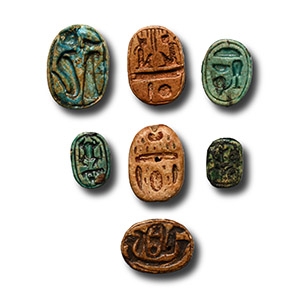
Egyptian Steatite and Other Scarab Collection
Late Period, 664-332 B.C.Sold for (Inc. bp): £520
Mixed group of scarabs and scaraboids in steatite and glazed composition with hieroglyphs to the underside. 10.2 grams total, 10-17 mm
Ex North London, UK, gentleman, 1990s. -
.jpg)
Egyptian Bone Cosmetic Spoon
Late New Kingdom, 1550-664 B.C.Sold for (Inc. bp): £2,600
The naked female figure standing on a lotus column and holding an elongated shallow cosmetic spoon above her head. 32 grams, 19.5 cm
Acquired in Egypt in the early 20th century. Private collection of Mr T.H., Norfolk, UK.
