
Loading, please wait...
LOT 0427
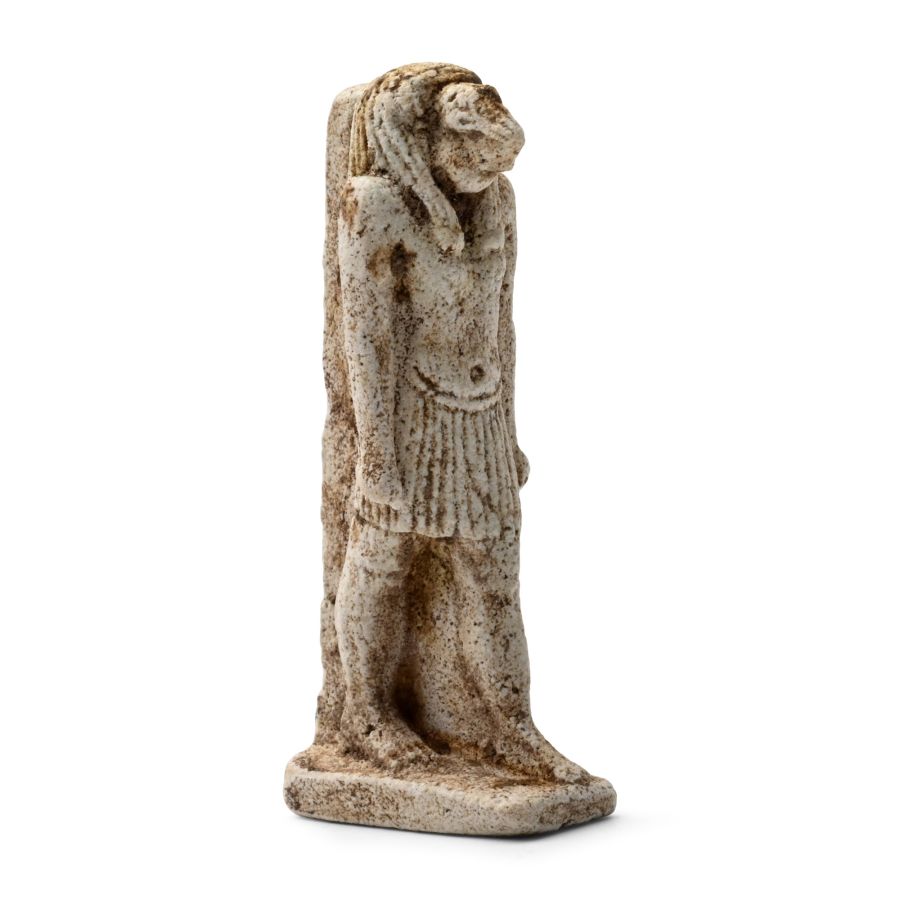
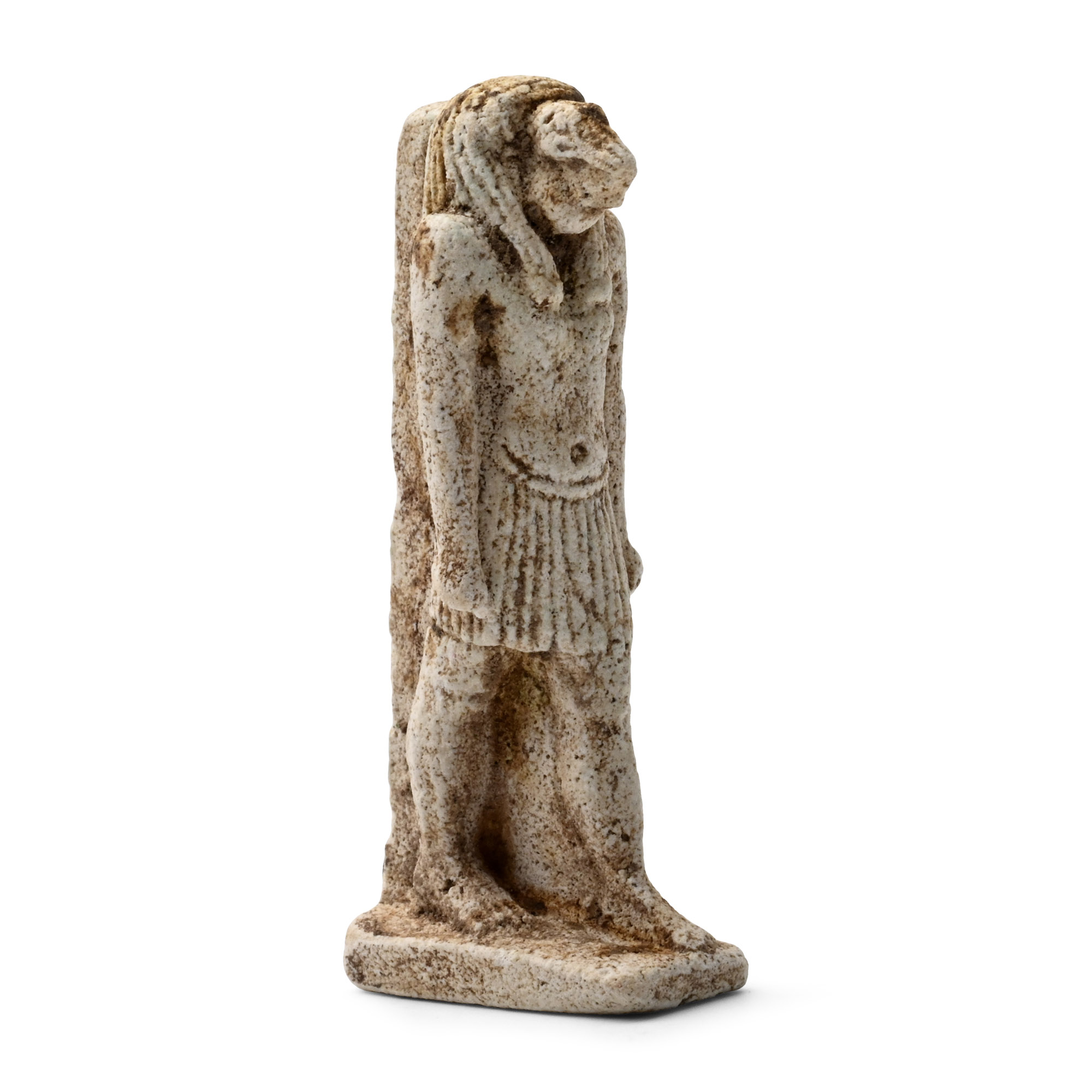
Egyptian Faience Amulet Representing Thoth
664-332 B.C.
1 1/2 in. (2.33 grams, 37 mm).
Comprising a rectangular base and dorsal pillar pierced behind the shoulders, the god with ibis head, tripartite wig, knee-length kilt.
ProvenancePrivate collection, Carouge, Switzerland, assembled in the 1980s-1990s.
Thence by descent to the collection of Mr S.P., since 2020.
This lot is accompanied by an illustrated lot declaration signed by the Head of the Antiquities Department, Dr Raffaele D'Amato.
Cf. Andrews, C., Amulets of Ancient Egypt, London, 1994, frontispiece for similar.
CONDITIONTimeLine Auctions follows a vetting process to ensure the authenticity and legality of all items, reinforcing our commitment to integrity and responsible trading. Each antiquity, antique, and coin lot undergoes thorough examination by a vetting committee of at least ten external specialists, professional trade association members, scientists, and archaeologists: Our Vetting Process
AUCTIONS:
TimeLine is a leading auction house specialising in antiquities, ancient art, collectables, natural history, coins, medals, and books. Our auctions offer museums, collectors, historians, and enthusiasts the opportunity to acquire unique and historically significant pieces.
-
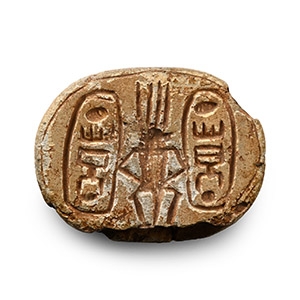
Large Egyptian Steatite Scarab with Bes and Cartouches of Thutmose III
Late Period, 664-332 B.C.Sold for (Inc. bp): £390
With segmented carapace, detailed legs and mouth, incuse image of Bes with plumed headdress to underside flanked by two cartouches, each bearing the throne name of Thutmose III (Men-kheper-Re); chipped. 26.3 grams, 39 mm
Ex London, UK, gentleman's collection, 1990s. This lot is accompanied by an illustrated lot declaration signed by the Head of the Antiquities Department, Dr Raffaele D'Amato.
The royal name is incorrectly written, containing two sun discs rather than one, suggesting it may be of Levantine manufacture. Thutmose III, a dynamic New Kingdom pharaoh celebrated centuries after his death, frequently appears on scarabs during the Late Period. From the New Kingdom onwards, Bes became one of ancient Egypt's most popular apotropaic deities. Despite his fearsome appearance, Bes served as the patron and protector of pregnant women and children, and was also believed to shield them from snakes. The combination of Thutmose III and Bes harnessed both royal and divine protection. -
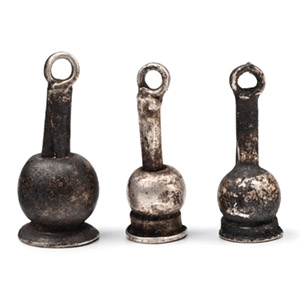
Egyptian Silver Poppy Amulet Group
Late-Ptolemaic Period, 664-30 B.C.Sold for (Inc. bp): £124
Three pendants each with poppy-head and loop at the apex. 3.68 grams total, 17-19 mm
Ex London, UK, gentleman 1980-1990s. This lot is accompanied by an illustrated lot declaration signed by the Head of the Antiquities Department, Dr Raffaele D'Amato.
Amulets in the form of poppies were used to heal and alleviate pain and to ward off death. These types of amulets were also linked to Osiris, the Egyptian deity of agriculture, death, and the afterlife. -
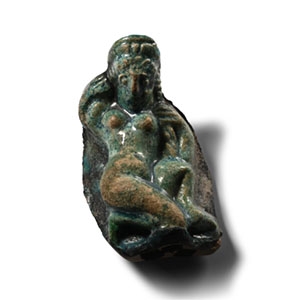
Egyptian Applique with Aphrodite
Ptolemaic Period, 332-30 B.C.Estimate: £600 - 800 (‡+bp*)
Opening Bid: £250
Fragment from a representation of the nude Aphrodite in high-relief, crouching with her left knee raised and her right knee touching the ground, holding her long hair with her hands and wearing a diadem on her head; an appliqué from a vessel with minor filling at the right thigh. 85 grams, 86 mm
Private collection, Somerset, England. with M.B., Los Angeles County, acquired 2014-2015 at a sale in the UK. with Ancient Resource, USA, Auction 70, 06 October 2018, no.7. This lot has been checked against the Interpol Database of stolen works of art and is accompanied by a search certificate number no.12827-240895. This lot is accompanied by an illustrated lot declaration signed by the Head of the Antiquities Department, Dr Raffaele D’Amato. This lot is accompanied by an illustrated lot declaration signed by the Head of the Antiquities Department, Dr Raffaele D'Amato.
