
Loading, please wait...
LOT 0460
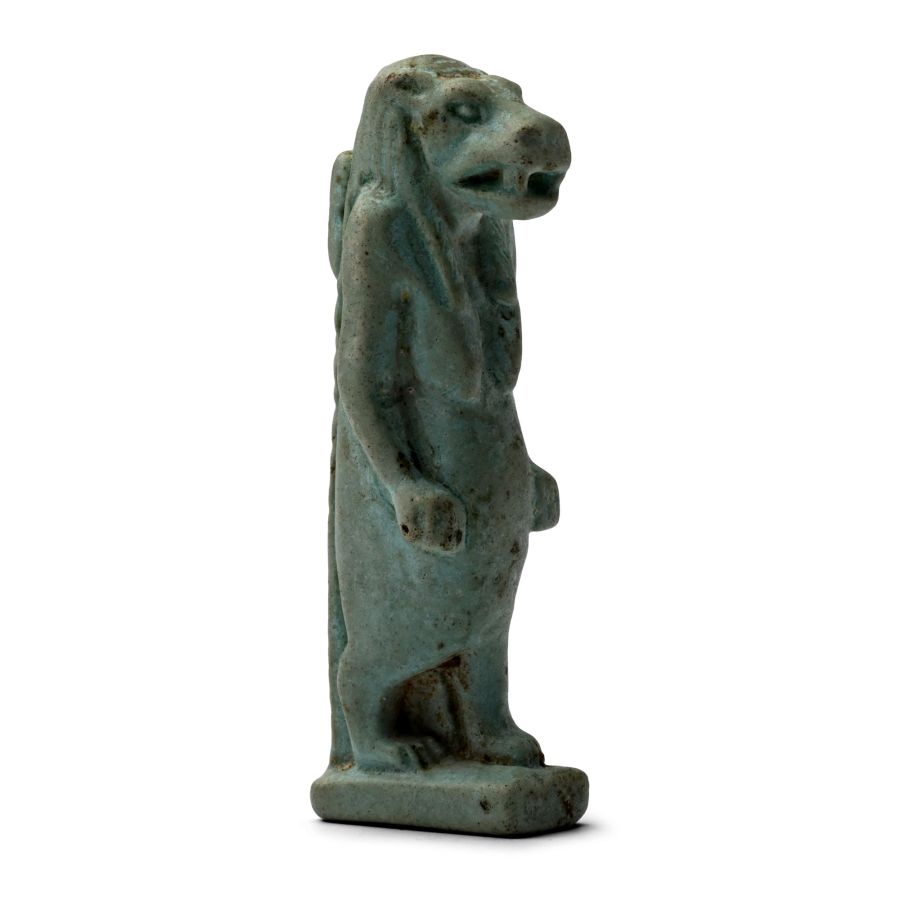
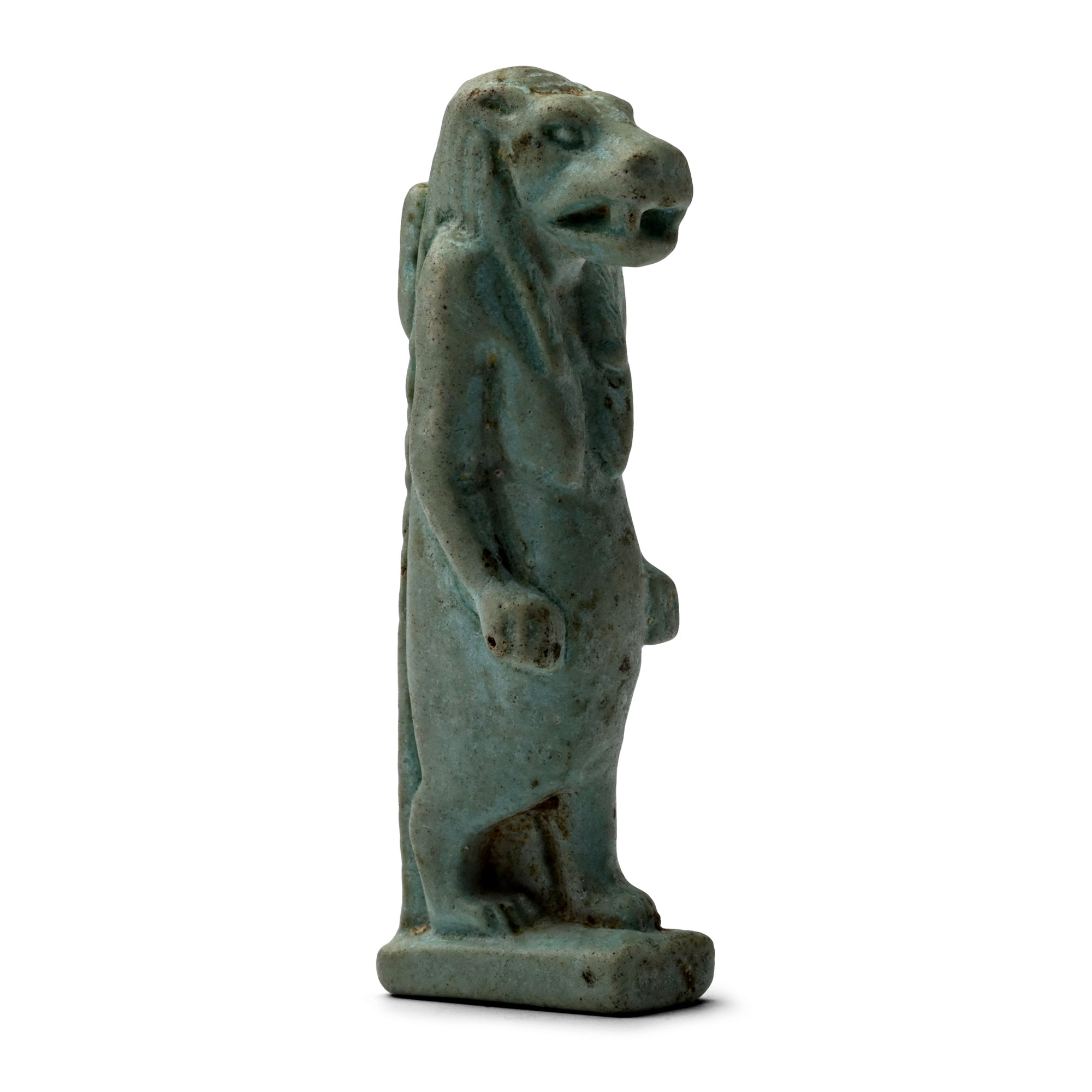
Egyptian Faience Amulet Representing Taweret
LATE PERIOD, 664-332 B.C.
2 in. (10.3 grams, 52 mm).
Modelled in the round on a rectangular base and with a dorsal pillar pierced at the shoulder, the goddess is depicted in hippopotamus form with human arms.
ProvenancePrivate collection, Carouge, Switzerland, assembled in the 1980s-1990s.
Thence by descent to the collection of Mr S.P., since 2020.
Cf. Loffet, H.C., Collections égyptiennes du Museum Emmanuel Liais de Cherbourg Octeville, Paris, 2007, p. 60, no. 63, for a similar example.
CONDITIONTimeLine Auctions follows a vetting process to ensure the authenticity and legality of all items, reinforcing our commitment to integrity and responsible trading. Each antiquity, antique, and coin lot undergoes thorough examination by a vetting committee of at least ten external specialists, professional trade association members, scientists, and archaeologists: Our Vetting Process
AUCTIONS:
TimeLine is a leading auction house specialising in antiquities, ancient art, collectables, natural history, coins, medals, and books. Our auctions offer museums, collectors, historians, and enthusiasts the opportunity to acquire unique and historically significant pieces.
-
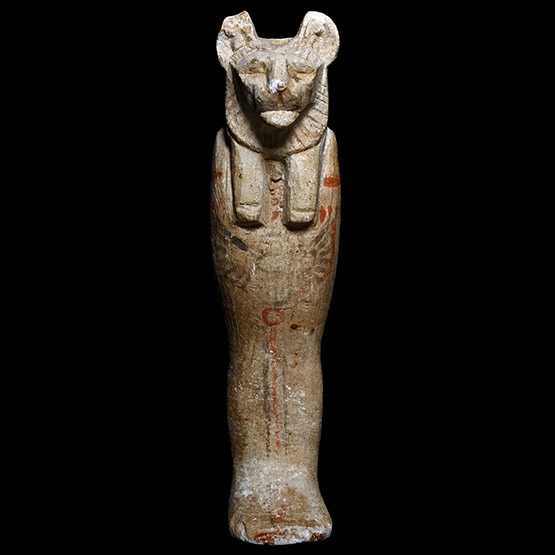
Egyptian Painted Limestone Mummiform Sekhmet Statuette
Circa 7th-6th century B.C.Sold for (Inc. bp): £3,000
Carved in the round depiction of Bastet or Sekhmet in a lion-headed form with a tripartite headdress, with front lappets overlain by the leonine mane; between the ears, a hole possibly for the insertion of a separate sun disc element; red pigment lines and fringe to the shoulders; a black diamond pattern with central red dots decorating the back, and a winged scarab in black on the abdomen; marked on the underside with the collector's reference 'BAOP SAKKARA'; mounted on a custom-made display stand. 29 grams total, 77 mm including stand
Private collection of George Anastase Michaelides (1900-1973) and legally exported from Egypt in the 1940s. Black ink inscription on base "BAOP SAKKARA". Christie's, London, 29 October 2003, no.167. Accompanied by a copy of the relevant Christie's catalogue pages. This lot has been checked against the Interpol Database of stolen works of art and is accompanied by search certificate number no.13101-248076.
Considering the specified Saqqara provenance, it is probable that the statuette originated from the Bubastaeion, dedicated to Bastet. The goddess was more commonly depicted as a cat or a human with a cat's head, although she also sometimes displayed a leonine aspect. It is also possible that the statuette represents her son, Mahes, who was depicted as a man with a lion's head. -
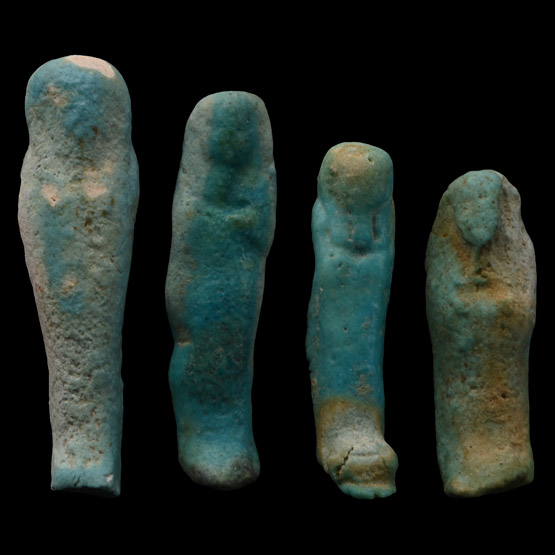
Egyptian Faience Shabti Collection
Ptolemaic Period, 332-30 B.C.Sold for (Inc. bp): £143
Comprising four mummiform figures with tripartite wigs and divine beards. 22.7 grams total, 44-60 mm
Ex H Norri collection, Milton Keynes, Bedfordshire, UK, 1980s-1990s. -
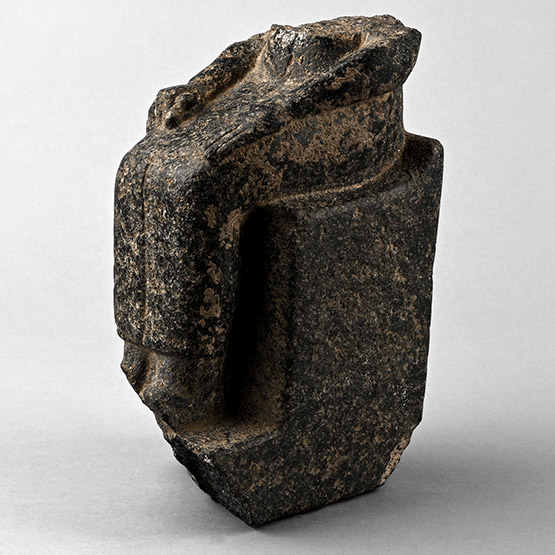
Egyptian Granite Seated Figure
Late Period, 664-332 B.C.Estimate: £3,000 - 4,000 (‡+bp*)
Opening Bid: £1,667
Fragment of a statue of an official, comprising the torso and legs clad in an ankle-length robe and seated on a rectangular-section seat with stepped base and short, curved backrest and rear dorsal pillar; the left hand carved with the palm resting along the thigh; the right hand similarly placed but with the hand gripping a folded piece of cloth of which the ends are draped over the lower thigh above the knee; traces of an old label to reverse. 4.1 kg, 18.7 cm
Private collection, Europe. with Bonhams & Brooks, 8th November 2001, no.265. Private collection, Europe. Accompanied by copies of the relevant Bonhams & Brooks catalogue pages. This lot has been checked against the Interpol Database of stolen works of art and is accompanied by a search certificate number no.12584-232097.
The official would have been shown wearing a longer cloak-like garment rather than a waist-height kilt, as the line of the folded edge is visible above where a waistband would typically be.
