
Loading, please wait...
LOT 0549
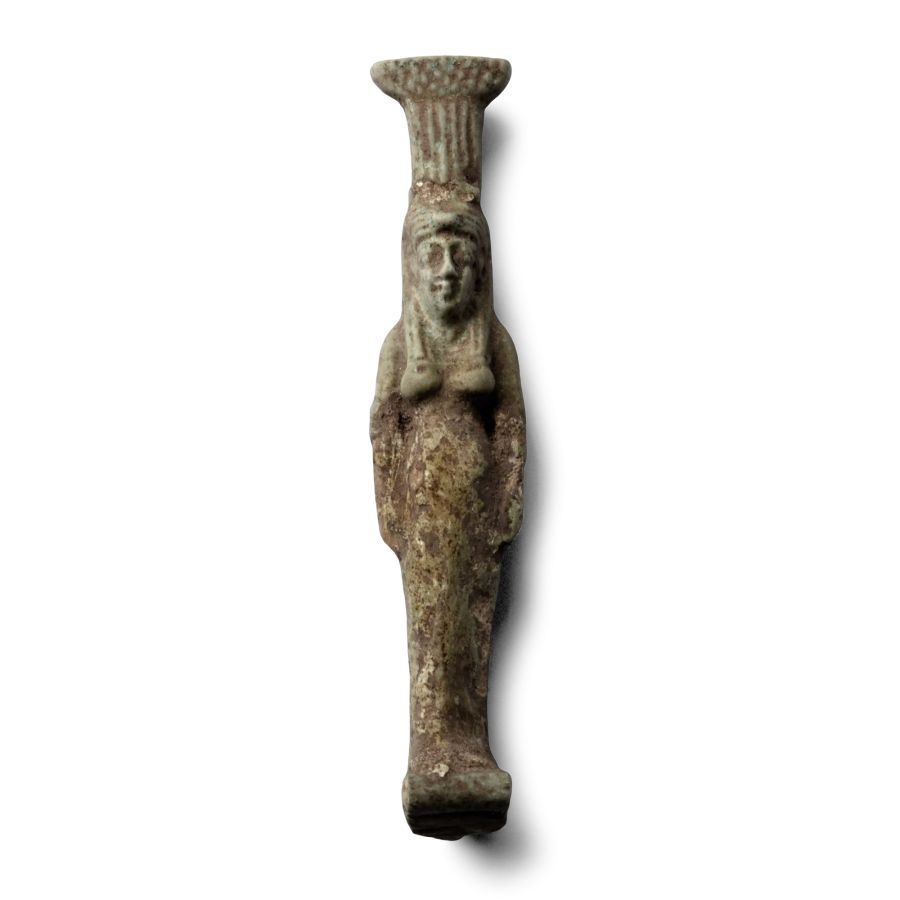
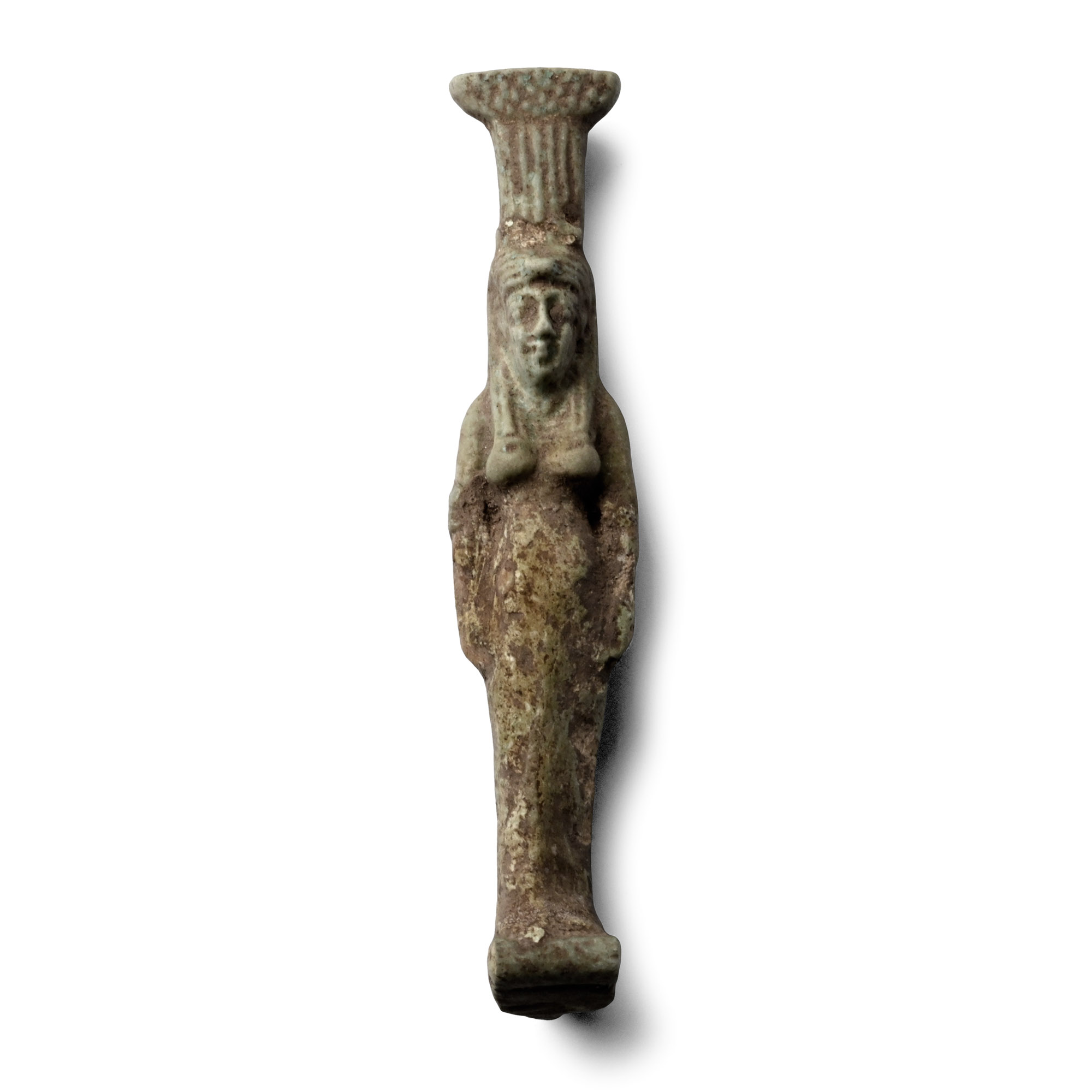
Egyptian Faience Amulet Representing Nephthys
LATE PERIOD, 664-332 B.C.
2 1/4 in. (4.15 grams, 55 mm).
Modelled in the round on a small base, wearing columnar headdress, with dorsal pillar pierced behind the elbows.
ProvenancePrivate collection, Carouge, Switzerland, assembled in the 1980s-1990s.
Thence by descent to the collection of Mr S.P., since 2020.
This lot is accompanied by an illustrated lot declaration signed by the Head of the Antiquities Department, Dr Raffaele D'Amato.
Cf. Andrews, C., Amulets of Ancient Egypt, British Museum 1994, p.48.
FootnotesNephthys was a protective goddess linked to mourning, magic, and the afterlife. As the sister of Isis, she played a vital role in the funerary rites of Osiris. Amulets like this were placed on the deceased to invoke her protection and aid in rebirth. Typically made of faience or semi-precious stone, they were especially common in the Late Period.
CONDITIONTimeLine Auctions follows a vetting process to ensure the authenticity and legality of all items, reinforcing our commitment to integrity and responsible trading. Each antiquity, antique, and coin lot undergoes thorough examination by a vetting committee of at least ten external specialists, professional trade association members, scientists, and archaeologists: Our Vetting Process
AUCTIONS:
TimeLine is a leading auction house specialising in antiquities, ancient art, collectables, natural history, coins, medals, and books. Our auctions offer museums, collectors, historians, and enthusiasts the opportunity to acquire unique and historically significant pieces.
-
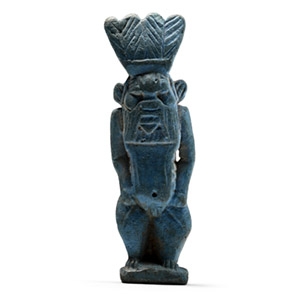
Egyptian Blue Amulet of Bes
Third Intermediate Period, circa 1069-735 B.C.Sold for (Inc. bp): £520
Modelled in the round, Bes standing nude with a lion's tail, wearing a feathered headdress. 4.13 grams, 44 mm
Archéologie; François de Ricqlès, Paris, 30 September-1 October 1996, no.322 (part). Private collection, London, UK, acquired from the above sale. Accompanied by a copy of a French cultural passport, dated 30 September 1996. Accompanied by a copy of the François de Ricqlès invoice. This lot has been checked against the Interpol Database of stolen works of art and is accompanied by a search certificate number no.12630-235074. This lot is accompanied by an illustrated lot declaration signed by the Head of the Antiquities Department, Dr Raffaele D'Amato.
From the New Kingdom onwards, Bes became one of ancient Egypt's most popular apotropaic deities. Despite his somewhat fearsome appearance, Bes served as the patron and protector of pregnant women and children, and was also believed to shield them from snakes. -
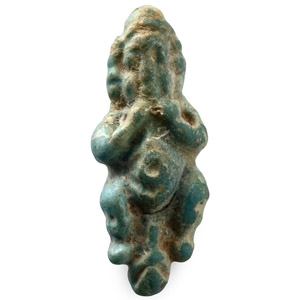
Egyptian Faience Phallic Figure Amulet
Ptolemaic Period, 332-30 B.C.Sold for (Inc. bp): £130
Blue glazed figure of a chubby dwarf with bent legs seated on emphasised phallus, both hands touching the chin, suspension loop to the reverse. 2.43 grams, 29 mm
From an early 20th century collection. This lot is accompanied by an illustrated lot declaration signed by the Head of the Antiquities Department, Dr Raffaele D'Amato. -
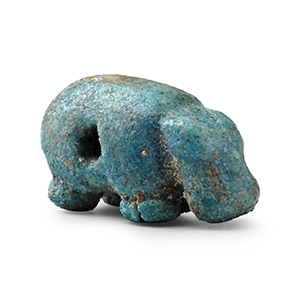
Egyptian Light Blue Faience Hippopotamus Amulet
Late Period, 664-332 B.C.Sold for (Inc. bp): £195
Blue glazed figure modelled in the round as a standing hippopotamus, pierced to the centre. 3.63 grams, 20 mm
From an early 20th century collection. This lot is accompanied by an illustrated lot declaration signed by the Head of the Antiquities Department, Dr Raffaele D'Amato.
In ancient Egypt, hippos symbolised both danger and protection, representing chaos and fertility. Feared for their aggression along the Nile, they were also associated with the protective goddess Taweret and the river’s life-giving power.
